
What treatment


Highly Recommended Fertility Treatment in Thailand Articles
Explore Our Trending Fertility Treatment in Thailand Articles
.png)
The 2026 Legal Evolution: How Thailand's New Altruistic Surrogacy Framework is Providing Hope for Eligible International Couples


Overview
The 2026 Legal Evolution: How Thailand's New Altruistic Surrogacy Framework is Providing Hope for Eligible International Couples,"Thailand’s 2026 altruistic surrogacy framework provides a legal pathway for eligible international couples, offering hope through regulated, ethical surrogacy with strong protections and transparent processes."...
Read more details




.png)
The Phenotype Hub: Why Asian and Western Recipients are Choosing Bangkok’s Diverse and Triple-Screened Egg Donor Banks
Overview
The Phenotype Hub: Why Asian and Western Recipients are Choosing Bangkok’s Diverse and Triple-Screened Egg Donor Banks,"Bangkok’s diverse, triple-screened egg donor banks attract Asian and Western recipients—phenotype matching with rigorous health, genetic, and psychological screening ensures safe, successful donor cycles."...
Read more details.png)
Thailand’s 2026 'Golden Year': How Bangkok’s AI-Driven IVF Labs are Achieving 90% Cumulative Success Rates
Overview
Thailand’s 2026 'Golden Year': How Bangkok’s AI-Driven IVF Labs are Achieving 90% Cumulative Success Rates,"Bangkok’s AI-driven IVF labs mark 2026 as a golden year, achieving 90% cumulative success rates—using deep learning for embryo selection and time-lapse incubation, drawing international couples seeking higher odds."...
Read more details
The Medical Necessity Shift: Why Families with Genetic Risks are Flocking to Bangkok for High-Precision PGT-M Screening
Overview
The Medical Necessity Shift: Why Families with Genetic Risks are Flocking to Bangkok for High-Precision PGT-M Screening,"Families with genetic risks flock to Bangkok for high-precision PGT-M screening—preventing inherited disorders by testing embryos for single-gene defects, ensuring only healthy embryos are transferred in IVF."...
Read more details
Precision Parenthood: How Bangkok Center Clinic’s Next-Gen NGS Screening is Attracting Middle Eastern Families Seeking Genetic Excellence
Overview
Next-generation sequencing (NGS) in Thailand: preconception, cancer risk, pharmacogenomics. Guide to top labs, costs, interpretation.
Discover your treatment options with a free, no-obligation quote!
Get your quote now!.png)
UAE Families Choose Thailand for Legal Family Balancing and Advanced PGT-A Genetic Screening
Overview
UAE families are choosing Thailand for legal family balancing and advanced PGT-A genetic screening. Thai fertility clinics offer comprehensive embryo testing to screen for chromosomal abnormalities and select for gender, all within a clear legal framework. With high success rates and affordable packages, Thailand provides a trusted, ethical option for family building....
Read more details
South East Asian Countries Turn to Thailand as the Regional Leader for Safe and Social Egg Freezing
Overview
Southeast Asian countries are turning to Thailand as the regional leader for safe and social egg freezing. With advanced vitrification technology, experienced reproductive specialists, and affordable pricing, Thai clinics offer women the opportunity to preserve their fertility with confidence. The trend reflects growing awareness of reproductive options and Thailand’s reputation for high-quality, accessible care....
Read more details
India’s Male Infertility Crisis: Why Advanced ICSI Procedures in Thailand are the 2026 Solution
Overview
India’s male infertility crisis has led couples to seek advanced ICSI procedures in Thailand as the 2026 solution. Thai fertility clinics specialize in complex male factor cases, including azoospermia and severe oligospermia, using micro-TESE and advanced sperm selection techniques. With high fertilization rates and affordable packages, Thailand offers hope to Indian couples struggling with male infertility....
Read more details
Thailand IVF Market 2026: The Secret Behind the Surge of Indian Couples Seeking Advanced Reproductive Care in Bangkok
Overview
The Thailand IVF market in 2026 is experiencing a surge of Indian couples seeking advanced reproductive care in Bangkok. The secret lies in Thailand’s combination of cutting-edge technology (including PGT-A and ICSI), high success rates, and significant cost advantages. For Indian couples facing complex fertility issues, Bangkok offers a world-class solution that is both accessible and affordable....
Read more detailsDiscover your treatment options with a free, no-obligation quote!
Get your quote now!
Australia’s Fertility Gap: Why More Couples are Turning to Thailand for Affordable, High-Success IVF Cycles
Overview
Australia’s fertility gap is driving more couples to turn to Thailand for affordable, high-success IVF cycles. With long wait times and high costs in Australia’s private system, Thai fertility clinics offer expedited access, advanced reproductive technology, and success rates that rival top Australian centers. Couples can achieve their family goals with significant savings and a supportive, stress-free experience....
Read more details
5 Things You Should Know About Reproductive Surgery in Thailand
Overview
Reproductive surgery in Thailand offers advanced, minimally invasive procedures performed by globally trained specialists at significantly lower costs, supported by world-class hospitals and comprehensive medical tourism services.
.png)
7 Benefits of Egg Donation & Freezing in Bangkok, Thailand
Overview
Egg donation and freezing in Bangkok offers advanced reproductive technology, affordable treatment, expert care, and a supportive environment for fertility preservation.

6 Reasons to Choose Gender Selection in Bangkok, Thailand
Overview
Gender selection in Bangkok combines advanced IVF with cutting-edge genetic screening, expert fertility specialists, and cost-effective care, offering a safe and effective pathway for family balancing and genetic health.

IVF with Gender Selection in Thailand: Tailored Fertility Treatments for Australian Couples
Overview
This article examines the growing trend of Australian couples seeking IVF with gender selection in Thailand. It explains the legal and ethical differences between the two countries and highlights why Thailand is a preferred destination.
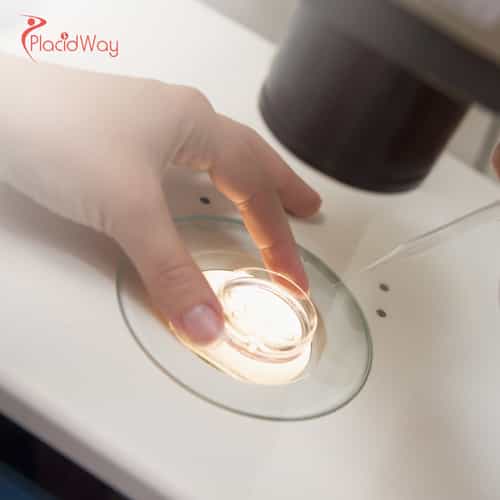
IVF with Egg Donation in Thailand: Affordable Fertility Solutions for Australian Couples
Overview
This article serves as a comprehensive guide for Australian couples considering IVF with egg donation in Thailand. It covers the benefits of seeking fertility treatment abroad, cost comparisons with Australia, how to choose a reputable fertility clinic, the step-by-step IVF process, legal considerations, and success rates....
Read more details
Beyond the Clinic: Enjoying Bangkok’s Culture During Your IVF Journey (2025)
Overview
Learn how to enjoy Bangkok’s rich culture while undergoing IVF in 2025. Discover temples, food, wellness, and tips for a balanced experience.

IVF Support Services in Bangkok: Counseling, Nutrition, and Stress Management in 2025
Overview
Discover IVF support services in Bangkok for 2025: counseling, nutrition plans, stress management, expert care, and holistic strategies for better outcomes.

Comparing Bangkok’s IVF Costs to Australia: A 2025 Fertility Cost Analysis
Overview
Discover 2025 IVF cost comparisons between Bangkok and Australia. Learn about pricing, quality, clinics, savings tips, and travel advice for fertility care.

Gender Selection in Bangkok: 2025 Guidelines, Ethics, and Clinic Reviews
Overview
Explore gender selection in Bangkok: 2025 guidelines, ethical considerations, costs, top doctors, accredited clinics, travel tips, and patient insights.

How Much Does IVF Cost in Bangkok? Is Bangkok Good for IVF?
Overview
IVF in Bangkok offers affordable, high-quality fertility treatments with world-class clinics and internationally trained specialists. This guide covers the cost of IVF in Bangkok, success rates, legal regulations, and the best IVF clinics in Thailand to help you make an informed decision...
Read more detailsShare with AI
Share this page with AI assistants to get summaries and insights


Table of Contents
- The 2026 Legal Evolution: How Thailand's New Altruistic Surrogacy Framework is Providing Hope for Eligible International Couples
- The Phenotype Hub: Why Asian and Western Recipients are Choosing Bangkok’s Diverse and Triple-Screened Egg Donor Banks
- Thailand’s 2026 'Golden Year': How Bangkok’s AI-Driven IVF Labs are Achieving 90% Cumulative Success Rates
- The Medical Necessity Shift: Why Families with Genetic Risks are Flocking to Bangkok for High-Precision PGT-M Screening
- Precision Parenthood: How Bangkok Center Clinic’s Next-Gen NGS Screening is Attracting Middle Eastern Families Seeking Genetic Excellence
Unlock the Best Packages Just for You
Discover the ultimate packages designed to meet your health and wellness goals. Choose the perfect fit for your journey.

Price starting from $3,800
Egg Freezing Package in Bangkok Thailand at First Fertility PGS Center
First Fertility PGS Center
- Fertility Treatment
Bangkok, Thailand

Price starting from $915
Low-Cost IUI Package in Bangkok, Thailand by Genea IVF and Genetics
Genea IVF and Genetics
- Fertility Treatment
Bangkok, Thailand

Price starting from $3,500
Most Affordable Tubal Ligation Reversal Package in Bangkok, Thailand
PlacidWay Thailand Medical Tourism
- Fertility Treatment
Bangkok, Thailand
-Package-in-Bangkok-Thailand-at-First-Fertility-PGS-Center.jpg)
Price starting from $3,800
Frozen Embryo Transfer (FET) Package in Bangkok Thailand at First Fertility PGS Center
First Fertility PGS Center
- Fertility Treatment
Bangkok, Thailand
Transformative Experiences: Dive into Procedure Insights
Discover the power of through compelling patient experiences. Uncover detailed insights into procedures, recovery journeys, and life-changing results.
.png)
Price starting from $8,400
ICSI in Thailand
- Intracytoplasmic sperm injection (ICSI), Fertility Treatment
Thailand

Price starting from $8,400
ICSI Fertility Treatment in Bangkok Thailand
- Intracytoplasmic sperm injection (ICSI), Fertility Treatment
Bangkok, Thailand

Price starting from $10,000
IVF with Gender Selection in Thailand
- IVF with Gender Selection, Fertility Treatment
Thailand
.png)
Price starting from $10,000
Family Balancing in Thailand
- IVF with Gender Selection, Fertility Treatment
Thailand
