
Life is a beautiful blessing. To savor every moment of this bliss, to explore everything that it offers, one must live more and live healthy. This is achievable if your healthcare providers understand you and your body completely and in case of an illness, they should make you sail through that phase, smoothly.
Committed to celebrating womanhood, we provide medical care in IVF, Birthing, Aesthetic treatments and Endoscopy. Within a year of inception, we are one of the leaders in IVF treatment in India.
After making great strides in above fields, we now proudly bring to you the world's most advanced Laparoscopy treatment in association with the best and most experienced doctors in this field.
We at Adiva Super Speciality Care are devoted exclusively to address the healthcare needs of all our patients with unrelenting consideration to patient safety and clinical excellence. We strive to endorse wellness, to alleviate distress, and to reinstate health as speedily, as carefully, and as humanely as possible.
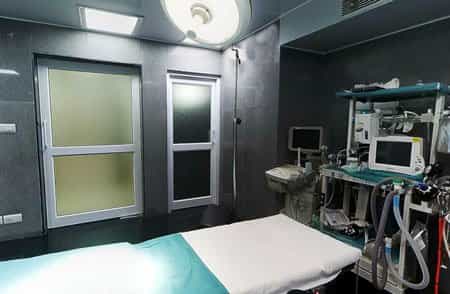
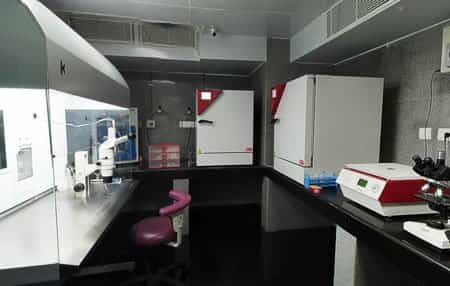
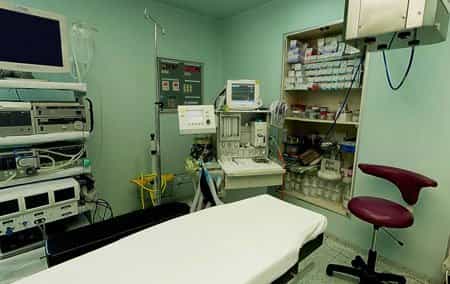
Adiva has many eminent doctors on its panel, who conduct daily OPD’s across specialties like Urology & Andrology, Nephrology, MIS, Orthopedics, Neurosciences and many more. The highlights of this hospital are modular operation theatres, minimal invasive surgeries, ultra sophisticated pathology labs; all functional under the supervision of renowned surgeons, physicians and skilled support staff.
We are a high-tech Adiva Super Speciality Care, delivering a depth of proficiency in the absolute continuum of highly developed medical & surgical intercession. With a wide-ranging mix of inpatient and outpatient services, the hospitals are out-and-out committed to endow the patients with spirited, accessible and inexpensive world-class healthcare services.
Come and enjoy the longevity and hence, the beauty of life!
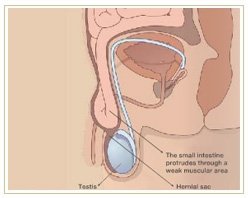
Adiva Super Speciality Care provides a comprehensive range of Urological and Andrological services to diagnose and treat Kidney Stone Diseases, Benign Prostatic hyperplasia (BPH), Cancer Prostate and other Urological Cancers, Stricture Urethra, Incontinence of Urine, Congenital Urological Defects, UTI and Infertility, and Erectile Dysfunction (Impotency). We have a team of highly experienced Urologists and Andrologists with high-end infrastructure and facilities.
The Nephrology Department is committed to provide superior quality and unparalleled medical care.
- Critical care Nephrology
- Haemodialysis
- Peritoneal Dialysis
- Renal Biopsy
- CAPD (Continuous Ambulatory Peritoneal Dialysis)
- Vascular Access Placement
At Adiva Super-Speciality Care, we are committed to offer novel, comfortable and safe alternatives to open and tedious surgical procedures. Our team of surgeons in the MIS (Minimal Invasive Surgery) department can perform these surgeries with bare minimum discomfort making extremely small incisions, thereby facilitating quick healing.
Adiva Super Speciality Care has a modern and advanced Orthopedic Department lead by competent and experienced surgeons.
Orthopedics is the medical specialty pertaining to diagnosis and treatment of problems of the musculoskeletal system, which includes muscles, joints and ligaments.
Orthopedic surgeons at Adiva are qualified to treat a wide variety of conditions such as arthritis, sports injuries, back pain, leg and foot pain, bone lengthening by llizarov procedure and carpal tunnel syndrome etc. Some doctors further specialize in treating children. They are called as pediatric orthopedic surgeons.
The Department of Neurosciences provides an all-inclusive assessment and management for patients with neurological complications. The department deals with the disorders associated with brain, spinal cord, nerve roots, plexus, nerves, myoneural junction and muscles. Neurosciences includes Neurology and Neurosurgery-
Neurology: The department offers all-inclusive assessment and treatment of adults and children with neurological disorders.
Neurosurgery: Neurosurgery comprises of various brain, spine, and functional neurosurgery. We provide with the optimum skills and precision in neurosurgery.
Outpatient Services: Initially, a detailed medical history consultation is carried out. All the necessary preliminary neurological investigations are carried out through the sophisticated imaging lab.
Electrophysiology Lab: We have a well equipped electrophysiology lab for the assessment of spinal cord, peripheral nerves and muscles.
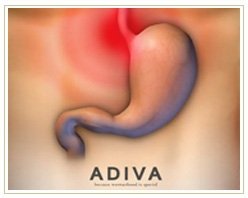
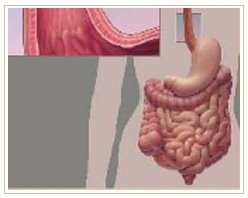
The Department of Gastroenterology at Adiva Super Speciality Care offers wide-range of services catering to the gastrointestinal tract complications such as colitis, heartburn, hepatitis, pancreatitis, ulcers, etc.
We have a well-equipped department which provides a complete range of diagnostic and therapeutic upper and lower GI procedures, along with ERCP (Endoscopic Retrograde Cholangiopancreatography). The Gastroenterology unit is looked after by an intensive care team, dedicated surgical team and is under the care of a gastroenterologist, throughout the day and night.
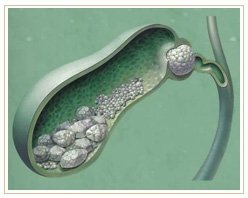
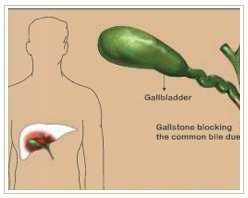
The departmental experts specialize in timely colon cancer detection and endoscopy. Routinely, endoscopy is carried out to picture and scrutinize the internal organs along with the treatment of various clinical conditions such as colon polyps, intestinal bleeding, and bile duct stones.
It is a minimal invasive gynecological surgery. Today, almost all the gynecological surgeries can be done through smaller incisions, without making large, unsightly and traumatic cuts. It is also known as a Keyhole surgery, Pinhole surgery or Laser surgery.
Endocrinology is a branch of biology and medicine dealing with the endocrine system. The endocrine system consists of several glands that secrete hormones directly into the blood. The various metabolic and hormonal diseases are caused due to hormonal imbalances.
Department of Endocrinology in Adiva is headed by Dr. Sahu, who takes care of diagnosis, treatment, monitoring, and patient education for all pediatric and adult hormonal disturbances.
The Department of ENT at Adiva Super-Speciality Care is being looked after by adept ENT surgeons who are expert in various sub specialties of ENT. The department takes care of the ailments related to Ear, Nose and Throat. It also attends to almost all the head and neck injuries.
The Department of Radiology offers state-of-the-art imaging with high quality diagnostic services to our patients and referring physicians. Our facilities are equipped with high end, latest generation devices with cutting-edge technology. This is coupled with highly qualified team of doctors, experienced technicians, nurses and support staff that provides exceptional patient care and services, round the clock. Adiva is equipped with 4 color and 1 portable ultrasound machine equipped with 4D, contrast ultrasound and Elastography capabilities. Conventional radiology has one 600 Siemens x-ray machine with fluoroscopy, 2 portable X-ray units and 2 c-arms for procedures in OT. The department is fully digitized with FUJI CR system and our radiologists have an expertise in specialized procedures.
We perform various ultrasound and fluoroscopic guided interventional procedures like FNAC, aspiration and biopsies. We at Adiva are starting to develop a patient centric approach to radiology that will greatly boost the interaction between radiologist and their patients.
The department also undertakes research studies on clinical imaging procedures and offers short term training courses to the doctors who want to upgrade skills in this domain.
The department is dedicated to improving health through pursuing excellence in image based patient-care, research and training.
Specializing in orthopedic, cardiac, transplant and plastic and cosmetic surgical procedures, India is also a leader in nuclear medicine, neurosurgery and cancer procedures. American medical travelers flock to India for such treatments because of the enormous savings to be had - nearly a tenth of the cost of procedures and surgeries in the U.S. It's no wonder that medical tourism in India is increasing at a rate of about 30% a year.



































Share this listing