


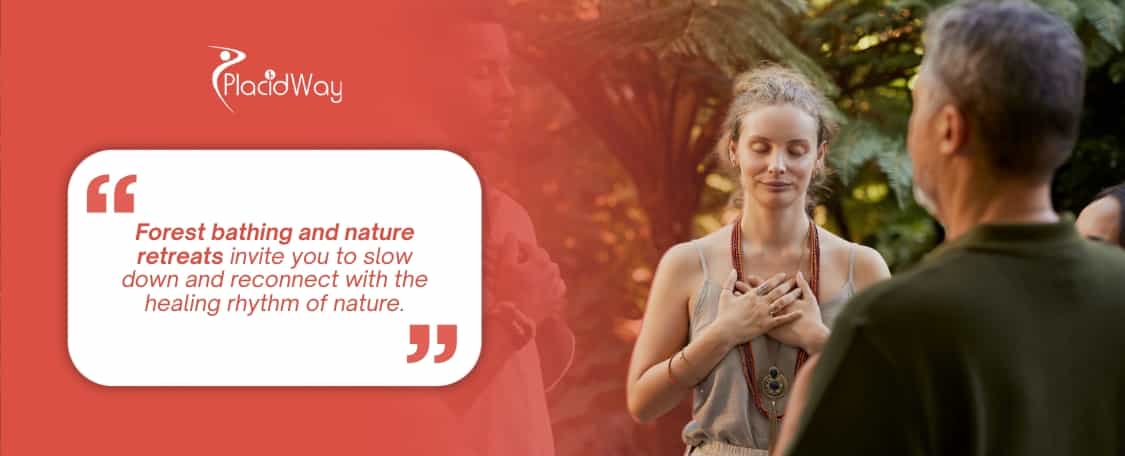
Forest Bathing - Why Is the World Turning to Nature for Medical Recovery?
In our hyper-connected, urbanized world, stress has become a chronic epidemic, leading to inflammation, anxiety, and a compromised immune system. Enter Forest Bathing, or Shinrin-yoku, a practice that transcends a simple walk in the woods. For the discerning medical tourist, Forest Bathing serves as a scientifically validated therapeutic intervention designed to lower cortisol levels, boost immune function, and restore cognitive focus through immersive sensory experiences.
Wellness Tourism has embraced this practice, elevating it from a leisure activity to a clinical therapy. The primary goal is not physical exertion but physiological regulation. By immersing oneself in the atmosphere of the forest—breathing in organic compounds released by trees and engaging the parasympathetic nervous system patients can achieve a state of restorative healing that clinical environments often fail to provide.
Did You Know?
The term Shinrin-yoku was coined in 1982 by Tomohide Akiyama, the Director of the Japanese Forestry Agency. It wasn't just a marketing slogan; it was a public health initiative launched in response to a spike in stress-related illnesses and autoimmune disorders among Japan's urban workforce. Today, it is prescribed as preventative medicine in healthcare systems across Asia and Europe.
What Is the Science and Philosophy Behind Forest Medicine?
To understand why patients travel globally for Wellness Tourism focused on nature, one must look at the "Biophilia Hypothesis." Popularized by biologist E.O. Wilson, this theory suggests humans have an innate, genetic tendency to seek connections with nature. When we are removed from natural environments, our physiological systems enter a state of subtle, chronic stress.
The Biological Mechanism: Phytoncides
The core principle of Forest Bathing efficacy lies in invisible airborne compounds called phytoncides. These are antimicrobial essential oils derived from wood (specifically cedar, pine, and cypress) that trees release to protect themselves from rot and insects.
When humans inhale these compounds during a retreat, scientific studies indicate a significant increase in the activity of Natural Killer (NK) cells—a type of white blood cell that kills tumor-infected and virus-infected cells. This biological interaction transforms the forest into a massive, open-air aromatherapy chamber.
Principles of Practice
- Sensory Immersion: Engaging sight, hearing, taste, smell, and touch to bridge the gap between the internal self and the external world.
- Aimlessness: Unlike hiking, which is destination-oriented, Forest Bathing is about the process. There is no destination, no fitness goal, and no time limit.
- Silence: Quietude is required to allow the brain to switch from the "executive network" (decision making) to the "default mode network" (daydreaming and processing).
Expert Insights
"In the context of Wellness Tourism, the location is the therapist. An ancient forest with high biodiversity offers a different chemical profile than a city park. Patients traveling for Forest Bathing are essentially seeking a 'higher dose' of nature. The complex fractals found in leaves and branches naturally soothe the human eye, reducing cognitive load in a way that modern architecture cannot replicate."
Who Is the Ideal Candidate for Nature-Based Therapy?
Forest Bathing is a low-impact, high-yield therapy suitable for a broad demographic. However, in the realm of medical tourism, it is specifically targeted toward individuals suffering from "civilization diseases" caused by modern lifestyles.
- Corporate Burnout: Executives experiencing adrenal fatigue and high cortisol levels.
- Hypertension Patients: Individuals looking to lower blood pressure naturally without increasing pharmaceutical dosage.
- Autoimmune Warriors: Patients with conditions like lupus or rheumatoid arthritis who need to reduce systemic inflammation.
- Mental Health Recovery: Those recovering from mild depression or anxiety, seeking to quiet the "rumination" loops in the brain.
- Post-Operative Recovery: Patients healing from surgery who require gentle movement and stress reduction to speed up tissue repair.
Contraindications & Precautions
While gentle, nature retreats are not suitable for everyone without medical clearance. Caution is advised for:
- Severe Allergies: Individuals with history of anaphylaxis to insect stings (bees/wasps) or specific tree pollens.
- Acute Psychiatric Crisis: Forest bathing promotes introspection, which can be overwhelming for those in acute psychosis or severe instability without clinical supervision.
- Mobility Restrictions: While some trails are ADA accessible, many authentic nature retreats involve uneven terrain.
Fun Fact
Trees communicate! Through an underground fungal network nicknamed the "Wood Wide Web" (mycelium), trees share nutrients and warning signals about pests. During a retreat, guides often use this fact to teach patients about the importance of community support and social connection in their own healing journeys.
What Should You Expect During a Clinical Forest Bathing Session?
A guided Forest Bathing experience in a Wellness Tourism context is structured and intentional. It is not merely walking; it is a sequence of invitations designed to open the senses. Here is the sensory walkthrough of the three typical phases.
The experience begins by physically crossing a threshold into the forest—often marked by a gate or a bridge.
- Digital Detox: All electronic devices are turned off and collected by the guide. This is non-negotiable for therapeutic effect.
- Grounding: The group stands in a circle, performing simple breathing exercises to synchronize with the forest atmosphere.
- Slowing Down: Participants are instructed to walk at a pace that feels "uncomfortably slow," allowing the nervous system to decelerate.
This is the core therapeutic phase, lasting 60 to 90 minutes. The guide offers "invitations"—suggestions for interaction rather than commands.
- Visual Macro/Micro: Shifting focus from the canopy movement to the minute details of moss on a rock, exercising the optical muscles and brain.
- The Sit Spot: Each participant finds a solitary spot to sit in silence for 20 minutes. This is where "soft fascination" occurs, resting the brain's attention centers.
- Tactile Engagement: Touching bark, water, or soil to ground the body electrically and texture-wise.
- Olfactory Deepening: Deep diaphragmatic breathing to maximize phytoncide intake.
The session concludes by bringing the internal calm back into a social setting.
- Foraged Tea: The guide often prepares tea using local plants (like pine needles or spicebush) to physically ingest the forest.
- Sharing Circle: Participants briefly share their experiences (if they wish), validating the emotional release.
- Transition: A structured walk back out of the forest, preparing the mind to re-enter the "real world" while retaining the physiological calm.
What Are the Benefits of Forest Bathing & Nature Retreats?
Immune System Boost
Exposure to phytoncides has been clinically proven to increase the count and activity of Natural Killer (NK) cells, which can last for up to 30 days after a 3-day retreat.
Cardiovascular Health
Significant reduction in systolic and diastolic blood pressure, along with a lowered heart rate, as the body shifts from "fight or flight" to "rest and digest."
Stress Hormone Reduction
Studies show substantial decreases in salivary cortisol and adrenaline levels after just 20 minutes of immersive forest observation.
Improved Sleep Quality
By resetting the circadian rhythm through natural light exposure and reducing anxiety, participants often report deeper, more restorative sleep.
Cognitive Restoration
Based on Attention Restoration Theory (ART), nature repairs mental fatigue, improving focus, creativity, and problem-solving skills upon return to daily life.
Potential Risks
Safety Warning: While generally safe, risks include exposure to environmental hazards like ticks (Lyme disease risk in certain regions), poisonous plants, or extreme weather changes. Emotional release is also a risk; silence can bring suppressed trauma to the surface, which is why traveling with a certified therapy guide is essential.
Where Are the Best Global Destinations for Wellness Tourism in Nature?
Medical tourists choose international destinations for Forest Bathing to access specific biomes that offer unique therapeutic benefits, such as ancient growth forests or high-altitude air.
How Do You Plan a Successful Therapeutic Nature Retreat?
A wellness tourism trip requires logistical precision to ensure the mind is free to relax. Follow this checklist to prepare.
Identify Your Wellness Goals (3 Months Out)
Are you seeking silence and solitude (Finland), or structure and guided therapy (Japan)? Define if you need a "soft" wellness trip (resort-based) or a "hard" reset (rugged cabins).
Verify Guide Credentials (2 Months Out)
Ensure your program is led by a certified Forest Therapy Guide (e.g., ANFT or INFOM certification). This ensures they are trained in First Aid and mental health facilitation.
Medical Consultation (6 Weeks Out)
Check with your doctor regarding allergies, asthma (triggered by cold or pollen), and physical endurance. Get appropriate vaccinations for the destination.
Gear and Preparation (1 Month Out)
Invest in high-quality, broken-in walking shoes and breathable layers. "There is no bad weather, only bad clothing." Prepare a small medical kit with antihistamines.
The Digital Pre-Tox (1 Week Out)
Begin reducing screen time before the trip. Set up auto-responders for work emails so you arrive at the retreat without "phantom vibration syndrome."
The Experience (On Site)
Trust the process. It may feel strange to walk so slowly or sit staring at a tree. Surrender to the pace of the guide and the environment.
Integration (Post-Trip)
Bring a piece of the practice home. Identify a local park or a single tree near your home where you can practice "micro-dosing" nature for 20 minutes a week.
Frequently Asked Questions About Wellness Tourism & Nature Retreats
No. Hiking is destination-oriented and usually involves aerobic exercise to reach a summit or endpoint. Forest Bathing is process-oriented, slow, and sensory. The goal is connection, not exertion. You might cover less than a mile in two hours.
While local parks are beneficial, Wellness Tourism destinations often feature old-growth forests with significantly higher concentrations of phytoncides. Additionally, traveling creates a "pattern break" from your daily stressors, allowing for deeper psychological immersion and recovery.
For therapeutic results, yes. A certified guide manages the pace, ensures safety, and facilitates the "invitations" that help you switch off your analytical brain. Without a guide, most people revert to hiking or worrying about their to-do lists.
Yes, but the approach differs. Children naturally "bathe" in nature through play. Family-oriented wellness retreats often have specific programs for kids that encourage exploration, while adults may engage in more silent, meditative practices.
In some countries like Japan and Germany, Shinrin-yoku or Kur treatments can be prescribed and covered. However, for most international medical tourists, this is an out-of-pocket expense, though some corporate wellness programs may subsidize it.
Rain is viewed as a sensory enhancer. Wet soil and bark release more aromas (petrichor), and the sound of rain is soothing. Guides will proceed with proper rain gear, as the atmospheric changes can actually deepen the therapeutic experience.
Costs vary widely. A single guided session might cost $50-$100. A comprehensive 7-day all-inclusive wellness retreat in Costa Rica or Japan, including accommodation, organic meals, and daily therapy, can range from $2,000 to $6,000.
Absolutely. Many accredited Forest Therapy bases have wheelchair-accessible trails. Since the practice is about sensory engagement rather than distance, mobility issues are rarely a barrier if the facility is chosen correctly.
Physically, you may feel tired as your body relaxes deeply, often releasing held tension. Emotionally, the silence can sometimes bring up suppressed feelings. This is a normal part of the healing process and is managed by the guide.
Research indicates that a sustained Forest Bathing trip (3 days/2 nights) can boost immune function (NK cell activity) for up to 30 days. Regular practice is recommended to maintain reduced cortisol levels.
Reconnect with Your Essence: Plan Your Nature Retreat with PlacidWellness
The path to holistic health doesn't always lead to a hospital; sometimes, it leads to the forest. Whether you are seeking relief from burnout, immune support, or simply a profound reset, Wellness Tourism offers a natural prescription.
At PlacidWay, we understand that finding the right environment is critical for your healing journey. Our PlacidWellness services offer:
- Curated Destinations: Access to the world's most pristine biomes and accredited therapy bases.
- Certified Programs: Connection with retreats led by medically trained Forest Therapy experts.
- Seamless Logistics: Support with travel, accommodation, and medical clearance for a stress-free experience.
Step out of the noise and into the calm. Your health is waiting in the trees.
Get Your Free Wellness Tourism Quote







.png)










Share this listing