


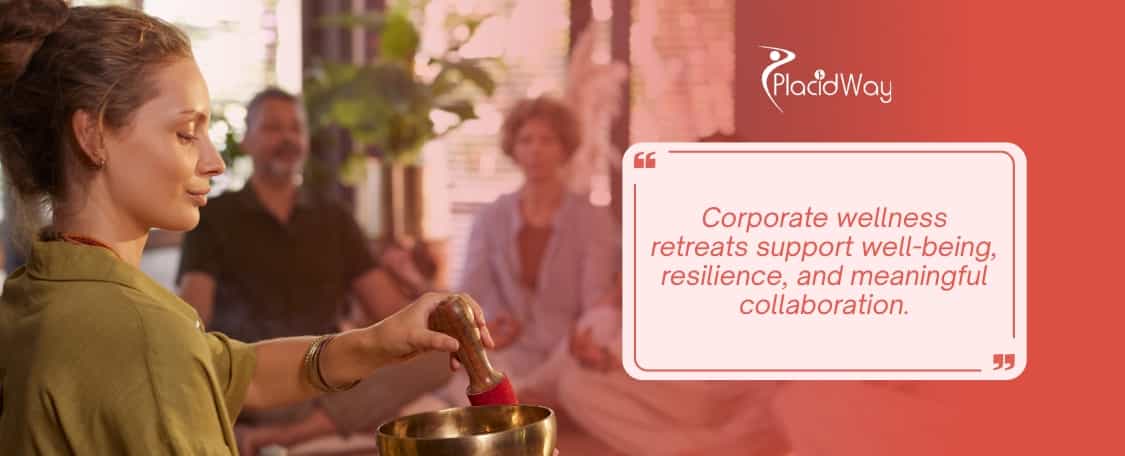
Corporate Wellness Retreats - Elevating Business Performance Through Holistic Health
In the high-stakes environment of modern business, the physical and mental vitality of a workforce is no longer a luxury it is a critical asset. The outdated concept of "team building" involving simple trust falls and buffet dinners is rapidly being replaced by medically integrated Corporate Wellness Retreats. As part of the booming Wellness Tourism sector, these retreats are sophisticated, data-driven interventions designed to reset the biological rhythms of executives and employees alike.
A Corporate Wellness Retreat is a structured, often residential program located in a destination conducive to healing and focus. Unlike a standard vacation, its primary goal is to address the physiological roots of burnout, improve cognitive function through nutrition and stress management, and conduct preventative health screenings. For the medical traveler, this represents a fusion of executive healthcare and restorative travel, providing a return on investment measured in reduced absenteeism, enhanced creativity, and prolonged longevity.
Did You Know?
The World Health Organization (WHO) has officially classified "burnout" as an occupational phenomenon, not a medical condition. It is estimated that burnout and stress-related illness cost the global economy over $1 trillion annually in lost productivity. This staggering statistic has driven a 400% increase in corporate spending on preventative wellness travel over the last decade.
What Is the Philosophy Behind Medical-Grade Corporate Retreats?
The philosophy driving modern Corporate Wellness Retreats is rooted in the concept of "Bio-Individual Organizational Health." This framework moves beyond the idea that a company is merely a legal entity and views it as a living organism composed of individual biological systems. If the cells (employees) are inflamed and stressed, the organism (the company) cannot function optimally.
Core Principles of the Experience
Whether the retreat takes place in the Swiss Alps or the beaches of Thailand, the medical tourism approach relies on three pillars:
- Sympathetic Downregulation: Most corporate environments keep employees in a constant "fight or flight" (sympathetic) state. Retreats are biologically engineered to switch the nervous system into "rest and digest" (parasympathetic) mode through guided breathwork, thermal spas, and digital detoxing.
- Preventative Intelligence: Utilizing the time away to conduct comprehensive executive checkups. This includes blood panels, cardiac stress tests, and metabolic analysis, catching potential health crises before they impact the leadership team.
- Epigenetic Optimization: Teaching teams how lifestyle factors—sleep hygiene, nutrient-dense diets, and movement—can alter gene expression. The goal is to improve cognitive endurance and emotional resilience.
- Environment as Medicine: Leveraging the healing power of nature (Biophilia Effect). Studies confirm that immersion in nature lowers cortisol levels and boosts immune function, making the destination itself a therapeutic tool.
Expert Insights
"The most successful Corporate Wellness Retreats are those that bridge the gap between clinical medicine and hospitality. It is not enough to simply sit by a pool. The modern executive needs to understand their biomarkers. By integrating metabolic testing with relaxation, companies empower their leaders to manage their energy with the same precision they manage their finances."
Who Are the Ideal Candidates for These Retreats?
While any organization can benefit from a retreat, specific corporate profiles and individual health statuses stand to gain the most substantial Return on Investment (ROI) from a medical tourism-focused wellness program.
- High-Stress Industries: Finance, Tech Startups, and Healthcare sectors where rapid decision-making and long hours are the norm.
- Remote-First Companies: Organizations seeking to build interpersonal cohesion while simultaneously addressing the physical isolation and sedentary habits associated with remote work.
- Executive Leadership Teams: C-Suite executives requiring comprehensive annual health screenings (executive physicals) combined with strategic planning sessions.
- Post-Merger Teams: Groups undergoing significant structural change, requiring stress relief and cultural alignment.
Contraindications and Cautions
Despite the benefits, corporate planners must exercise caution. These retreats are not suitable for:
- Acute Crisis Management: A wellness retreat cannot fix a toxic company culture or deep-seated HR violations. These issues must be resolved internally before travel.
- Mandatory Medical Procedures: Participation in medical screenings or invasive therapies (like IV drips or bloodwork) must always be voluntary to respect employee privacy laws.
- Individuals with Unstable Conditions: Employees with severe, unmanaged psychiatric conditions or acute physical injuries may require specialized medical care rather than a group wellness setting.
Fun Fact
The concept of the corporate retreat has roots in the 19th-century "Sanatorium" movement in Europe. Industrialists would send their managers to mountain clinics for weeks of fresh air, hiking, and simple diets to cure "neurasthenia"—the Victorian term for what we now recognize as chronic fatigue and burnout.
What Does a Medical-Integrated Corporate Retreat Look Like?
A high-end Corporate Wellness Retreat is a carefully choreographed sequence of events designed to assess, treat, and sustain. Here is a sensory walkthrough of the three phases of this procedure.
The experience begins weeks before the flight. This phase focuses on data collection to customize the experience.
- Virtual Consultations: Employees complete confidential health questionnaires regarding dietary restrictions, stress levels, and sleep patterns.
- Wearable Tech Integration: Participants may be issued smart rings or bands to track baseline heart rate variability (HRV) and sleep quality.
- Goal Setting: Leadership defines the "Theme" of the retreat (e.g., Metabolic Reset, Mental Clarity, or Physical Endurance).
This phase builds anticipation and ensures the onsite medical team is prepared for specific needs.
Upon arrival at the destination, the rigorous yet restorative schedule begins.
- Executive Physicals: Mornings may be reserved for on-site medical screenings, including body composition analysis, blood pressure monitoring, and nutritional deficiency testing.
- Therapeutic Nutrition: Meals are anti-inflammatory, gut-healing, and low-glycemic, designed to stabilize energy levels without the "afternoon crash." Alcohol is often limited or removed.
- Somatic Release: Group sessions involving yoga, breathwork, or guided meditation to physically release stored tension.
- Educational Workshops: Doctors and nutritionists lead seminars on biohacking, sleep hygiene, and ergonomics tailored for desk workers.
- Nature Immersion: Scheduled hikes, ocean swimming, or "forest bathing" to reset circadian rhythms.
The true ROI is determined by what happens after the team returns to the office.
- Actionable Health Plans: Each participant receives a personalized report based on their screenings, with dietary and lifestyle recommendations.
- Office Adjustments: Implementation of learnings, such as changing cafeteria options, installing standing desks, or mandating "no-meeting" zones.
- Follow-Up Coaching: Quarterly check-ins with wellness coaches to track progress on health goals set during the retreat.
This phase ensures the retreat is not just a memory, but a pivot point for company culture.
What Are the Benefits of Corporate Wellness Retreats?
Reduced Healthcare Costs
By identifying risk factors (high cholesterol, pre-diabetes) early through executive screenings, companies can prevent costly chronic disease claims later.
Enhanced Cognitive Performance
Nutritional interventions and sleep coaching lead to better focus, problem-solving abilities, and creativity among staff.
Talent Retention
Investing in high-end wellness travel signals to employees that they are valued, significantly reducing turnover in competitive industries.
Team Cohesion
Shared vulnerability during wellness activities creates deeper bonds than superficial social events, leading to better collaboration.
Stress Resilience
Employees learn practical tools (breathing techniques, ergonomic stretches) to self-regulate stress when they return to high-pressure environments.
Potential Risks & Considerations
Strategic Warning: The biggest risk is the "Re-entry Shock." If a team returns from a serene retreat to the exact same chaotic work environment without structural changes, morale can drop lower than before. Additionally, forcing mandatory participation in vulnerable activities (like weight checks or group therapy) can lead to HR complications and feelings of alienation.
Which Global Destinations Lead in Corporate Wellness?
Companies are increasingly looking abroad for Wellness Tourism to access specialized treatments, lower costs for luxury facilities, and the psychological benefit of distance from the office. Here are the top hubs:
How Do You Plan a Successful Medical Wellness Retreat?
Planning a retreat that involves health interventions requires more than a travel agent; it requires a strategic workflow. Use this checklist to guide your organization.
Define the "Health KPI" (6 Months Out)
Determine what you want to measure. Is it stress reduction (cortisol levels)? Physical fitness (cardiovascular health)? Or general engagement scores? The destination must match this goal.
Survey the Team (5 Months Out)
Conduct an anonymous survey to gauge comfort levels with travel, shared activities, and medical screenings. Ensure the chosen program is inclusive of all physical ability levels.
Vet the Medical Credentials (4 Months Out)
If the retreat includes checkups or therapies, verify the facility's accreditation (e.g., JCI, ISO). PlacidWay can assist in verifying the licensure of medical staff at the destination.
Logistics & Legal Compliance (3 Months Out)
Check visa requirements and corporate insurance policies for international travel. Establish protocols for data privacy regarding any health information collected.
Pre-Trip "Teasers" (1 Month Out)
Begin the wellness journey before departure. Send out packing lists, hydration guides, and introductory videos from the retreat leaders to build excitement.
The "Digital Handshake" (During Retreat)
Agree on communication protocols. Are you going fully offline? Or checking emails only between 9-10 AM? Clear boundaries are essential for mental rest.
Post-Trip ROI Analysis (1 Month Post-Return)
Re-measure the KPIs defined in step 1. Review employee feedback and determine what lifestyle changes have stuck, adjusting office policies accordingly.
Frequently Asked Questions About Corporate Wellness Tourism
Often, yes, but it depends on the jurisdiction and the itinerary. If the primary purpose of the trip is business (strategic planning, workshops) and the wellness activities are ancillary, or if the medical component is part of an employee health benefit, significant portions may be deductible. Consult a corporate tax advisor for specifics.
To achieve a physiological reset, a minimum of 4 to 7 days is recommended. Short 2-day trips are often viewed as "perks" rather than therapeutic interventions. It takes approximately 72 hours for cortisol levels to drop significantly in a new environment.
Yes, provided the facility is medically vetted. One advantage of Wellness Tourism is access to clinical staff. Pre-retreat medical questionnaires are essential to alert the onsite team to any allergies, mobility issues, or medical conditions.
Surprisingly, international options can be more cost-effective. A luxury wellness resort in Thailand or Mexico, including treatments and meals, often costs 30-50% less per head than comparable facilities in the US or Western Europe, even when factoring in airfare for smaller executive teams.
Absolutely. PlacidWay works with facilities that offer modular packages. You can choose to include comprehensive cardiac panels for senior executives while offering general nutritional counseling and ergonomic assessments for the wider team.
Wellness should never be coerced. Best practice is to make the "medical" components (screenings, biometrics) optional, while keeping the workshops and team sessions mandatory. Often, seeing colleagues participate encourages others to join in.
Medical results should remain strictly between the individual employee and the medical provider. The employer should only receive aggregate, anonymized data (e.g., "40% of the team has high blood pressure") to guide future wellness initiatives, never individual diagnoses.
Studies consistently show a positive correlation. Research indicates that for every $1 spent on comprehensive wellness programs, companies save approximately $3.27 in reduced healthcare costs and $2.73 in absenteeism costs, alongside marked improvements in focus and morale.
This is the scientific premise that humans have an innate biological need to connect with nature. Retreats located in rich natural environments (forests, oceans) automatically trigger the parasympathetic nervous system, lowering blood pressure and enhancing mental recovery faster than urban settings.
Yes, they are particularly effective for distributed teams. By combining face-to-face social interaction with physical activity, retreats build the "social capital" and trust that is often difficult to generate through video calls alone.
Invest in Your Company's Vitality with PlacidWellness
A healthy business starts with healthy leadership and an energized workforce. Don't let burnout erode your bottom line. Organizing a medical-grade wellness retreat abroad can be complex, but it doesn't have to be stressful.
PlacidWay is your strategic partner in Wellness Tourism. We provide:
- Tailored Corporate Packages: From executive checkups in Switzerland to team detoxes in Thailand.
- Transparent Pricing: Clear, upfront costs for groups of any size.
- Vetted Medical Facilities: Ensuring safety, privacy, and clinical excellence for your team.
Transform your company culture from the inside out.
Request A Free Quote





.png)









Share this listing