


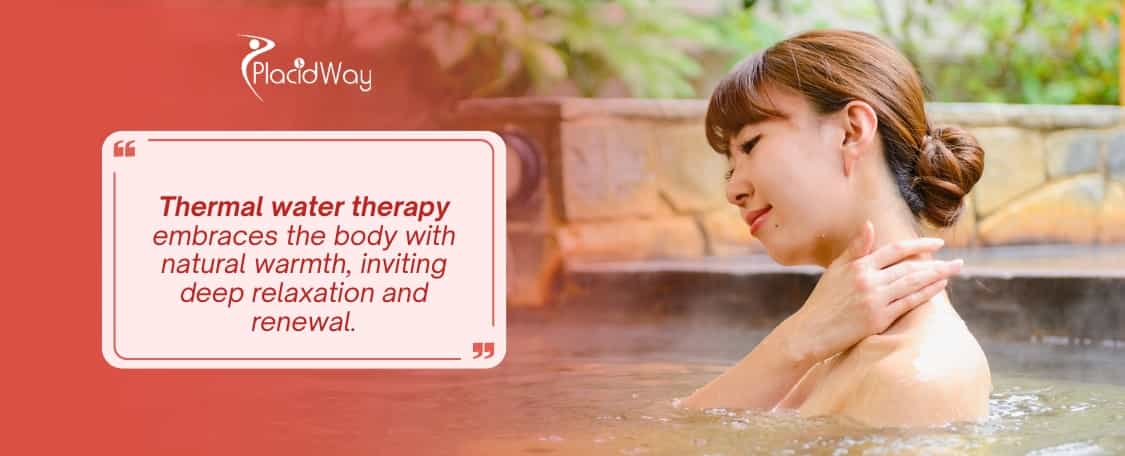
Thermal Water Therapy - Experience the Earth's Ancient Mineral Medicine
Imagine immersing yourself in warm, buoyant waters sourced from deep within the earth's crust, where the heat relaxes your muscles and the rich mineral content actively heals your body from the outside in. This is Thermal Water Therapy, scientifically known as Balneotherapy. As one of the oldest forms of medicine known to humanity, it is experiencing a renaissance through modern Wellness Tourism. For the discerning international patient, this is not merely a spa vacation; it is a calculated medical intervention designed to treat chronic pain, dermatological conditions, and systemic stress.
The primary goal of Thermal Water Therapy is to utilize the chemical, thermal, and mechanical properties of mineral-rich water to restore physiological balance. Unlike a standard hot tub, true thermal waters are naturally heated by geothermal activity and laden with dissolved solids like sulfur, magnesium, silica, and radium. Today, Wellness Tourism has transformed these ancient springs into sophisticated medical centers, allowing patients to travel specifically to destinations where the water's unique chemical composition aligns with their specific health needs.
Did You Know?
The Romans were the first great architects of Wellness Tourism. They built massive bath complexes (Thermae) across their empire, from Bath in England to Budapest in Hungary. Roman soldiers were known to travel hundreds of miles to recuperate in specific springs known for healing battle wounds. They understood intuitively what modern science now confirms: that different waters cure different ailments.
How Does Balneotherapy Actually Influence Human Biology?
To make an informed decision about traveling for this therapy, it is essential to move beyond the relaxation aspect and understand the medical philosophy. Thermal Water Therapy operates on a triad of biological principles that distinguish it from standard hydrotherapy.
The Triad of Thermal Healing
- Chemical Factor (Transdermal Absorption): This is the defining feature of thermal therapy. As you soak, the warm water opens the pores, allowing minerals like sulfur, calcium, bicarbonate, and lithium to be absorbed through the skin (osmosis). These minerals enter the bloodstream and affect the immune system and autonomic nervous system.
- Thermal Factor (Hyperthermia): The natural heat of the water (typically between 34°C and 40°C) dilates blood vessels, improving circulation and oxygen delivery to damaged tissues. It also raises the body's pain threshold and sedates sensory nerve endings.
- Mechanical Factor (Buoyancy & Pressure): The water's hydrostatic pressure reduces swelling (edema) by forcing fluid out of the tissue and into the lymphatic system. Simultaneously, buoyancy reduces body weight by 90%, allowing patients with severe arthritis or injuries to move freely without gravitational stress.
In the context of Wellness Tourism, these facilities function as "sanatoriums" rather than recreational pools. The philosophy focuses on a "Cure Cycle"—a repeated, disciplined exposure to the waters over a period of weeks to induce a lasting biological change.
Expert Insights
"Not all water is created equal. When planning a medical trip, patients must match the mineral composition to their condition. Sulfur-rich waters are the gold standard for joint pain and arthritis due to their anti-inflammatory properties. Conversely, bicarbonate and magnesium-rich waters are often sought for dermatological issues like psoriasis or eczema. The success of the therapy relies entirely on the geochemistry of the chosen destination."
Who Should Consider Traveling for Thermal Treatments?
Thermal Water Therapy is a potent intervention. It is ideally suited for individuals suffering from chronic, non-acute conditions who wish to reduce their reliance on painkillers or steroids. The ideal candidate is someone willing to dedicate time—usually 14 to 21 days—to a slow, progressive healing process.
Primary Indications
- Musculoskeletal Disorders: Rheumatoid arthritis, osteoarthritis, fibromyalgia, ankylosing spondylitis, and chronic lower back pain.
- Dermatological Conditions: Psoriasis (especially when combined with UV therapy), eczema, and acne.
- Respiratory Issues: Chronic bronchitis and asthma (often treated via inhalation of thermal steam).
- Rehabilitation: Post-orthopedic surgery recovery or sports injury healing.
- Circulatory Issues: Mild hypertension and poor peripheral circulation.
Important Contraindications
Professional consultation is mandatory before booking a trip, as the heat and mineral intensity can be dangerous for certain profiles. Avoid this therapy if you have:
- Uncontrolled high blood pressure or severe heart failure.
- Open wounds, ulcers, or active skin infections.
- Acute inflammation or fever (thermal water aggravates acute flare-ups).
- Epilepsy (risk of drowning during a seizure).
- Pregnancy (hyperthermia can be risky for the fetus, though some cool immersion is permitted).
Fun Fact
In many historic European thermal towns, doctors prescribe water drinking cures! Patients walk around large colonnades carrying special porcelain cups with built-in spouts, sipping specific mineral waters at timed intervals. This internal consumption is believed to regulate digestion and metabolism, complementing the external soaking.
What Does a Day in a Medical Thermal Center Look Like?
A Wellness Tourism package for thermal therapy is structured and disciplined. It is distinct from a casual spa day. A typical treatment plan spans 1 to 3 weeks. Here is a sensory walkthrough of the procedure phases.
Upon arrival, you undergo a comprehensive medical check-up.
- Vitals Check: Blood pressure and heart rate are strictly monitored, as hot water places load on the cardiovascular system.
- Mineral Matching: The balneologist assigns specific pools based on mineral content (e.g., Radon pools for nerve pain, Sulfur pools for joints).
- Schedule Creation: You receive a precise timetable dictating immersion duration (usually 15-20 minutes) to prevent "thermal fatigue."
This is the active treatment phase, often performed in the morning when the body is reactive.
- The Soak: You enter the thermal pool slowly. The water may smell of minerals (like sulfur). You remain static or perform gentle hydro-gymnastics.
- Pelotherapy (Mud Packing): Often combined with soaking, hot mineral mud is applied to specific joints to intensify the thermal effect and mineral absorption.
- Contrast Kneipp: Walking through alternating channels of cold and hot water to stimulate circulation and strengthen veins.
- Weightless Traction: In some cases, patients are suspended in the deep water to stretch the spine using weights (underwater traction).
The most overlooked yet critical phase. After exiting the water, you are wrapped in dry, warm linens (the "dry pack").
- Obligatory Rest: You must lie down for 30-60 minutes in a silent relaxation room. This allows the body to re-regulate its temperature and process the mineral uptake.
- Rehydration: Drinking specific mineral waters or herbal teas to replace fluids lost through sweating.
- Integration: The body often continues to sweat slightly; this "secondary sweating" is considered vital for detoxification.
What Are the Benefits of Thermal Water Therapy?
Key Benefits
Sustained Pain Relief
The combination of heat and minerals blocks pain receptors (nociceptors). Patients with arthritis often report reduced pain levels that persist for months after a 2-week course.
Improved Joint Mobility
Collagen tissues become more flexible in warm water. This allows for greater range of motion and helps break down adhesions in frozen shoulders or stiff knees.
Dermatological Healing
Sulfur and silica waters have keratolytic effects, meaning they help peel the outer layer of skin, reducing plaques in psoriasis and improving skin texture and elasticity.
Stress Reduction (Cortisol Lowering)
Immersion therapy has been shown to lower cortisol levels and increase serotonin production, addressing the physical manifestations of burnout and anxiety.
Enhanced Circulation
Hydrostatic pressure assists venous return, helping blood travel from the legs back to the heart, which can reduce swelling in the ankles and lower extremities.
Potential Risks & Considerations
Safety Warning: The most common risk is "Balneodermatitis" (a rash from heat/minerals) or "Thermal Reaction," where a patient feels fatigue, irritability, or increased pain after 3-4 days of treatment. This is usually temporary. More serious risks include fainting (syncope) from lowered blood pressure upon standing, dehydration, and aggravation of existing heart conditions.
Which Global Destinations are Leading in Thermal Wellness Tourism?
Medical tourists travel for thermal therapy to access specific mineral compositions not available in their home countries, and to benefit from centuries-old therapeutic traditions. Here are the top destinations:
How Do You Plan a Successful Thermal Therapy Trip?
To extract the medical benefits of thermal water, you must plan beyond a simple hotel booking. Follow this checklist to organize your wellness journey.
Identify Your Water Type (3 Months Out)
Research the mineral content. Do you need Sulfur for joints? Salt (Brine) for gynecology or respiration? Silica for skin? PlacidWay can assist in matching your condition to the correct geographical location.
Consult Your Cardiologist (2 Months Out)
If you are over 60 or have any history of heart issues, get clearance. Thermal baths act like mild exercise for the heart, and you must be cleared for "thermal stress."
Check Seasonal Timing (2 Months Out)
Thermal water is hot. Visiting Turkey or Italy in August might be overwhelming. The best seasons for balneotherapy are typically Spring and Autumn when the air is cooler, making the hot baths more comfortable.
Pack Appropriate Gear (1 Week Out)
Bring dark-colored swimwear (minerals like sulfur can stain light fabrics orange or yellow), non-slip flip-flops, and a thick bathrobe. If visiting Japan, research tattoo policies, as some traditional Onsens restrict entry.
Hydration Strategy (During Travel)
Start increasing your water intake on the flight over. You will be sweating significantly during treatments, and starting dehydrated can lead to headaches and dizziness on day one.
Post-Therapy Rest (After Trip)
The "bath reaction" can sometimes occur after you return home. Do not plan strenuous work or athletic activities for 3-5 days after your trip to allow the benefits to settle.
Frequently Asked Questions About Thermal Water Therapy
A regular hot tub uses heated tap water with added chlorine. Thermal water is naturally heated by the earth and contains dissolved minerals (sulfur, magnesium, calcium) at high concentrations that are absorbed through the skin. The therapeutic value lies in the mineral composition, not just the temperature.
Generally, 15 to 20 minutes per session is recommended. Staying in longer than 30 minutes can cause overheating, drop in blood pressure, and fatigue. Always follow the specific instructions of the medical director at the facility.
Most medical thermal pools have age restrictions (often 12 or 14+) because children's bodies regulate heat differently, and their skin is more permeable to minerals. However, some centers offer specific lower-temperature pools designed for pediatric respiratory or skin conditions.
It depends on stability. Controlled hypertension is usually fine, but you must enter the water slowly and avoid the hottest pools. Uncontrolled hypertension is a contraindication. Always consult the on-site doctor before entering.
In many European countries (like Germany or France), it is covered. For international medical tourists (e.g., from the US or UK), it is typically an out-of-pocket expense, though some specialized travel insurance policies for medical treatments may offer partial coverage.
For chronic conditions like arthritis, a "cure" package usually consists of 10 to 15 sessions over 2-3 weeks. A single dip is relaxing but will not provide long-term medical benefits.
That smell indicates high sulfur content. Sulfur is one of the most therapeutic minerals for joint cartilage and skin health. The stronger the smell, often the more potent the water is for rheumatological conditions.
Usually, no. Thermal pools are for soaking, not aerobic exercise. The heat makes swimming dangerous due to cardiac strain. Most facilities encourage "floating" or very slow movements.
Around the 3rd or 4th day of treatment, you might feel worse (tiredness, slight pain increase, irritability). This is a known physiological response indicating the body is adjusting to the stimulus. It typically passes within 24 hours.
In most international facilities, a swimsuit is required. However, in some traditional cultures (like Japanese Onsens or some German saunas), nudity is required to prevent bacteria from clothing entering the pure water. Always check the facility's dress code beforehand.
Immerse Yourself in Healing - Plan Your Wellness Tourism Journey with PlacidWellness
Whether you are seeking relief from chronic pain or simply wish to reset your nervous system in the world's most healing waters, the destination matters. Not all thermal springs are alike, and navigating the options abroad requires expertise.
With PlacidWellness, you get more than a booking agent. We provide:
- Mineral Matching: We help you choose the right country and water composition for your specific condition.
- Transparent Packages: All-inclusive quotes covering medical consultation, treatments, and accommodation.
- Safety Assurance: Access to accredited facilities with English-speaking medical staff.
Let nature be your medicine. Discover the restorative power of thermal water today.
Get Your Free Thermal Therapy Quote





.png)









Share this listing