


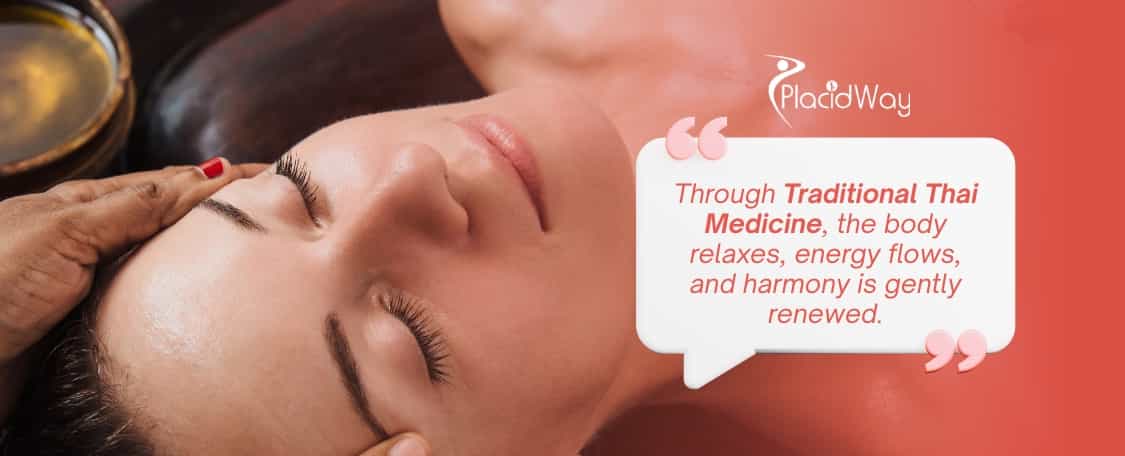
Traditional Thai Medicine - Unlocking Vitality Through the Ancient Science of Balance
For many global travelers, the phrase "Thai Massage" conjures images of beachside relaxation. However, this is merely the surface of a profound, 2,500-year-old medical system known as Traditional Thai Medicine (TTM). For the modern medical tourist seeking relief from chronic pain, burnout, and systemic imbalance, TTM offers a rigorous, clinically recognized pathway to restoration. It is not just a spa treatment; it is a holistic science that harmonizes the physical body with its energetic framework.
The primary goal of Traditional Thai Medicine is to restore the free flow of energy—or Lom—throughout the body by balancing the four elemental forces: Earth, Water, Wind, and Fire. Unlike Western medicine, which often compartmentalizes symptoms, TTM views the patient as a microcosm of the universe. By integrating physical manipulation, herbal pharmacology, and spiritual cultivation, this practice treats the root cause of illness, making it a premier choice for international patients seeking deep physiological resets in the land of its origin.
Did You Know?
The founding father of Traditional Thai Medicine is Jivaka Komarabhacca, a physician who lived over 2,500 years ago and is recorded in Buddhist scriptures as the personal doctor to the Buddha himself. To this day, practitioners in Thailand recite the "Wai Kru" ceremony—a prayer of gratitude to Dr. Jivaka—before commencing treatment, highlighting the sacred spiritual lineage that underpins the physical therapy.
How Does the Philosophy of Elements and Energy Lines Work?
To make an informed decision about traveling for TTM, one must grasp its unique biological theory. The system is a blend of Ayurveda, Traditional Chinese Medicine, and indigenous Siamese practices, but it stands apart in its specific focus on the "Sen" lines and Elemental Theory.
The Sen Sib (Ten Energy Lines)
While Chinese medicine focuses on meridians and acupuncture points, Thai medicine focuses on the Sen Sib—ten invisible energy pathways that run through the body. It is believed that life energy (Prana) flows through these channels. Blockages in these lines lead to physical discomfort and disease. The famous stretching and deep pressure techniques associated with Thai medicine are specifically designed to force energy through these blockages, acting like a hydraulic pump for the nervous system.
The Four Elements (Tard Jao Reun)
Diagnosis in TTM relies heavily on determining the balance of the four elements within the patient:
- Earth (Din): Represents solid structures like bones, muscles, and organs. An imbalance here manifests as skin diseases or tumors.
- Water (Nam): Represents fluids like blood, lymph, and urine. Imbalances cause blood disorders or eye issues.
- Wind (Lom): Represents movement, including breath and circulation. "Wind" is the most common diagnosis for pain, dizziness, and stiffness.
- Fire (Fai): Represents heat and metabolism. Imbalances lead to fever, inflammation, or digestive issues.
Expert Insights
"International patients often mistake Thai massage for simple muscle kneading. However, a true TTM doctor (Moh Thai) applies pressure to specific anatomical points that may feel distant from the site of pain. For example, pressing a point on the leg to release tension in the lower back. This is 'reflexology' on a systemic scale, utilizing the interconnectedness of the fascia and the Sen lines to treat the body as a single, cohesive unit."
Who Should Consider Traveling for Traditional Thai Medicine?
TTM is particularly renowned for its efficacy in treating musculoskeletal disorders and stress-related conditions. It is an active therapy, requiring patient participation (breathing and relaxation) during the procedure.
The Ideal Candidate Profile
Medical tourists seeking TTM often suffer from:
- Chronic Pain Syndromes: Lower back pain, frozen shoulder, and tension headaches.
- Office Syndrome: Stiffness and repetitive strain injuries caused by sedentary lifestyles.
- Digestive Stagnation: Bloating, constipation, and slow metabolism (often treated with abdominal massage or 'Chi Nei Tsang').
- Post-Partum Recovery: Thailand is famous for "Yu Fai," a heat-based herbal program to restore the uterus and energy levels after childbirth.
- Emotional Burnout: Anxiety and insomnia resulting from energetic blockages.
Critical Contraindications
While natural, TTM is physically intense. Professional consultation is mandatory if you have:
- Osteoporosis or Brittle Bones: The deep compression techniques can be risky.
- Severe Varicose Veins: Deep pressure on legs must be avoided.
- Recent Surgery: Especially joint replacements or abdominal surgeries (within 6 months).
- Pregnancy: While there are specific prenatal Thai massages, general TTM involves positions and pressure points that are contraindicated, especially in the first trimester.
- Acute Infection or Fever: Massage increases circulation, which can spread infection or raise body temperature further.
Fun Fact
In Northern Thailand (Lanna style), there is a unique therapy called "Tok Sen." Practitioners use a wooden mallet and a wedge made from a tamarind tree that has been struck by lightning. They rhythmically tap along the Sen lines. The vibration is believed to penetrate deeper into the muscle and bone than human hands can, clearing blockages with mechanical resonance.
What Should You Expect During a TTM Program?
Visiting a specialized TTM clinic or hospital is a structured medical experience. Unlike a beach massage, a therapeutic session follows a strict clinical protocol consisting of three phases.
The session begins with an interview by a Thai Traditional Doctor. They will check your pulse, examine your tongue, and palpate your abdomen.
- Elemental Calculation: Based on your birth date and month, they determine your dominant element (Earth, Water, Wind, or Fire).
- Current Imbalance Check: The doctor identifies which element is currently disturbed (e.g., "Wind" trapped in the shoulder).
- Contraindication Screening: Ensuring blood pressure and heart rate are stable before physical exertion.
You will then change into loose, cotton pajamas provided by the clinic to allow for full range of motion.
The treatment takes place on a firm mat on the floor, not a table. This phase is dynamic and often lasts 90 to 120 minutes.
- Sen Line Manipulation: The practitioner uses thumbs, palms, elbows, knees, and feet to apply rhythmic pressure along the energy lines.
- Assisted Yoga (Rusie Dutton): You will be gently moved into yoga-like stretches to open joints and elongate muscles.
- Luk Pra Kob (Herbal Compress): A steaming bundle of therapeutic herbs (lemongrass, turmeric, plai, camphor) is pressed onto the body. The heat dilates capillaries while the herbs absorb into the skin to reduce inflammation.
- Herbal Steam: In some programs, you may sit in a steam room infused with Thai herbs to open the respiratory system.
TTM is not just external. The final phase involves balancing the internal elements through ingestion.
- Herbal Prescription: You will be given specific herbal teas or capsules. For example, 'Ya Hom' for dizziness or 'Fa Thalai Chon' (Andrographis) for immunity.
- Dietary Advice: The doctor will recommend foods to balance your element. A "Fire" element person might be told to avoid spicy food and eat cooling melons, while a "Wind" person might need ginger tea.
- Self-Care Stretches: You will likely be taught 1 or 2 specific stretches to perform daily to prevent the pain from returning.
What Are the Benefits and Risks?
Deep Muscular Release
The unique combination of acupressure and stretching releases deep-seated tension in the fascia that standard massage often misses, providing relief for chronic back pain and stiffness.
Improved Circulation & Lymph Drainage
The mechanical pumping action of the massage, combined with heat therapy, drastically improves blood flow and lymph movement, reducing swelling (edema) and accelerating toxin removal.
Enhanced Flexibility
Often called "lazy man's yoga," the assisted stretching increases range of motion in the hips, shoulders, and spine without the patient exerting effort.
Stress Reduction & Mental Clarity
By lowering cortisol levels and stimulating the parasympathetic nervous system, TTM induces a meditative state, alleviating anxiety and tension headaches.
Digestive Health
Techniques focused on the abdomen (Chi Nei Tsang) can relieve constipation and bloating by physically stimulating the peristaltic action of the intestines.
Potential Risks & Considerations
Safety Warning: While beneficial, TTM can be intense. Post-treatment soreness (known locally as 'Rabom') is common and can last 24-48 hours. There is also a risk of injury if the practitioner uses excessive force on the spine or if stretches are forced beyond the patient's limit. Always communicate your pain threshold clearly.
Where is the Best Place for Authentic Thai Medicine?
While Thai massage is available globally, true Traditional Thai Medicine involves complex herbal pharmacology and diagnosis that is best experienced in its country of origin. Thailand remains the undisputed global hub, with distinct regional specializations.
How to Plan Your Thai Medical Wellness Trip: A Checklist
Traveling for TTM requires preparation to ensure you receive authentic medical care rather than recreational services.
Verify Clinic Certification (2 Months Out)
Look for the "Thailand Trust Mark" or certification from the Thai Ministry of Public Health. Ensure the facility is a registered clinic, not just a massage parlor. PlacidWay can assist in verifying these credentials.
Identify Your Style Preference (1 Month Out)
Do you prefer deep, targeted pressure (Bangkok style) or gentler stretching (Chiang Mai style)? Researching this beforehand ensures your treatment aligns with your pain tolerance.
Medical History Compilation (3 Weeks Out)
If you have spinal issues (herniated discs) or metal implants, bring your X-rays or MRI reports. TTM doctors need to know exactly where not to apply pressure.
Pack Appropriate Clothing (1 Week Out)
While clinics provide pajamas, bring loose, breathable linen or cotton clothing for your trip. TTM often involves herbal balms that can stain, so avoid expensive white fabrics.
Post-Treatment Schedule (During Trip)
Do not plan strenuous activities (like hiking or gym workouts) for at least 24 hours after a session. Your body needs energy to repair and integrate the structural changes.
Frequently Asked Questions About Traditional Thai Medicine
It can be intense, but it should not be excruciating. There is a concept of "good pain" where you feel the release of tension. However, if you feel sharp, shooting pain, you must inform the practitioner immediately to adjust the pressure. Thai massage is not a "no pain, no gain" endurance test; it is about finding the threshold of release.
No. Unlike Western oil massages, Traditional Thai Massage is performed fully clothed. You will be given loose-fitting pajamas (fisherman pants) to wear. This preserves modesty and allows the practitioner to perform complex stretches without friction on the skin.
Swedish massage focuses on relaxing muscles using long strokes (effleurage) and oils. Thai Medicine is an energy-work system. It uses compression, acupressure, and passive yoga stretching to correct energy flow and structural alignment. Thai massage is generally more active and invigorating than the sedative Swedish style.
A therapeutic session is rarely shorter than 90 minutes. It takes time to open the Sen lines starting from the feet and working up to the head. A full comprehensive treatment, including herbal compresses, can last 2 to 3 hours.
Generally, yes, as the ingredients are natural (turmeric, lemongrass, kaffir lime). However, the heat can be intense. If you have extremely sensitive skin or allergies to specific plants, ask for a patch test or request a lower temperature for the compress.
Experienced medical TTM practitioners can provide significant relief by releasing the muscular tension surrounding the spine, which reduces pressure on the disc. However, they should never apply direct pressure on the spine itself. Always seek out a clinic with qualified doctors, not a street-side spa, for spinal conditions.
For chronic conditions, a typical protocol might involve 3 to 5 sessions spaced 2-3 days apart. For general wellness and maintenance, once a week or once every two weeks is standard. Daily intense massage is usually not recommended as the muscles need recovery time.
In a casual spa setting, tipping is common. However, in a formal medical clinic or hospital setting where you are seeing a doctor and paying medical fees, tipping is less expected but still appreciated for the therapist performing the physical work.
Yes, there is a specific branch of TTM for children. It is much gentler and focuses on digestive health and calming the nervous system. However, deep tissue work and complex stretches are reserved for adults whose skeletal structure is fully formed.
The cost difference is substantial. A high-quality, 2-hour therapeutic session in a certified Thai clinic may cost between $25 and $60 USD. A comparable medical-grade session in the US or Europe could range from $120 to $200 USD. This affordability allows patients to undergo a full multi-day treatment course for the price of a single session at home.
Restore Harmony: Begin Your Thai Wellness Journey
Traditional Thai Medicine offers more than relaxation; it offers a scientifically grounded path to structural alignment and energetic balance. Navigating the thousands of options in Thailand to find a certified, medical-grade facility can be challenging. PlacidWay is here to guide you to the authentic source.
Our wellness travel services include:
- Certified Clinic Verification: We connect you only with facilities accredited by the Thai Ministry of Public Health.
- Tailored Programs: Find centers specializing in your needs, from chronic back pain to post-partum recovery.
- Transparent Costs: Access clear pricing for multi-day treatment packages and accommodation.
- Travel Logistics: Assistance with airport transfers, accommodation booking, and local guidance.
Experience the healing power of the East with the safety standards you expect.
Get Your Free Thai Wellness Quote








.png)









Share this listing