


Patients seeking facial rejuvenation often express a primary fear before undergoing surgery: looking artificial or unrecognizable. The primary goal of a natural SMAS facelift in Thailand is to restore a youthful aesthetic without leaving telltale signs of surgical intervention. Advanced surgical techniques now prioritize underlying anatomical structures rather than merely stretching the surface tissue.
Outdated methodologies often resulted in an unnatural, wind-swept appearance that betrayed the patient's cosmetic procedures. Modern plastic surgery focuses on deep tissue repositioning to ensure facial expressions remain authentic and dynamic. By understanding the mechanical failures of older techniques, patients can make informed decisions about their facial rejuvenation journey.
Video Chapters & Quick Navigation
Understanding the "Pulled Face" Phenomenon After Facial Cosmetic Surgery
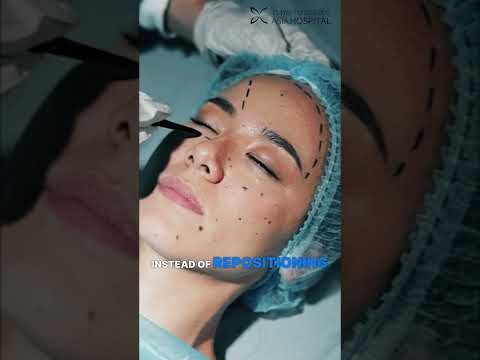
The hallmark of a poorly executed procedure is the dreaded "pulled face" appearance that distorts a patient's natural features. As noted at [00:00], this pulled face happens when a facelift focuses only on tightening skin rather than addressing the structural foundation. This superficial approach leads to a stretched aesthetic that compromises the patient's ability to emote naturally.
When tension is applied exclusively to the dermal layers, the skin is forced to bear the full weight of the lifted facial tissues. The skin is naturally elastic and is not designed to act as a structural anchor for the heavier fat pads and muscles beneath it. Consequently, this creates unnatural tension and drastically distorts standard facial expressions.
Patients who undergo skin-only lifts often report feeling physically tight and socially self-conscious about their results. The corners of the mouth may appear widened, and the eyes can take on a slanted, unnatural shape due to the lateral pull. Correcting these deformities requires complex revision surgeries that could be avoided with proper initial techniques.
The Critical Role of Surgical Planes and Vector Tension in Facial Rejuvenation
Successful facial cosmetic surgery relies heavily on the surgeon's mastery of complex facial anatomy and surgical planes. As highlighted at [00:07], the problem clinically comes from incorrect surgical planes and poor vector tension. A surgical plane refers to the specific anatomical layer where the surgeon dissects and separates tissues to facilitate the lift.
Operating in the wrong surgical plane usually means the surgeon is working too close to the surface, separating the skin from the underlying fat and muscle without addressing the deeper structures. When tissues are pulled in the wrong direction, it counteracts the natural downward progression of aging. Facial aging occurs vertically due to gravity, meaning tissues drop downward rather than pulling sideways.
Applying a horizontal or lateral vector tension pulls the midface tissues toward the ears, creating a wind-blown appearance. To achieve natural facial rejuvenation in Thailand, elite surgeons employ vertical vector tension to reposition tissues exactly where they originated. This upward elevation restores the heart-shaped volume of youth without flattening the cheeks or widening the mouth.
Why Traditional Skin-Tightening Techniques Fail Long-Term
Traditional facelift methods relied entirely on excising excess skin and pulling the remaining dermal tissue tight over the unchanged deeper structures. As explained at [00:15], instead of repositioning deeper support layers, the skin is merely stretched. This superficial stretching leads directly to visible tightness and unnatural contours that fade quickly.
Because the skin is highly elastic, it will invariably stretch back out under the constant weight of the unsupported underlying tissues. This phenomenon, known as "rebound stretch," causes the results of a skin-only facelift to degrade rapidly, often within a year or two. Patients are left with recurrent sagging combined with widened, highly visible scars around the ears.
The excessive tension placed on the incision lines can also lead to a complication known as "pixie ear deformity," where the earlobe is pulled downward and attaches directly to the jawline. Avoiding these complications requires a fundamental shift away from skin tension. Modern facial cosmetic surgery ensures that the skin simply redrapes over a newly secured foundation.
- Widened Incision Scars: Excessive tension on the skin causes the body to create thick, wide scar tissue to hold the wound closed.
- Pixie Ear Deformity: The downward pull of unsupported cheek tissue drags the earlobe out of its natural, rounded position.
- Loss of Facial Volume: Pulling skin tightly across the facial skeleton flattens the cheeks, removing the youthful fullness of the midface.
- Short-Lived Results: Skin-only lifts suffer from rapid relapse as the dermis stretches under continuous gravitational pull.
How a Proper SMAS Facelift Restores Underlying Facial Structure
The introduction of SMAS manipulation revolutionized the field of facial plastic surgery by addressing the root cause of sagging. As detailed at [00:19], a proper facelift works directly on the SMAS layer, restoring structure rather than pulling the surface. The Superficial Musculoaponeurotic System (SMAS) is a tough, fibrous network of connective tissue that encases the facial muscles.
By elevating and tightening the SMAS layer, the surgeon essentially lifts the entire structural framework of the face as a single unit. This deep support layer lacks the elasticity of the skin, meaning once it is repositioned and sutured, it provides a permanent, stable foundation. The jowls are eliminated, the neck is sharpened, and the cheeks are restored to their youthful elevation.
Once the SMAS is securely anchored, the overlying skin is gently redraped over the new facial contours without any intrinsic tension. Excess skin is then carefully trimmed away, and the incisions are closed delicately. Because the deeper tissues bear 100% of the lifting burden, the resulting scars heal invisibly, and the facial expressions remain completely natural.
| Surgical Component | Skin-Only Facelift (Outdated) | Advanced SMAS Facelift |
|---|---|---|
| Tissue Tension | High tension placed entirely on the skin | Zero tension on skin; tension held by deep fascia |
| Lifting Vector | Horizontal pull causing wind-swept look | Vertical pull restoring natural youthful volume |
| Longevity of Results | Short-term (1 to 3 years) before skin stretches | Long-term (10 to 15+ years) due to structural fix |
| Incision Quality | Often widened, hypertrophic, or highly visible | Virtually invisible, fine-line scars hidden in creases |
Choosing Asia Cosmetic Hospital for an Advanced Facelift in Thailand
Thailand has rapidly emerged as a global epicenter for advanced medical tourism, attracting patients seeking world-class plastic surgery. As mentioned at [00:23], at Asia Cosmetic Hospital, facelifts are meticulously planned using correct anatomical vectors. This dedication to surgical precision ensures that international patients receive care that rivals or exceeds Western standards.
Surgeons at Asia Cosmetic Hospital specialize in deep plane and SMAS facelift methodologies, having performed thousands of successful facial rejuvenations. Their profound understanding of multi-ethnic facial anatomy allows them to customize the lifting vectors to each patient's unique bone structure. This personalized surgical mapping prevents the generalized, cookie-cutter outcomes associated with lesser clinics.
Beyond surgical expertise, traveling for a facelift in Thailand offers the distinct advantage of specialized, comprehensive aftercare. Facilities like Asia Cosmetic Hospital provide dedicated recovery suites where patients receive round-the-clock nursing care during the critical early healing phases. This luxurious, stress-free recovery environment significantly reduces post-operative swelling and ensures optimal aesthetic outcomes.
Key Anatomical Differences: Superficial Skin vs. Deep Support Layers
Understanding the difference between the skin and the deep support layers is crucial for any patient researching facial rejuvenation. The epidermis and dermis are highly pliable tissues meant to protect the body and expand or contract as needed. Subjecting these delicate layers to the structural strain of lifting heavy facial fat pads violates basic anatomical principles.
In contrast, the SMAS layer and the deeper retaining ligaments are incredibly robust, dense connective tissues. These structures naturally hold the facial fat compartments in place during youth before gradually loosening with age. Re-suspending these specific anatomical anchors mimics the natural biological state of a younger face.
When surgeons focus on the superficial skin, they inadvertently thin out the dermal layer over time, leading to a translucent, skeletal appearance. Prioritizing the deep support layers maintains the thickness and vitality of the skin. The result is a complexion that looks refreshed, plump, and healthy rather than stretched and compromised.
Achieving Balanced, Natural Facelift Results That Are Never Overdone
The ultimate hallmark of an exceptional SMAS facelift is an outcome that defies detection by friends, family, and colleagues. As stated at [00:27], proper surgical planning ensures that results look natural, balanced, and never overdone. A successful procedure should elicit comments about looking well-rested rather than inquiries about plastic surgery.
Achieving this balance requires the surgeon to meticulously evaluate the patient's entire face, including the brow, eyes, midface, and neck. Elevating the lower face while ignoring severe volume loss in the midface can create a disjointed, inharmonious appearance. Expert surgeons often combine the SMAS facelift with complementary procedures like structural fat grafting to restore lost volume comprehensively.
A natural facelift also preserves the unique character of the patient's face, smoothing away harsh shadows and jowls without altering their fundamental identity. The goal is not to morph the patient into a different person, but to reveal a vibrant, energetic version of themselves. This conservative yet highly effective approach is what distinguishes premier cosmetic surgeons from the rest of the field.
Long-Term Facial Contour Maintenance After Surgery
While a deep plane or SMAS facelift effectively resets the aging clock by ten to fifteen years, it does not stop the biological aging process entirely. Maintaining those balanced and natural contours requires a commitment to excellent post-surgical skincare and lifestyle habits. Protecting the skin from harmful ultraviolet radiation is paramount to preventing premature collagen degradation.
Patients are heavily advised to adhere to a medical-grade skincare regimen utilizing retinoids, vitamin C serums, and broad-spectrum sunscreens. Periodic non-invasive maintenance, such as subtle neuromodulator injections or laser skin resurfacing, can further protect the surgical investment. These minor touch-ups help preserve the pristine quality of the skin as the years progress.
Ultimately, investing in a high-quality, structurally sound procedure at a facility like Asia Cosmetic Hospital provides the best foundation for graceful aging. Because the underlying facial architecture has been permanently fortified, any subsequent aging occurs on a more youthful structural baseline. Patients enjoy decades of confidence, free from the anxiety of the dreaded pulled face phenomenon.
Ready for Natural Facial Rejuvenation in Thailand?
Discover how the expert surgeons at Asia Cosmetic Hospital can restore your youthful contours without the unnatural pulled look. Request comprehensive details about the advanced SMAS facelift procedure today.
Get Free QuoteView Full Video Transcript
00:00 A pulled face happens when a facelift focuses only on tightening skin.
00:03 This creates unnatural tension and distorts facial expression.
00:07 Clinically, the problem comes from incorrect surgical planes and poor vector tension.
00:11 When tissues are pulled in the wrong direction instead of repositioning deeper support layers,
00:15 the skin is stretched leading to visible tightness and unnatural contours.
00:19 A proper facelift works on the SMAS layer restoring structure rather than pulling the surface.
00:23 At Asia Cosmetic Hospital, facelifts are planned using correct anatomical vectors.
00:27 So results look natural, balanced and never overdone.








.jpg)









Share this listing