
If you want a fuller breast shape without relying only on implants, you may be seeing European clinics describe “stem-cell breast augmentation.” Before you travel, ask exactly what cells are being used, whether the plan is standard fat grafting or a regulated cell-based product, and what the written cost includes. A lower quote is not a substitute for a licensed facility, a surgeon listed on the destination country’s medical register, and a clear plan for complications after you return home.
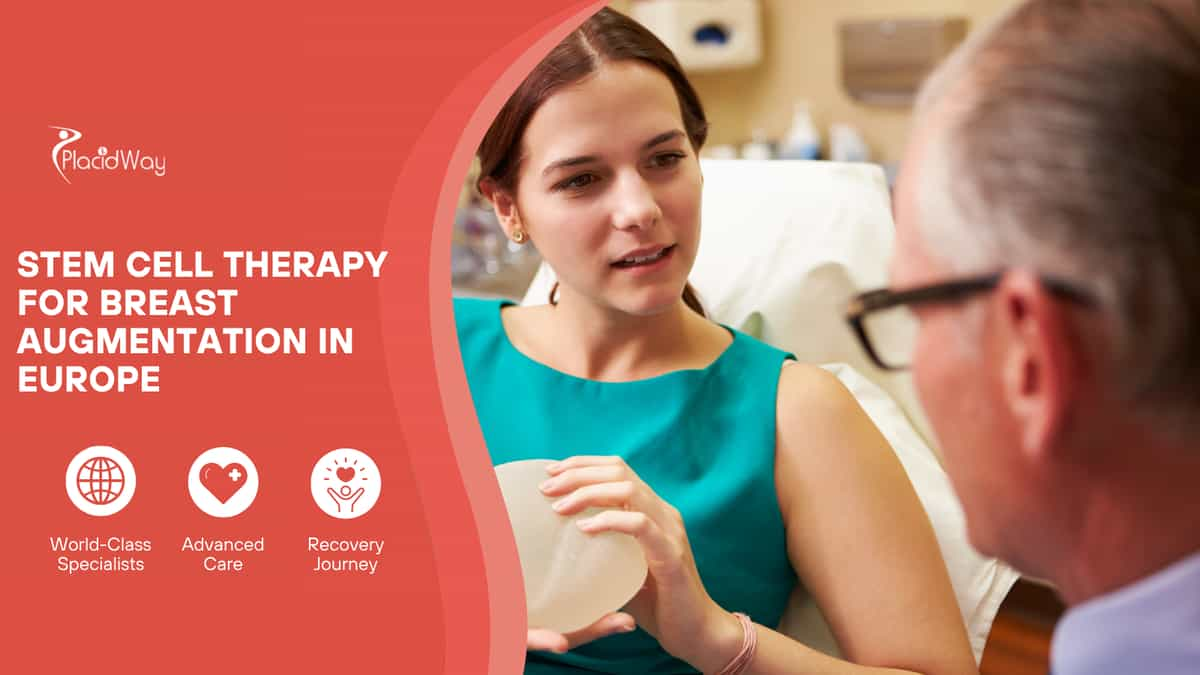
Quick Summary: stem-cell breast augmentation in Europe
- Cost: A reliable Europe-wide USD price range for cell-enhanced breast augmentation is not available. Ask for an itemized written quote; do not compare a procedure-only fee with a package price.
- What it usually means: Many offers refer to autologous fat grafting, where your own fat is removed, processed, and injected. This is not automatically the same as stem-cell therapy.
- Regulatory caution: Isolated, cultured, or substantially manipulated cells may fall under EU advanced-therapy rules. A clinic should explain the product’s regulatory pathway in writing.
- Candidate profile: You may be considered when you are in good general health, have enough donor fat, and accept that fat retention and final volume can vary.
- Recovery: Timing varies by technique and your health. Plan for swelling, bruising, donor-site discomfort, and a surgeon-set follow-up schedule rather than a fixed online timetable.
- Non-negotiable checks: verify the facility licence, the surgeon’s national registration and specialty status, and when cells are processed the relevant tissue/cell or medicines authorisation.
What “stem cell therapy” means for breast augmentation in Europe
In cosmetic breast augmentation, the phrase can be used for very different interventions. The established surgical conversation is usually about autologous fat grafting: a surgeon removes fat by liposuction, prepares it, and places small amounts into the breast. Fat contains naturally occurring cells, including adipose-derived stromal cells, but that fact alone does not mean you are receiving a separately manufactured stem-cell medicine.
A more complex claim may involve stromal vascular fraction, isolated cells, cell enrichment, culture, or a laboratory process intended to change the tissue’s function. These approaches raise different evidence, manufacturing, and regulatory questions. Ask the clinic to use the precise clinical name, not only a marketing label.
Standard fat grafting
Uses your own harvested fat for contour and volume. It can be an implant alternative for selected people, but retained volume is variable and more than one session may be discussed.
Cell-enhanced claim
May add cell isolation, processing, or concentration. You need product-specific evidence, a regulatory explanation, and transparent informed consent before considering it.
Why patients consider breast fat grafting in Europe
People usually look for breast volume restoration, a softer contour change, correction of asymmetry, or an implant-free option. Some also explore a hybrid approach fat grafting with an implant but that is a separate surgical decision. A responsible consultation begins with your anatomy, breast imaging history, donor-fat availability, previous surgery, and goals, not with a promise of a cup size.
- EU residents may seek care in a neighbouring country, where travel is shorter and follow-up may be more realistic.
- Some patients compare private-pay options when local access, surgeon availability, language support, or cost differs.
- People with prior implants may ask about fat grafting as part of a wider reconstructive or revision discussion.
- Patients may value combining body contouring with breast volume transfer, while recognising that this adds donor-site surgery.
- International travellers often want a written plan for imaging, complication care, and continuity after they go home.
Breast augmentation patient demographics and recent procedure context
There is no verified European registry showing age, gender, or country-of-origin data for stem-cell–enhanced breast augmentation. The most recent ISAPS survey does provide broader worldwide breast-augmentation context, so the figures below should not be read as Europe-specific data or as evidence of demand for cell therapy.
Histogram: worldwide breast augmentation by age group, 2024
Source: ISAPS Global Survey of procedures performed in 2024. The values are the reported global age distribution for breast augmentation, not a patient-selection rule.
How European regulation applies to cell-based breast augmentation
Europe is a region, not one licensing jurisdiction. Each destination country has its own health ministry or competent authority, medical register, facility rules, and complaint pathway. EU law adds an important layer: tissues and cells are covered by quality and safety rules, while advanced therapy medicinal products (ATMPs) are medicines based on genes, cells, or tissue engineering.
Whether a proposed cell-based approach is an ATMP depends on the actual processing and intended use. The European Medicines Agency explains that ATMPs require marketing authorisation before being marketed in the EU, subject to specific legal routes and national arrangements. This is why a clinic should be able to answer regulatory questions plainly not dismiss them as paperwork.
| Ask about | What a clear answer includes |
|---|---|
| The intervention | Whether it is fat grafting alone, cell-enriched fat, isolated stromal vascular fraction, or another product. |
| Cell handling | Where cells are processed, how they are handled, and which national authority oversees that activity. |
| Legal status | The applicable authorisation, trial registration if relevant, and what evidence supports the proposed use. |
| Traceability | Records, consent, adverse-event reporting, and how you will receive your medical documentation. |
Who may be a candidate for breast fat grafting in Europe
Suitability is individual. A surgeon may consider your skin and breast anatomy, body-fat distribution, current weight stability, smoking or nicotine use, medical conditions, medications, previous operations, and breast imaging. If you have a breast lump, concerning imaging, active infection, an unresolved health problem, or a cancer history, you may need additional assessment or specialist coordination before any cosmetic plan.
A consultation may focus on
- Modest-volume goals and realistic asymmetry expectations
- Adequate donor-fat areas
- Ability to attend follow-up and imaging
- Understanding that graft retention can vary
Pause and reassess when
- A clinic promises a guaranteed size or permanent retention
- “Stem cells” are not precisely defined
- There is no written complication plan
- Your medical history is not reviewed
Stem-cell breast augmentation costs in Europe: what can be verified
A validated Europe-wide price for cell-enhanced breast augmentation is not available. Costs vary by destination, anaesthesia, theatre time, liposuction areas, laboratory or processing steps, overnight care, follow-up, and whether revision planning is included. A quote for “stem cells” without a named product or process is not a meaningful cost comparison.
| Cost item | Ask the provider to state | Why it matters |
|---|---|---|
| Surgeon, anaesthesia, operating facility | Each fee in USD and the facility licence | Shows whether a headline price excludes core clinical care. |
| Fat harvest and transfer | Donor areas, compression garments, imaging, and consumables | Donor-site work is part of the procedure, not an incidental extra. |
| Cell processing, if proposed | Exact method, regulatory basis, laboratory fee, and evidence | This is the key difference from conventional fat grafting. |
| Travel and aftercare | Nights, interpreter, follow-up, complication cover, and revision policy | These expenses can materially change the total you pay. |
What happens during breast fat grafting and what varies with cell processing
Conventional fat grafting commonly involves fat harvesting, careful preparation, and placement in small deposits through small incisions. This approach aims to support the transferred tissue’s blood supply. Your surgeon should explain the intended volume, where fat will be taken from, scar locations, anaesthesia, breast-imaging implications, and the possibility that a staged approach may be safer than trying to transfer too much volume at once.
- Medical assessment: history, examination, goals, and imaging review where indicated.
- Written consent: planned technique, alternatives, uncertainties, and named complications.
- Procedure day: harvesting and transfer in an appropriately licensed facility.
- Follow-up: wound review, assessment of healing, and a route to help when you are abroad or home.
Safety limits, complications, and warning signs after breast augmentation
Fat grafting can cause bruising, swelling, pain, contour irregularity, fat necrosis, oil cysts, infection, bleeding, fluid collection, and changes that may need assessment on future breast imaging. The published complication rates vary because studies use different techniques, follow-up periods, and definitions. Cell enhancement does not remove the usual surgical risks, and long-term evidence for specific cell-processing methods may be limited.
| If you notice | What to do |
|---|---|
| Rapidly increasing one-sided swelling, severe pain, heavy bleeding, or a new breast colour change | Contact the operating team urgently; use local emergency services if you cannot reach them. |
| Fever, worsening redness, pus-like drainage, or feeling acutely unwell | Seek prompt medical assessment for possible infection. |
| Chest pain, breathlessness, fainting, or sudden leg swelling | Treat as an emergency and call local emergency services. |
Recovery planning for breast augmentation travel in Europe
Your surgeon should set the recovery plan because it depends on the amount of liposuction, transfer technique, anaesthesia, your healing, and any combined procedure. Do not book a return flight based solely on a clinic’s shortest suggested stay. Ask who will examine you before travel and how your records will be shared with a clinician at home if needed.
| Timeframe | Clinical process | What you may feel | Activity | Action |
|---|---|---|---|---|
| Immediately after | Early wound and anaesthesia recovery | Soreness, swelling, tiredness | Protected movement only | Attend all checks; follow discharge instructions. |
| Early healing | Swelling and bruising evolve | Donor-site discomfort may be prominent | Activity limits are surgeon-specific | Confirm safe travel timing with your surgeon. |
| Later follow-up | Transferred-fat retention becomes clearer over time | Shape may continue to settle | Gradual return as cleared | Keep imaging and follow-up appointments. |
How to choose a licensed European clinic for breast augmentation
Start with the destination country’s health regulator not a social-media profile. Ask for the facility’s operating licence number and the issuing authority. If the plan involves cell or tissue processing, ask which competent authority authorises or oversees that work and whether the site is a licensed tissue establishment or is using a regulated medicinal product pathway.
- Current facility licence and legal entity name
- Written emergency transfer arrangement or on-site hospital capability
- A named complication-management protocol and 24/7 contact route
- Itemized quote, inclusions, exclusions, cancellation terms, and revision policy
- Structured follow-up schedule, medical records, and multilingual support if you need it
- National accreditation where applicable; JCI, Temos, or ACHSI may be additional signals, not replacements for local licensing
How to verify a breast augmentation surgeon in Europe
Your operator should be identifiable in the destination country’s official medical register. Confirm the doctor’s active registration, recognised specialty in plastic, reconstructive and aesthetic surgery where applicable, and scope to perform the proposed procedure. Membership in a professional society can be useful, but it does not replace checking the official register and facility licence.
European travel, consent, and aftercare for breast augmentation patients
EU citizens may have rights to access care in another EU country, but reimbursement and prior-authorisation rules are country- and treatment-specific; cosmetic procedures may not be covered. Contact your home-country National Contact Point and insurer before relying on reimbursement. Visitors from outside the EU should confirm visa, travel-insurance exclusions, and the plan for unplanned medical care.
Before you travel, obtain a signed treatment plan in a language you understand, surgeon and facility details, consent forms, implant details if relevant, aftercare instructions, and an itemized invoice. Delay travel or seek local assessment if your operating team advises it. Keep records for future breast screening and let imaging professionals know about prior fat grafting.
Frequently asked questions about stem-cell breast augmentation in Europe
Is stem-cell breast augmentation legal in Europe?
Legality depends on the destination country and the exact product or procedure. Standard fat grafting and a separately processed cell-based product are not automatically regulated in the same way. Ask the provider for the exact method and the applicable national and EU authorisation pathway.
Is fat transfer the same as stem cell therapy for breast augmentation?
No. Fat transfer uses your own fat to add volume, and fat naturally contains cells. A treatment marketed as stem-cell therapy may involve additional isolation, concentration, culture, or processing. You should not treat the terms as interchangeable without a written technical explanation.
How much does stem-cell breast augmentation cost in Europe?
A reliable Europe-wide USD cost is not available for cell-enhanced procedures. Ask for an itemized written quote covering surgery, anaesthesia, cell processing if any, facility care, follow-up, garments, travel, and the policy for complications or revision.
Can breast fat grafting replace implants?
For some people seeking modest volume change, fat grafting may be discussed as an alternative. It cannot produce the same predictable volume as an implant in every body, and transferred fat retention varies. Your surgeon should compare both options against your anatomy and goals.
What credentials should a European breast augmentation surgeon have?
Verify active registration in the destination country’s official medical register and recognised plastic-surgery specialty status where applicable. Also verify the operating facility licence. If cell processing is involved, request the relevant tissue, cell, or medicines authorisation.
Are cell-enriched fat grafts proven to last longer?
Do not assume they do. Evidence and methods vary, and the long-term evidence for a specific processing method may be limited. Ask for peer-reviewed evidence for the exact product or technique and for realistic discussion of uncertainty and possible re-treatment.
Will fat grafting affect mammograms or breast screening?
Fat grafting can cause changes such as fat necrosis or oil cysts that may need evaluation on imaging. Tell your breast-imaging team about prior surgery and keep your operative records. Your surgeon should discuss your imaging history before treatment.
Can I travel home soon after breast fat grafting in Europe?
Only when your surgeon says it is safe. Your stay should account for immediate postoperative checks, your individual risk factors, the journey length, and access to urgent care. Do not make flight plans before receiving personalised postoperative advice.
What are red flags in a stem-cell breast augmentation offer?
Red flags include a guarantee of results, vague descriptions of the cells, no facility or surgeon licence information, pressure to pay quickly, no complication plan, and a refusal to give the regulatory basis or written informed-consent materials.
Can PlacidWay help me compare breast augmentation options in Europe?
PlacidWay can help you request information, compare available providers, understand quoted inclusions, and prepare questions for clinics. This support does not replace an independent medical consultation or your responsibility to verify licensing and credentials.
Compare breast augmentation options in Europe with PlacidWay
You can request information from providers, compare treatment options and itemized costs, and use the questions in this guide to clarify exactly what is being offered.
Disclaimer
Disclaimer: This information is for educational purposes only and does not replace professional medical advice. Always consult a qualified healthcare provider before making medical decisions.
References
- Advanced therapy medicinal products: overview – European Medicines Agency
- Unregulated advanced therapy medicinal products pose serious risks to health – European Medicines Agency
- Tissues and cells – European Commission
- Cross-border healthcare – European Commission
- Autologous Fat Grafting in Breast Augmentation: A Systematic Review – Plastic and Reconstructive Surgery
- Breast fat grafting and cancer: a systematic review of the literature – PubMed


























Share this listing