
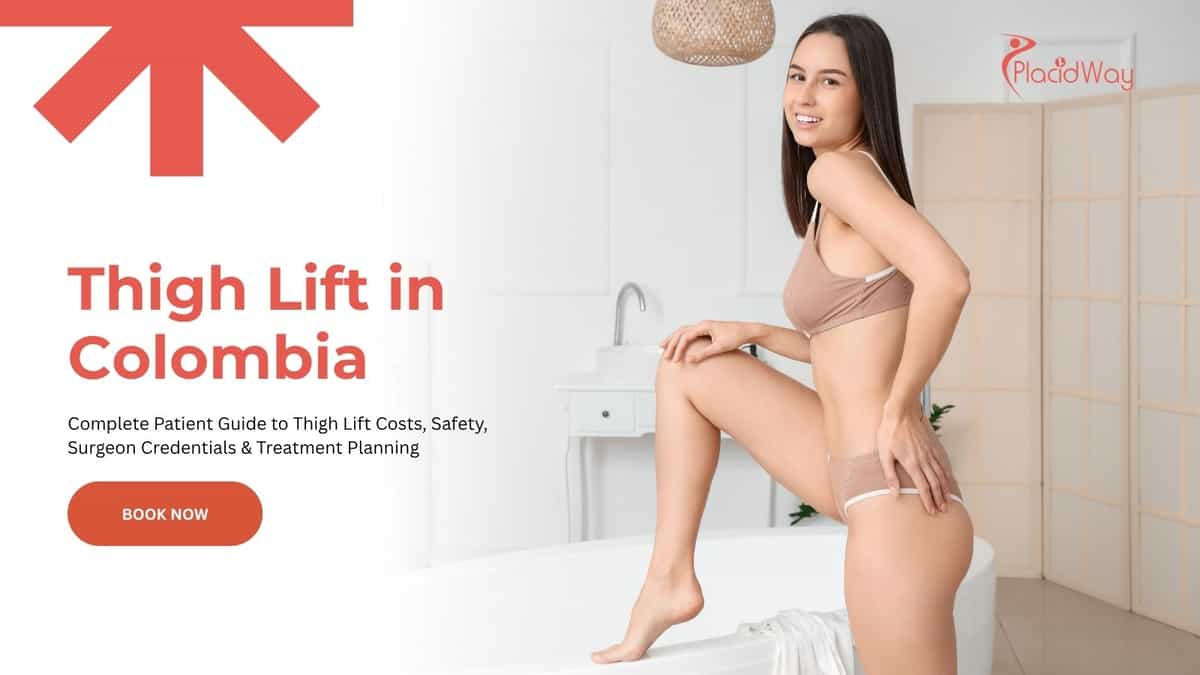
If you are struggling with loose, uncomfortable skin on your upper legs after significant weight loss or aging, traveling to Colombia for a thigh lift can provide high-quality surgical care at a lower cost than in your home country. Before making this important medical decision, you need to understand exactly how to verify a surgeon's credentials with the Colombian Society of Plastic Surgery (SCCP), what realistic treatment costs look like, and how to safely plan your recovery abroad. This guide will help you evaluate your options, understand the risks, and choose a licensed facility for your body contouring procedure.
Quick Answer Summary
- Estimated Cost: Typically ranges from $3,500 to $5,500 USD, depending on the complexity of the tissue removal and clinic location.
- Safety Overview: Generally safe when performed by surgeons registered with the national medical council (RETHUS) in Ministry of Health-licensed facilities.
- Ideal Candidate: Non-smokers who have maintained a stable weight for at least six months and have excess, sagging skin on their inner or outer thighs.
- Recovery Time: Most patients need 2 to 3 weeks in Colombia before flying home, with full activity resuming after 6 to 8 weeks.
- Why Patients Choose Colombia: Access to highly specialized post-bariatric surgeons, advanced surgical techniques, and significant cost savings compared to North America.
- Important Caution: Always verify that your surgeon holds active board certification from the Sociedad Colombiana de Cirugía Plástica (SCCP) to avoid unlicensed aesthetic practitioners.
Why Consider Thigh Lift Surgery in Colombia?
Deciding to undergo plastic surgery abroad is a major step, especially when targeting areas affected by massive weight loss. Colombia has emerged as a premier destination for body contouring procedures because it combines stringent medical training with an advanced healthcare infrastructure. Many patients travel here to finalize their weight loss journey, seeking to remove chafing, heavy skin that diet and exercise cannot fix. When you choose a reputable clinic, you gain access to specialists who perform these specific contouring surgeries daily.
Patients typically travel to Colombia for this procedure for several specific reasons:
- Specialized Expertise: Colombian surgeons often complete advanced fellowships in post-bariatric body contouring.
- Cost Efficiency: The strong exchange rate allows international patients to access premium medical facilities for a fraction of US or European prices.
- Comprehensive Care Packages: Many clinics provide coordinated recovery protocols, including lymphatic drainage massages and specialized post-op nursing.
- Stringent Medical Standards: Reputable clinics operate under the strict oversight of the Colombian Ministry of Health.
- Geographic Proximity: Short, direct flights from North America make travel less physically demanding during recovery.
Travel Tip: When booking flights to Colombia, consider the altitude of your destination city. Bogotá is at a high altitude, which can affect early recovery for some, whereas Medellín or Cali sit at lower elevations, which some patients find more comfortable.
Understanding the Thigh Lift Procedure
A thigh lift, clinically known as thighplasty, is a surgical procedure designed to reshape the thighs by reducing excess skin and, in some cases, underlying fat. This results in smoother skin and better-proportioned contours of the upper legs. The procedure is highly individualized. Depending on your anatomy and the amount of skin laxity you have, your surgeon will recommend a specific technique to address your unique concerns.
The surgery addresses biological changes that occur when the skin loses its elasticity. When significant weight is lost, the skin matrix cannot always shrink back to fit the new, smaller body shape. This leaves redundant tissue that can cause friction, skin rashes, and mobility limitations. By excising this tissue and tightening the remaining skin, the procedure restores both function and comfort.
| Type of Thigh Lift | Target Area | Incision Location | Best Suited For |
|---|---|---|---|
| Medial (Inner) Thigh Lift | Inner upper thighs | Groin crease, extending downward if necessary | Patients with moderate skin laxity on the inner thigh |
| Standard/Extended Thigh Lift | Inner to lower thigh | Groin crease extending down to the knee | Massive weight loss patients with severe skin redundancy |
| Lateral (Outer) Thigh Lift | Outer thighs and buttocks | Upper hip/pelvic region | Patients needing overall lower body contouring |
Patient Demographics: Who Travels for Body Contouring?
Understanding who travels for this treatment can help you feel more confident in your decision. Recent data from the 2024-2025 period indicates a steady rise in international patients seeking post-weight-loss surgeries in Colombia. The majority of these patients travel from the United States, Canada, and the Caribbean. They share common clinical motivations, primarily addressing the physical aftermath of bariatric surgery or GLP-1 weight loss medications.
The demographic distribution shows that this procedure spans several age groups, though it is most heavily concentrated among middle-aged adults who have successfully stabilized their weight. The visual data below illustrates recent trends in the ages of international patients and the increasing volume of patients seeking post-bariatric contouring.
Age Distribution of International Thigh Lift Patients in Colombia (2024-2025)
Data reflects compiled patient demographics for cross-border post-weight-loss surgeries in major Colombian medical hubs (2024-2025).
International Patient Volume Trends: Post-Bariatric Procedures (2024-2026)
Projected and recorded volume growth indexed to Q1 2024 baselines for inbound medical travel.
Cost of Thigh Lift Treatment in Colombia
One of the primary reasons patients research this procedure abroad is the significant difference in healthcare pricing. In North America, the price of body contouring is often inflated by high hospital facility fees and anesthesia costs. In Colombia, a lower cost of living and specialized medical tourism packages allow clinics to offer comprehensive surgical care at a much more accessible price point.
Prices vary depending on the complexity of your anatomy, the city you choose (prices in Bogotá might differ slightly from Cali or Medellín), and whether you require an inner, outer, or extended lift. It is vital to request a transparent, itemized quote before traveling. Avoid packages that seem suspiciously cheap, as this can be a red flag for compromised safety standards.
| Country | Estimated Cost (USD) |
|---|---|
| United States | $9,000 - $16,000 |
| Canada | $10,000 - $17,000 |
| United Kingdom | $8,500 - $14,000 |
| Colombia | $3,500 - $5,500 |
Cost Warning: Be cautious of "too-good-to-be-true" pricing. Always verify what is included in your quote. Ask your coordinator if the price covers the anesthesiologist's fee, hospital operating room time, overnight stays, compression garments, and required post-operative lymphatic massages.
Evaluating Surgeon Credentials in Colombia
Your safety and surgical outcome depend entirely on the skill and qualifications of your surgeon. Colombia has world-class medical professionals, but like any country, it also has underqualified practitioners operating in unregulated settings. As an international patient, you must proactively verify credentials through official national channels rather than relying on social media marketing.
The foremost indicator of a qualified plastic surgeon in this region is membership in the national specialty board. Surgeons who have completed the rigorous medical and specialty training required by law will be officially registered with the government. Do not accept general "aesthetic medicine" certificates as proof of surgical competency for an invasive procedure like a thighplasty.
Essential Certifications
- SCCP Membership: Sociedad Colombiana de Cirugía Plástica Estética y Reconstructiva. This is the gold standard for plastic surgeons in the country.
- RETHUS Registration: Registro Único Nacional del Talento Humano en Salud. The national health registry verifying the doctor's legal right to practice surgery.
- Medical Degree: From an accredited university recognized by the Ministry of Education.
Questions to Ask Your Surgeon
- How many thigh lifts do you perform annually?
- Do you have hospital privileges in a licensed facility to perform this specific surgery?
- What is your protocol for managing surgical complications for international patients?
Selecting a Licensed Hospital or Clinic
Just as important as the surgeon is the facility where the surgery takes place. In Colombia, outpatient surgical centers and hospitals are heavily regulated by the government. Never agree to have a thigh lift performed in a spa, a residential building, or an unaccredited aesthetic clinic. The facility must be equipped to handle medical emergencies, complete with proper sterilization protocols and emergency transfer agreements.
When selecting a clinic, prioritize those that are formally licensed by the national or regional health secretariats (Secretaría de Salud). These licenses confirm that the facility meets strict standards for operating room hygiene, anesthesia equipment, and biohazard waste disposal. Additionally, look for facilities approved by INVIMA (the Colombian equivalent of the FDA) for the use of medical devices and supplies.
Some premium clinics may also hold international accreditations such as Joint Commission International (JCI) or AAAASF. While these international badges indicate a very high standard of care, many excellent, perfectly safe local hospitals operate solely under strict Colombian Ministry of Health regulations. Focus first on national government licensing before worrying about international seals.
Are You a Suitable Candidate?
A thigh lift is a highly effective procedure, but it is not a weight-loss surgery. It is a contouring procedure designed to remove excess skin. Therefore, patient suitability is heavily dependent on weight stability and general health. If you are still actively losing weight, your surgeon will likely recommend waiting, as further weight loss can create new loose skin, compromising the surgical results.
Medical conditions that impair healing, such as uncontrolled diabetes or cardiovascular disease, can disqualify you from elective surgery. Furthermore, nicotine restricts blood vessels and severely impairs wound healing, leading to tissue necrosis. You must commit to being completely nicotine-free for several weeks before and after the procedure.
Patient Suitability Checklist
- Stable weight for at least 6 to 12 months.
- BMI generally under 30 (or specific target set by surgeon).
- Completely smoke-free and nicotine-free for at least 4-6 weeks prior.
- No underlying medical conditions that impair healing.
- Realistic expectations about post-surgical scarring.
Pre-Surgical Preparation for Medical Travelers
Preparing for surgery abroad requires careful logistical and medical planning. Because you will be recovering away from home, establishing a solid plan for the first few weeks is essential. The preparation phase begins weeks before your departure. Your Colombian medical team will require comprehensive blood work, an EKG, and a detailed medical history to ensure you are medically cleared for general anesthesia.
You must also plan your accommodations carefully. You will not be able to navigate stairs easily, lift heavy luggage, or sit in certain positions for long periods. Choose a recovery house (often called a "casa de recuperación") or a medically accessible hotel that caters specifically to post-op patients. These facilities often provide nursing support, specialized meals, and transportation to follow-up appointments.
| Timeline | Action Required |
|---|---|
| 4-6 Weeks Before | Stop all nicotine use; pause blood-thinning supplements (Vitamin E, fish oil); confirm surgical quote and dates. |
| 2-3 Weeks Before | Complete required lab work and send results to the clinic; finalize flights and recovery house booking. |
| 1 Week Before | Pack loose-fitting clothing, slip-on shoes, and required medical items; hydrate thoroughly. |
| Arrival in Colombia | Attend in-person medical consultation; complete final pre-op clearance and anesthesia evaluation. |
Step-by-Step Breakdown of the Procedure
Understanding the clinical steps can alleviate preoperative anxiety. On the day of your surgery, you will meet with both your plastic surgeon and the anesthesiologist. The surgeon will use a marker to trace the exact incision lines on your skin while you are standing. This mapping is crucial because the skin shifts when you lie down on the operating table.
Once in the operating room, you will typically receive general anesthesia. The surgeon makes the incisions along the pre-marked lines. For an inner thigh lift, the incision is placed discreetly in the groin crease. For massive weight loss patients needing an extended lift, the incision may run down the inside of the leg toward the knee. The underlying tissue is reshaped, excess skin is removed, and the remaining skin is pulled taut and sutured. Surgical drains are often placed to prevent fluid buildup, and you are fitted into a specialized compression garment before waking up.
Recovery Timeline and Expectations
Recovery from a thigh lift requires patience and strict adherence to your surgeon’s post-operative instructions. Because the incisions are located in an area of high mobility and friction, wound care is critical. During the initial recovery phase in Colombia, your clinic will monitor your healing, manage your surgical drains, and likely prescribe lymphatic drainage massages to reduce swelling.
You must avoid squatting, bending, or spreading your legs aggressively. Walking lightly is encouraged to promote blood circulation and prevent blood clots, but strenuous activity must be avoided. Your surgeon will clear you for your flight home only when the risk of immediate complications has passed, usually around the two to three-week mark.
| Timeframe | Biological Process | Patient Sensation | Action Required |
|---|---|---|---|
| Days 1-3 | Acute inflammation; tissue trauma response. | Significant soreness, tightness, and fatigue. | Rest completely; manage drains; take prescribed pain medication. |
| Days 4-10 | Fluid shifts; initial skin healing begins. | Itchiness, bruising peaks, mild discomfort when walking. | Begin gentle, short walks; attend follow-up and massage appointments. |
| Weeks 2-3 | Drains typically removed; incisions sealing. | Mobility improves; swelling starts to decrease. | Prepare for flight home; continue wearing compression garment. |
| Weeks 4-6 | Deep tissue repair; collagen remodeling. | Feeling closer to normal; scars appear red and raised. | Gradually resume normal activities; avoid heavy leg workouts. |
Potential Risks and Complication Management
While thigh lift surgery is generally safe when performed by a qualified professional, it is a major surgical procedure that carries inherent medical risks. Because the surgical site is near the groin, an area prone to moisture and movement, wound healing complications are more common here than with other cosmetic procedures. It is essential to understand these risks and know how your medical team in Colombia will address them.
Deep Vein Thrombosis (DVT) is a serious risk associated with leg surgery and air travel. Your clinic will implement protocols, such as compression stockings and early mobilization, to mitigate this. Other potential complications include seroma (fluid collection under the skin), wound separation along the incision line, infection, and asymmetrical scarring. If a complication arises, your surgeon may recommend extending your stay in Colombia to ensure you receive proper medical care before flying.
Key Takeaway on Safety: Always request written information regarding your clinic’s complication policy. Ask what insurance options (such as medical complication insurance) are available to international patients to cover unexpected extended stays or revision treatments.
Combining Treatments: The Lower Body Lift
Many patients traveling to Colombia for skin removal opt to combine procedures to maximize their time away from work and minimize total anesthesia exposure. A thigh lift is frequently performed in conjunction with other contouring surgeries. However, patient safety dictates how many procedures can be safely performed simultaneously. Overloading the body with excessive surgical trauma increases the risk of complications and extends recovery time.
If your overall health is excellent, your surgeon may recommend combining a thighplasty with an arm lift (brachioplasty) or a breast lift. Combining it with a full abdominoplasty (tummy tuck) or a lower body lift is common but requires careful clinical evaluation. Your surgeon will calculate the total operative time; if it exceeds safe limits, they will advise splitting the surgeries into two separate trips.
Travel Logistics: Navigating Your Medical Journey
Colombia is highly accessible from North America, with major international airports in Bogotá (BOG), Medellín (MDE), and Cali (CLO). When planning your trip, factor in the entire timeline: arriving 1 to 2 days before surgery for consultations, the surgery day itself, and at least 14 to 21 days for post-operative recovery. Attempting to fly home too soon severely increases the risk of blood clots and wound separation.
Most international medical tourists from the US, Canada, and the EU do not require a special medical visa for stays under 90 days, though you must verify current entry requirements with the Colombian consulate prior to travel. Ensure you have robust travel health insurance that explicitly covers medical evacuation, as standard travel insurance often excludes complications arising from elective cosmetic surgery.
Frequently Asked Questions About Thigh Lift in Colombia
Before confirming your surgery dates, review these common patient inquiries regarding clinical expectations, safety protocols, and travel logistics for body contouring in Colombia.
How long do I need to stay in Colombia after a thigh lift?
You typically need to remain in Colombia for 14 to 21 days post-surgery. This timeframe is essential for drain removal, early wound monitoring, and ensuring you are medically cleared to withstand the pressure changes and immobility of international air travel.
Will the scars from a thigh lift ever completely disappear?
No, surgical scars are permanent. However, a skilled surgeon places incisions discreetly in the natural creases of the groin. Over 12 to 18 months, scars typically fade from red and raised to flat, lighter lines, depending on your genetics and adherence to scar care.
Is it safe to fly home with surgical drains?
Surgeons generally do not clear patients to fly internationally with surgical drains still in place. The pressure changes in the cabin and the risk of infection make it unsafe. You must wait until your clinical team removes the drains before flying.
What happens if my skin separates along the incision?
Wound separation (dehiscence) is a known risk due to thigh tension. If it occurs while in Colombia, your surgeon will manage it through specialized dressings or minor suturing. This highlights the importance of staying in the country for the fully recommended recovery period.
Do I need to lose more weight before getting a thigh lift?
Your surgeon will require your weight to be stable for at least 6 months. If you plan to lose a significant amount of additional weight, you should wait, as further weight loss will create new loose skin and compromise your surgical results.
Why do surgeons in Colombia emphasize lymphatic massages?
Post-operative lymphatic drainage massages are a standard part of Colombian surgical recovery. They help accelerate the reduction of swelling (edema), prevent the buildup of scar tissue, and improve the final contouring results by assisting the body's natural healing process.
Can I finance my thigh lift surgery abroad?
While international clinics typically require direct payment (via wire transfer, credit card, or cash), many patients use third-party medical loan companies based in their home country to finance medical travel and surgery costs.
Are Colombian hospitals equipped for medical emergencies?
Yes, provided you choose a licensed facility. Reputable, Ministry of Health-approved surgical centers either have on-site Intensive Care Units (ICUs) or strict transfer agreements with major hospitals to manage any critical emergencies safely.
How do I verify a Colombian plastic surgeon's credentials?
You should ask for their medical license number and verify their active membership on the official website of the Sociedad Colombiana de Cirugía Plástica (SCCP) and ensure they are listed in the national RETHUS database.
Is a thigh lift painful?
You will experience soreness, tightness, and discomfort rather than sharp pain, particularly during the first few days. Your medical team will provide prescribed pain medications to keep you comfortable while the acute inflammation subsides.
Ready to Plan Your Treatment?
PlacidWay can help you connect with verified, SCCP-certified surgeons, compare comprehensive treatment costs, and organize your medical journey to Colombia safely.
Request a Free ConsultationDisclaimer
Disclaimer: This information is for educational purposes only and does not replace professional medical advice. Always consult a qualified healthcare provider before making medical decisions. Patient outcomes, pricing, and recovery timelines vary based on individual health profiles and specific clinical diagnoses.
References
- National Health Standards and Regulations – Ministerio de Salud y Protección Social Colombia
- Surgeon Directory and Safety Standards – Sociedad Colombiana de Cirugía Plástica (SCCP)
- Global Aesthetic Survey 2024 (Patient Demographics and Treatment Trends) – International Society of Aesthetic Plastic Surgery (ISAPS)
- Thigh Lift Procedure Guidelines and Recovery – American Society of Plastic Surgeons (ASPS)
- Medical Device and Facility Safety Protocols – Instituto Nacional de Vigilancia de Medicamentos y Alimentos (INVIMA)
- Travel Health and Safety Guidelines for Colombia – Centers for Disease Control and Prevention (CDC)
- Post-Bariatric Clinical Pathways and Weight Management – World Health Organization (WHO)






















Share this listing