


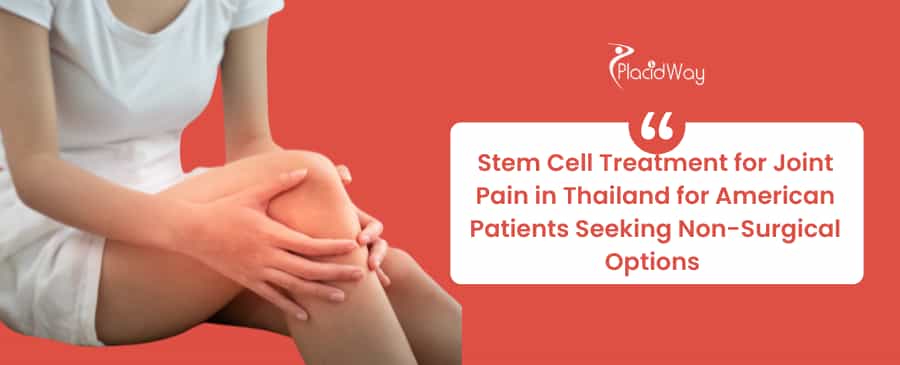
For millions of Americans suffering from chronic joint pain, the choice has often been limited to temporary cortisone shots or invasive total joint replacement surgery. However, Stem Cell Therapy in Thailand has emerged as a powerful, non-surgical alternative, offering cutting-edge regenerative treatments that are often unavailable or prohibitively expensive in the United States. With world-class JCI-accredited hospitals and advanced biotechnology labs, Thailand has positioned itself as the global leader for orthopedic regeneration.
This comprehensive guide explores why thousands of US patients are flying to Bangkok and Phuket to treat osteoarthritis, meniscus tears, and hip degeneration. We break down the costs, safety protocols, and the advanced Umbilical Cord Mesenchymal Stem Cells (UC-MSCs) technology that is changing the landscape of orthopedic care.
Key Takeaways: The Thailand Advantage
Combining a tropical vacation with advanced medical care, Thailand offers a unique value proposition for patients seeking alternatives to surgery. Here is what you need to know about restoring your mobility in the "Land of Smiles":
- Massive Cost Savings: Americans save 60% to 75% on stem cell treatments compared to US clinics, with packages often including luxury accommodation.
- Higher Potency Treatments: Thai regulations allow for the expansion (culturing) of stem cells, meaning you can receive doses of 100 million+ active cells, a potency rarely available in the US due to FDA restrictions.
- All-Inclusive Packages: Most clinics offer seamless experiences including VIP airport pickup, 5-star hotel stays, and personal translators.
- No Wait Times: Unlike the months-long queues for specialists in the West, appointments in Bangkok can often be booked within weeks.
Estimated Cost Snapshot:
- ?? USA Average: $20,000 – $50,000 (often for lower cell counts)
- ?? Thailand Average: $5,000 – $15,000 (for high-dose, cultured cells)
- ? Knee Injection Package: ~$3,000 – $6,000 per joint
Why Americans Choose Thailand for Joint Regeneration
The regulatory environment in Thailand allows for more advanced, potent cellular therapies than what is currently accessible in North America.
The primary driver for medical tourism to Thailand is not just cost, but treatment quality and dosage. In the United States, the FDA enforces strict regulations that classify expanded (cultured) stem cells as drugs. This means US doctors are generally limited to using "same-day" procedures where cells are harvested from your fat or bone marrow and reinjected immediately without culturing. These treatments typically yield a relatively low number of stem cells.
In contrast, Thailand's medical framework allows for the safe culture and expansion of stem cells in GMP-certified laboratories. This allows Thai specialists to administer doses containing hundreds of millions of viable, highly active cells. For a patient with severe knee osteoarthritis or hip dysplasia, this higher dosage is often the critical factor in successfully regenerating cartilage and reducing inflammation.
"The 'dose' matters immensely in regenerative medicine. In a standard US bedside procedure, a patient might receive 1-5 million stem cells. In our Bangkok facilities, we can culture and administer 100 million Umbilical Cord MSCs. This massive increase in therapeutic cells is why we see superior outcomes for tissue repair and long-term pain relief."
Understanding Non-Surgical Stem Cell Options
Thailand offers a spectrum of regenerative therapies tailored to your specific orthopedic condition and recovery goals.
Umbilical Cord-Derived Mesenchymal Stem Cells (UC-MSCs)
This is the "gold standard" for many international patients. Sourced ethically from the umbilical cords of healthy, full-term newborns (with parental consent), these cells are young, potent, and immune-privileged, meaning they do not require a match and cause no rejection. They are renowned for their powerful anti-inflammatory capabilities, making them ideal for rheumatoid arthritis and chronic joint pain.
Adipose-Derived Stem Cells (ADSCs)
In this procedure, a small amount of fat is harvested from the patient's own abdomen via mini-liposuction. The stem cells are then isolated and expanded. This is a great option for patients who prefer using their own biological material (autologous) and is widely used for cosmetic and anti-aging purposes alongside joint repair.
Bone Marrow Aspirate Concentrate (BMAC)
Commonly used for younger patients or sports injuries, this involves harvesting cells from the pelvic bone. While effective, it is more invasive than the UC-MSC option and is less commonly chosen by older patients traveling for comfort.
Cost Comparison: Thailand vs. USA
A detailed look at how medical tourism makes elite regenerative care accessible to the average American patient.
The table below provides a comparative analysis of costs for a standard knee or hip stem cell protocol. Prices in Thailand often include concierge services that would be billed as luxury add-ons in the West.
| Treatment Feature | USA (Estimated) ?? | Thailand (Estimated) ?? |
|---|---|---|
| Single Joint (Knee/Hip) | $5,000 – $10,000+ | $3,000 – $6,000 |
| Comprehensive Protocol (IV + Joint) | $25,000 – $50,000 | $12,000 – $15,000 |
| Cell Type Availability | Restricted (Autologous only) | Full Access (UC-MSCs, Expanded) |
| Hospital Stay | Outpatient / Extra Cost | Often Included (1-2 Nights) |
| MRI / Diagnostics | $1,000 – $3,000 | $300 – $500 (or included) |
Thailand was the first country in Asia to achieve JCI (Joint Commission International) accreditation for a hospital. Today, it boasts over 60 JCI-accredited medical centers, more than any other Southeast Asian nation, ensuring that your stem cell procedure is performed in a facility meeting the highest global safety standards.
Top Destinations: Bangkok, Phuket, and Chiang Mai
Choosing the right location depends on whether you prefer a bustling metropolis or a beachside recovery.
Bangkok: The Medical Capital
Home to world-renowned facilities like Bumrungrad International Hospital, Bangkok Hospital, and specialized centers like Vega Stem Cell Clinic, the capital offers the highest concentration of experts. It is ideal for patients with complex cases requiring multidisciplinary care.
Phuket: Recovery in Paradise
For those treating sports injuries or milder arthritis, Phuket offers high-quality clinics combined with a resort atmosphere. Recovering from a knee injection while relaxing by the Andaman Sea reduces stress, which is conducive to healing.
Success Rates and Expected Outcomes
Real-world data suggests high efficacy for patients seeking alternatives to total knee replacement.
While individual results vary, leading Thai clinics report an 80-90% success rate in significant pain reduction for patients with Grade 1 to 3 osteoarthritis. The goal of the therapy is twofold: to reduce the chronic inflammation causing pain and to stimulate the regeneration of worn cartilage.
Timeline of Relief:
- Weeks 1-2: Anti-inflammatory effects begin; reduction in stiffness.
- Month 3: Noticeable improvement in range of motion and pain levels.
- Month 6: Peak tissue regeneration; many patients return to activities like golf or hiking.
"Successful stem cell therapy is not just about the injection; it is about the comprehensive protocol. Our packages in Thailand often include complementary physiotherapy, ozone therapy, and nutritional support. This holistic approach ensures the body provides a fertile environment for the new stem cells to thrive and repair the damaged joint tissue."
Step-by-Step Treatment Journey
From your first inquiry to your flight home, the process is designed for international ease.
1. Pre-Arrival Assessment
You will send your recent X-rays or MRI scans digitally. The medical team in Thailand reviews these to determine if you are a candidate and creates a custom treatment plan.
2. Arrival in Thailand
Upon landing at Suvarnabhumi Airport (BKK), a clinic representative greets you. You are whisked away to your hotel or the hospital via private transfer.
3. The Procedure
The treatment is minimally invasive. Under local anesthesia and ultrasound guidance, the concentrated stem cells are injected precisely into the damaged joint capsule. The entire process typically takes less than 2 hours.
4. Recovery & Return
Most patients walk out of the clinic the same day. After a follow-up check 24-48 hours later to ensure no infection, you are free to enjoy a light holiday or return to the US.
Frequently Asked Questions
Addressing common concerns for American patients traveling abroad for care.
1. Is stem cell therapy for knees legal in Thailand?
Yes, it is legal and regulated. The Thai FDA and Medical Council oversee the use of stem cells, particularly requiring that laboratories be GMP-certified to ensure safety and potency.
2. How many stem cells will I receive?
This depends on your condition, but Thai clinics typically administer between 50 million and 100 million cells per treatment, significantly higher than standard US protocols.
3. Is the procedure painful?
Most patients report minimal discomfort. The injection is performed under local anesthesia, similar to a dental procedure. You may experience mild swelling for 1-2 days post-treatment.
4. Can I fly home immediately after the treatment?
Doctors usually recommend resting for 24 to 48 hours after the injection before flying to allow the cells to settle and to monitor for any immediate reactions.
5. What if I have severe "bone-on-bone" arthritis?
Stem cell therapy is most effective for early to moderate degeneration. If you have complete cartilage loss (Grade 4), stem cells may provide pain relief but likely cannot fully regenerate the joint. A consultation is necessary to manage expectations.
6. Do Thai doctors speak English?
Yes, specialists at top international hospitals in Thailand are fluent in English. Many have completed fellowships in the US, UK, or Australia.
7. Does insurance cover this treatment?
Generally, US health insurance (including Medicare) does not cover medical tourism or stem cell therapies deemed "experimental" by the FDA. However, the out-of-pocket cost in Thailand is often lower than the deductible for surgery in the US.
8. How long do the results last?
Results can last anywhere from 3 to 5 years or longer, depending on the patient's lifestyle, weight, and the severity of the initial condition.
9. Are there side effects?
Serious side effects are rare. The most common minor side effects are temporary swelling, stiffness, or bruising at the injection site.
Reclaim Your Active Life Today
Don't let joint pain dictate your lifestyle. PlacidWay partners with the most reputable, JCI-accredited stem cell centers in Thailand to bring you safe, high-potency regenerative treatments.
Get a free, personalized quote and let our medical travel experts guide you to an affordable, non-surgical solution for your knee or hip pain.
Get a Quote for Treatment in Thailand-(1).png)



















Share this listing