Executive Overview: Penile Curvature & Plaque Solutions
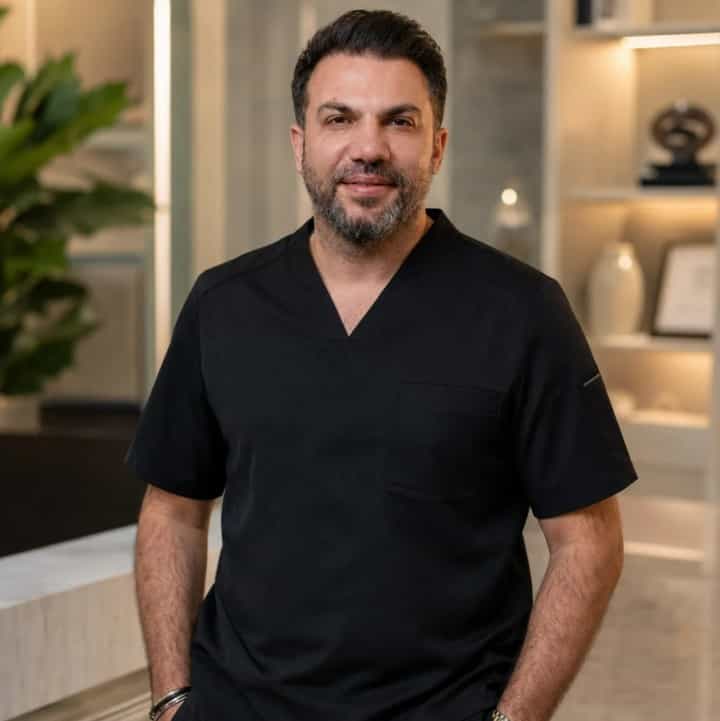
Seeking Penile Curvature Treatment in Istanbul Turkey offers men access to high-precision urological care, advanced plaque management, and corrective surgical expertise. Assoc. Prof. Dr. Zulfu Sertakaya provides state-of-the-art therapies designed to address structural changes, eliminate pain, and restore sexual function with total privacy.
-
Accurate Diagnostic Staging: Differentiation between active inflammatory phases and chronic stable curvature to ensure proper therapeutic timing.
-
Conservative & Non-Invasive Care: Tailored shockwave therapy (ESWT), specialized traction devices, and targeted plaque injections for early-stage management.
-
Advanced Surgical Precision: Expert execution of tunical plication, plaque grafting, and state-of-the-art Peyronie's Surgery in Istanbul Turkey.
-
Dual-Action Prosthetic Reconstruction: Simultaneous correction of severe anatomical deviation and erectile dysfunction via Center of Excellence penile implant surgery.
Understanding Peyronie's Condition
Peyronie's disease is an acquired connective tissue disorder affecting the elastic fibrous layer surrounding the erectile chambers (the tunica albuginea). The development of inelastic, non-yielding scar tissue causes the shaft to bend, twist, or narrow during an erection. While many men suffer in silence due to psychological distress or embarrassment, this condition is a well-understood medical disorder that responds exceptionally well to modern urological treatments.
When men search for comprehensive Penile Plaque Treatment in Istanbul Turkey, they find world-class medical centers focused on restoring both structural alignment and physical intimacy. With early clinical intervention, progressive anatomical deformity can be checked, and comfort can be restored through tailored medical protocols.
Recognizing the Primary Clinical Symptoms
The clinical manifestations of Peyronie's disease vary depending on the severity of the scar tissue and the duration of the disorder. Men experiencing Penile Curvature Treatment in Istanbul Turkey are routinely evaluated for the following primary indicators:
-
Anatomical Angulation: Curvature occurring upward, downward, or laterally during erection, making intercourse painful or physically impossible.
-
Palpable Fibrotic Plaque: A firm, dense region or band of hardened tissue felt beneath the skin along the penile shaft.
-
Erectile Pain: Localized inflammatory pain during tumescence, typically associated with the active stage of plaque formation.
-
Dimensional Loss & Indentation: Narrowing of the shaft creating an "hourglass" structural deformity or noticeable shortening.
-
Concomitant Erectile Dysfunction: Difficulty maintaining sufficient rigidity, frequently arising from vascular leakage or psychological stress.
Crucial Distinction: Active vs. Stable Disease Stages
A key factor in selecting the appropriate medical protocol is identifying the exact stage of the condition. Treating Peyronie's disease requires a strict medical distinction between two distinct phases:
-
The Active (Acute) Phase: Characterized by active inflammation, evolving plaque size, changing curvature angles, and persistent pain during erections. Surgical repair is strictly contraindicated in this phase because operating on unstable tissue leads to high recurrence rates. Therapy centers on symptom mitigation, pain control, and slowing plaque progression.
-
The Stable (Chronic) Phase: Occurs when curvature stabilizes and pain subsides completely for at least 3 to 6 months. Once the anatomical shape has settled, definitive corrective procedures and Peyronie's Surgery in Istanbul Turkey can be safely performed with predictable, lasting outcomes.
Non-Surgical Therapeutic Interventions
For patients in the early active stage or those with minor curvature that does not impede sexual function, conservative therapies serve as an initial line of defense:
-
Pharmacological Protocols: Oral agents and antioxidants aimed at reducing inflammatory markers and easing localized discomfort.
-
Extracorporeal Shockwave Therapy (ESWT): Focused low-intensity acoustic waves applied to breakdown calcification, encourage microvascular circulation, and provide significant pain reduction.
-
Intralesional Injections: Targeted enzymatic or anti-inflammatory agents administered directly into the fibrotic plaque to break down collagen fibers and increase tissue flexibility.
-
Mechanical Traction Therapy: Custom medical stretching equipment worn according to strict daily guidelines to preserve length and gradually reduce curvature severity.
Surgical Correction & Penile Reconstruction
When curvature exceeds 30 degrees, interferes with penetration, or remains static after conservative attempts, surgical correction becomes necessary. Dr. Zulfu Sertakaya utilizes three principal surgical methods tailored to individual clinical profiles:
-
Tunical Plication Techniques: Placing non-absorbable structural sutures on the side opposite the plaque to pull the shaft straight. This approach is ideal for men with minimal loss of length and robust natural erectile firmness.
-
Plaque Incision and Grafting: For severe angulation, complex indentation, or severe shortening, the rigid plaque is incised or partially excised, and the resulting gap is covered with a biocompatible graft material to restore length and axial symmetry.
-
Penile Prosthesis Placement: In cases where severe curvature is accompanied by moderate-to-severe erectile dysfunction, installing an inflatable 3-piece penile implant corrects the bend while guaranteeing reliable rigidity on demand.
Combining Penile Implants with Peyronie's Reconstruction
A significant proportion of men with Peyronie's disease also suffer from underlying erectile dysfunction. Attempting to straighten the penis without restoring vascular rigidity leads to unsatisfactory functional results. In these complex scenarios, a combined surgical strategy provides the gold-standard solution.
During implant surgery, the placement of fluid-filled cylinders within the corpora cavernosa naturally expands and straightens the shaft. If residual curvature remains after cylinder inflation, specialized intraoperative manual modeling, plication, or localized plaque release is performed concurrently. As an accredited Center of Excellence surgeon for Boston Scientific AMS 700™ and Coloplast Titan®, Assoc. Prof. Dr. Zulfu Sertakaya employs advanced no-touch surgical protocols, ensuring superior antiseptic protection, minimal tissue disruption, and optimal cosmetic outcomes.
Frequently Asked Questions (FAQs)
1. Does Peyronie's disease resolve on its own without treatment?
In most cases, no. Spontaneous improvement occurs in only a small percentage of men, while the majority experience persistent or worsening penile curvature over time. Although pain during erections often decreases naturally as the condition enters the stable phase, the scar tissue (plaque) usually remains. Without appropriate treatment, the curvature may continue to interfere with sexual intercourse, reduce confidence, and affect overall quality of life. Early evaluation by an experienced urologist allows treatment to begin before the condition progresses and helps determine whether observation, medication, traction therapy, or surgery is the most appropriate option.
2. When is the right time to undergo surgery for Peyronie's disease?
Surgery is generally recommended only after Peyronie's disease has reached the stable phase. This means the penile curvature has remained unchanged for at least three to six months, pain during erections has resolved, and the deformity significantly interferes with sexual function. Performing surgery too early while the disease is still progressing may increase the risk of recurrent curvature. During your consultation, your urologist will evaluate the severity of the plaque, erectile function, and overall penile anatomy before recommending the most suitable surgical technique.
3. Does Peyronie's disease surgery make the penis shorter?
The answer depends on the surgical technique used. Plication procedures straighten the penis by shortening the longer side, which may result in a small reduction in length, typically around 1 to 2 centimeters. For patients with more severe curvature, plaque incision or excision with grafting can help preserve penile length. If Peyronie's disease is combined with severe erectile dysfunction, penile prosthesis implantation may restore rigidity while also correcting curvature and maintaining functional penile length as much as possible.
4. What happens if Peyronie's disease and erectile dysfunction occur together?
Peyronie's disease and erectile dysfunction frequently occur together because scar tissue can interfere with normal blood flow and penile rigidity. When medications are no longer effective, penile prosthesis implantation is considered the gold-standard treatment. The implant restores reliable erections while allowing the surgeon to straighten the penis during the same procedure. This comprehensive approach often provides excellent functional and cosmetic outcomes for appropriately selected patients.
5. What non-surgical treatments are available for Peyronie's disease?
Several non-surgical options may be recommended during the early or active phase of the disease. These include oral medications, penile traction therapy, vacuum erection devices, and injectable treatments designed to soften or reduce the plaque. The effectiveness of each option depends on the stage of the disease, the severity of the curvature, and the patient's erectile function. Your urologist will recommend an individualized treatment plan based on your specific condition rather than using a one-size-fits-all approach.
6. Is Peyronie's disease painful?
Pain is common during the early inflammatory stage of Peyronie's disease, particularly during erections. Fortunately, this discomfort often decreases or disappears as the disease enters the chronic stable phase. However, even when the pain resolves, the penile curvature and scar tissue usually remain. Persistent pain or worsening deformity should always be evaluated by a qualified urologist to determine the most appropriate treatment strategy.
7. How long is the recovery period after Peyronie's disease surgery?
Recovery varies depending on the surgical procedure performed. Most patients are discharged within one or two days and can return to light daily activities within one week. International patients often remain in Istanbul for several days for follow-up appointments before traveling home. Sexual intercourse, strenuous exercise, and heavy lifting are generally postponed for four to six weeks to allow proper healing. Your surgeon will provide personalized recovery instructions based on your procedure.
8. Can Peyronie's disease return after treatment?
Although modern surgical techniques have high success rates, no treatment can completely eliminate the possibility of recurrence. Most patients experience long-lasting correction, especially when surgery is performed during the stable phase of the disease. Following post-operative instructions, attending follow-up appointments, and addressing any underlying erectile dysfunction can help maximize long-term results and reduce the risk of future problems.
9. Why do international patients choose Istanbul for Peyronie's disease treatment?
Istanbul has become one of the leading destinations for advanced urological care thanks to its experienced surgeons, internationally accredited hospitals, modern medical technology, and competitive treatment costs. Many clinics also provide comprehensive medical tourism services, including airport transfers, hotel accommodation, multilingual coordinators, and personalized treatment plans, making the experience convenient for patients traveling from abroad.
10. How should I prepare for my consultation about Peyronie's disease?
Before your consultation, prepare a detailed medical history, including when you first noticed the curvature, whether it has changed over time, and any symptoms such as pain or erectile dysfunction. Your urologist may perform a physical examination, penile ultrasound, or photographic assessment of the curvature to determine the severity of the condition. Bringing previous medical records and preparing questions about treatment options, expected outcomes, and recovery will help you make an informed decision about your care.
Take Control of Your Health with Confidential Expert Care in Istanbul
Living with penile curvature or painful plaques should never compromise your confidence, emotional well-being, or intimate relationships. By consulting for Peyronie's Surgery in Istanbul Turkey with Assoc. Prof. Dr. Zulfu Sertakaya, you gain access to internationally recognized urological expertise, discrete diagnostic evaluations, and custom-tailored treatment plans utilizing the world's most advanced non-surgical and prosthetic solutions.
Whether you require conservative plaque stabilization, delicate micro-surgical alignment, or dual-action penile prosthesis implantation, our specialized team ensures seamless international patient coordination, state-of-the-art clinical safety, and absolute confidentiality from initial inquiry through post-operative recovery.
Schedule Your Private Consultation Today








.png)















Share this listing