
Advanced Guide to Venous Leak: Symptoms, Diagnostic Criteria, and Modern Treatments for Erectile Dysfunction
For many men, the struggle with erectile dysfunction (ED) is often dismissed as a psychological hurdle or a natural byproduct of aging. However, when the physical mechanics of the body fail, specifically the vascular system's ability to trap blood within the male organ, the condition is known as a venous leak. This specific form of vascular ED can be particularly frustrating because it often allows for the initiation of an erection but makes maintaining it nearly impossible, especially during critical moments like position changes or when using protection.
In this comprehensive guide, inspired by the clinical insights of expert urologist and andrologist Dr. Zülfü Sertkaya, we delve deep into the world of penile venous insufficiency. We will explore why this happens, how to recognize the tell-tale signs, and the progressive treatment ladder—ranging from vascular therapies to the gold-standard permanent solution: the penile prosthesis. Understanding the "veno-occlusive mechanism" is the first step toward reclaiming sexual health and confidence.
Video Chapters & Quick Navigation
The Science of the Veno-Occlusive Mechanism: What is Venous Leak?
To understand a venous leak, one must first understand how a healthy erection works. When a man is stimulated, blood flows into the corpora cavernosa through the arteries. As these chambers fill, they expand and compress the veins against a tough outer layer called the tunica albuginea. This compression "locks" the blood inside, creating the rigid pressure necessary for intercourse [00:14].
A venous leak, or crural venous insufficiency, occurs when this locking mechanism fails. The veins do not compress sufficiently, or the valves within the veins remain open, allowing blood to escape back into the general circulation as fast as it enters. This prevents the internal pressure from reaching the threshold required for sustained hardness [00:30].
Why Traditional ED Medications Often Fail
Many patients with venous leak find that standard oral medications (PDE5 inhibitors) offer little to no relief. These medications primarily work by increasing blood inflow through the arteries. However, if the "exit door" (the veins) is wide open, increasing the inflow does not solve the underlying problem of retention. This is often the first clinical clue that a patient is dealing with a vascular structural issue rather than a simple blood flow or hormonal deficiency.
Red Flags: Recognizing the Signs of Penile Venous Insufficiency
Identifying a venous leak requires paying close attention to the patterns of erectile dysfunction. It is rarely a total "on-off" switch; rather, it is a failure of duration and sustainability. Dr. Sertkaya highlights several specific scenarios that point toward this diagnosis [00:36].
The Position Change Phenomenon
One of the most characteristic symptoms of a venous leak is losing an erection immediately upon changing positions during intercourse [01:04]. The shift in physical orientation and the momentary pause in stimulation allow the blood to drain rapidly because the venous valves are not functioning to hold it in place.
Loss of Turgidity During Protection Use
Another common indicator occurs when a man achieves a full erection but loses it the moment he pauses to apply a condom [00:53]. This brief lapse in active stimulation is enough for the "leak" to empty the chambers, leading to frustration and psychological distress, which can further exacerbate the problem through performance anxiety.
| Symptom | Physiological Reason |
|---|---|
| Rapid Detumescence | Blood exits veins faster than arteries can supply it. |
| Erection loss on position change | Gravitational and valvular failure during movement. |
| Softness during condom application | Inability to maintain pressure without constant stimulation. |
| Poor response to Pills | Focus is on inflow, but the issue is the outflow (leak). |
The Root of the Issue: Connective Tissue and Venous Valves
Why do some men develop this condition? It often boils down to the health of the connective tissue and the structural integrity of the veins [01:18]. The veins in the penis have small valves that are supposed to close when pressure rises. In men with venous leak, these valves may stay partially open due to several factors:
- Peyronie’s Disease: Scar tissue can disrupt the tunica albuginea, preventing proper vein compression.
- Diabetes & Hypertension: Chronic high blood sugar and pressure damage the smooth muscle and vascular endothelium.
- Aging and Connective Tissue Loss: As we age, the elasticity of the penile tissues decreases, making the veno-occlusive mechanism less efficient.
- Trauma: Injury to the pelvic area or the organ itself can lead to permanent vascular damage.
Exploring Treatment Options: From Embolization to Ligation
When a venous leak is diagnosed—often via a Penile Doppler Ultrasound—the question becomes how to stop the leak. Historically, surgeons attempted "venous ligation," which involves tying off the offending veins to prevent drainage [01:30].
The Challenge of Collateral Veins
While ligation or embolization (blocking veins using coils or glue) can provide temporary relief, the human body is remarkably resilient—sometimes to its own detriment. The body often creates "collateral" vessels to bypass the blocked areas [01:47]. These new veins eventually begin to leak as well, causing the erectile dysfunction to return within months or a few years. This makes vascular surgery for venous leak a controversial and often non-permanent choice.
The Penile Prosthesis: A Permanent Cure for Venous Leak
For moderate to severe cases where vascular surgery has failed or is deemed ineffective, Dr. Sertkaya introduces the penile prosthesis, colloquially known as the "happiness bar" [02:07]. This is a surgical implant that bypasses the vascular system's requirement to "trap" blood.
How the Penile Implant Works
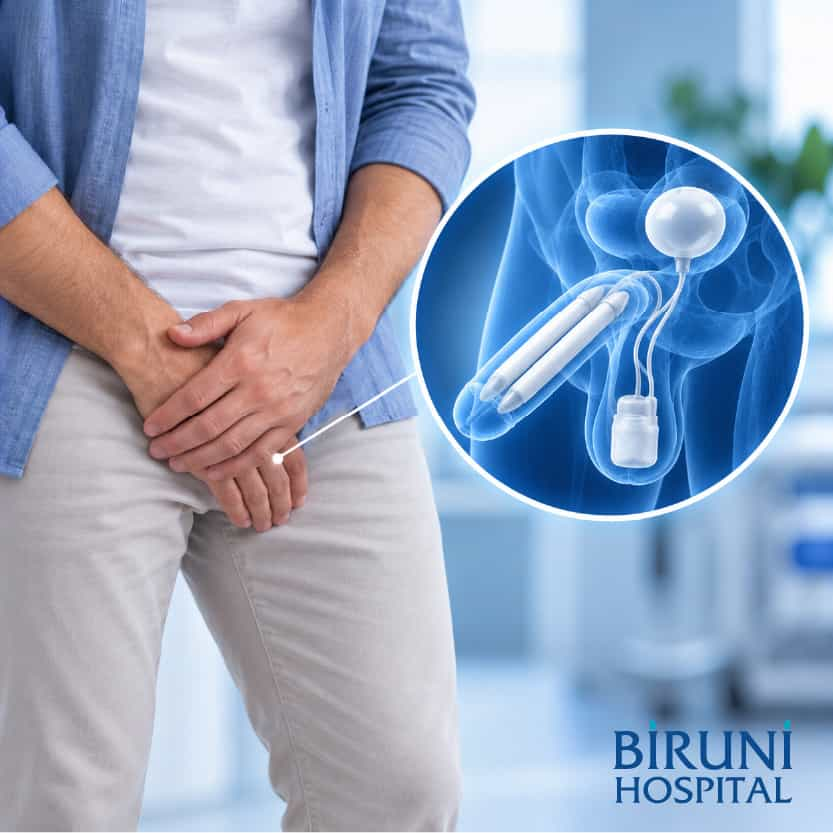
A penile implant consists of two cylinders placed inside the corpora cavernosa, a pump placed in the scrotum, and a reservoir in the lower abdomen. Because the rigidity is provided by the fluid-filled cylinders rather than the body's ability to hold blood in veins, a venous leak becomes irrelevant. The patient can achieve an erection whenever they want, for as long as they want, regardless of position changes or pauses in stimulation.
The Treatment Ladder: Personalized Care Based on Severity
Not every venous leak requires major surgery. Treatment is typically delivered in stages based on the severity of the condition [02:18].
Stage 1: Early/Mild Leak
In the beginning stages, treatments focus on vascular health. This may include shockwave therapy (ESWT) to stimulate new blood vessel growth and improve the elasticity of existing tissues. Medication and lifestyle changes (smoking cessation, exercise) are also critical here to prevent progression.
Stage 2: Moderate Leak
For patients who are starting to fail oral medications, intracavernosal injections or vacuum erection devices may be used. Some may opt for embolization, though the risks of recurrence must be clearly understood [02:28].
Stage 3: Advanced/Severe Leak
When conservative and vascular treatments provide no relief, the penile prosthesis is the definitive choice. It provides a 90-95% satisfaction rate among both patients and their partners because it effectively "cures" the symptoms of the leak permanently [02:35].
Living with a venous leak is undeniably difficult. It impacts intimacy, self-esteem, and relationship dynamics. However, as Dr. Sertkaya emphasizes, it is not an unsolvable problem. With modern andrological techniques and expert intervention, restoring your sexual function and confidence is an achievable reality.
View Full Video Transcript (Turkish)
00:00 Bir ili?ki s?ras?ndas?n?z ve pozisyon de?i?tirdiniz. Bu durumda sertli?iniz azald?, dü?tü. Venöz kaçak olabilir.
00:14 Sertle?me bozuklu?unuz var ve size venöz kaça??n?z oldu?u söylendi. Nedir venöz kaçak? Venöz kaçak, özellikle sertle?me s?ras?nda penisten kalbe kan? götüren damarlardaki kaçak durumu.
00:27 Bu bir reflü olabilir. Bu, sertle?me için gerekli bas?nc?n engeli olan bir durum olabilir. Bunlar?n hepsi sizde sertle?me bozuklu?u yaratabilir.
00:36 Sadece sertle?me bozuklu?u yaratmaz. Sizde ba?lang?ç a?amas?nda sertle?meniz tam olmu?ken sertle?meyi sürdürememek gibi bir durumla da kar??la?abilirsiniz.
00:49 Veya sertle?tiniz, ili?kiye devam ettiniz, sürdürdünüz. Ama prezervatif takman?z gereken bir an oldu, sertle?meniz dü?ebilir.
00:58 Bu hikayeyi akl?n?zda tutun. Özellikle de ?u hikayeyi: Sertle?meniz oldu, bir ili?ki s?ras?ndas?n?z ve pozisyon de?i?tirdiniz. Bu durumda sertli?iniz azald?, dü?tü ve bunu tekrardan sertli?inizi sa?layacak duruma getiremediniz. Venöz kaçak olabilir.
01:14 Venöz kaçak özellikle nedir diye soracak olursan?z da damarlardaki ba? dokusuyla alakal? bir problem. Damarlar geni?liyor. Geni?ledi?i için kapanmas? gereken kapaklar aç?k kal?yor ve bir kaçak olu?uyor.
01:29 Bu kaça?? nas?l çözebiliriz? Bu damarlar? ba?layarak veya bu damarlar? t?kayarak yapabiliriz. Ama bununla ilgili ameliyatlar veya embolizasyon gibi durumlar sizde geçici bir rahatlama sa?layacak.
01:42 Evet ama tamamen bu olay? çözmüyor. Çünkü yeni olu?an damarlar, yani bizim kolateraller dedi?imiz damarlar yine benzer ?ekilde geni?leyip kapaklar?n aç?k kal?p kaça??n olu?mas?na sebep olabilir.
01:57 Nas?l çözece?iz? Dedi?im gibi bu ba?layarak veya embolizasyonla çözülebilir. Di?er bir tedavi ?ekli de bu durumu tamamen ortadan kald?racak olan mutluluk çubu?u, yani penil protez.
02:07 Penil protez takt???n?zda bu durum tamamen ortadan kalkacakt?r. Peki her venöz kaça?a bu tarz tedaviler gerekir mi? Hay?r.
02:18 Ba?lang?ç a?amas?ndaki bir venöz kaça?? olan birine biz kan ak?m?n? art?rarak veya damar yenileyici tedaviler yaparak bu durumu çözebilecekken, orta-ileri seviyede bir venöz kaça?? olan birine ne yaz?k ki bahsetti?im ameliyatlar? yapmam?z veya mutluluk çubu?unu takmam?z gerekecektir.
02:38 Venöz kaçak ile ya?amaya devam etmek gerçekten zor. Çünkü sertle?me bozuklu?u veya sertle?meyi sürdürme problemi veya tam bas?nç olu?turamad??? için birden fazla ili?kiye girmek çok mümkün olmayacakt?r.
02:52 Çözümsüz de?il, çözümü belli a?amalarda zahmetli ama sonu her zaman mutluluk. Hep dimdik kalmak için bazen bu zahmete katlanmak gerekir.





















Share this listing