
Preserve Vision: Intra-Arterial Chemotherapy in Saudi Arabia
Retinoblastoma is a rare childhood eye cancer that develops in the retina and can threaten a child's vision and overall health if it is not diagnosed and treated promptly. Advanced treatment options, including intra-arterial chemotherapy in Saudi Arabia, allow specialists to deliver chemotherapy directly to the blood vessels supplying the tumor, helping control cancer growth while limiting exposure to the rest of the body. At King Faisal Specialist Hospital and Research Centre (KFSHRC) in Riyadh, a specialized multidisciplinary program focuses on effective tumor management and preserving the affected eye whenever clinically appropriate. This targeted Retinoblastoma Treatment in Saudi Arabia highlights the importance of early diagnosis, individualized treatment planning, and coordinated pediatric oncology and ophthalmology care to improve outcomes for children with retinoblastoma.

Quick Summary & Key Program Highlights
- Specialized Facility: Care is provided at King Faisal Specialist Hospital and Research Centre (KFSHRC) in Riyadh, Saudi Arabia.
- Target Condition: Retinoblastoma, a childhood eye cancer developing in the retina.
- High Globe Preservation Rate: Clinical data reports an 84% eye preservation rate among children treated for retinoblastoma.
- Patient Overall Survival: Clinical reports indicate a 100% overall survival rate during the evaluated follow-up period.
- Advanced Technique: Ophthalmic Artery Chemotherapy in Saudi Arabia delivers micro-doses of medication directly into the ophthalmic artery supplying the tumor via microcatheter guidance.
- Program Availability: KFSHRC Saudi Arabia operates the only specialized Intra-Arterial Chemotherapy (IAC) program of its kind in the Kingdom, reporting a 93% procedure technical success rate.
- Multidisciplinary Care: Blends pediatric hematology-oncology, interventional radiology, ophthalmic oncology, and pediatric eye surgery.
Featured Healthcare Institution in Saudi Arabia
King Faisal Specialist Hospital and Research Centre (KFSHRC)
Riyadh, Saudi Arabia
King Faisal Specialist Hospital and Research Centre is a tertiary healthcare facility in Saudi Arabia providing advanced pediatric oncology and interventional radiology services. Its dedicated clinical team offers specialized Intra-Arterial Chemotherapy in Saudi Arabia for Retinoblastoma through a multidisciplinary program incorporating high-precision intravascular delivery.
FACILITY & QUALITY STANDARDS CREDENTIALS
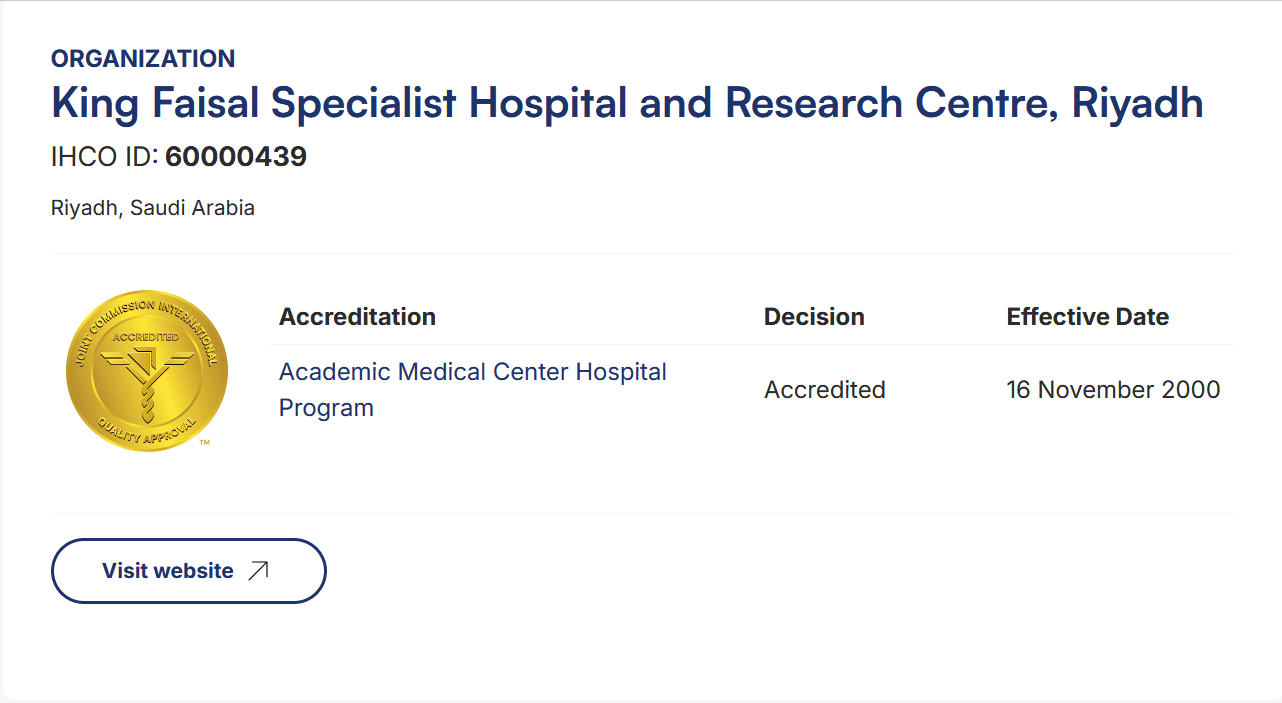
Institutional Accreditation & Hospital Overview
Protecting a Child’s Sight: Understanding the Challenge of Retinoblastoma
Retinoblastoma is a primary intraocular malignancy of childhood that originates in the light-sensitive retinal cells at the back of the eye. While rare, it represents the most frequent eye cancer in infants and young children, often developing before the age of five. Safeguarding both life and visual functionality requires rapid diagnostic evaluation and targeted intervention.
Historically, advanced intraocular tumors required surgical removal of the eye (enucleation) to prevent systemic spread. Modern Eye Preservation Therapy in Saudi Arabia combines interventional radiology with specialized pediatric oncology to target neoplastic tissue directly inside the eye, minimizing systemic toxicity while striving to save useful vision.
What Is Retinoblastoma and How Does It Affect Children?
Retinoblastoma arises from genetic mutations in immature retinal stem cells, leading to unregulated cell division and localized tumor mass formation within the retina. It may present unilaterally (in one eye) or bilaterally (in both eyes). Inherited germline mutations typically manifest earlier and increase the risk of bilateral disease.
As the intraocular tumor expands, it can detach the retina, cause painful secondary glaucoma, impair optical transmission, and damage the optic nerve. Left untreated, tumor cells can invade the optic nerve sheath or blood vessels, spreading beyond the eye into the brain, central nervous system, or distant organs.
Reported Retinoblastoma Clinical Outcomes at KFSHRC
Clinical outcome analysis from the specialized pediatric intra-arterial chemotherapy program demonstrates key benchmarks for globe preservation and procedure performance in Saudi Arabia.
Retinoblastoma Program Clinical Statistics (KFSHRC)
Source: Data reported by King Faisal Specialist Hospital and Research Centre (KFSHRC), Riyadh, Saudi Arabia.
Early Warning Signs of Retinoblastoma in Children
Recognizing early physical signs of intraocular tumors can significantly improve the clinical outlook for affected children. Parents, pediatricians, and caregivers should watch for the following primary indicators:
Leukocoria (White Pupil Reflection)
An abnormal white or yellowish reflection in the pupil, sometimes noticed in flash photography or during an eye examination instead of the usual red-eye reflection.
Strabismus (Misaligned Eyes)
Eyes that appear crossed or turn inward or outward. This may occur when retinoblastoma affects vision in the involved eye.
Reduced Vision and Tracking Difficulties
Difficulty focusing on or following objects, reduced visual responsiveness, or signs that a child is not seeing clearly with one eye.
Eye Redness or Pain
Persistent redness, irritation, or eye discomfort may occur, particularly when the condition causes complications or increases pressure inside the eye.
Swelling or Bulging of the Eye
An eye that appears enlarged or protrudes abnormally may indicate advanced disease or another serious eye condition requiring urgent medical assessment.
Changes in Iris or Pupil Appearance
Unusual changes in pupil appearance, cloudiness, or differences between the eyes may warrant examination by a pediatric ophthalmologist, especially when accompanied by other warning signs.
Why Early Diagnosis Matters for Eye and Vision Preservation
Early identification of Childhood Eye Cancer Treatment in Saudi Arabia directly influences the breadth of available conservative treatment modalities. When tumors are diagnosed at early stages (Group A to C under the International Classification of Intraocular Retinoblastoma), localized treatments can eradicate neoplastic tissue while saving the globe and preserving functional vision.
What Is Intra-Arterial Chemotherapy for Retinoblastoma?
Intra-Arterial Chemotherapy (IAC), also termed Ophthalmic Artery Chemotherapy in Saudi Arabia, is an advanced targeted endovascular intervention. Instead of administering chemotherapeutic agents intravenously throughout the entire body, interventional radiologists deliver high-density therapeutic agents directly into the blood vessel feeding the eye tumor.
This catheter-based approach concentrates chemotherapy precisely within the ocular vascular bed. As a result, the tumor receives potent treatment doses while systemic drug exposure to bone marrow, kidney, liver, and gastrointestinal organs is significantly curtailed.
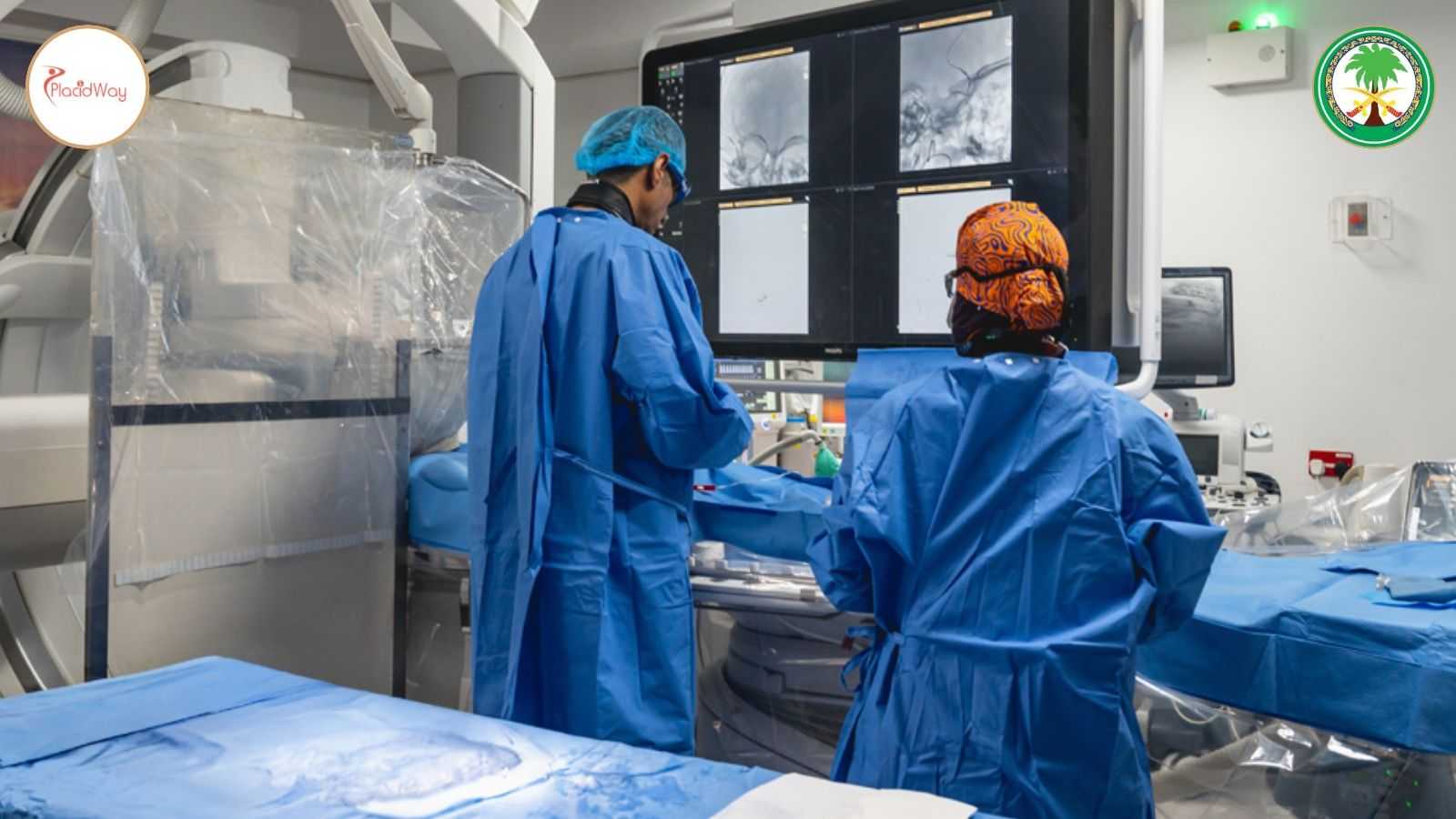
How Intra-Arterial Chemotherapy Delivers Medication to the Eye
The intravascular delivery sequence requires specialized endovascular technique and high-resolution fluoroscopic guidance:
- Femoral Artery Micro-Access: Under general anesthesia, a specialized interventional radiologist inserts a microcatheter into the femoral artery in the upper thigh.
- Vascular Guidance to the Ophthalmic Artery: Guided by continuous fluoroscopic imaging, the microcatheter is maneuvered up through the aorta, internal carotid artery, and to the ostium of the ophthalmic artery.
- Pulsatile Chemotherapy Infusion: Chemotherapeutic medications (such as melphalan, topotecan, or carboplatin) are infused slowly over 30 to 45 minutes directly into the ophthalmic circulation.
- Targeted Tumor Saturation: Concentrates localized medication within intraocular tumor tissue while sparing systemic circulation.
- Hemodynamic Flow Monitoring: Real-time angiography verifies consistent vessel patency and checks vascular dynamics throughout infusion.
- Post-Procedure Recovery & Examination: The catheter is safely withdrawn, hemostasis achieved at the thigh puncture site, and follow-up retinal exams scheduled.
Determining Whether a Child Is Suitable for Intra-Arterial Chemotherapy
Selection for Retinoblastoma Treatment in Saudi Arabia using IAC requires rigorous clinical stratification. Candidates are evaluated during multidisciplinary tumor board review, weighing anatomical feasibility, vascular anatomy, and disease staging.
Favorable Clinical Criteria
- Unilateral or bilateral intraocular retinoblastoma (Groups B, C, and D)
- Recurrent or refractory tumors following systemic chemotherapy
- Adequate caliber and patency of the femoral and ophthalmic arteries
- Absence of extraocular extension or distant systemic metastases
- Stable general health suitable for repeated pediatric anesthesia
Clinical Considerations & Limits
- Advanced Group E eyes with total neovascular glaucoma or phthisis bulb
- Confirmed tumor extension into the optic nerve margin or brain
- Severe vascular anomalies hindering catheter navigation
- Severe systemic bleeding disorders or unmanageable drug allergies
- Uncontrolled systemic infection or unstable cardiopulmonary status
Preparing for Intra-Arterial Chemotherapy Treatment
Comprehensive pre-procedural planning ensures pediatric safety and procedural efficiency. The diagnostic workup at King Faisal Specialist Hospital and Research Centre includes:
| Pre-Treatment Phase | Clinical Objective | Key Evaluations & Actions |
|---|---|---|
| Ophthalmic Assessment | Evaluate intraocular tumor dimensions and retinal health | Examination Under Anesthesia (EUA), RetCam photography, ocular ultrasound |
| Diagnostic Imaging | Rule out extraocular extension and intracranial disease | High-resolution brain and orbit MRI (avoiding ionizing CT radiation) |
| Pediatric Hematology Check | Assess systemic safety and organ function baseline | Complete Blood Count (CBC), renal/liver panels, coagulation screening |
| Anesthetic & Vascular Review | Plan pediatric sedation and endovascular access route | Airway evaluation, femoral artery pulse check, hydration stabilization |
What Happens During the Intra-Arterial Chemotherapy Procedure?
The procedure is performed in a specialized biplane interventional radiology suite equipped with high-definition digital subtraction angiography (DSA). The procedure spans several key steps:
- Pediatric General Anesthesia: Pediatric anesthesiologists administer complete general anesthesia and continuously monitor vital parameters, blood pressure, and oxygen saturation.
- Arterial Sheath Placement: A small ultrasound-guided puncture is created in the right femoral artery, securing micro-sheath access.
- Selective Catheterization: A 1.5-to-1.7 French microcatheter is navigated into the internal carotid artery and carefully advanced into the orifice of the ophthalmic artery.
- Angiographic Roadmap: Contrast medium injection verifies that blood flow travels exclusively into the ocular vascular bed without retrograde reflux into internal carotid branches.
- Pulsatile Drug Delivery: Chemotherapeutic agents are infused slowly over 30 to 45 minutes.
- Catheter Removal & Hemostasis: Following infusion, the catheter is withdrawn, and gentle manual pressure is applied to the femoral puncture site to achieve complete hemostasis.
Combining Localized Chemotherapy With Other Retinoblastoma Treatments
Intra-Arterial Chemotherapy is frequently integrated into a comprehensive multimodal treatment strategy. Combining modalities ensures that both main tumor masses and vitreous or subretinal seedings are effectively eradicated:
Transpupillary Thermotherapy (TTT)
Diode laser energy applied directly to small retinal tumors to induce thermal necrosis.
Cryotherapy
Targeted freezing probes applied through the sclera to eliminate peripheral retinal lesions.
Intravitreal Chemotherapy
Micro-injections of chemotherapy directly into the vitreous humor for persistent vitreous seeds.
Monitoring Tumor Response, Vision, and Eye Health After Treatment
Following IAC sessions (typically given every 3 to 4 weeks for a total of 2 to 4 cycles), children undergo structured clinical monitoring under general anesthesia to evaluate therapeutic response.
| Surveillance Parameter | Clinical Assessment Tool | Target Outcome |
|---|---|---|
| Tumor Regression | RetCam fundus photography & ultrasound | Calcification, cottage-cheese type regression, or translucent scar formation |
| Vitreous Seed Disappearance | High-magnification indirect ophthalmoscopy | Complete clearance or inactive calcified dusting in the vitreous body |
| Retinal Vascular Health | Fluorescein angiography | Confirmation of patency in retinal vessels without ischemic occlusion |
| Visual Function | Age-appropriate visual acuity testing & VEP | Preservation of macula-dependent central and peripheral visual fields |
Potential Benefits, Risks, and Limitations of Intra-Arterial Chemotherapy
While IAC has transformed pediatric ophthalmic oncology, understanding both potential therapeutic advantages and procedural risks is necessary for informed clinical consent.
Primary Benefits
- Significantly higher rates of globe preservation in advanced intraocular tumors.
- Marked reduction in systemic side effects (hair loss, severe neutropenia, systemic infections).
- Reduced requirement for external beam radiation therapy and enucleation.
Potential Procedural Risks
- Localized vascular risk: Ophthalmic artery spasm, thrombosis, or choroidal ischemia.
- Eyelid edema, transient forehead hyperemia, or temporary loss of cilia.
- Transient neutropenia or mild allergic response to iodinated contrast media.
Specialized Pediatric Eye Cancer Care and Retinoblastoma Treatment in Saudi Arabia
The management of retinoblastoma in Saudi Arabia reflects a highly integrated regional framework. Through the synergy of specialized clinical teams at King Faisal Specialist Hospital and Research Centre (KFSHRC), young patients gain access to multidisciplinary care combining pediatric hematology-oncology, interventional neuroradiology, and ophthalmic surgery.
As the only center in Saudi Arabia operating a dedicated pediatric Intra-Arterial Chemotherapy program, KFSHRC offers families across the Middle East advanced conservative treatment pathways. This centralized expertise ensures that children receive comprehensive diagnostic evaluation, microcatheter intervention, and long-term surveillance aimed at protecting both life and visual potential.
Frequently Asked Questions
What is retinoblastoma?
Retinoblastoma is a rare eye cancer that forms in the retina, the light-sensitive tissue at the back of the eye. It primarily affects infants and young children under five years of age.
What is the primary early sign of retinoblastoma?
The most common early sign is leukocoria, a white reflection in the pupil that is often visible in flash photographs or under specific lighting conditions.
How does intra-arterial chemotherapy differ from standard chemotherapy?
Intra-arterial chemotherapy delivers medication directly into the ophthalmic artery supplying the eye through a microcatheter, minimizing drug exposure to the rest of the body compared to intravenous chemotherapy.
What eye preservation rate has been reported for retinoblastoma at KFSHRC?
King Faisal Specialist Hospital and Research Centre reports an 84% eye preservation rate among children treated within its specialized retinoblastoma program.
Is intra-arterial chemotherapy painful for the child?
No. The procedure is performed under general anesthesia by pediatric anesthesiologists, ensuring the child remains asleep and comfortable throughout the catheterization.
How many IAC treatment sessions are typically required?
King Khaled Eye Specialist Hospital (KKESH) collaborates with KFSHRC by supporting early clinical diagnosis, patient referral, public awareness, and physician education.
What is the procedure success rate of IAC at KFSHRC?
KFSHRC reports a 93% technical success rate in performing microcatheter navigation and drug delivery into the ophthalmic artery.
How is long-term vision monitored after treatment?
Children undergo regular examinations under anesthesia (EUA), fundus photography, electroretinography, and visual acuity evaluations as they grow.
Explore Retinoblastoma Treatment Options in Saudi Arabia
PlacidWay can assist families in connecting with leading medical specialists for Eye Cancer Treatment in Saudi Arabia, understanding treatment procedures, and requesting comprehensive information regarding pediatric eye cancer programs at King Faisal Specialist Hospital and Research Centre. Contact PlacidWay to learn more about specialized pediatric care and medical travel coordination in Riyadh, Saudi Arabia.
Request Medical InformationDisclaimer: This content is provided for educational and informational purposes only and does not constitute formal medical advice, clinical diagnosis, or treatment recommendations. Decisions regarding pediatric eye cancer treatment should always be made in consultation with a qualified pediatric oncologist and ophthalmic specialist.
References:
- National Cancer Institute (NCI) – Childhood Retinoblastoma Treatment Guidelines
- World Health Organization (WHO) – Global Initiative for Childhood Cancer
- American Academy of Ophthalmology (AAO) – Pediatric Ophthalmology Guidelines
- Ministry of Health Saudi Arabia – Specialized Healthcare Services
- Cardiovascular and Interventional Radiological Society of Europe (CIRSE) – Pediatric Interventions
- Society of Interventional Radiology (SIR) – Intra-Arterial Chemotherapy Standards




















Share this listing