


Middle East Crisis Disrupts India's Medical Tourism Boom in 2026
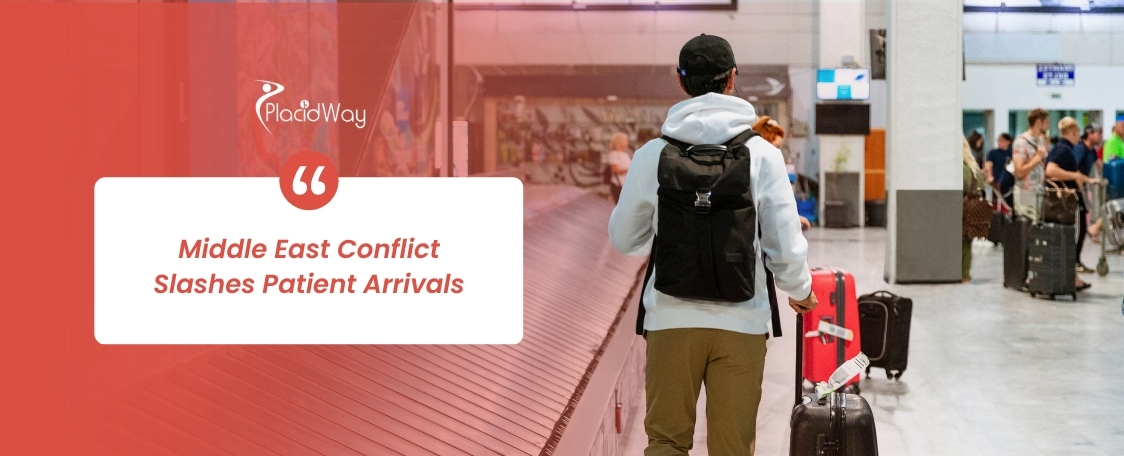
The escalating 2026 US-Israel-Iran conflict is severely disrupting healthcare travel, causing a massive drop in Middle Eastern patients seeking affordable cardiac surgery in India. Airspace closures and regional instability threaten billions in global medical tourism revenue.
The Domino Effect of the 2026 Geopolitical Conflict on Healthcare Travel
The geopolitical landscape of 2026 has introduced unprecedented challenges to the global healthcare sector, specifically impacting cross-border medical travel. As the tripartite conflict involving the United States, Israel, and Iran escalates, the geopolitical tremors are being felt thousands of miles away in the bustling medical hubs of South Asia. India, traditionally recognized as a global superpower in medical tourism, is currently experiencing significant headwinds as patient arrivals from the Middle East plummet. The conflict has effectively severed several critical travel corridors, turning what was once a seamless journey for advanced healthcare into a logistical labyrinth.
This sharp decline in inbound patient volume is a classic example of a macroeconomic domino effect. The instability in the Middle East has not only grounded commercial aviation routes over the Persian Gulf but has also triggered rapid currency devaluations in surrounding, non-combatant nations. Consequently, the purchasing power of the average Middle Eastern citizen has been severely compromised. Even for life-saving procedures, the combination of soaring travel insurance premiums, exorbitant rerouted flight costs, and the sheer psychological burden of leaving a volatile region has forced tens of thousands of prospective patients to delay or completely cancel their scheduled treatments in India.
Did You Know?
Prior to the 2026 geopolitical disruptions, patients from the Middle East and Gulf Cooperation Council (GCC) nations accounted for roughly 30% of all medical tourism revenue in India, injecting billions of dollars annually into the South Asian healthcare economy.
Why Middle Eastern Patients Historically Dominated India's Medical Market?
To understand the magnitude of this sudden market contraction, one must look at the historical synergy between the Middle East and India's healthcare infrastructure. For the past two decades, India has cultivated a healthcare ecosystem specifically tailored to the cultural and medical needs of Arab and Persian demographics. Major metropolitan medical hubs in cities like Delhi, Mumbai, and Chennai developed dedicated international patient wings equipped with in-house Arabic translators, prayer rooms, and specialized dietary services offering certified Halal cuisine. This deep cultural integration transformed India into a second home for Middle Eastern families seeking complex medical interventions.
Beyond cultural comfort, the clinical appeal was undeniable. Middle Eastern patients heavily relied on Indian medical expertise for highly specialized procedures that were either unavailable or prohibitively expensive in their home countries. Oncology treatments, complex pediatric cardiac surgeries, and particularly multi-organ transplants drove the majority of this inbound traffic. The high prevalence of lifestyle diseases such as diabetes and cardiovascular conditions in the Gulf region created a steady, high-volume pipeline of patients seeking world-class, JCI-accredited care at a fraction of the cost they would incur in Western Europe or the United States. The 2026 disruption of this symbiotic relationship has thus created a profound vacuum in India's premium healthcare wards.
Disruptions in Flight Routes and Medical Visas Hindering Patient Access
The practical logistics of traveling for healthcare have become the primary bottleneck in 2026. What was once a direct, four-hour flight from major Middle Eastern capitals to Indian medical centers has devolved into a complex, multi-day ordeal. The cascading effects of the US-Israel-Iran war have created several insurmountable barriers for medically fragile travelers:
- Restricted Airspace Protocols: Commercial airlines have completely bypassed Iranian and neighboring airspaces, adding several hours to flight times, requiring multiple layovers, and drastically increasing the physical toll on chronically ill patients.
- Skyrocketing Travel Costs: The rerouting of flights and the spike in global aviation fuel prices tied to the conflict have caused the price of medical travel packages from the Middle East to more than double in the span of a few months.
- Paralyzed Visa Processing: Diplomatic shifts and the evacuation of embassy staff in highly volatile zones have resulted in massive backlogs for the "Medical Visa (M-Visa)" category, delaying life-saving treatments indefinitely.
- Insurance Premium Surges: International health and travel insurance providers have categorized wide swaths of the Middle East as "high-risk conflict zones," refusing to underwrite medical evacuation or complication coverage for exiting citizens.
- Banking and Currency Sanctions: Stricter international banking regulations aimed at conflict zones have made it incredibly difficult for patients to wire large sums of money internationally to secure surgical deposits in India.
Analyzing the Economic Impact: Shifts in Global Medical Tourism Revenue
The economic fallout for the destination country is substantial. The medical tourism sector in India is a multi-billion-dollar industry that cross-subsidizes domestic healthcare costs. International patients typically opt for premium, private suites and utilize comprehensive diagnostic panels, making them the most lucrative demographic for the nation's sprawling corporate healthcare networks. With the Middle Eastern tap suddenly running dry, financial analysts project a revenue shortfall in the hundreds of millions for the fiscal year 2026 alone.
This shift is actively reshaping the global medical economy. While India loses its Middle Eastern market share, patients from those conflict-adjacent areas who *can* afford to travel are being forced to look at drastically different options, or forego surgery altogether. The table below illustrates the stark contrast in pricing and how the loss of the Indian option impacts the financial reality for international patients seeking complex procedures.
Strategic Pivots: India Targets New Demographics for Advanced Medical Care
In response to the severe headwinds generated by the 2026 Middle East crisis, India’s healthcare strategists are executing an aggressive pivot to offset revenue losses. Rather than waiting out the geopolitical storm, the nation's medical boards and international patient departments are actively redirecting their marketing and outreach efforts toward new, high-potential geographic demographics. Foremost among these are the Commonwealth of Independent States (CIS) nations, including Russia, Kazakhstan, and Uzbekistan. Patients from these regions possess a growing demand for advanced oncology and robotic surgeries—services that are currently underserved in their local healthcare systems.
Simultaneously, India is strengthening its medical corridors with the African continent. Nations such as Nigeria, Kenya, and Ghana have long viewed India as a vital healthcare partner, but marketing efforts in 2026 have intensified dramatically. Furthermore, there is a concerted push to attract the underinsured populations of the United States and the United Kingdom. By emphasizing absolute cost transparency and zero wait times, Indian healthcare providers are positioning themselves as the ultimate solution for Western patients trapped by domestic inflation and backlogged national health services, effectively shifting the global axis of medical travel away from the conflict zones.
"The geopolitical crises of 2026 have undeniably fractured traditional medical tourism routes, creating immense anxiety for patients who depend on cross-border care for their survival. However, the global healthcare market is inherently resilient. When one door closes due to regional conflict, the industry adapts by forging new, secure medical corridors. Our immediate priority is to ensure that international patients are not left stranded, providing them with verified, safe-haven destinations where world-class medical excellence remains accessible."
— Pramod Goel, CEO of PlacidWay
Reassuring the Global Patient: The Unchanged Quality of India's Healthcare Infrastructure
Despite the external geopolitical chaos disrupting patient arrivals, the internal reality of India's medical infrastructure remains impeccably strong. It is crucial for prospective patients from alternative markets to understand that the drop in inbound volume is purely a logistical and geopolitical issue, not a reflection of clinical quality. In fact, India's major medical metropolises continue to heavily invest in next-generation medical technology. Throughout 2026, the country has seen a record deployment of cutting-edge robotic surgical systems, AI-driven diagnostic imaging centers, and highly advanced cellular therapy labs.
Moreover, the clinical talent pool in India remains one of the most robust and globally integrated in the world. Thousands of the surgeons operating in these top-tier medical facilities hold dual board certifications from prestigious institutions in the United States, the United Kingdom, and Australia. Strict adherence to international protocols ensures that clinical outcomes—from complex organ transplant survival rates to post-operative infection control—consistently match or exceed global benchmarks. For patients originating from non-conflict zones, India continues to represent an oasis of elite medical capability.
Did You Know?
India is home to over 40 Joint Commission International (JCI) accredited medical facilities. This gold standard of global healthcare accreditation guarantees that these hospitals maintain the exact same stringent patient safety, hygiene, and technological standards as the top-rated hospitals in the United States and Europe.
The Vital Role of PlacidWay in Navigating Unpredictable Medical Travel Markets
In an era defined by rapid geopolitical shifts and unpredictable travel restrictions, the role of an independent medical tourism facilitator has evolved from a convenience to an absolute necessity. Patients attempting to coordinate complex international surgeries on their own are increasingly vulnerable to sudden visa embargoes, canceled flight routes, and unverified clinic claims. The information asymmetry in the global healthcare market can lead to disastrous financial and medical consequences if not managed by industry experts who have real-time visibility into global travel conditions.
PlacidWay serves as the ultimate stabilizing force for patients navigating this turbulent 2026 landscape. By offering a meticulously vetted network of global healthcare providers, PlacidWay empowers patients to bypass logistical blind spots. If a traditional medical corridor like the Middle East-to-India route becomes compromised, PlacidWay’s dynamic platform allows patients to instantly compare alternative, secure destinations that offer equivalent JCI-accredited care. From facilitating virtual consultations to verifying the clinical outcomes of specific international facilities, PlacidWay ensures that every patient can secure reliable, safe, and cost-effective healthcare regardless of global uncertainties.
Forecasting the Future of Medical Tourism in India Amid Global Uncertainty
Looking beyond the immediate crises of 2026, the long-term forecast for India's medical tourism sector remains cautiously optimistic. Healthcare economists suggest that the current headwinds will ultimately serve as a catalyst for the industry's maturation. By diversifying their target demographics away from an over-reliance on a single geographic region, Indian healthcare networks are building a more resilient, globally balanced patient portfolio. As the conflict inevitably stabilizes over time, pent-up demand from the Middle East is expected to trigger a massive resurgence in medical travel, leading to a "V-shaped" recovery for the sector.
Ultimately, the fundamental drivers of medical tourism—the universal need for timely, high-quality, and financially sustainable healthcare—cannot be permanently suppressed by regional conflicts. So long as domestic healthcare systems in the West struggle with hyper-inflation and massive waiting lists, destinations like India will continue to serve as vital pressure valves for the global healthcare economy. The destinations that prioritize patient safety, maintain absolute price transparency, and partner with trusted global connectors will inevitably emerge from 2026 stronger and more internationally integrated than ever before.
.jpg)



















Share this listing