
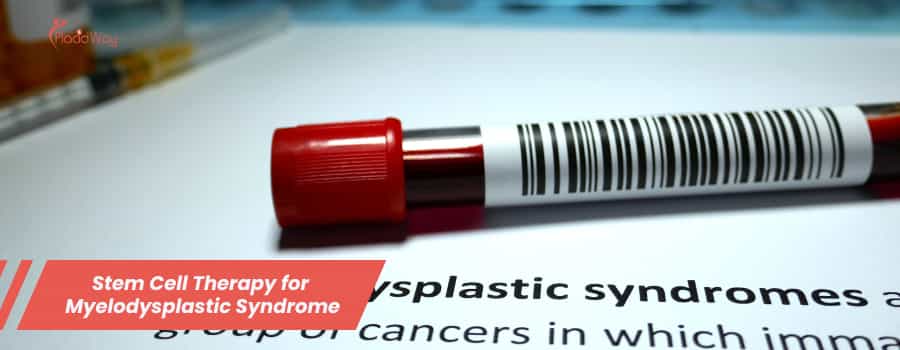
Stem cell therapy, also known as a bone marrow transplant, is the only potential cure for Myelodysplastic Syndrome (MDS). It replaces your unhealthy bone marrow with healthy, blood-forming stem cells from a donor. Many patients explore this option abroad for cost savings and access to care.
A Patient's Guide to Stem Cell Therapy for Myelodysplastic Syndrome Abroad
Receiving a diagnosis of Myelodysplastic Syndrome, or MDS, can feel overwhelming. It's a complex condition where your body's "blood factory"—your bone marrow—stops working correctly, failing to produce enough healthy blood cells. You might be feeling tired, getting infections easily, or just not feeling like yourself. As you explore treatment paths, you've likely heard about stem cell therapy. It's a powerful option, and for many, it's a confusing one.
Let's clear things up: for MDS, stem cell therapy is a bone marrow transplant. This is the single most important thing to know. It's not an unproven injection; it's a well-established medical procedure that is the only potential cure for MDS. The goal is to completely reboot your bone marrow, replacing the faulty cells with healthy, new ones from a donor.
This is a major treatment, and it comes with big questions about cost, safety, and logistics. For a growing number of patients, the answer lies in medical tourism. Traveling abroad for a stem cell transplant can make this life-changing procedure accessible and affordable. This guide will walk you through what MDS is, how the transplant works, and what to expect if you're considering treatment at a world-class international hospital.
What Exactly Is Myelodysplastic Syndrome (MDS)?
MDS is a group of bone marrow disorders where the bone marrow produces many abnormal or "immature" blood cells. These faulty cells don't work properly and die off too early, leading to shortages of healthy red blood cells, white blood cells, and platelets.
Think of your bone marrow as a busy factory that's supposed to produce three key products:
- Red Blood Cells: To carry oxygen (giving you energy).
- White Blood Cells: To fight infections.
- Platelets: To help your blood clot.
In MDS, the factory's machinery is broken. It's still running, but it's producing defective products that don't make it off the assembly line. This results in low blood counts, known as cytopenias, which cause the main symptoms of MDS:
- Anemia (low red cells): Causes severe fatigue, weakness, and shortness of breath.
- Neutropenia (low white cells): Leads to frequent or severe infections.
- Thrombocytopenia (low platelets): Causes easy bruising or unusual bleeding.
MDS is considered a type of cancer. In some patients, MDS can progress to a more aggressive blood cancer called acute myeloid leukemia (AML). That's why finding an effective treatment is so important.
What Is Stem Cell Therapy for MDS and How Does It Work?
This therapy, correctly called an Allogeneic Stem Cell Transplant, is a three-stage process. First, high-dose chemotherapy (and/or radiation) destroys your faulty bone marrow. Second, you receive healthy stem cells from a matched donor. Third, these new cells build a new, healthy immune and blood-cell system.
This procedure is a journey with three main steps:
- Step 1: Conditioning. This is the first and most intensive phase. You'll receive high-dose chemotherapy, sometimes with radiation. The goal is to completely wipe out your existing, dysfunctional bone marrow. This makes room for the new cells and also suppresses your immune system so it doesn't reject the donor cells.
- Step 2: The Transplant (Infusion). This part is surprisingly simple. The healthy stem cells, collected from your donor's blood or bone marrow, are given to you through an IV line, just like a blood transfusion. It's not a surgery. These smart cells know exactly where to go—they travel through your bloodstream to your bone marrow.
- Step 3: Engraftment. This is the recovery phase. Over the next few weeks, the new donor stem cells settle into your bone marrow and begin to grow and multiply. They start producing new, healthy red cells, white cells, and platelets. This process is called engraftment, and it's the beginning of your new, healthy blood system.
Is a Stem Cell Transplant a Cure for MDS?
Yes, an allogeneic stem cell transplant is the only treatment that offers a potential cure for MDS. Other treatments, like transfusions or medications, can manage symptoms and improve quality of life, but they don't fix the underlying problem. This transplant aims to eliminate the MDS completely by replacing the diseased marrow.
It's important to understand the difference between "managing" and "curing." Most treatments for MDS are "supportive care." Blood transfusions, for example, are like refilling a leaky bucket—they temporarily boost your blood counts but don't fix the leak. Medications can help your bone marrow work a little better, but they can't repair the fundamental damage.
A stem cell transplant is a curative-intent therapy. The goal is to get rid of the "leaky bucket" entirely and replace it with a brand new, perfectly functioning one. By giving you a completely new blood-forming system from a healthy donor, the transplant aims to remove the MDS cells from your body for good, offering the chance for a long-term, disease-free life.
What Are the Different Types of Stem Cell Transplants for MDS?
The main type for MDS is the Allogeneic Transplant, which uses healthy cells from a donor. A less intense version, the Reduced-Intensity Transplant (Mini-Transplant), is often used for older patients. Autologous transplants (using your own cells) are rarely used for MDS because the patient's own stem cells already contain the MDS defect.
Understanding the types is key to understanding your options:
- Allogeneic Stem Cell Transplant: This is the standard and most effective type for MDS. "Allo" means "other." You receive stem cells from another person—a donor. This donor can be a matched sibling or a matched, unrelated donor from a global registry. This is effective for two reasons: 1) It replaces your faulty marrow, and 2) The donor's new immune system can recognize and attack any remaining MDS cells (this is called the "graft-versus-leukemia" effect).
- Reduced-Intensity Allogeneic Transplant (Mini-Transplant): A full allogeneic transplant uses very high-dose chemotherapy (called myeloablative conditioning) that can be too harsh for older patients or those with other health issues. A "mini-transplant" uses lower, less toxic doses of chemo. It doesn't completely destroy the old bone marrow but suppresses it enough for the new donor cells to take over. It relies more heavily on the "graft-versus-leukemia" effect to fight the MDS. This has made transplants an option for many more patients.
- Autologous Stem Cell Transplant: "Auto" means "self." This involves collecting your own stem cells, treating you with chemo, and then giving the cells back. This is rarely used for MDS. The problem is that the MDS is a disease of the stem cells themselves, so collecting and returning your own cells would just reintroduce the disease.
Who Is a Good Candidate for This Treatment?
Good candidates are generally younger (under 75), in good overall health (aside from MDS), and have a higher-risk form of MDS that warrants intensive treatment. Most importantly, a suitable matched stem cell donor (either a relative or from a registry) must be available. Patients who are older may qualify for a reduced-intensity transplant.
Doctors consider several factors to see if a transplant is the right choice for you:
- MDS Risk Level: Patients with "higher-risk" MDS (which is more likely to progress to leukemia) are more often recommended for a transplant. Patients with "lower-risk" MDS may be monitored or use other treatments first.
- Age and Overall Health: A full transplant is physically demanding. Doctors will assess your heart, lung, liver, and kidney function. While there's no strict age cutoff, younger patients tend to have fewer complications. However, the development of reduced-intensity transplants now allows patients into their 60s and 70s to be candidates.
- Donor Availability: You cannot have an allogeneic transplant without a donor. Your medical team will search for a "match"—someone whose tissue type (called HLA type) is compatible with yours. The best match is often a sibling, but millions of volunteer donors are available on global registries.
What Are the Biggest Risks and Potential Side Effects?
This is an intensive procedure with serious risks. The two main complications are Graft-versus-Host Disease (GVHD), where the donor's immune cells attack your body, and severe infections, because your immune system is wiped out during conditioning. Your medical team will work to prevent and manage these issues.
It's crucial to be aware of the challenges. The conditioning chemo causes short-term side effects like nausea, hair loss, and mouth sores. The two most serious, long-term risks are:
- Infection: After your conditioning, your white blood cell count will be zero for a while. You'll be extremely vulnerable to bacteria, viruses, and fungi. You will be in a protective, often isolated, hospital room and given antibiotics to prevent this. This is a very high-risk period until your new "engrafted" cells start to grow and build a new immune system.
- Graft-versus-Host Disease (GVHD): This is a unique complication of allogeneic transplants. The donor's immune cells (the "graft") can sometimes see your body's healthy tissues (the "host") as foreign and attack them. This can be mild, causing a rash or diarrhea, or it can be severe and affect the liver, lungs, and other organs. You will be given immunosuppressive drugs to help prevent and manage GVHD.
Why Do People Travel Abroad for MDS Treatment?
The primary driver is dramatic cost savings. A stem cell transplant can be 50-80% cheaper in countries like India, Mexico, or Turkey than in the US, even at internationally accredited hospitals. Other reasons include shorter wait times for a donor match or procedure and access to experienced specialists in specific transplant types.
For many patients in countries like the United States, the cost of a bone marrow transplant is simply out of reach, often running into hundreds of thousands of dollars. Medical tourism provides a solution.
Top-tier hospitals in medical tourism hubs offer "all-inclusive" transplant packages that cover the procedure, hospital stay, medications, and donor matching for a fraction of the price. These centers are often JCI-accredited (the same accreditation as top US hospitals) and have highly experienced transplant teams who perform these procedures regularly. The lower cost is not due to lower quality, but to the lower cost of living, operational expenses, and salaries in those countries.
How Much Does Stem Cell Therapy Cost Around the World?
The cost varies wildly. A full bone marrow transplant (BMT) for MDS in the U.S. can exceed $300,000 - $800,000. In comparison, accredited centers abroad may offer the same procedure for $70,000 - $150,000. The table below shows costs for general stem cell therapies, which are less complex than a BMT, but illustrates the significant price differences.
Important Note: The table below provides a general comparison for various types of stem cell therapies (like those for orthopedic or autoimmune conditions). A full allogeneic bone marrow transplant for MDS is a far more complex and costly procedure. These prices are estimates to show the cost ratio between countries. A specific quote for your MDS treatment is required from the hospital.
| Country | Estimated Cost Range (General Stem Cell Therapy) |
|---|---|
| United States | $20,000 - $50,000+ |
| Mexico | $3,500 - $15,000 |
| India | $2,000 - $6,000 |
| Thailand | $3,000 - $13,000 |
| Turkey | $2,000 - $15,000 |
For a full BMT for MDS, you can expect savings of 50% or more. For example, a procedure costing $400,000 in the US might be available for $120,000 at a top hospital in India or Turkey.
Is it Safe to Get Stem Cell Therapy in Countries like Mexico or Thailand?
It is safe if you go to a reputable, internationally accredited hospital that specializes in hematology and bone marrow transplants. You must avoid "clinics" offering unproven "stem cell cures." The key is rigorous research, which is where a medical tourism partner like PlacidWay becomes essential.
This is a valid and important concern. You may have heard warnings about "stem cell tourism." These warnings are typically about unaccredited clinics offering unproven stem cell injections for conditions like anti-aging or neurological disorders.
This is completely different from traveling to a JCI-accredited, major international hospital for a standard-of-care allogeneic bone marrow transplant. These facilities are often global centers of excellence for oncology and hematology. The risk is not in the "country," but in the "clinic." Choosing a world-renowned hospital in Mexico City, Bangkok, or Mumbai is just as safe as choosing one in the US, provided you verify its credentials.
How Do I Choose a Safe and High-Quality International Clinic?
Look for international accreditation (like JCI), a specialized BMT unit with positive-pressure isolation rooms, and a transplant team with extensive experience. Ask about their success rates, donor matching protocols, and post-transplant care plans. Never choose based on price alone.
Your checklist for a safe facility should include:
- Accreditation: Is the hospital JCI (Joint Commission International) accredited? This is the global gold standard.
- Specialized Unit: Do they have a dedicated Bone Marrow Transplant (BMT) unit with HEPA-filtered, positive-pressure rooms to protect you from infection?
- Doctor's Credentials: Is the hematologist-oncologist board-certified and experienced in MDS transplants? How many transplants does the center perform per year?
- Transparency: Are they willing to provide clear information on costs, success rates, and potential complications? Can they connect you with a past patient?
- Follow-up Plan: What is the plan for long-term monitoring? How will they coordinate with your doctor back home?
What Does the Typical Recovery Look Like After Treatment?
Recovery is a long road. You'll spend several weeks (3-6) in the hospital's transplant unit waiting for engraftment. After discharge, you must stay near the hospital for 2-3 months for close monitoring. Full recovery and rebuilding your immune system can take six months to a year or more.
The recovery timeline is crucial for planning medical travel. You are not "done" when you leave the hospital.
- In-Hospital (approx. 3-6 weeks): After your transplant infusion, you'll be in an isolation room. This is the highest-risk period as you wait for your new white blood cells to grow. You'll be monitored 24/7 for fever, infection, and early signs of GVHD.
- Near-Hospital (approx. 2-3 months): Once your blood counts are stable and you can leave the hospital, you must stay in a clean apartment or hotel very close to the transplant center. You will have frequent clinic visits (often 2-3 times per week) for blood tests and check-ups.
- Back Home (6-12+ months): Once cleared to fly home, your care will be transferred to your local oncologist. Your new immune system is still "learning" and will be weak for many months. You'll need to be very careful about avoiding germs, and it may take a full year before you feel close to "normal."
What Is the Success Rate for MDS Stem Cell Transplants?
Success, meaning long-term remission or cure, depends heavily on the patient's age, overall health, and the specific risk-level of their MDS. Broadly, long-term survival rates can range from 30% to 75%. Patients with lower-risk MDS who get a transplant often have a better prognosis than those with high-risk MDS.
"Success rate" is a complex number. Your doctor will discuss your specific prognosis, but general statistics show that outcomes depend on:
- Disease Risk: Patients with lower-risk MDS or who are in remission before the transplant generally have better outcomes.
- Patient Age/Health: Younger, healthier patients tend to tolerate the procedure better and have lower rates of complications.
- Donor Match: A perfectly matched donor (especially a sibling) often leads to the best results and lower rates of severe GVHD.
While the risks are real, it's important to remember that this is the only treatment that offers a chance for a cure. For many, a 40%, 50%, or 60% chance of a cure is a hopeful path forward compared to the certainty of disease progression.
Explore Your Path to Recovery with PlacidWay
Ready to explore your options for MDS treatment? A life-changing stem cell transplant at a world-class international hospital could be more accessible than you think. Your journey to a healthier future is just a click away. Explore top-rated hematology centers, compare package prices, and get a free, personalized quote for your transplant with PlacidWay. Let us help you plan a seamless and safe medical travel experience. Start your confidential inquiry today!
Stem Cell Therapy Abroad


.png)



.png)










Share this listing