
Find Your Thyroid Balance - Can Stem Cell Therapy Help Your Hashimoto's Thyroiditis?
Living with Hashimoto's Thyroiditis often means a lifelong journey of managing symptoms like fatigue, weight gain, and brain fog, all while your immune system mistakenly attacks your thyroid. Traditional treatments focus on hormone replacement, but what if you could address the root autoimmune issue? This is where stem cell therapy emerges as a groundbreaking possibility.
This innovative treatment aims to do what conventional medicine cannot: modulate the immune system and potentially regenerate damaged thyroid tissue. For many, the high cost in countries like the United States is a major barrier. This has opened the door to medical tourism, where patients can access high-quality, advanced treatments in countries like Mexico or Turkey for a fraction of the price, combining their path to wellness with a journey abroad.
What is Hashimoto's Thyroiditis?
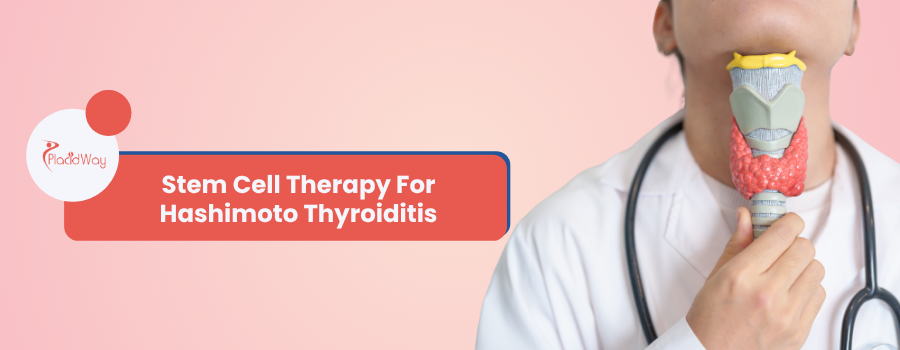
Imagine your body's defense system, which is supposed to fight off invaders like viruses, getting confused and attacking one of your own vital organs. In Hashimoto's, the target is the small, butterfly-shaped gland in your neck—the thyroid. This gland is your body's master metabolic regulator, controlling everything from your heart rate and body temperature to your energy levels and weight.
The exact cause isn't known, but it's believed to be a mix of genetic predisposition and environmental triggers. Common symptoms that build up over time include:
- Persistent fatigue and sluggishness
- Unexplained weight gain
- Increased sensitivity to cold
- Dry skin, brittle nails, and hair loss
- Muscle aches, tenderness, and joint stiffness
- Depression or memory problems ("brain fog")
How Does Stem Cell Therapy Work for Hashimoto's?
This therapy isn't about replacing your thyroid. It's about stopping the destruction. The most commonly used cells, Mesenchymal Stem Cells (MSCs), are like master regulators. When introduced into your body (usually through a simple IV infusion), they sense the inflammation caused by the autoimmune attack.
In response, they release a cascade of anti-inflammatory proteins and growth factors. This does two key things: first, it tells your T-cells (the "attack" cells) to stand down. Second, it promotes the activity of regulatory T-cells (the "peacekeeper" cells), helping to restore balance to your immune system. By quieting this internal war, the therapy gives your thyroid a chance to heal and potentially recover some function.
Is Stem Cell Therapy a Cure for Hashimoto's?
The goal is to halt the progression of the disease. While some patients may see a remarkable improvement in their thyroid antibody levels and hormone production, it doesn't guarantee that the autoimmune condition will be gone forever. The effects can last for several years, but the longevity varies from person to person.
Think of it as putting out the fire, not rebuilding the part of the house that already burned down. It stops further damage and allows the remaining structure to function as well as it can. For many, this "stop" is life-changing, leading to improved energy, better mood, and a higher quality of life that hormone pills alone couldn't provide.
What Are the Main Types of Stem Cell Therapy Used?
These MSCs can be sourced from a few different places, each with its own profile:
- Umbilical Cord Tissue (Allogeneic): This is one of the most common and potent sources. These cells are collected from the Wharton's jelly of donated, healthy umbilical cords after birth. They are brand new, robust, and have strong anti-inflammatory properties. Because they are "immunoprivileged" (they don't have markers that your body recognizes as foreign), they can be safely given to any patient without risk of rejection.
- Adipose Tissue (Autologous): These MSCs are harvested from your own body fat, typically through a mini-liposuction procedure. The fat is processed to isolate the cells, which are then re-infused. The benefit is that they are your own cells, eliminating any risk of rejection. However, the cells are as "old" as you are and may be less vigorous than newborn umbilical cord cells.
- Bone Marrow (Autologous): This involves aspirating bone marrow, usually from the hip bone, to collect MSCs. This is a more invasive procedure than adipose collection and yields a lower number of stem cells, making it less common for treating autoimmune conditions like Hashimoto's.
Embryonic stem cells, which you may have heard of, are not used for this type of therapy due to ethical concerns and medical risks like tumor formation.
Who is a Good Candidate for This Therapy?
This therapy is often considered when:
- Your symptoms are poorly controlled, even if your lab tests (TSH) look "normal."
- You have high levels of thyroid antibodies (TPOAb, TgAb), indicating an active autoimmune attack.
- You are in the earlier stages of the disease, as stem cells are better at preserving thyroid function than restoring tissue that is already completely destroyed and fibrotic.
- You are in good general health, without active infections or cancer.
A reputable clinic will conduct a thorough review of your medical history, including recent lab work and diagnostic imaging, to determine if you are a suitable candidate.
What are the Potential Benefits and Risks?
Potential Benefits:
- Significant reduction in thyroid antibodies (TPOAb).
- Decreased inflammation throughout the body.
- Improved energy levels and reduced "brain fog."
- Better mood and reduced symptoms of depression.
- Potential decrease in the required dose of thyroid medication.
Potential Risks:
- Short-term fatigue, headache, or fever following the infusion.
- Infection at the infusion or harvest site (very rare at reputable clinics).
- Allergic reaction (also rare).
- If using your own (autologous) cells, there are risks associated with the fat or bone marrow harvest procedure.
It's crucial to note that many stem cell therapies are not yet FDA-approved in the U.S. for this specific use, which is why many patients seek treatment abroad in countries where it is regulated and more widely available.
What is the Worldwide Cost of Stem Cell Therapy for Hashimoto's?
Here is a general cost comparison for stem cell therapy protocols. (Note: Prices are estimates and can vary based on the clinic, the number of cells, and the specific protocol.)
| Country | Estimated Cost (USD) | Key Notes |
|---|---|---|
| United States | $20,000 - $50,000+ | Not FDA-approved for Hashimoto's; not covered by insurance. |
| Mexico | $4,500 - $15,000 | High-quality clinics (COFEPRIS-regulated), experienced doctors. |
| Turkey | $3,000 - $12,000 | Very affordable, modern facilities, often includes packages. |
| Colombia | $5,000 - $14,000 | Growing hub for regenerative medicine with high standards. |
| Thailand | $4,000 - $13,000 | Excellent hospitals, combines treatment with holistic recovery. |
Why is Stem Cell Therapy for Hashimoto's Cheaper Abroad?
In the U.S., strict FDA regulations classify stem cells as drugs, leading to extremely high costs for research, compliance, and insurance. In countries like Mexico or Turkey, the regulatory bodies (like COFEPRIS in Mexico) have approved the use of stem cells for therapeutic purposes, making it a more accessible part of medical practice.
These international clinics operate in state-of-the-art facilities with highly trained, often US-educated, doctors. They compete for an international patient base, which drives them to offer competitive pricing and comprehensive packages that often include accommodation and transfers, further increasing the value.
What are the Best Countries for Stem Cell Therapy for Hashimoto's?
- Mexico (e.g., Cancun, Monterrey): Proximity to the U.S., many high-quality, regulated clinics, and decades of experience with medical tourists.
- Turkey (e.g., Istanbul, Antalya): Known for its ultra-modern hospitals, very competitive pricing, and expertise in a wide range of advanced medical procedures.
- Colombia (e.g., Medellín): Rapidly emerging as a center for high-tech healthcare, particularly in regenerative and cosmetic fields, with excellent doctors.
When choosing, it's vital to look beyond price. Consider clinic accreditations, doctor credentials, the source of the stem cells, and patient testimonials. A medical tourism facilitator like PlacidWay can help you vet and connect with these trusted international providers.
What Does the Treatment Process Look Like for a Medical Tourist?
Here’s a typical timeline:
- Phase 1: Remote Consultation: You will send your medical records and lab results from home to the clinic's medical team for review. They will confirm your eligibility and create a personalized treatment plan.
- Phase 2: Arrival & In-Person Consult (Day 1-2): You arrive, are transferred to your hotel, and meet with the doctor at the clinic. They will conduct a physical exam, answer your questions, and may perform fresh blood tests.
- Phase 3: Treatment Day (Day 3-4): The stem cell therapy is administered, usually through a simple IV drip, which can take 1-2 hours. It's a painless, outpatient procedure. You'll rest at the clinic for a short observation period.
- Phase 4: Recovery & Follow-up (Day 5-7): You'll have a final check-up with the doctor to ensure you are feeling well. You are then cleared for travel and can fly home, often with a plan for remote follow-up.
What Should I Expect After the Procedure?
In the first few days, you might feel some mild fatigue or a headache, which is a normal response. The clinic will advise you to rest, stay hydrated, and avoid strenuous exercise for about a week.
The most significant changes happen at a cellular level. You might first notice you're sleeping better or have a bit more energy. Over the following months, many patients report a clearer mind, less joint pain, and an overall sense of improved well-being as their antibody levels drop and inflammation subsides. Your doctor will typically order follow-up blood tests at 3, 6, and 12 months to track your progress.
Is Stem Cell Therapy for Hashimoto's Safe?
The key to safety lies in the clinic's quality control. Reputable international clinics source their umbilical cord cells from accredited labs that screen donors rigorously for all infectious diseases. The cells are processed in a sterile environment and their viability is confirmed before administration.
The theoretical risk of tumor formation is primarily associated with embryonic stem cells, which are not used in this treatment. Decades of research on Mesenchymal Stem Cells have not shown them to cause tumors. Choosing a vetted, accredited facility is the most important step you can take to ensure a safe and effective treatment.
Ready to Explore a New Path for Your Hashimoto's?
Your journey to better thyroid health and renewed energy could be waiting. Don't let cost be a barrier to advanced care. Explore top-rated international clinics, compare affordable treatment packages, and get a free, personalized quote for your stem cell therapy with PlacidWay. Let us help you plan a seamless and restorative medical journey. Start your consultation today!
Stem Cell Therapy Abroad




.png)
.png)
.png)
.png)

Share this listing