
Robotic Spine Surgery in Turkey for Degenerative Scoliosis and Spinal Stenosis
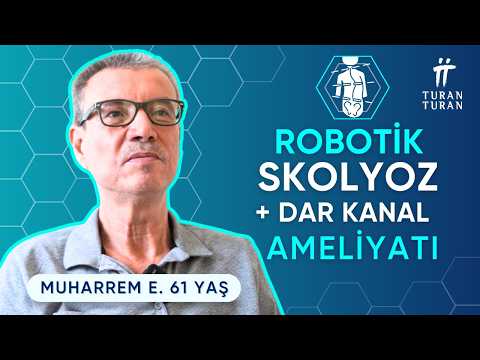
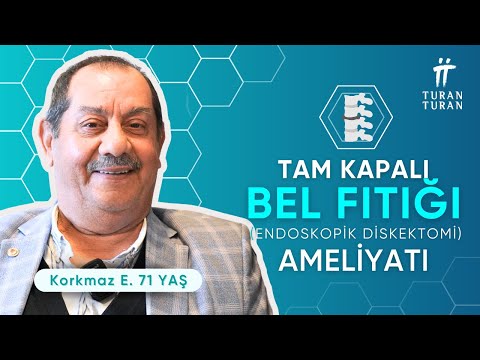
Muharrem, a 61-year-old patient from Eski?ehir, had lived with back pain for nearly 30 years before learning that his condition involved degenerative scoliosis and nerve compression. His symptoms eventually affected his ability to sit, walk more than short distances, move his big toe normally, and sleep comfortably. After researching treatment options, he traveled to Turan & Turan Health Group for robotic-assisted spine surgery using the Mazor X system.
In this video, Muharrem and Op. Dr. Yunus Uysal discuss his symptoms, diagnosis, previous treatment attempts, concerns about complex spine surgery, robotic planning, screw placement, decompression, spinal stabilization, and his experience 10 days after surgery.
Video Chapters & Clinical Insights
How Degenerative Scoliosis and Spinal Stenosis Affected Muharrem's Mobility
Muharrem says his back had been hurting for nearly 30 years. He had worked in physically demanding jobs and describes carrying 100 to 150 sacks of cement a day during part of his working life [00:51].
Over time, his symptoms became more limiting. He explains that sitting caused hip pain, walking more than about 500 meters became difficult, his left big toe did not bend normally, and lying down could trigger pain throughout his leg [03:45].
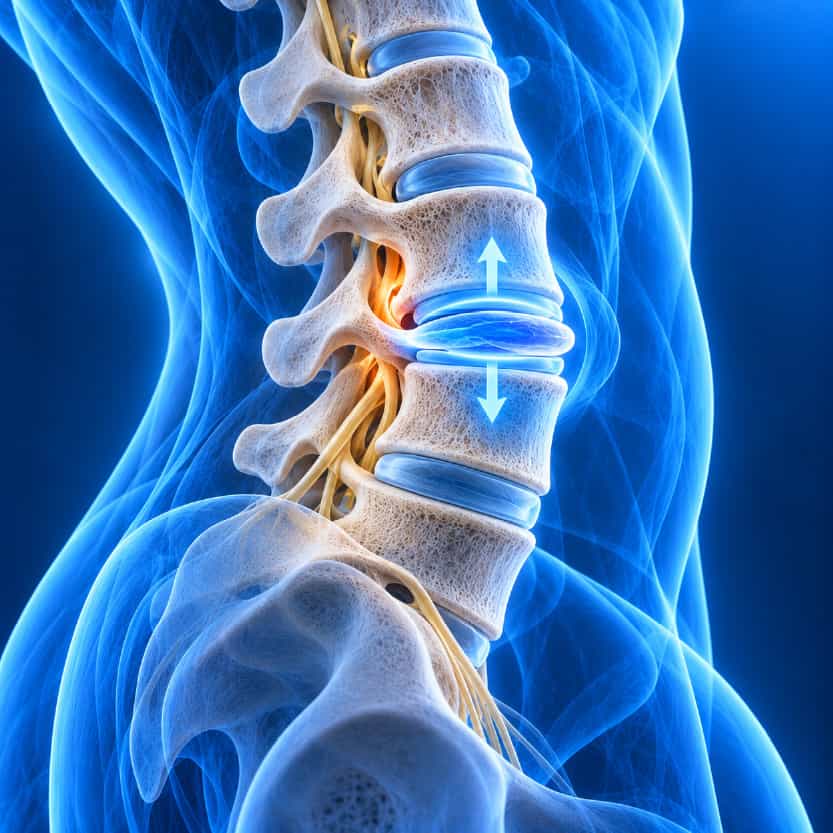
In the medical explanation provided in the video, Dr. Yunus Uysal describes how degenerative scoliosis can alter the normal biomechanics of the spine. When the spine becomes curved and unevenly loaded, changes such as bone protrusions may contribute to nerve compression. This can lead to symptoms including pain, numbness, and loss of strength in the legs.
From Suspected Disc Hernia to a Diagnosis of Degenerative Scoliosis
For many years, Muharrem believed his symptoms were caused by a lumbar disc hernia [00:35]. He sought orthopedic and physical therapy care and later learned that his spinal condition involved scoliosis.
According to Dr. Uysal's explanation in the video, degenerative scoliosis is different from scoliosis that develops in adolescence. It is associated with age-related changes in the spine, including changes in discs, joints, and bones [06:49].
| Feature | Lumbar Disc Hernia | Degenerative Scoliosis |
|---|---|---|
| Primary Issue | Disc material may protrude and irritate or compress a nerve. | Age-related changes can create an abnormal spinal curve and uneven loading. |
| Spinal Alignment | May occur without a visible spinal curve. | Can involve side-to-side curvature of the spine. |
| Symptoms | May include back pain, sciatica, numbness, or weakness. | May include back pain, difficulty standing or walking, numbness, and weakness. |
| Extent | Often affects a localized disc level. | May involve multiple spinal levels. |
Muharrem recalls one doctor describing his spine as having become "like a snake" [02:02]. He also underwent 45 days of physical therapy. He says he initially felt better during treatment, but his pain returned about a week after going home.
Why Muharrem Was Concerned About Complex Spine Surgery
Muharrem describes receiving a concerning assessment during an earlier consultation in Ankara. He says he was told that his surgery would require 14 screws and that there was uncertainty about whether the screws could affect a nerve or the spinal cord [02:24].
In his own account, he recalls being told there was a "90% risk of a wheelchair and a 10% chance of walking." This figure reflects what Muharrem reports being told during that earlier consultation and should not be interpreted as a general risk estimate for scoliosis surgery.
Because of these concerns, he continued researching treatment options and eventually found information about robotic-assisted spine surgery at Turan & Turan Health Group [04:01].
How Mazor X Robotic Guidance Was Used in His Spine Surgery
The video explains that robotic guidance was used to help plan and guide screw placement in Muharrem's deformed spine. Dr. Uysal describes robotic surgery as particularly useful when spinal anatomy is altered and accurate screw positioning becomes more difficult.
The Mazor X system uses three-dimensional planning to help the surgical team determine the intended size, angle, depth, and trajectory of spinal screws before placement [05:13].
How robotic guidance was used in Muharrem's case:
- 3D Surgical Planning: The surgical team planned screw positions based on Muharrem's individual spinal anatomy.
- Robotic Guidance: The robotic system helped guide the planned trajectory for screw placement during surgery.
- Placement Verification: The system was used to support accurate positioning of screws in a spine affected by deformity.
Dr. Uysal explains that screw placement can be more difficult in a deformed spine because normal anatomical landmarks have changed. In Muharrem's case, robotic technology was used to assist with screw positioning while the surgical team also addressed nerve compression and spinal stabilization [08:41].
Muharrem's Recovery After Robotic Spine Surgery
After surgery, Muharrem began walking as part of his recovery [05:42]. His recovery experience is specific to his individual case and should not be considered a guaranteed outcome for other patients undergoing complex spine surgery.
Dr. Uysal explains that the goal of treatment for adult degenerative scoliosis is not simply to change the appearance of spinal alignment. For adult patients, functional goals may include improving the ability to walk, climb stairs, drive, and perform daily activities [05:48].
Post-operative imaging shown in the video demonstrates the corrected spinal alignment and the placement of screws from the upper spinal levels toward the pelvic bone [05:38].
Muharrem's 10-Day Follow-Up After Spine Surgery
Ten days after surgery, Muharrem returned for follow-up [10:36]. He describes the first 10 days as a difficult recovery period but says that eating, drinking, and sleeping had improved by the time of his follow-up.
Muharrem also says, "I started to taste the tea I drink and the food I eat," while describing how he felt after the operation [10:41].
His story reflects one patient's experience with robotic-assisted surgery for degenerative scoliosis and spinal stenosis. The appropriate treatment approach and expected recovery depend on each patient's diagnosis, neurological symptoms, overall health, spinal anatomy, and surgical plan.
Explore Robotic Spine Surgery Options in Turkey
If you are researching treatment for degenerative scoliosis, spinal stenosis, nerve compression, or another complex spinal condition, a qualified spine specialist can review your imaging, symptoms, medical history, and previous treatments to determine which options may be appropriate. PlacidWay can help you request information about spine surgery options in Turkey.
REQUEST SPINE TREATMENT INFORMATIONView Full Video Transcript
00:00 If I sit, my hip hurts. If I walk, I can't walk 500 meters, my big toe doesn't bend. If I lie down, after half an hour or an hour, my leg hurts completely.
00:11 The doctor in Ankara said to me: 90% risk of a wheelchair, 10% chance of walking. He gave me that chance.
00:24 Muharrem, I'm coming from Eski?ehir, I'm 61 years old. My back has been hurting for almost 30 years.
00:31 Of course, I went to doctors back then. Orthopedics, physical therapy... but I thought it was a hernia.
00:44 They told me, you are still young, don't have surgery. I always worked in heavy jobs. Cement... I was carrying 100-150 sacks of cement a day.
00:58 We couldn't protect ourselves, to be honest. Then I retired. After I retired, I focused on this even more.
01:07 I went to all the hospitals in Eski?ehir. City Hospital, Yunus Emre... I went to Ankara last year.
01:17 Finally, I went to Osmangazi Hospital. They said I have scoliosis. Uncle, they said, your waist has become like a snake, it's curved.
01:26 I can do the surgery, but I can't guarantee if you can walk or not, he said. I can't give this guarantee.
01:34 I went to Ankara, the doctor there said: 14 screws will be inserted, but whether it hits a nerve or the spinal cord, we can't say anything definite.
01:44 He gave me a 90% risk of a wheelchair and a 10% chance of walking. I took a step back, of course.
01:51 For a year, this back pain has now hit my hip. For a while, I couldn't even sit on my hip.
01:59 The doctors finally told me, go to physical therapy. Last year I stayed in physical therapy for 45 days. I was fine while there, but a week after I came home, my pains started again.
02:16 Again I couldn't sit on my hip. This time the pain in my hip went down from my left leg to my foot.
02:25 If I sit, my hip hurts. If I walk, I can't walk 500 meters, my big toe doesn't bend. If I lie down, my leg hurts completely.
02:39 Meanwhile, I'm doing research. I saw Yunus Hodja's videos on Instagram. I started watching them. What is scoliosis, what is it not...
02:48 I came here and talked with Yunus Hodja. He examined me. I had come here with my MRIs already.
03:02 Yunus Hodja looked and said, what the other doctor friends said is true, your waist is in a very bad condition.
03:07 Robotic surgery... I already saw it on Instagram and the reason I came here was for the robotic surgery.
03:13 Plus 3D... all the bones are visible. We see this screw going into the waist bone there, he says. This screw is mounted directly to the bone without damaging the nerve or your spinal cord.
03:34 Children's waists become scoliosis, we make it like a rope, but he says we don't have the chance to make yours like a rope.
03:41 Can I walk after the surgery? Because the others didn't say I could walk. Yunus Hodja said, you can walk, there will be no problem in walking.
03:48 Can I climb stairs, Hodja? You can. Can I drive a car, Hodja? You can. When he said that, I decided to come here.
03:56 [Medical Expert Analysis]: When we say scoliosis, adolescent idiopathic scoliosis comes to mind for most of us. However, one of the types of scoliosis we treat in our daily practice is degenerative scoliosis.
04:09 Degenerative scoliosis is a type caused by changes due to the aging of the spine, usually at later ages.
04:19 In Muharrem Bey's pre-operative X-ray, we see a scoliotic curve in the lumbar region. Normally, the spine should continue straight down without leaving the midline.
04:40 Because the biomechanics of the spine are disturbed, bone protrusions form in areas where loading is excessive. These protrusions cause nerve compression.
04:50 Because of this pressure on the nerves going to the legs, symptoms like pain, numbness, and loss of strength can occur. Muharrem Bey had a loss of strength in his ankle movements.
05:09 We aimed to both correct this degenerative scoliosis and eliminate the nerve pressure. Therefore, we performed a screw placement process starting from the back vertebrae down to the pelvic bone.
05:28 Placing the screws in the correct position is more difficult than in a spine without deformity. This increases the possibility of not being able to place screws in the correct position.
05:51 In such deformed spines, we frequently benefit from robotic surgery to place screws in the correct position. The robot prevents nerve damage that could be caused by screw position errors.
06:09 In Muharrem Bey's case, we ensured the screws were placed in the correct position in his deformed spine using robotic technology.
06:20 After the surgery, as you see here, we corrected the curvature and fixed the area by screwing from the upper levels to the pelvic bone.
06:36 [Muharrem - 10 Days Post-Op]: 10 days... then I called Yunus Bey. Those 10 days were a dungeon to me. Eating, drinking, sleeping... they are all back. I'm fine now.
06:48 It was a very difficult process, it's not easy. May God not give it to anyone. I started to taste the tea I drink and the food I eat. Thank you.
.png)




.png)


.png)

-2-(1).png)
.jpg)
.jpg)
-2-(1).png)








Share this listing