
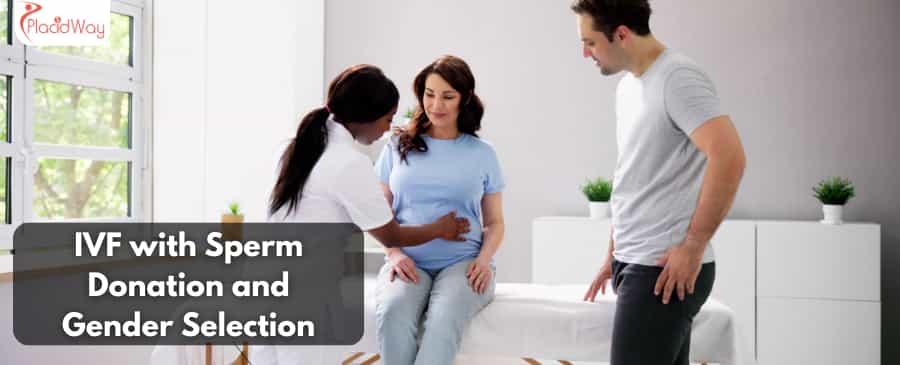
Embarking on Your Family Journey: IVF with Sperm Donation and Gender Selection
Navigating the path to parenthood can be a deeply personal and often complex journey. For many, the dream of starting or completing a family involves unique circumstances that necessitate advanced reproductive technologies. If you're exploring In Vitro Fertilization (IVF) combined with sperm donation and gender selection, you're considering a powerful, multifaceted approach to achieve your family goals.
This comprehensive treatment offers a beacon of hope for various individuals and couples: those facing male infertility, single women or same-sex female couples wishing to conceive, or parents desiring to balance their family with a child of a specific gender. The integration of donor sperm provides the necessary genetic material, while gender selection—typically through Preimplantation Genetic Testing (PGT)—allows for the careful choice of an embryo based on its chromosomal makeup, including sex.
Understanding the intricacies of "IVF with donor sperm and gender selection" is crucial. This guide will demystify the process, explain who it's for, delve into the procedural steps, discuss costs, and explore why many are now turning to medical tourism for this specialized fertility treatment. Whether you're researching "gender selection IVF cost," "donor sperm IVF success rates," or "countries where gender selection is legal," we're here to provide clarity and support as you consider this life-changing option.
Our aim is to empower you with knowledge, addressing common questions and concerns with empathy and precision. We recognize that this decision involves significant emotional, financial, and logistical considerations. Let's explore how IVF with sperm donation and gender selection can help turn your family aspirations into a beautiful reality.
Why Consider IVF with Sperm Donation and Gender Selection?
The decision to pursue IVF with sperm donation and gender selection is often driven by a combination of medical necessity and personal preferences. Understanding these underlying reasons can help you determine if this path is right for you:
- Severe Male Factor Infertility: For couples where the male partner has conditions like azoospermia (absence of sperm), severe oligozoospermia (very low sperm count), or genetic issues that cannot be overcome with other treatments, donor sperm becomes a vital option.
- Single Women and Same-Sex Female Couples: Women who wish to conceive independently or same-sex female partners seeking to start a family will require donor sperm to achieve pregnancy through IVF.
- Family Balancing: Many parents desire to have children of both genders or a specific gender to complete their family. Gender selection, through PGT, allows them to choose the sex of their next child.
- Prevention of Sex-Linked Genetic Diseases: Although less common, some families might choose gender selection to prevent passing on sex-linked genetic disorders that affect one gender disproportionately.
This combined approach offers a comprehensive solution, moving beyond simple conception to addressing specific family planning desires or medical necessities. Patients often search for "reasons for IVF with donor sperm" or "family balancing options" when exploring these choices.
What Factors Lead to Needing Donor Sperm and Gender Selection?
While "symptoms" usually refer to medical conditions, in this context, we're talking about the circumstances or desires that lead individuals to this specific treatment. These factors are critical to understanding the patient's journey:
- Male Infertility Issues:
- Azoospermia: Complete absence of sperm in semen.
- Severe Oligospermia: Extremely low sperm count that makes natural conception or even ICSI with own sperm unfeasible.
- Poor Sperm Quality: Issues with sperm motility, morphology, or DNA fragmentation.
- Genetic Abnormalities: Risk of passing on genetic conditions through the male partner's sperm.
- Previous Vasectomy or Cancer Treatment: Irreversible damage to sperm production.
- Social and Personal Circumstances:
- Single Women: Choosing to become a solo parent.
- Female Same-Sex Couples: Building a family together.
- Family Balancing: A desire to have a child of a specific gender to create a balanced family composition (e.g., "wanting a boy after two girls").
- Genetic Health Reasons (Rare):
- To avoid passing on severe X-linked genetic disorders, where one gender is affected.
These circumstances lead to patients searching for "donor sperm options for infertility" or "how to choose baby gender."
How Does IVF with Donor Sperm and Gender Selection Work? (The Procedure Explained)
This combined procedure is a highly orchestrated medical process involving several distinct stages:
- Sperm Donor Selection: Patients select a sperm donor from a licensed sperm bank. Donors undergo rigorous screening for medical history, genetic conditions, and infectious diseases. You can often choose based on physical characteristics, ethnicity, education, and even interests. Patients often search for "how to choose a sperm donor" or "sperm bank selection criteria."
- Ovarian Stimulation: The female partner undergoes a controlled ovarian stimulation protocol using fertility medications to encourage her ovaries to produce multiple mature eggs. This stage is monitored closely with ultrasounds and blood tests.
- Egg Retrieval: Once the eggs are mature, a minor surgical procedure called egg retrieval is performed. Under light sedation, a thin needle guided by ultrasound collects eggs from the ovaries.
- Fertilization (IVF/ICSI): The retrieved eggs are fertilized in the lab with the selected donor sperm. Often, Intracytoplasmic Sperm Injection (ICSI) is used, where a single sperm is injected directly into each egg to maximize fertilization success.
- Embryo Culture: The fertilized eggs (now embryos) are cultured in the lab for 3-5 days, allowing them to develop.
- Preimplantation Genetic Testing (PGT-A for Gender Selection):
- On day 5 or 6 of development, a few cells are carefully biopsied from each viable embryo.
- These cells are sent for genetic analysis (PGT-A, also known as PGS). PGT-A screens for chromosomal abnormalities and accurately determines the sex of each embryo.
- This is the stage where "gender selection through IVF" occurs. Only embryos of the desired gender and deemed chromosomally healthy are considered for transfer.
- Embryo Transfer: A selected, healthy embryo of the desired gender is carefully transferred into the female partner's uterus. Any remaining high-quality embryos can be frozen for future use.
- Pregnancy Test: Approximately two weeks after the embryo transfer, a pregnancy test is performed to determine if the procedure was successful.
This intricate process allows for remarkable control over the reproductive journey, addressing both fertility challenges and specific family planning desires.
Who is an Ideal Candidate for IVF with Sperm Donation and Gender Selection?
Not everyone is a candidate for this advanced procedure. Eligibility criteria typically include:
- Female Partner's Health: The female partner should generally be in good health, with healthy ovaries and a uterus capable of carrying a pregnancy. An assessment of ovarian reserve (egg supply) is crucial.
- Age: While there isn't a strict age cut-off, success rates for IVF decline with age, particularly after 35, due to reduced egg quality and quantity. Some clinics may have upper age limits.
- Medical History: A thorough review of both partners' medical histories (or the individual's) to identify any contraindications or risks.
- Emotional and Psychological Readiness: The process can be emotionally demanding, so psychological preparedness is important.
- Legal Considerations: Importantly, gender selection for non-medical reasons (family balancing) is not legal in many countries (e.g., Canada, UK, Australia). This is a primary reason why candidates often look abroad for treatment. Patients search for "countries where gender selection is legal" or "legal age for IVF abroad."
Consulting with a fertility specialist is essential to determine individual eligibility and discuss the most appropriate treatment plan.
What is the Recovery Time and What Can You Expect After IVF with Donor Sperm?
The "recovery" aspect of IVF primarily relates to two stages:
- After Egg Retrieval:
- You might experience mild cramping, bloating, and light spotting for a day or two.
- Most women can resume light activities within 24-48 hours. Strenuous exercise, heavy lifting, and sexual intercourse are typically discouraged for about a week.
- Discomfort is usually managed with over-the-counter pain relievers.
- After Embryo Transfer:
- This is a relatively quick and painless procedure.
- Some clinics recommend a day or two of rest, while others suggest resuming light daily activities. Heavy lifting, vigorous exercise, and intercourse are generally restricted until after the pregnancy test.
- The most significant "wait" is the "two-week wait" (or TWW) until the pregnancy test. This period is often emotionally challenging due to anticipation and anxiety.
Generally, physical recovery from IVF is not extensive, but the emotional journey requires significant support and patience. Patients often look for "what to do after embryo transfer" or "IVF two week wait tips."
Are There Risks and Side Effects Associated with IVF, Donor Sperm, and Gender Selection?
While generally safe, like any medical procedure, IVF with sperm donation and gender selection carries potential risks and side effects:
- Risks of IVF:
- Ovarian Hyperstimulation Syndrome (OHSS): This can occur when ovaries over-respond to fertility drugs, leading to swelling, pain, and in severe cases, fluid accumulation. It's usually mild but can sometimes require hospitalization.
- Multiple Pregnancies: Transferring more than one embryo increases the risk of twins or triplets, which carries higher risks for both mother and babies (e.g., preterm birth, low birth weight). Elective single embryo transfer (eSET) is often recommended to mitigate this.
- Ectopic Pregnancy: When a fertilized egg implants outside the uterus, usually in the fallopian tube.
- Complications from Egg Retrieval: Rare risks include bleeding, infection, or damage to surrounding organs (bowel, bladder, blood vessels).
- Emotional Stress: The IVF process is emotionally taxing, with cycles of hope and disappointment.
- Risks of Donor Sperm:
- Medically, risks are minimal due to extensive donor screening for infectious diseases and genetic conditions.
- Emotional/psychological considerations can arise regarding the child's genetic heritage and future disclosures.
- Risks of Gender Selection (PGT):
- The embryo biopsy itself carries a very small theoretical risk of damage to the embryo, though studies show it's extremely low when performed by skilled embryologists.
- There's a minimal chance of diagnostic error (false positive/negative), but PGT-A is highly accurate.
It's crucial to have a thorough discussion with your fertility specialist about all potential risks and side effects to make an informed decision. Patients often search for "IVF complications" or "risks of PGT-A."
How Much Does IVF with Sperm Donation and Gender Selection Cost Worldwide?
The cost of this specialized IVF treatment is a significant consideration, and it varies widely depending on the country, clinic, and specific services included. The primary factors influencing cost are:
- Base IVF Cycle Cost: This includes ovarian stimulation, egg retrieval, fertilization, and embryo transfer.
- Sperm Donor Fees: Cost for selecting and purchasing donor sperm from a sperm bank.
- PGT-A (Gender Selection) Fees: The cost for embryo biopsy and genetic testing. This is often an add-on.
- Medications: Fertility drugs can be a substantial part of the total cost and may or may not be included in package prices.
- Additional Services: Such as freezing leftover embryos, assisted hatching, or ICSI if not already included.
Worldwide Cost Comparison (Approximate Ranges per Cycle in USD)
| Country | IVF Base Cost | Sperm Donor (vial) | PGT-A (per embryo/batch) | Total Estimated Range (Excluding Travel/Accommodation) |
|---|---|---|---|---|
| USA | $12,000 - $18,000 | $800 - $1,500 | $3,000 - $8,000 | $15,800 - $27,500+ |
| Mexico | $6,000 - $9,000 | $500 - $1,000 | $2,000 - $4,000 | $8,500 - $14,000+ |
| Spain | $7,000 - $10,000 | $600 - $1,200 | $2,500 - $5,000 | $10,100 - $16,200+ |
| Greece | $5,000 - $8,000 | $500 - $1,000 | $2,000 - $3,500 | $7,500 - $12,500+ |
| Cyprus (Northern) | $4,000 - $7,000 | $400 - $800 | $1,500 - $3,000 | $5,900 - $10,800+ |
*Prices are estimates and can vary significantly. They generally do not include medications, travel, or accommodation.
This wide range is a key driver for "medical tourism for gender selection" or "affordable IVF abroad."
Why Consider IVF with Donor Sperm and Gender Selection Abroad?
For many patients, especially those from Western countries, seeking IVF with donor sperm and gender selection abroad isn't just an option—it's often the only viable path. Here's why:
- Legality of Gender Selection: The most common reason. Gender selection for non-medical reasons (family balancing) is illegal in many countries, including Canada, the UK, Australia, and parts of the USA. Countries like Mexico, Spain, Greece, and Northern Cyprus have more permissive laws. Patients often search for "countries where gender selection is legal."
- Cost Savings: As seen in the cost comparison, the total price for the procedure can be significantly lower in popular medical tourism destinations, even when including travel and accommodation. This makes advanced fertility treatments accessible to a wider range of patients.
- Access to Advanced Technology and Expertise: Many international clinics specialize in these procedures, boasting state-of-the-art labs and highly experienced fertility specialists, often with success rates comparable to or even surpassing those in their home countries.
- Shorter Waiting Lists: Some countries offer immediate access to treatment without the long waiting lists found in public healthcare systems or popular clinics elsewhere.
- Donor Availability and Anonymity: Certain countries have larger pools of diverse sperm donors or offer different anonymity options that might appeal to patients.
Choosing to go abroad involves careful planning but can open doors to achieving your family dreams that might otherwise remain closed.
Which Countries Offer the Best Value for IVF with Sperm Donation and Gender Selection?
When considering medical tourism for IVF with sperm donation and gender selection, certain countries consistently stand out for their combination of legal frameworks, quality of care, and cost-effectiveness:
- Mexico: A top choice, especially for North Americans, due to proximity, competitive pricing, and high-quality clinics. Gender selection is legal. Patients often search for "IVF Mexico gender selection reviews."
- Spain: Known for its advanced reproductive medicine and high success rates. Gender selection for non-medical reasons is allowed under specific conditions (e.g., family balancing is generally permitted).
- Greece: Offers modern facilities, experienced doctors, and relatively lower costs compared to Western Europe, with gender selection permitted under certain conditions.
- Northern Cyprus: Emerged as a very popular destination for gender selection due to its more liberal laws and highly competitive prices, attracting patients globally.
- Other Options: Countries like Turkey, Thailand, and some Eastern European nations also offer options, though it's crucial to verify the legality of gender selection specifically.
The "best value" often combines cost savings with excellent medical standards and a welcoming environment. It's important to research specific clinic success rates, accreditations, and patient reviews for any chosen destination.
What to Expect When Traveling for This Procedure Abroad?
Traveling abroad for such an intimate medical procedure requires careful planning. Here's a general roadmap of what to expect:
- Initial Consultations (Often Virtual): Most reputable clinics offer online consultations with fertility specialists to review your medical history, discuss treatment plans, and determine suitability before you travel.
- Pre-Travel Preparations: This includes obtaining necessary medical records, travel documents (passport, visa if needed), and coordinating flights and accommodation. Many clinics offer assistance with these logistics.
- Duration of Stay: You will typically need to be in the destination country for approximately 2-3 weeks, depending on the specific protocol. This allows for ovarian stimulation, egg retrieval, and embryo transfer. If you're only doing PGT and frozen embryo transfer (FET), the stay might be shorter.
- Local Support: Many clinics cater to international patients and have multilingual staff, patient coordinators, and support services to ensure a smooth experience.
- Combining Treatment with Travel: While the primary goal is medical, many patients find time to explore the local culture and enjoy the destination, which can help alleviate stress. However, remember that the focus is on treatment.
- Post-Procedure Follow-up: Discuss with your foreign clinic how post-transfer monitoring and initial pregnancy care will be handled once you return home.
Patients often search for "IVF abroad travel guide" or "medical tourism fertility packages."
How Can You Ensure Safety and Quality for IVF Abroad?
Ensuring safety and quality is paramount when undertaking medical treatment, especially abroad. Here's how to safeguard your journey:
- Research Reputable Clinics: Look for clinics with a long history of success, positive patient reviews, and transparent reporting of their success rates. Websites like PlacidWay can provide curated lists of trusted clinics.
- Check Accreditations and Certifications: Verify that the clinic holds international accreditations (e.g., JCI - Joint Commission International) or local equivalent accreditations that demonstrate adherence to high standards of care.
- Doctor Qualifications: Inquire about the qualifications, experience, and specialization of the fertility specialists and embryologists who will be handling your case.
- Transparent Communication: Ensure the clinic provides clear, detailed information about the treatment plan, risks, success rates, and all costs involved. Language should not be a barrier, with multilingual staff available.
- Lab Standards: Ask about the clinic's embryology lab standards, technology used (e.g., time-lapse incubators), and quality control procedures for PGT.
- Legal and Ethical Framework: Confirm that the clinic operates within a robust legal and ethical framework for reproductive medicine, especially concerning donor screening and genetic testing.
- Insurance and Emergency Protocols: Understand if your travel insurance covers medical complications and what emergency protocols are in place.
Don't hesitate to ask many questions. A reputable clinic will welcome your inquiries and provide comprehensive answers. Patients often search for "best IVF clinics abroad" or "safe gender selection abroad."
What Are Patient Success Stories and Ethical Considerations for Gender Selection Abroad?
Hearing about others' experiences can be incredibly reassuring and informative. Many individuals and couples have successfully built their families through IVF with donor sperm and gender selection abroad, often after years of struggling or facing legal hurdles in their home countries.
- Success Stories: These often highlight the relief of finding a legal and affordable pathway to their desired family structure, the professionalism of international medical teams, and the joy of welcoming a child of their chosen gender. These stories underscore the profound impact of medical tourism on personal lives.
- Ethical Considerations: The practice of gender selection for non-medical reasons (family balancing) is a topic of ongoing ethical debate globally.
- Autonomy vs. Social Impact: Proponents emphasize reproductive autonomy and the right to make choices about one's family. Critics raise concerns about potential societal implications, such as gender imbalance in populations (though this is less likely with individual family balancing) or the commodification of children.
- Medical vs. Social Need: The distinction between selecting gender for medical reasons (e.g., preventing a serious sex-linked disease) and social reasons (e.g., family balancing) is a core part of the debate that drives differing legal stances worldwide.
- Donor Sperm Ethics: Considerations also include the rights of the donor, the future child's right to know their genetic origins (depending on anonymity laws), and the process of donor selection.
When considering this procedure, it's important to reflect on these ethical aspects and choose a clinic and country whose regulatory framework aligns with your personal values and ensures ethical practice. Patients often search for "gender selection ethics" or "IVF abroad success rates."
Take the Next Step with PlacidWay
Ready to explore treatment options abroad? Discover top clinics, compare prices, and get a free quote tailored to your needs with PlacidWay.
Fertility Treatment Abroad, Best Fertility Clinics




.png)
.png)

.jpg)





-(1).png)
.png)












Share this listing