


The Biological Journey of an In Vitro Fertilization Procedure
Going through an In Vitro Fertilization procedure is a profound medical journey that fundamentally alters your natural reproductive cycle. Many patients wonder exactly what happens to your body during this intensive fertility treatment protocol. From the initial hormone injections to the delicate embryo transfer process, understanding the IVF step-by-step timeline helps demystify the physical changes you will experience. This comprehensive guide breaks down the biological shifts, medical milestones, and bodily sensations required to achieve a successful pregnancy through assisted reproductive technology.
Video Chapters & Quick Navigation
Ovarian Suppression: Pausing Your Natural Cycle
The first active step of an In Vitro Fertilization procedure is often counterintuitive to patients seeking to get pregnant. Doctors begin by deliberately shutting down your natural reproductive cycle to take complete control of your endocrine system. This phase, often called down-regulation, ensures that your body does not release an egg prematurely during the upcoming treatment.
As explained at , reproductive endocrinologists typically prescribe birth control pills or specialized medications like Lupron. These medications block the natural communication between your brain and your ovaries. During this time, your estrogen levels drop significantly, which can mimic the early symptoms of menopause.
Physically, you might experience mild hot flashes, headaches, and sudden mood swings as your body adjusts to the suppressed hormone levels. This temporary state creates a blank canvas for the fertility specialists. By preventing early ovulation, doctors can ensure that all your follicles will grow at the exact same rate when the stimulation phase begins.
The Role of Baseline Bloodwork and Ultrasounds
Before moving to the next stage, your fertility clinic will require you to come in for baseline testing. A transvaginal ultrasound is performed to check your ovaries for any existing cysts that could interfere with the IVF fertility medication. Your uterine lining is also examined to ensure it is appropriately thin.
Simultaneously, nurses will draw blood to measure your baseline estradiol and follicle-stimulating hormone levels. If your estrogen is appropriately low and your ovaries are quiet, you are officially cleared to begin the stimulation process. This precise synchronization is critical for maximizing your overall IVF success rates.
Ovarian Stimulation: Pushing the Body to Produce Multiple Eggs
Once your natural cycle is suppressed, the most physically demanding phase of the In Vitro Fertilization procedure begins. You will start administering daily subcutaneous hormone injections to stimulate your ovaries. In a natural, unmedicated cycle, your body typically matures and releases only one single egg per month.
During the ovarian stimulation phase, the goal is to rescue multiple eggs that would have otherwise died off. You will inject high doses of synthetic Follicle Stimulating Hormone (FSH) and Luteinizing Hormone (LH) directly into your lower abdomen. As noted at , these powerful IVF fertility medications force the ovaries to develop a large cohort of follicles simultaneously.
Because your ovaries are expanding to accommodate ten, twenty, or sometimes thirty growing follicles, they become significantly enlarged and heavy. By the second week of injections, you will likely feel a profound sense of fullness and pressure in your pelvic region. Many women report looking and feeling heavily bloated, making tight clothing incredibly uncomfortable.
The Impact of Rapidly Rising Estrogen
As each follicle grows, it secretes estrogen into your bloodstream. Because you have multiple follicles growing at once, your estrogen levels will skyrocket well beyond normal physiological limits. This drastic hormonal surge is responsible for many of the physical IVF side effects on the body.
You may experience extreme fatigue, breast tenderness, and an increase in cervical mucus. Emotionally, the high estrogen levels can lead to heightened sensitivity and tearfulness. Your clinical team will monitor these hormone levels closely to ensure your body is responding safely to the stimulation protocol.
Follicle Monitoring and the Crucial Trigger Shot
Throughout the ovarian stimulation phase, you will visit your fertility clinic frequently for morning monitoring appointments. These visits consist of routine blood draws and transvaginal ultrasounds to measure the precise millimeter size of your developing follicles. The medical team is looking for the majority of your follicles to reach an optimal diameter, typically between 18 and 22 millimeters.
Your medication dosages are frequently adjusted based on these daily ultrasound findings to prevent dangerous overstimulation. Once the follicles reach the target size, your doctor will instruct you to administer the final, most important injection. This is universally known in the fertility community as the "trigger shot."
The trigger shot contains Human Chorionic Gonadotropin (hCG) or a Lupron agonist, which mimics the natural LH surge. As highlighted at , this injection initiates the final maturation process of the eggs. It effectively detaches the eggs from the follicle walls, making them ready to be surgically retrieved exactly 36 hours later.
The Strict Timeline of Egg Maturation
The timing of the trigger shot is the most inflexible rule of the entire In Vitro Fertilization procedure. If the shot is taken even an hour late, it can completely jeopardize the egg retrieval surgery. Taking it too early can result in immature eggs that cannot be fertilized in the laboratory.
Taking it too late means you might ovulate before the surgeon can retrieve the eggs, resulting in a canceled cycle. Patients are given exact, down-to-the-minute instructions for this injection. The precision required during this 36-hour window underscores the highly medicalized nature of advanced fertility treatments.
The Egg Retrieval Surgery: What Happens in the Operating Room
The egg retrieval process is a minor, yet highly delicate, surgical procedure performed under twilight sedation or general anesthesia. You will be completely asleep and will not feel any pain during the actual operation. The entire surgical intervention usually takes only 15 to 30 minutes, depending on the number of follicles present.
The reproductive endocrinologist uses a specialized transvaginal ultrasound probe equipped with a long, hollow needle. As detailed at , the needle is carefully guided through the vaginal wall directly into each swollen ovary. The doctor pierces every single mature follicle and uses gentle suction to drain the follicular fluid, which contains the microscopic eggs.
This fluid is immediately passed through a small window into the adjacent embryology laboratory. There, an embryologist searches the fluid under a high-powered microscope to locate and isolate the retrieved eggs. Once you wake up in the recovery room, your doctor will be able to tell you exactly how many eggs were successfully collected.
Post-Surgery Physical Recovery
When you wake up from the anesthesia, it is completely normal to experience moderate pelvic cramping, similar to intense menstrual pain. You may also notice light vaginal spotting or bleeding from the needle puncture sites. The clinic will provide pain management medication and strict instructions to rest for the remainder of the day.
Your ovaries remain significantly enlarged even after the fluid is drained, and they will need several weeks to shrink back to their normal almond size. Patients are advised to avoid strenuous exercise, heavy lifting, and sexual intercourse to prevent a rare but serious condition called ovarian torsion. Heating pads and electrolyte-rich fluids become your best tools for post-operative recovery.
In the Laboratory: Fertilization and Embryo Development
While you are recovering at home, the most critical scientific phase of the In Vitro Fertilization procedure happens inside the embryology lab. The retrieved eggs are stripped of their surrounding cells and evaluated for maturity. Only mature eggs have the biological capacity to be successfully fertilized by sperm.
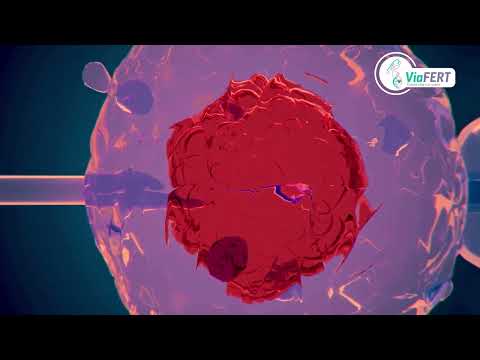
Fertilization is achieved through either conventional insemination or Intracytoplasmic Sperm Injection (ICSI). With conventional IVF, thousands of motile sperm are placed in a petri dish with the egg, allowing nature to take its course. With ICSI, which is mentioned at , a highly trained embryologist selects a single, perfectly shaped sperm and injects it directly into the center of the egg.
The following morning, the embryology team checks the eggs to see how many have successfully fertilized, indicated by the presence of two pronuclei. This begins the agonizing wait known as the "embryo hunger games," where the number of viable embryos naturally drops at each stage of development. Over the next three to six days, the fertilized embryos are incubated in sophisticated machines that mimic the internal environment of a human fallopian tube.
The Blastocyst Stage and Genetic Testing
The ultimate goal is for the embryos to reach the blastocyst stage by day five, six, or seven of development. A blastocyst is a highly complex structure containing hundreds of cells, divided into the inner cell mass (which becomes the fetus) and the trophectoderm (which becomes the placenta). Reaching this advanced stage is a strong indicator of embryo quality and survival.
Many modern IVF patients opt to have their blastocysts biopsied for Preimplantation Genetic Testing for Aneuploidies (PGT-A). A few cells are carefully removed from the trophectoderm and sent to a specialized genetics lab to check for chromosomal abnormalities. The viable embryos are then rapidly frozen in a process called vitrification, safely preserving them for a future frozen embryo transfer.
The Embryo Transfer Experience and Uterine Preparation
Before an embryo can be transferred, your body must be hormonally prepped to accept a pregnancy. In a frozen embryo transfer cycle, doctors will prescribe exogenous estrogen to thicken your endometrial lining. Frequent ultrasound monitoring ensures the uterine lining reaches a thick, trilaminar (three-layered) appearance, which is optimal for implantation.
Once the lining is deemed perfectly receptive, you will begin heavy progesterone supplementation. Progesterone is the crucial hormone that stabilizes the uterine lining and prevents the body from shedding it like a normal period. As explained at , this is often administered via daily intramuscular injections into the buttocks, known as Progesterone in Oil (PIO).
The actual embryo transfer is remarkably simple compared to the egg retrieval, requiring no anesthesia. You will be awake as the doctor inserts a highly flexible, thin catheter through your cervix and into your prepared uterus. Using live abdominal ultrasound guidance, the embryologist gently pushes the microscopic embryo through the catheter, depositing it perfectly within the endometrial cavity.
The Physical Sensations During Transfer
The procedure is virtually painless, with most women feeling only mild pressure from the speculum. However, the requirement to have a completely full bladder during the procedure can cause significant physical discomfort. A full bladder is necessary because it pushes the uterus into a flat, visible position for the ultrasound technician.
Once the catheter is removed and checked under the microscope to ensure the embryo did not stick to the plastic, you are officially pregnant until proven otherwise. You will be allowed to empty your bladder immediately and are usually sent home with instructions to relax for a day or two. Strict bed rest is no longer recommended by modern fertility clinics, as light movement promotes healthy blood flow to the uterus.
The Luteal Phase and the Infamous Two-Week Wait
The period between the embryo transfer and the official pregnancy blood test is universally known as the two-week wait. Biologically, the embryo must hatch from its protective shell and physically burrow into your thickened uterine lining. This delicate process of implantation usually occurs within the first 48 to 72 hours after the transfer procedure.
During this waiting period, you must continue all of your hormone medications flawlessly to support a potential pregnancy. This phase is notoriously difficult for patients because the physical side effects of progesterone medication perfectly mimic early pregnancy symptoms. You may experience nausea, extreme fatigue, breast soreness, and mild pelvic twinges.
As noted at , patients often obsessively analyze every bodily sensation, wondering if it indicates successful implantation or just the medication. Some women may experience light implantation bleeding or pink spotting, which can be terrifying but is biologically normal. The emotional toll of hoping, waiting, and hyper-analyzing physical symptoms makes this one of the hardest parts of the IVF timeline.
The Beta hCG Blood Test
Approximately nine to fourteen days after the transfer, you will return to the clinic for a quantitative blood pregnancy test. This test measures the exact level of human chorionic gonadotropin (beta hCG) circulating in your bloodstream. A positive test confirms that the embryo has successfully implanted and begun growing.
If the test is positive, your clinical team will schedule a follow-up blood draw two days later. They are looking for the hCG levels to appropriately double, which indicates a strong, viable early pregnancy. You will be required to continue taking all of your estrogen and progesterone medications until you are around ten weeks pregnant, at which point the placenta takes over hormone production.
Managing Physical Side Effects and Ovarian Hyperstimulation Syndrome
Throughout the In Vitro Fertilization procedure, your body undergoes massive unnatural hormone fluctuations that produce distinct physical side effects. The sheer volume of injectable medications can lead to localized bruising, welts, and soreness at the injection sites. Managing these symptoms requires rotating injection locations, using ice packs, and applying heating pads after intramuscular shots.
The most significant medical risk during the IVF process is developing Ovarian Hyperstimulation Syndrome (OHSS). This condition occurs when the ovaries overreact to the fertility medications, causing fluid to leak from the blood vessels into the abdominal cavity. While mild OHSS is common and manageable at home, severe OHSS is a medical emergency requiring hospitalization.
Monitoring your weight daily and tracking your fluid intake and output are critical post-retrieval habits. Drinking electrolytes and eating a high-protein diet can help draw the excess fluid back into the vascular system. Below is a detailed breakdown of expected symptoms versus dangerous warning signs that require immediate medical intervention.
| Symptom Category | Normal Expected Side Effects | Warning Signs of Severe OHSS |
|---|---|---|
| Abdominal Sensations | Mild to moderate bloating, feeling full quickly, period-like cramping. | Severe abdominal pain, rapid extreme swelling, tight and hard stomach. |
| Weight Fluctuations | Gaining 2 to 4 pounds of water weight over a few days. | Gaining more than 2 to 3 pounds in a single 24-hour period. |
| Gastrointestinal | Mild nausea, occasional constipation or indigestion. | Severe nausea, inability to keep liquids down, persistent vomiting. |
| Respiration & Urination | Normal breathing patterns, slightly reduced urine output. | Shortness of breath, chest pain, significantly decreased dark urination. |
The Psychological Toll on the Body
It is impossible to separate the physical side effects of IVF from the psychological impact it takes on your body. The intense hormone fluctuations, coupled with the high-stakes anxiety of fertility treatments, can trigger sleep disturbances, adrenal fatigue, and heightened stress responses. Chronic stress during a cycle physically manifests as muscle tension, tension headaches, and an elevated resting heart rate.
Many patients benefit tremendously from integrating holistic care into their medical protocol. Techniques such as fertility acupuncture, gentle restorative yoga, and meditation can help physically lower cortisol levels and improve uterine blood flow. Recognizing that an In Vitro Fertilization procedure is a marathon, not a sprint, helps patients give their bodies the grace, rest, and patience required to endure this complex medical undertaking.
Exploring Affordable Global IVF Options?
Fertility treatments shouldn't put you in financial distress. PlacidWay connects patients with world-renowned fertility clinics globally, offering advanced In Vitro Fertilization procedures at a fraction of the cost. Get access to top-tier reproductive endocrinologists today.
REQUEST FREE PRICING INFO







.png)


.png)














Share this listing