
Overcoming Chronic Arthritis: Maria Antonia’s Breakthrough with Stem Cell Therapy
For millions of people worldwide, the morning doesn't start with a fresh cup of coffee, but with the grinding reality of stiff joints and sharp, persistent pain. Chronic arthritis is more than just a medical diagnosis; it is a thief of time, mobility, and independence that traditional medicine often struggles to fully address. When standard pharmacological treatments begin to fail or cause secondary health complications, patients are left searching for a more sustainable path to recovery.
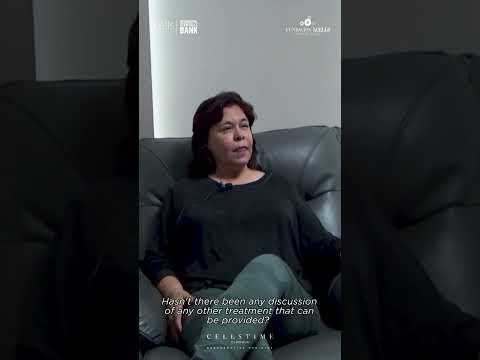
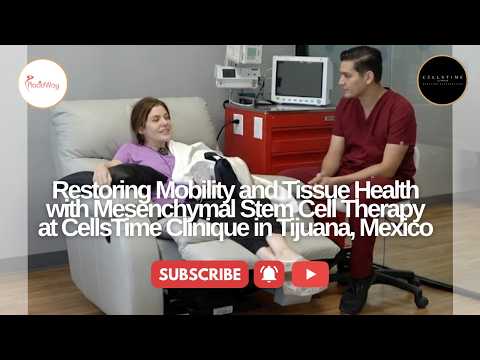
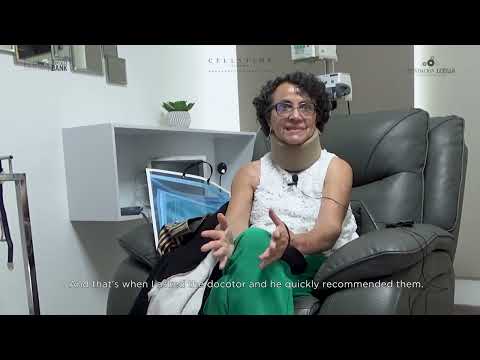
In this compelling testimonial, we meet Maria Antonia Álvarez Flores, a 58-year-old woman who found herself at a crossroads after seven years of intensifying arthritic pain and medication-induced liver issues. Her story highlights the transformative potential of regenerative medicine and mesenchymal stem cell therapy. Watch as she details the limitations of her previous treatments and why she turned to CellsTime Clinique for a future without debilitating joint pain.
Video Chapters & Quick Navigation
Arthritis is often misunderstood as a simple "wear and tear" condition, but for patients like Maria, it is a progressive inflammatory state that affects every facet of life. At [00:00], she introduces herself as a 58-year-old battling a condition that has slowly tightened its grip over seven years. What began as manageable discomfort transitioned into a daily struggle that medications alone could no longer solve.
The Daily Burden of Living with Chronic Arthritis
Living with chronic arthritis means navigating a world that often feels inaccessible. Maria describes the localized nature of her pain, starting with her hands and moving to her ankles, which are critical for basic mobility. By [00:13], she articulates how the pain migrated, making even the simplest movements a chore.
The progression of arthritis is rarely linear. As the inflammation spreads, it impacts different joints at different intensities. For Maria, the stiffness in her hands became particularly debilitating in the mornings, a classic symptom of rheumatoid or osteoarthritic conditions where the joints "freeze" during periods of inactivity. This stiffness isn't just uncomfortable; it prevents the execution of fine motor tasks required for work and household management.
The Loss of Daily Independence
One of the most sobering moments in the video occurs at [00:24], when Maria explains that she can no longer drive. The inability to turn her head or neck without severe pain is more than a physical limitation; it is a loss of freedom. Driving represents the ability to manage one's own schedule, shop for groceries, and participate in social life.
Similarly, housework and exercise—activities she once enjoyed—have become painful hurdles. When walking causes significant ankle pain, as she mentions at [00:31], the risk of a sedentary lifestyle increases, which can paradoxically make arthritic symptoms even worse over time.
The Hidden Risks of Long-Term Arthritis Medication
Standard treatment for arthritis usually involves a heavy regimen of Non-Steroidal Anti-Inflammatory Drugs (NSAIDs) or corticosteroids. While these can provide temporary relief, they often carry a high biological cost. Maria’s experience is a cautionary tale for many chronic pain sufferers.
At [00:36], she reveals that the "treatment of several pills" she was taking resulted in a slightly inflamed liver. This is a common but dangerous side effect of many pharmaceuticals when processed by the body over long periods. Hepatotoxicity can lead to serious health complications, forcing patients to make a devastating choice: live with the pain or risk organ damage.
Why Stopping Conventional Treatment is Not Enough
Because of her liver inflammation, Maria had to stop her medication. However, as she notes at [00:48], the pain immediately returned. This "rebound effect" happens because conventional pills only mask symptoms rather than addressing the underlying cellular damage or chronic inflammatory state within the joint.
This cycle of pain-medication-toxicity-pain is exactly why regenerative medicine has become such a vital field for arthritis patients. It offers a way to modulate the immune response and promote tissue repair without the systemic side effects associated with oral drugs.
The Science of Stem Cell Therapy for Joint Regeneration
Mesenchymal Stem Cell (MSC) therapy is at the forefront of biological treatments for joint disorders. Unlike medications that merely block pain signals, stem cells are "smart" biological agents. They possess the unique ability to home in on areas of inflammation and release bioactive molecules that promote healing.
Anti-Inflammatory Properties: Stem cells secrete cytokines that "calm" the overactive immune response in arthritic joints, reducing swelling and pain naturally. Tissue Repair: While research is ongoing regarding the extent of cartilage regrowth, MSCs are known to improve the microenvironment of the joint, potentially slowing the progression of the disease and improving the quality of the remaining tissue.
Why Patients Choose CellsTime Clinique in Mexico
Mexico has emerged as a premier destination for high-quality regenerative medicine. Clinics like CellsTime Clinique (associated with International Stem Cell Bank) utilize advanced protocols that are often more accessible than those in the U.S. or Europe due to regulatory frameworks that favor innovative biological research.
At [01:50], Maria mentions that a doctor from Texas actually recommended this clinic to a friend. This highlights the growing trend of "cross-border medical collaboration," where U.S. physicians recognize the expertise and sophisticated technology available in specialized Mexican facilities.
| Feature | Conventional Arthritis Care | Stem Cell Therapy (CellsTime) |
|---|---|---|
| Primary Goal | Symptom Management (Pain/Swelling) | Regeneration & Inflammation Modulation |
| Side Effects | Liver damage, GI issues, Kidney stress | Minimal (localized swelling or redness) |
| Longevity | Requires daily dosage indefinitely | Can provide relief for months or years |
| Treatment Method | Pills, Cortisone shots, or Surgery | Targeted injections or IV infusion |
Reclaiming an Active Lifestyle at 58
Age is often used as a reason to dismiss physical limitations, but Maria refuses to accept that 58 is "too old" to be active. At [01:21], she makes a poignant statement: "I don't think I'm at such an advanced age that I can't even walk anymore."
Her motivation is clear: she wants to return to the gym, she wants to continue working, and she wants to perform the housework that maintains her dignity and standard of living. This psychological drive is a critical component of healing. Patients who seek out regenerative options are often highly motivated to maintain their health and vitality long into their senior years.
The Importance of Patient Testimonials
Maria's story is one of many that showcase the human side of medical advancement. While clinical trials and data sheets are important, the words of a fellow patient often carry the most weight. At [01:10], she discusses how personal recommendations led her to this path. For those currently suffering, hearing that there is a way to avoid both the pain of arthritis and the damage of pills is a powerful message of hope.
Take the First Step Toward Relief
PlacidWay Medical Tourism connects you with trusted clinics offering advanced stem cell and regenerative therapies. Let us guide you through safe, effective treatments to help restore mobility, reduce pain, and improve your quality of life.
GET A FREE QUOTEView Full Video Transcript
00:00 My name is Maria Antonia Alvarez Flores. I have 58 years old. I have arthritis and now a slightly inflamed liver from the medications I was taking for the arthritis.
00:13 My hands hurt a lot, I started with pain in my hands, then with pain in my ankles. I've been having these pains for about 7 years now, but lately they are stronger.
00:24 I can't drive because I can't move my head. And my ankles hurt a lot, it hurts when I walk and do housework.
00:36 The doctors were giving me a treatment of several pills, that's why my liver is very inflamed as a consequence of that treatment. And how are your arthritis pains going?
00:46 Well, the pain is already starting because I stopped the treatment. My hands are already starting to hurt again, in the morning I wake up with stiff hands. Hasn't there been any discussion of any other treatment that can be provided?
00:59 Well, if my liver is not inflamed, I would start with the same treatment and if not, I think I would change it.
01:09 A doctor from Texas told a friend about you and she looked at me very badly and that's why she told me about you. Well... I want to be fine.
01:21 I don't think I'm at such an advanced age that I can't even walk anymore. I like to exercise. I want to keep working.
.png)

.png)









.jpg)
.jpg)
.jpg)









Share this listing