


Achieving natural, long-lasting facial rejuvenation requires advanced surgical expertise and a profound understanding of anatomical structures. Patients seeking a highly specialized deep plane facelift in South Korea benefit from world-class medical infrastructure and highly refined surgical methodologies. This comprehensive guide explores the intricate details of modern facelift procedures, highlighting innovative approaches developed by leading medical professionals and global aesthetic pioneers. By examining the rigorous principles taught at premier educational events, individuals can better understand how top-tier cosmetic surgeons consistently deliver exceptional, age-defying outcomes.
The landscape of facial aesthetic surgery is constantly evolving, driven by an unwavering commitment to patient safety and structural anatomical accuracy. As traditional cosmetic methods are rapidly replaced by sophisticated sub-SMAS dissections, the primary surgical focus has correctly shifted toward releasing deep retaining ligaments and repositioning composite facial tissues. This detailed surgical overview delves deeply into the mechanics of facial aging, the protective measures utilized for facial nerve preservation, and the specific advantages of advanced techniques discussed at prestigious international medical symposiums.
Video Chapters & Quick Navigation
Understanding the Mechanics of the Deep Plane Facelift Procedure
The deep plane facelift represents the absolute pinnacle of modern facial rejuvenation surgery, moving significantly beyond superficial skin tightening. Unlike traditional cosmetic methods that repeatedly rely on pulling the cutaneous layer or superficially plicating the superficial musculoaponeurotic system (SMAS), this advanced procedure directly addresses the foundational structural pillars of the human face. Plastic surgeons meticulously elevate the skin, facial muscle, and robust fascial layers as a single composite unit, ensuring a much more harmonious and anatomically correct repositioning of displaced facial tissues.
This profound anatomical approach successfully prevents the unnatural, wind-swept appearance commonly associated with older, tension-heavy facelift techniques. By expertly accessing the highly specialized sub-SMAS surgical plane, dedicated facial plastic surgeons can directly mobilize the descended malar fat pads and underlying midface structures. This comprehensive structural mobilization restores beautiful, youthful volume to the upper cheeks and effectively obliterates deep nasolabial folds and prominent marionette lines without relying on excessive dermal fillers.
Grasping the underlying deep plane methodology is completely essential for anyone seriously considering an advanced rhytidectomy procedure. The complex surgical technique demands an extraordinary level of strict anatomical knowledge, as the deep tissue dissection occurs in remarkably close proximity to vital neurovascular facial structures. Consequently, deliberately selecting a highly credentialed, board-certified surgeon who exclusively performs the true deep plane facelift is absolutely paramount for successfully achieving safe, long-lasting, and clinically superior aesthetic results.
This multi-layered operative approach also significantly enhances the overall longevity of the final surgical outcome when directly compared to traditional rhytidectomy operations. Because the heavy structural lifting is completely supported by the highly robust deep fascia rather than the inherently fragile dermal layers, the surgical results strongly resist the relentless downward forces of gravity over time. Patients can confidently expect their revitalized, youthful facial contours to endure beautifully for well over a decade.
The Critical Role of Retaining Ligaments and Facial Nerves
The fundamental mechanical key to a truly successful deep plane facelift lies squarely in the precise surgical management of the dense facial retaining ligaments. These critical supporting ligaments naturally act as exceptionally strong, fibrous anatomical tethers that firmly anchor the outer skin and superficial soft tissues directly to the rigid, underlying facial skeleton. As highlighted clearly during the advanced anatomical demonstrations at [00:24], comprehensively releasing these stubborn retaining ligaments is undeniably the single most important aspect of the entire deep plane operation.
Without properly and completely releasing these thick fibrous tethers, any upward surgical traction applied to the descending facial tissues will be severely limited physically, inevitably resulting in extremely early surgical relapse and profound patient disappointment. Expert facial cosmetic surgeons must skillfully navigate and meticulously divide the tough zygomatic, masseteric, mandibular, and cervical retaining ligaments to fully and safely mobilize the heavy composite tissue flap. Once these rigid fascial attachments are cleanly and surgically divided, the entire descended lower face, heavy jowls, and deflated midface can be effortlessly repositioned superiorly without ever placing any unnatural, damaging tension on the overlying thin skin.
However, carefully dissecting these dense ligaments directly introduces the primary technical risk of the complex procedure, which is the potential for mechanical injury to the highly delicate microscopic branches of the facial nerve. The facial retaining ligaments are intimately and dangerously associated with the vital motor branches of the facial nerves, strictly necessitating absolute surgical precision and extensive, flawless anatomical familiarity. Highly advanced surgical training strictly focuses intensely on safely dissecting these dangerous transitional anatomical areas without causing any unintended thermal or mechanical neurological damage.
Introducing the Push Down Technique for Facial Rejuvenation
Relentless, ongoing innovation in complex surgical technique continuously drives the highly specialized field of aesthetic cosmetic surgery forward, constantly offering safer and substantially more effective structural solutions for aging patients globally. During numerous recent international medical symposiums, a highly refined surgical methodology known as the Push Down technique has rapidly emerged as an incredibly elegant method for safely managing dense facial ligaments. As visually demonstrated in precise detail at [00:34], this specific surgical approach effectively allows operating physicians to safely and efficiently navigate the highly treacherous deep facial anatomical planes.
The highly regarded Push Down surgical technique is widely and enthusiastically celebrated within the professional surgical community for its inherent structural simplicity, remarkable clinical effectiveness, and exceptionally high utility in the demanding operating theater. Instead of inappropriately utilizing aggressive upward pulling or cutting blindly into highly resistant fibrous tissue, the master surgeon gently pushes down the deeper protective tissues while simultaneously elevating the superficial composite tissue flap. This vital, continuous tactile feedback mechanism quickly provides a significantly safer surgical corridor for totally releasing the retaining ligaments while aggressively maximizing the physical safety distance from the delicate, underlying facial motor nerves.
This beautifully atraumatic surgical method significantly minimizes collateral internal tissue trauma, directly leading to massively reduced postoperative surgical swelling and a significantly faster, more comfortable overall recovery timeline for the cosmetic patient. Furthermore, specific surgical techniques that heavily prioritize foundational anatomical safety while consistently delivering profound structural tissue release are highly sought after by top-tier cosmetic surgeons worldwide. As explicitly mentioned by the operating faculty at [00:46], this brilliant method's highly reliable clinical effectiveness continues to completely revolutionize modern facial facelift approaches.
MAFAC and Mayo Clinic: Elevating Facial Plastic Surgery Education
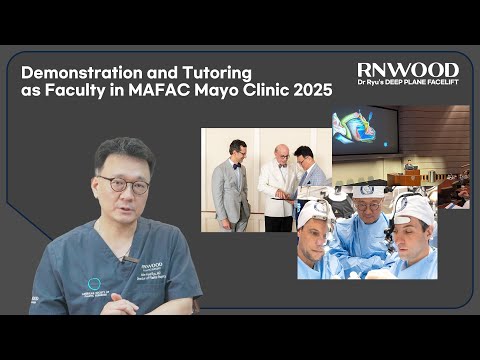
Rigorous, highly structured continuous medical education remains the absolute core cornerstone of ongoing surgical excellence, particularly in rapidly advancing, highly demanding fields as complex as deep plane facial rejuvenation. The internationally renowned Mendelson Advanced Facial Anatomy Course (MAFAC) serves proudly as an elite, globally recognized premier educational platform for dedicated facial plastic surgeons worldwide. The unprecedented, highly prestigious educational collaboration between the MAFAC academic organization and the world-famous Mayo Clinic, prominently noted at [00:00], perfectly highlights the immense global commitment to relentlessly advancing surgical training standards.
Held securely within the massive, state-of-the-art medical research facilities in Rochester, this exceptionally rigorous, invitation-only academic course routinely brings together the absolute brightest clinical minds in modern plastic surgery to meticulously dissect and openly discuss highly complex facial anatomy. The incredibly intensive, multi-day curriculum effectively bridges the historical gap between abstract theoretical textbook knowledge and highly practical, directly applied surgical application in the live operating room. Surgeons eagerly attending these exclusive masterclasses are rapidly and thoroughly equipped with the absolute latest, highly evidence-based surgical techniques to immediately improve their private clinical practice.
The extraordinary global prestige of such combined medical organizations absolutely ensures that strictly only the highest possible caliber of advanced surgical instruction is ever provided to the international attendees. By actively fostering a highly inclusive environment of intense peer review, open academic discussion, and tactile hands-on learning, legendary institutions like the Mayo Clinic effectively help standardize highly advanced, high-risk cosmetic procedures. As proudly referenced by the visiting surgical faculty at [00:08], this massive collaboration holds immense medical significance for the safe future of the entire surgical specialty.
The Concept of Layered Facial Anatomy in Modern Rhytidectomy
Mastering comprehensive facial aesthetic surgery strictly requires a profound, highly accurate three-dimensional spatial understanding of exactly how the human face ages within its distinct, highly organized anatomical layers. The foundational surgical concept of layered facial anatomy provides the absolute essential surgical framework required for completely and safely performing the intricate deep plane facelift. Expert academic lectures on this vital subject, such as the highly anticipated medical presentation highlighted at [01:37], delve incredibly deeply into the progressive structural changes that naturally occur from the facial skeleton straight up to the superficial epidermal skin.
Progressive, chronological facial aging does not merely cause superficial skin laxity; it critically and deeply involves severe craniofacial bone resorption, significant underlying fat pad deflation and descent, and the gradual, unavoidable attenuation of the dense facial retaining ligaments. Rapidly recognizing these highly complex, multi-layered physiological changes allows elite, globally trained surgeons to highly tailor their specific operative approach, directly addressing the underlying structural root causes of profound facial aging. By strategically operating exclusively within the specific, naturally occurring avascular glide planes of the facial anatomy, surgeons can effortlessly mobilize heavy composite tissues without ever encountering any significant bleeding or dangerous fibrous resistance.
This highly advanced anatomical philosophy purposefully and deliberately shifts the primary surgical focus away from pulling superficial skin tension and rapidly moves it directly toward comprehensive deep structural realignment and fat pad repositioning. Restoring the heavy descended soft tissues precisely to their original, highly youthful anatomical positions consistently yields a remarkably refreshed and highly vibrant appearance that perfectly honors the individual patient's natural, unique facial contours. The comprehensive, exhaustive medical study of these specific sub-SMAS fascial layers remains a completely indispensable, absolutely non-negotiable part of modern surgical plastic surgery training programs.
Global Collaboration and Hands-On Cadaver Dissection Training
The rapid, highly continuous ongoing evolution of advanced surgical techniques relies incredibly heavily on completely transparent international collaboration and the entirely open, unrestricted exchange of highly specialized medical knowledge. Global educational events frequently and highly successfully gather eager surgical participants from widely diverse geographic regions, prominently including dedicated physicians from Brazil and Argentina. As enthusiastically described during the post-course surgical recap at [01:09], these highly intensive anatomical laboratory sessions securely allow international surgeons to work incredibly closely together for multiple, rigorous days.
Intensive, closely monitored hands-on cadaver dissection remains an absolutely irreplaceable, core fundamental component of thoroughly and safely mastering the highly complex deep plane facelift operation. It successfully provides an entirely risk-free, highly controlled educational environment for visiting surgeons to repeatedly practice dangerously complex facial ligament releases and meticulously trace the microscopic pathways of the facial nerve branches. This highly tactile, intensely repetitive physical experience is absolutely vital for accurately and confidently translating abstract textbook knowledge into highly reliable, reflexive surgical skill in the live operating room.
Dedicated, highly patient mentorship plays an incredibly crucial role during these exhaustive surgical training sessions, with highly experienced teaching faculty actively guiding the attendees through the most intricate and potentially dangerous facial dissections. Sharing highly proprietary, finely tuned surgical techniques and incredibly practical, hard-won clinical tips rapidly helps elevate the collective technical proficiency of the entire international cosmetic surgical community. As warmly noted at [01:15], openly sharing medical knowledge and actively helping one another is the absolute true spirit of these advanced medical symposiums.
Comparing Traditional Facelifts to Deep Plane Facelift Techniques
When carefully and methodically evaluating comprehensive facial rejuvenation options, thoroughly understanding the massive mechanical differences between competing surgical methods is absolutely critical for setting highly appropriate, realistic patient expectations prior to surgery. Traditional SMAS plication or highly outdated superficial skin-only facelifts typically yield very superficial aesthetic results that consistently last for a significantly shorter overall duration before visible tissue relapse occurs. In stark, undeniable contrast, the advanced deep plane technique consistently offers a profoundly transformative, exceptionally long-lasting aesthetic result by comprehensively releasing and physically repositioning the deeper, foundational facial structures completely free of tension.
Patients unfortunately undergoing traditional, highly superficial facelifts very frequently experience extreme physical tension on their delicate surgical incision lines, which can rapidly and predictably lead to highly visible, widened scars or a severely pulled, deformed earlobe appearance known clinically as a pixie ear. The deep plane surgical approach completely and entirely avoids this dreaded aesthetic complication, as the massive heavy lifting tension is entirely borne by the extremely strong deep fascial layers rather than the highly fragile, elastic overlying skin. This vital, structural surgical distinction absolutely ensures that the external surgical incisions heal incredibly imperceptibly, perfectly preserving the natural, completely undetectable anatomy of the temporal hairline and the tragus of the ears.
| Surgical Feature | Traditional SMAS Facelift | Advanced Deep Plane Facelift |
|---|---|---|
| Primary Surgical Plane | Superficial directly above the SMAS layer | Deep directly beneath the SMAS layer (Sub-SMAS) |
| Ligament Release Management | No true deep ligament release performed | Comprehensive release of all major retaining ligaments |
| Postoperative Skin Tension | High tension placed dangerously and heavily on the skin | Zero tension on skin; entirely supported by deep fascia |
| Midface Rejuvenation Efficacy | Minimal to zero improvement to the descended midface region | Significant, entirely natural malar fat pad structural volumization |
| Overall Result Longevity | Generally much shorter duration (typically 5-7 years) | Exceptionally long-lasting structural hold (10-15+ years) |
Why Choose a Deep Plane Facelift in South Korea?
South Korea has firmly, completely, and undeniably established itself as the absolute premier global epicenter for highly advanced, technologically sophisticated cosmetic surgery and highly comprehensive international medical tourism. Patients actively seeking a flawless, natural deep plane facelift in South Korea immediately benefit from a completely unparalleled combination of elite surgical expertise, cutting-edge medical infrastructure, and highly rigorous, uncompromising medical safety standards. The country's board-certified facial plastic surgeons are internationally celebrated for their extraordinary, meticulous attention to microscopic anatomical detail and their completely unwavering dedication to consistently producing incredibly natural, undetectable aesthetic results.
The incredibly massive volume of complex facial cosmetic surgeries successfully performed daily in South Korean medical centers completely guarantees that their attending surgeons possess an exceptionally high level of specialized clinical operative experience. This immense, continuous daily surgical exposure directly allows these highly dedicated physicians to rapidly perfect incredibly intricate surgical maneuvers, such as the perfectly safe dissection of the deep facial retaining ligaments and the seamless, tension-free repositioning of the sub-SMAS composite flap. Furthermore, highly specialized South Korean cosmetic clinics are routinely equipped with the absolute latest advancements in 3D medical imaging and highly sophisticated, rapid post-operative recovery technology.
Medical tourists eagerly traveling to South Korea for highly advanced facial rejuvenation also consistently experience a highly streamlined, exceptionally luxurious patient care journey straight from the initial digital consultation right to the final postoperative follow-up visit. Dedicated, multi-lingual international patient care coordinators expertly and seamlessly handle every single logistical aspect of the medical trip, ensuring a completely stress-free, deeply comforting surgical experience for the traveling patient. This highly holistic, incredibly all-encompassing approach to premium cosmetic patient care absolutely ensures that individuals can fully focus entirely on their rapid surgical recovery and their beautiful aesthetic facial transformation.
Maximizing Patient Safety and Nerve Protection During Surgery
Absolute, uncompromising patient safety remains the single most paramount, completely overriding concern in any elective cosmetic procedure, and it is exceptionally critical during highly invasive, anatomically complex deep facial surgeries. The primary, overarching patient anxiety actively surrounding the deep plane facelift operation intimately involves the absolute preservation of the highly delicate facial nerve, which dynamically controls all essential, natural facial expressions. Highly advanced surgical education and incredibly rigorous clinical training heavily emphasize absolutely meticulous, highly bloodless tissue dissection techniques to entirely and completely mitigate this surgical risk.
Master cosmetic surgeons explicitly utilize highly specific, universally recognized deep anatomical landmarks and definitively safe fascial transition zones to expertly navigate completely around the highly delicate, microscopic nerve branches. By strictly maintaining an absolute, totally uncompromising adherence to these clearly established deep surgical planes, the statistical risk of accidental nerve injury is dramatically, massively, and effectively reduced to near absolute zero. Continuous, incredibly brightly illuminated surgical visualization and a highly thorough, encyclopedic understanding of rare anatomical nerve variations are absolutely essential, totally non-negotiable components of a completely safe facial surgical operation.
Rigorous, highly structured postoperative medical care also plays an incredibly significant, massive outsized role in consistently ensuring a highly smooth, completely safe, and remarkably rapid recovery process. Cosmetic patients are incredibly closely monitored by highly dedicated nursing staff for any early clinical signs of surgical hematoma or delayed fascial wound healing, with incredibly strict, standardized medical protocols actively in place to immediately address any potential surgical complications highly swiftly. When exclusively performed by a highly trained, board-certified facial specialist completely utilizing these highly refined, protective techniques, the deep plane facelift undeniably remains one of the absolute safest, most structurally rewarding cosmetic procedures currently available.
The Future of Facial Rejuvenation Surgery and 3D Planning
The incredibly rapid, totally relentless integration of highly advanced digital technology is completely and fundamentally changing exactly how modern plastic surgeons actively plan and perfectly execute incredibly complex facial rejuvenation procedures. Highly sophisticated three-dimensional medical imaging directly allows for exceptionally precise, completely customized preoperative anatomical assessments of an individual patient's unique craniofacial bone structure and highly specific soft tissue volume distribution. This massive technological leap directly enables top-tier cosmetic surgeons to successfully formulate highly personalized, incredibly accurate surgical strategies long before ever entering the sterile operating room.
Incredibly detailed, extraordinarily high-resolution 3D digital models quickly provide an unprecedented, completely in-depth view of the patient's underlying hidden deep anatomy, clearly highlighting any potential structural bony challenges long before the initial surgical scalpel incision is ever actually made. As passionately discussed during the advanced digital lecture series specifically referenced at [01:44], this highly proactive, incredibly technologically driven approach significantly enhances the overall safety profile of the cosmetic operation. Surgeons can now virtually map out the absolute ideal vector of tissue pull to absolutely ensure the most highly harmonious, completely natural aesthetic outcome possible for the patient.
Moreover, these incredibly sophisticated digital visualization surgical tools greatly facilitate significantly better, highly transparent clinical communication between the prospective patient and their meticulously chosen operating surgeon. Eager cosmetic patients can clearly and highly realistically visualize their highly accurately projected postoperative surgical outcomes, perfectly helping to firmly align their personal aesthetic expectations with entirely realistic, highly achievable surgical structural possibilities. The rapid, continuous global adoption of these highly advanced medical imaging diagnostic modalities absolutely represents a completely monumental, entirely paradigm-shifting step forward in the incredible, rapidly evolving field of highly personalized cosmetic medicine.
- Advanced anatomical mapping provides unparalleled surgical safety.
- 3D visualization ensures customized vector planning for natural results.
- Continuous surgical education is mandatory for mastering the deep plane technique.
- South Korea remains a global leader in highly specialized rhytidectomy procedures.
Ready to Transform Your Appearance?
Discover the unparalleled benefits of a highly advanced deep plane facelift with globally recognized, board-certified surgical experts. Schedule your comprehensive medical consultation today to begin your highly personalized journey toward incredibly natural, long-lasting facial rejuvenation.
Get Free QuoteView Full Video Transcript
00:00 - The 33rd Mendelson Advanced Facial Anatomy Course (MAFAC) was held in Mayo Clinic, Rochester throughout the 6th to 9th of July.
00:08 - There is great significance in the collaboration of MAFAC and Mayo Clinic, two highly prestigious organizations.
00:18 - As a faculty, I contributed the Cadaver Dissection Demonstration & Tutoring.
00:24 - The most important aspect of DEEP PLANE FACELIFT is the releasing of the retaining ligaments without damage to the facial nerves.
00:34 - With the surgical anatomy I have learned from Dr. Mendelson, I demonstrated my own surgical technique known as the “PUSH DOWN Technique”.
00:46 - This method is simple, effective and has high utility.
00:52 - I mentioned it during the MAFAC in Mayo Clinic 2023 on my DEEP PLANE FACELIFT presentation.
01:01 - This time, I was able to show it more detailed through demonstration.
01:09 - The participants I tutored in this MAFAC course were from Brazil and Argentina.
01:15 - We spent three days closely in the lab. We shared and helped each other.
01:21 - When I taught my technique on how to safely dissect retaining ligaments, they were able to experience it first-hand.
01:30 - I hope they can take away a lot of knowledge and experiences from MAFAC.
01:37 - The first lecture was Dr. Bryan Mendelson's "The Concept of Layered Facial Anatomy".
01:44 - Afterwards, Prof. Basel Sharaf shared his 3D-Lecture.
01:49 - It was like experiencing the past, present and future of Facial Rejuvenation Surgery and Anatomy in this one moment.
02:01 - Dr. Mario Pele Cerevelo and Dr. Bryan Pruit also attended as Invited Faculty.
02:09 - As expected from a global icon, their lectures and admirable characters left me a lasting impression.
02:18 - To continually grow alongside such global top-tier experts is a great privilege and honor for the MAFAC Faculty.
02:30 - On the last day, all the participants joined the MAFAC Dinner.
02:35 - My mentor, Dr. Bryan Mendelson, kindly left me a written comment on my Faculty Certification.
02:44 - His comments offered encouragement and recognition. It personal and touching.
02:51 - Chin-Ho, Basel and Goergies, my brothers and role models, are also part of MAFAC Faculty.
02:59 - Their accomplishments and characters are truly inspirational and respectful.
03:07 - The 33rd MAFAC Mayo Clinic 2025 successfully ended.
03:12 - It was a great honor to be part of the faculty.
03:16 - I take great pride in the progress of MAFAC and look forward to the 34th MAFAC in Amsterdam in November! Thank you.








.jpg)









Share this listing