


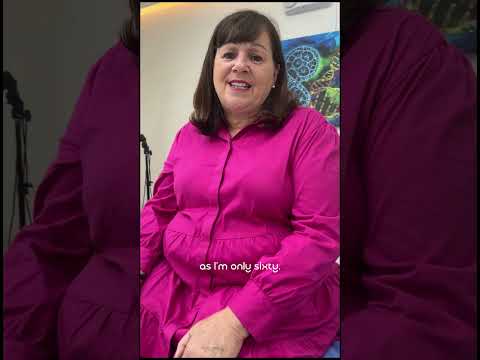
Finding an effective bone on bone knee treatment without surgery has become a primary focus for active adults facing severe joint deterioration. Many individuals reaching their sixties are actively searching for a reliable alternative to knee replacement surgery to maintain their mobility and quality of life. For patients like Lorna from Houston, Texas, exploring advanced regenerative medicine options across the border provided a viable path forward [00:02]. Her journey highlights a growing shift in how patients manage severe osteoarthritis without committing to invasive orthopedics.
Navigating the complex landscape of joint preservation requires understanding the modern therapies available outside traditional local healthcare networks. Innovative facilities like Quantum Biohack are offering specialized cellular therapies that target the root causes of inflammation and tissue degradation. By looking into targeted regenerative knee injections in Mexico, patients are discovering minimally invasive procedures that prioritize natural healing. This approach allows individuals to delay or completely avoid major joint reconstruction while regaining functional independence.
Video Chapters & Quick Navigation
- Understanding Severe Bone on Bone Knee Osteoarthritis
- Seeking an Alternative to Knee Replacement Surgery at 60
- The Rise of Medical Tourism for Severe Osteoarthritis
- How Regenerative Knee Injections Work at Quantum Biohack
- Choosing English Speaking Doctors in Mexico
- Comparing Surgery vs Regenerative Joint Injections
- Long Term Outlook for Joint Preservation
- Identifying the Ideal Candidate for Non-Surgical Joint Restoration
Understanding Severe Bone on Bone Knee Osteoarthritis
The human knee is a complex hinge joint reliant on a smooth layer of articular cartilage to function properly without friction. When a patient is diagnosed with bone on bone knee osteoarthritis, it signifies that this critical protective cartilage has completely worn away. This advanced stage of joint degeneration leaves the femur and tibia to grind directly against one another during basic movements. The resulting friction triggers intense chronic inflammation, debilitating pain, and significant mechanical stiffness.
Patients dealing with this level of deterioration often experience sharp, persistent pain even while resting or attempting to sleep. Traditional medical advice typically points immediately toward total knee arthroplasty once the cartilage loss reaches this extreme stage. However, the physical reality of living with such severe joint space narrowing prompts many to seek a non-surgical bone on bone knee treatment [00:09]. They recognize that while the mechanical damage is severe, altering the biological environment of the joint might offer relief.
Managing advanced osteoarthritis involves addressing both the mechanical friction and the biological inflammation cycle. Once the joint reaches a bone on bone state, the synovial fluid that normally lubricates the knee becomes thin and inflammatory. This hostile joint environment accelerates further bone damage and leads to the formation of painful bone spurs known as osteophytes. Halting this destructive cycle is the primary goal of emerging regenerative therapies.
Seeking an Alternative to Knee Replacement Surgery at 60
Age plays a critical role in the decision-making process for orthopedic interventions. Reaching the age of sixty presents a unique dilemma for active adults diagnosed with end-stage arthritis. A prosthetic knee joint has a limited lifespan, typically lasting between fifteen to twenty years depending on the patient's activity level. Undergoing a full operation at sixty often guarantees the need for a complex revision surgery later in life [00:15].
Revision surgeries are notoriously more challenging, carry higher complication rates, and require longer recovery periods than the initial replacement. Because of this, younger seniors actively hunt for a viable alternative to knee replacement surgery at 60. They prefer treatments that preserve their natural bone and tissue for as long as possible. Delaying the initial amputation of the natural joint is a medically sound strategy for preserving long-term mobility.
Furthermore, the rehabilitation associated with total joint replacement is intensely demanding and painful. Patients must commit to months of rigorous physical therapy to regain basic flexion and extension. For individuals who are still working full-time or heavily involved in family activities, this extended downtime is highly disruptive. Opting for targeted injections provides a bridge therapy that keeps them moving without the massive interruption of major surgery.
The Rise of Medical Tourism for Severe Osteoarthritis
The landscape of healthcare is rapidly globalizing, particularly in the fields of orthopedics and regenerative medicine. Patients residing in border states like Texas have a unique geographical advantage when exploring international healthcare options. Traveling from Houston to specialized clinics abroad has become a streamlined process for those seeking severe osteoarthritis knee treatment abroad. This form of medical tourism is driven by a combination of high domestic healthcare costs and restricted access to advanced cellular therapies in the United States.
Regulatory frameworks in North America strictly limit how cellular products can be processed and administered for orthopedic conditions. In contrast, international medical hubs often operate under different regulations that permit the use of cultured and expanded cellular treatments. This allows patients to access higher concentrations of regenerative biologics designed to tackle massive joint inflammation. Clinics catering to international patients ensure seamless logistics, providing transportation and accommodation assistance.
Cost predictability is another massive driver for this sector of medical tourism. High-deductible health plans and out-of-pocket expenses for joint replacement can financially cripple a patient. By pursuing regenerative bone on bone knee injections in Mexico, individuals secure transparent pricing that is often a fraction of domestic surgical costs. This economic efficiency does not compromise the quality of care, as these specialized foreign clinics boast state-of-the-art medical technology.
How Regenerative Knee Injections Work at Quantum Biohack
Targeted biological therapies are changing the paradigm of how we approach joint deterioration. Facilities like Quantum Biohack focus on leveraging the body's intrinsic healing mechanisms to alter the disease progression in the knee. The process involves delivering concentrated regenerative agents directly into the damaged joint capsule [00:06]. These injections bathe the raw bone and degraded tissue in powerful anti-inflammatory and immunomodulatory proteins.
When severe osteoarthritis knee treatment abroad utilizes these advanced biologics, the primary goal is not immediate cartilage regrowth, but rather profound environmental modification. The injected cells act as signaling beacons, communicating with the patient's native joint tissue to stop producing destructive inflammatory enzymes. This signaling cascade dramatically reduces pain and swelling. Over time, this optimized microenvironment allows the joint to function more smoothly despite the lack of thick cartilage.
The actual procedure is remarkably straightforward compared to surgical interventions. It is performed in an outpatient setting, often taking less than an hour from start to finish. Patients find it to be a very easy and well-tolerated process [00:18]. Using advanced ultrasound guidance ensures that the regenerative fluid is placed exactly where the joint needs it most for maximum therapeutic effect.
Choosing English Speaking Doctors in Mexico
One of the most significant barriers to participating in medical tourism is the fear of miscommunication regarding complex medical details. Trust is the foundation of any doctor-patient relationship, especially when traveling abroad for critical joint care. Knowing that the attending physician is fully bilingual instantly alleviates anxiety for international travelers. Having English speaking doctors in Mexico ensures that patients fully comprehend their diagnosis, treatment plan, and post-procedure instructions.
Clear communication makes the entire medical journey simpler and far less intimidating. When professionals like Dr. Carlos can explain the science of the injections in plain English, patients feel confident in their healthcare choices [00:21]. They can ask detailed questions about cellular mechanisms, expected outcomes, and potential risks without worrying about language barriers. This level of personalized, understandable care leads directly to high patient satisfaction and strong recommendations.
The Importance of Medical Transparency
Medical transparency goes beyond just speaking the same language. It involves setting realistic expectations about what regenerative therapies can actually achieve. A reputable bilingual physician will clearly outline that while pain reduction is highly likely, a bone-on-bone knee will not suddenly look like a twenty-year-old joint on an X-ray. Setting these precise expectations ensures the patient is psychologically prepared for the gradual healing process.
Comparing Surgery vs Regenerative Joint Injections
Making an informed decision about joint health requires a clear understanding of the distinct differences between available treatments. Total knee replacement is an invasive amputation of the joint surfaces, replaced by metal and plastic hardware. Regenerative medicine, conversely, focuses on joint preservation. The contrasting experiences between these two paths dictate how quickly a patient can return to their normal daily life.
| Factor | Total Knee Replacement | Regenerative Knee Injections |
|---|---|---|
| Invasiveness | High (Bone cutting and implant insertion) | Minimal (Needle injection only) |
| Anesthesia | General or spinal anesthesia required | Local numbing anesthetic |
| Recovery Time | 3 to 6 months of intense rehabilitation | Few days of rest, gradual improvement over weeks |
| Hospital Stay | 1 to 3 days inpatient admission | Outpatient procedure (Walk-in, walk-out) |
The risk profile associated with major joint surgery is significantly higher than that of simple injections. Surgical interventions carry risks of deep vein thrombosis, severe hospital-acquired infections, and implant rejection. Conversely, adverse reactions to autologous or carefully screened allogeneic cellular therapies are exceptionally rare. This safety profile makes regenerative medicine a highly attractive first line of defense.
Furthermore, the commitment to post-operative physical therapy following a joint replacement is monumental. Patients must push through severe pain to break up scar tissue and achieve functional bending of the new knee. Regenerative treatments encourage gentle, progressive movement without the burden of healing from massive surgical trauma. This distinction often finalizes the decision for those seeking an alternative to knee replacement surgery at 60.
Long Term Outlook for Joint Preservation
Managing expectations regarding the timeline of biological healing is vital for patient satisfaction. Unlike pharmaceutical pain blockers or steroid injections that offer immediate but temporary relief, cellular therapies work on a biological timetable. Patients who undergo regenerative bone on bone knee injections in Mexico should anticipate a gradual reduction in symptoms. The newly introduced biologics require weeks to successfully modulate the joint's inflammatory response.
Most individuals begin noticing significant improvements in stiffness and resting pain within the first month. As the cellular signaling continues over several months, functional mobility typically increases. Patients look forward to seeing the final results as the biological cascade completes its cycle [00:28]. This steady progression allows them to reintroduce low-impact activities like swimming or cycling back into their routines.
- First 48 Hours: Minor soreness at the injection site, requiring basic rest and avoidance of strenuous activity.
- Weeks 1 to 4: Noticeable decrease in acute joint inflammation and a reduction in chronic, throbbing pain.
- Months 2 to 6: Enhanced joint lubrication, leading to improved range of motion and easier navigation of stairs.
- Long Term: Sustained joint preservation, allowing patients to delay surgical interventions for years.
Identifying the Ideal Candidate for Non-Surgical Joint Restoration
Not every patient is a perfect fit for advanced cellular interventions. Determining candidacy requires a thorough evaluation of the patient's medical history, current imaging, and lifestyle goals. The ideal candidate for finding a bone on bone knee treatment without surgery is typically someone who possesses realistic expectations about the outcomes of biological medicine. They understand that while pain can be vastly reduced, mechanical abnormalities like severe bow-leggedness cannot be reversed via injection.
Candidates who experience the highest success rates are those willing to combine their treatments with supportive lifestyle modifications. Weight management is crucial, as every pound of body weight places four pounds of pressure on the knee joint. Patients who commit to a structured, low-impact physical therapy program following their severe osteoarthritis knee treatment abroad tend to maximize their functional gains. The synergistic effect of biologics and physical conditioning yields the best long-term joint stability.
Ultimately, individuals absolutely recommend facilities like Quantum Biohack when the treatment aligns with their specific medical needs [00:25]. By taking a proactive approach to joint preservation, active seniors can bypass the operating room. They secure a higher quality of life through advanced, globally accessible medical science.
Ready to Explore Non-Surgical Knee Treatments?
Discover if you are a candidate for advanced regenerative therapies. Connect with top-tier, English-speaking medical specialists in Mexico and take the first step toward living without debilitating joint pain.
Get Free QuoteView Full Video Transcript
[00:00]
(Quantum Biohack intro visual)
[00:02]
Hi! I'm Lorna Ramsay, I'm from Houston, Texas.
[00:05]
I came to Quantum to get injections into my knees.
[00:09]
As I'm bone on bone and didn't want to go for a full operation at this time as I'm only sixty.
[00:16]
It was a great procedure, it was very easy.
[00:19]
Doctor Carlos speaks English which made it very simple for me.
[00:24]
I would absolutely recommend Quantum. Yes.
[00:27]
Look forward to seeing the results.
















Share this listing