


A Closer Look at Stem Cell Therapy in Osaka Japan at Cell Grand Clinic
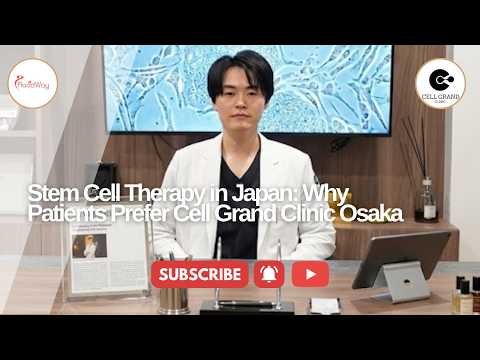
About this video: Regaining your youth and vitality is no longer a dream of science fiction but a reality of modern regenerative medicine. Many patients struggling with chronic fatigue, joint degradation, or the visible signs of aging often feel that their body's natural repair mechanisms have simply clocked out for good. However, advanced Stem Cell Therapy Japan is proving that we can re-engage these internal repair crews to restore health at a cellular level. Watch this detailed presentation by Dr. Wakabashi to understand how autologous adipose-derived stem cells are revolutionizing longevity and medical recovery.
Video Chapters & Quick Navigation
The Biological Foundation: How Our Body Repairs Itself
Within every human being lies a sophisticated network of biological units designed for one specific purpose: maintenance and repair. As Dr. Wakabashi explains at [00:35], these are known as stem cells. You can visualize these as microscopic handymen residing within your tissues, waiting for a signal that something is amiss.
However, the tragedy of human biology is the inevitable decline of these resources. As we age, the total count of these "repairmen" begins to dwindle significantly. Not only do the numbers decrease, but the remaining cells often lack the vigor and efficiency they possessed during our youth.
This explains why a minor injury in a twenty-year-old heals in days, while the same injury in a sixty-year-old might linger for weeks or even months. The goal of autologous stem cell therapy is to address this deficit by harvesting, concentrating, and reintroducing these vital cells back into the system.
The Evolution of Regenerative Medicine: From Bone Marrow to Adipose Tissue
Many people assume that stem cell treatments are a brand-new experimental field. In reality, as noted at [01:10], medical science has been using these concepts for decades. Bone marrow transplants for leukemia patients are a primary example of stem cell application that has saved countless lives.
The modern breakthrough lies in the source of these cells. Adipose-derived stem cell therapy represents a significant evolution in patient comfort and cell yield. Extracting bone marrow is an invasive, often painful procedure that requires significant downtime.
By shifting the focus to adipose (fat) tissue, clinics can now harvest high-quality cells with minimal discomfort. This transition has made regenerative medicine accessible for broader applications, including cosmetic enhancement, organ support, and systemic anti-aging protocols.
Why Fat is the "Gold Mine" of Stem Cells
Fat tissue is no longer seen as just an unwanted caloric reserve. It is actually one of the richest sources of mesenchymal stem cells (MSCs) in the adult human body. Compared to bone marrow, fat contains a higher density of these cells, which are easier to culture and expand in a laboratory setting.
Furthermore, because these are autologous cells—meaning they come from your own body—the risk of rejection is non-existent. This safety profile is the cornerstone of the treatments provided at SR Clinic in Japan, where patient safety is prioritized alongside clinical efficacy.
Decoding the Homing Effect: How Cells Find the Damage
One of the most fascinating aspects of stem cell biology is the "Homing Effect," discussed at [01:45]. When stem cells are reintroduced via an IV drip, they do not just float aimlessly. They are biologically programmed to seek out "SOS signals" sent by damaged or inflamed tissues.
These signals, often in the form of specific chemokines and cytokines, act like a beacon. Whether it is a worn-down knee joint, a struggling liver, or damaged vascular walls, the stem cells detect these signals and begin to accumulate in those precise locations.
This targeted response ensures that the therapeutic power of the treatment is concentrated where the body needs it most. It is a natural, intelligent process that mimics the body’s own response to injury, but amplified a thousand-fold through modern cultivation techniques.
The Dual Power of Stem Cells: Differentiation and the Paracrine Effect
Once stem cells reach their destination, they exert their influence through two primary mechanisms. The first is differentiation. This is the ability of a stem cell to transform itself into a specialized cell type, such as a bone, muscle, or blood vessel cell.
The second, and perhaps more important mechanism, is the Paracrine Effect. As Dr. Wakabashi mentions at [02:35], this is where stem cells act as the "foremen" of a construction site. They release signaling molecules that wake up the dormant repair cells already present in your body.
| Mechanism | Primary Function | Analogy |
|---|---|---|
| Differentiation | Replacing dead or damaged cells with new functional tissue. | Adding new bricks to a broken wall. |
| Paracrine Effect | Releasing growth factors to stimulate local tissue repair. | A foreman encouraging workers to work faster. |
This dual action provides a comprehensive approach to healing. It is not just about adding new cells; it is about revitalizing the entire local environment. This is why patients often report improvements in areas they weren't even specifically targeting for treatment.
Why Quality Matters: The SR Clinic Three-Pillar Commitment
Not all stem cell therapies are created equal. The industry varies wildly in terms of laboratory standards and cell viability. At [03:40], Dr. Wakabashi outlines the rigorous standards that set their clinic apart from the competition.
The first pillar is Freshness. While many clinics use pre-made or frozen stocks, SR Clinic guarantees a survival rate of over 95%. This is critical because dead cells cannot perform the homing effect or the paracrine effect. If the cells aren't alive when they enter your bloodstream, the treatment is effectively useless.
The second pillar is Youth and Activity. If cells are over-cultivated in a lab, they lose their potency and can even become dangerous. By maintaining a strict cultivation window, the clinic ensures the cells remain in their most energetic and "hungry" state, ready to work the moment they are injected.
The Importance of High Purity
Purity is the third pillar of their commitment. Using cells that are 99% pure stem cells reduces the risk of inflammatory reactions and ensures that the 200 million cell count is truly made of effective repair units. This precision is verified through government-approved specialized culture facilities.
The Patient Journey: A Seamless Three-Step Process
Transitioning from chronic pain to regeneration is a surprisingly simple logistics process for the patient. The entire flow is designed to fit into a busy lifestyle without requiring lengthy hospital stays or debilitating recovery periods.
Step 1: Fat Harvesting (The Collection Phase)
This involves taking a small sample of fat, roughly the size of a bean, usually from the umbilical area. It takes about 30 minutes under local anesthesia. As noted at [05:20], most patients return to their daily lives immediately after the procedure.
Step 2: Culturing (The Expansion Phase)
The harvested fat is sent to a specialized facility where it is grown over a period of about seven weeks. This is a critical time where the "quality over quantity" approach is applied, ensuring the cells multiply without losing their biological integrity.
Step 3: Treatment (The Reintroduction Phase)
Once the cells reach the target count and purity, the patient returns for the IV drip or direct injection. The IV drip process takes about an hour in a relaxing reclining chair. It is so non-invasive that many patients come in during a shopping trip or a lunch break.
Safety Management and Risk Mitigation in Stem Cell Therapy
Every medical procedure carries some level of risk, and transparency is vital for patient trust. At [07:25], the clinic addresses the potential side effects with total honesty. Because the cells are autologous, severe allergic reactions or rejection are extremely rare.
The primary safety concern in IV stem cell therapy is avoiding cellular "clumping" which could lead to blockages in small blood vessels. SR Clinic manages this by strictly limiting the count to 200 million cells per drip and administering the infusion slowly over time.
What to Expect Post-Treatment: Managing Side Effects
Minor side effects are often a sign that the body is responding to the treatment. Some patients may experience localized bruising at the fat harvest site or a temporary low-grade fever following the IV infusion. These symptoms typically resolve within 48 to 72 hours.
A "feeling of fatigue" is also common as the body redirects energy toward the newly initiated repair processes. Understanding these standard responses allows patients to undergo treatment with peace of mind, knowing that a professional medical team is available for immediate support if any concerns arise.
Choosing a clinic that provides a Quality Certificate for every treatment is the ultimate safeguard. This document verifies the cell count, survival rate, and purity of your specific batch of cells, ensuring that you are receiving the premium care you invested in for your health and longevity.
Experience the Future of Healing Today
Don't let the aging process or chronic injury define your future. Discover how Regenerative Medicine Japan can help you unlock your body's hidden potential for repair and rejuvenation.
BOOK YOUR CONSULTATION NOWView Full Video Transcript
[00:00] Hello, I am Dr. Wakabashi, director of CR clinic. Thank you very much for visiting us today. Today I would like to explain what stem therapy is and why our clinic is chosen by so many patients.
[00:25] What is stem cell therapy? Our body possesses cells that naturally try to repair themselves when we are injured or unwell. These are called stem cells.
[00:45] You can think of stem cells as tiny repair inside your body. However, the number of these lip decreases as we age and the ability to work weakens.
[01:10] That is why injuries and fatigue that quickly we are young take longer time to recover as we age get older. Actually, using the power of stem cells is not a sudden new technology. It has a long history in the medical fields.
[01:35] For example, you may have heard of bone marrow transplantation for leukemia. In a process, this is actually a form of stem cell therapy. Our autologus ipos derive stem cell therapy is an evolution of this technology.
[02:00] This is designed to reduce the burden on the body while being applied to anti-aging and various other health concerns. When stem cells are returned to the body via ivy trip, they first gather in the lung.
[02:25] From there they cycle through the body over time finding areas that are sending out SOS signals for help and gradually accumulate there. This ability to gather at damaged area is called the homing effect.
[02:50] Once the stem cell reaches the affected area they exert two main power. The first one is differentiation. This is ability to stem cells to transform into cells that function like a bone, muscle or blood cells as needed.
[03:15] They support the repair of damaged tissues. The second is the parkine effect. This is the power of stem cell to send signals to surrounding cells saying red starts repairs.
[03:40] This activate the cells originally present in your body. Think of the stem cell as a site for who arrives at the construction site to organize and encourage the workers.
[04:05] By combining these two powers, the power to replenish and the power to energize surroundings, they help recover the body from the inside, supporting blood vessels formation and protecting nerves.
[04:30] In other words, unlike main that temporary mass sensations, this treatment supports the body's recovery power at the cellular level. That is the main purpose of stem cell therapy.
[04:55] Actually, even though it is all called stem therapy, not all clinics are the same. Just like the ingredients such as beef have different grades. And did you know their stem cells also have freshness and quality?
[05:20] SR clinic has three major commitment that you won't find elsewhere? Fresh cells with over 95% survival rate. It is crucial to return cells to the body in the most energetic state possible.
[05:45] Generally, when using pre-made cells, their viability drops and the survival rate is said to be around 70%. At our clinic, we don't use pre-made stock. We prepare cells according to the patient treatment day.
[06:10] Ensuring we use cells with a high survival rate of over 95%. This means that even if the same number of cells are administrated, more cells will actually work actively in your body, leading to higher expected result.
[06:35] This freshness is our major commitment. Second, young and active cells. If cells are forced to multiply too much, they gradually lose their energy. We use only cells that are at a stage where they are energetic.
[07:00] The third high purity cells to ensure you receive treatment with peace of mind. We strictly check for impurities and use only stem cells with with 99% purity.
[07:25] Furthermore, we adhere to limit of 200 million cells per IV drip. We provide a quality certificate each time so you can see the condition of your cells, fresh, young, and purity.
[07:50] The flow is very simple. Step one, part harvesting. We take a small amount of fat about the size of a bean from around your ne. We use local anesthesia, so there is almost no pain.
[08:15] It takes about 30 minutes. You can return to your daily life in the same day. We use absorbable sutures. So no stitch removal is needed. Step two, culturing.
[08:40] The fat we collected is carefully grown over about 7 weeks at a government approved specialized culture facility. Step three, treatment. Once culturing is complete, it is time for treatment.
[09:05] You can choose an IV drip to circulate cells throughout the body or direct injection into areas of concerns like knees or the face. For an IV drip, you simply relax in a reclining chairs for about 1 hours.
[09:30] Side effect. Considering treatment, your biggest concerns are like are there side effects or is it dangerous? Uh this is a medical procedure. There is always some risk.
[09:55] First a big reassurance is that this treatment use your own cells. Since we are not putting other people's cells or artificial substances into your body, the chances of strong rejection is considered very very low.
[10:20] So what can actually happen? There are mainly three things. The first one, a pain or interbreeding at the harvest site. You may experience muscle pain like soreness or bruising for a few days where fat was taken.
[10:45] The second fever or fatigue after IV some patient feel slightly feverish or tired after the trip. This is a sign the body is reaching positively and it usually settles down usually in a few days.
[11:10] The third rare risks the things we are most careful about blocked blood pieces or allergic reactions. That is why we enforce safety management. We set a strict limit of 200 million cells per drip.
[11:35] Maximize effect minimize risk. That is the medical policy of S grand clinic. Even if you feel any discomfort after treatment, we have a system where doctor can respond immediately. Thank you.









Share this listing