
Struggling with conception can be a deeply emotional and overwhelming experience for many prospective parents. Countless couples spend years navigating a maze of well-meaning advice, home remedies, and internet rumors before seeking professional medical guidance. Uncovering the truth about reproductive health is the first crucial step toward building the family you desire. Securing a reliable diagnosis and exploring an advanced IVF procedure in United States can drastically improve your chances of achieving a healthy pregnancy.
Many individuals unknowingly delay effective medical treatments because they fall victim to widespread misconceptions regarding age, diet, and alternative therapies. Trusting outdated advice can cost valuable time, especially when biological factors are at play. Medical science has evolved significantly, offering targeted solutions for complex reproductive issues like tubal disease and severe male factor infertility. By replacing guesswork with comprehensive diagnostic testing and evidence-based medicine, patients can take control of their reproductive timelines and make highly informed decisions regarding their care.
Video Chapters & Quick Navigation
- Overcoming Widespread Fertility Myths
- The Impact of Maternal Age on Conception
- Holistic Diets vs Medical Interventions
- Understanding Tubal Disease Complications
- Mitigating Ectopic Pregnancy Risks
- Debunking Alternative Tubal Therapies
- Comprehensive Male and Female Diagnostics
- Transitioning to Successful IVF Pathways
Overcoming Widespread Fertility Myths and Misconceptions
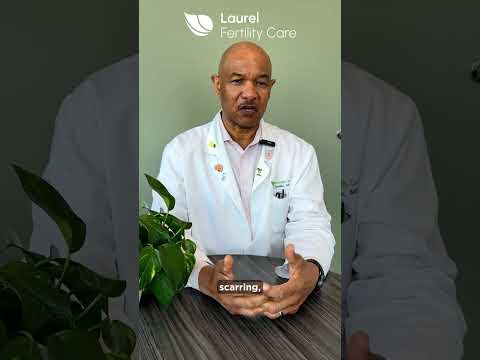
Medical professionals frequently encounter patients who have spent years relying on inaccurate reproductive advice. One of the most pervasive misunderstandings is the belief that sheer persistence will eventually lead to a successful pregnancy. As highlighted at [00:01], the idea that simply "trying harder" or "trying longer" will yield results is fundamentally flawed. When underlying biological barriers exist, natural conception attempts alone are mathematically and medically insufficient.
Couples often endure immense psychological strain month after month when they follow the "just keep trying" mantra. This continuous cycle of hope and disappointment can lead to severe stress, which further complicates the reproductive environment. Delaying a clinical evaluation allows silent conditions, such as diminishing ovarian reserve or progressive endometriosis, to worsen over time. Early intervention is the cornerstone of effective reproductive healthcare.
Seeking the expertise of a board-certified reproductive endocrinologist shifts the focus from blind repetition to targeted strategy. Through advanced diagnostics, specialists can pinpoint the exact cause of conception failure. This allows patients to stop wasting precious time and transition toward proven methods, such as an optimized in vitro fertilization procedure, tailored to their unique biological profile.
The Profound Impact of Maternal Age on Conception
Age remains the single most critical factor in determining a woman's biological ability to conceive naturally. A dangerous myth circulates among patients who assume that if their mothers or grandmothers had children late in life, they possess the same timeline. Mentioned explicitly at [00:11], believing you can easily get pregnant at 45 or 50 simply because a relative did ignores fundamental human biology. Every woman's ovarian reserve depletes at a highly individualized rate.
Women are born with a finite number of eggs, and both the quantity and quality of these eggs decline significantly after the age of 35. By the time a woman reaches her mid-forties, the percentage of chromosomally normal eggs is drastically reduced. This biological reality drastically lowers natural conception rates and simultaneously increases the risk of miscarriage or genetic abnormalities. Family history provides some context, but it does not guarantee your personal ovarian function.
Relying on anecdotal family histories rather than clinical data often leads to missed opportunities for egg freezing or earlier IVF interventions. Medical science utilizes concrete tools, like Anti-Mullerian Hormone (AMH) testing, to provide an accurate picture of a woman's current reproductive timeline. Acknowledging the biological clock empowers patients to seek an advanced IVF procedure in United States before their ovarian reserve becomes critically low.
Holistic Diets and Supplements vs True Medical Interventions
The wellness industry heavily markets the idea that lifestyle modifications alone can cure reproductive ailments. Countless patients believe that finding the perfect anti-inflammatory diet, managing stress, and consuming specialized vitamins will guarantee a positive pregnancy test. Discussed at [00:26], it is a common fallacy that doing "all the right things" in terms of diet and education is enough to overcome infertility. While optimizing your overall health is certainly beneficial, it cannot reverse structural or severe genetic reproductive barriers.
Biology is occasionally unforgiving, and optimal nutrition cannot bypass blocked anatomical pathways or resolve severe chromosomal issues. For instance, if a male partner has zero sperm count (azoospermia) or a female has completely scarred fallopian tubes, no amount of organic food or acupuncture will facilitate natural fertilization. As noted at [00:43], while supplements may offer slight supportive benefits for certain specific disorders, they are rarely the primary solution. Medical intervention becomes a non-negotiable requirement for many couples.
Patients must balance holistic preparation with realistic medical expectations. Supplements like CoQ10 or folic acid serve as excellent supportive care to improve cellular health during fertility treatments. However, these holistic measures should act as companions to, rather than replacements for, clinical treatments like in vitro fertilization. Recognizing the limits of lifestyle changes ensures patients do not delay necessary medical procedures.
Understanding Tubal Disease and Conception Barriers
The fallopian tubes play a highly specialized role in the reproductive process, acting as the critical highway where sperm and egg meet. Tubal disease occurs when these pathways become blocked, scarred, or damaged, preventing natural fertilization. Highlighted at [00:58], tubal factor infertility is one of the most common reasons patients require an advanced IVF procedure in United States. Conditions like pelvic inflammatory disease (PID), severe endometriosis, or previous abdominal surgeries are standard culprits for this specific damage.
Historically, the primary treatment for blocked tubes was invasive reconstructive surgery. Surgeons would attempt to remove the scar tissue and stitch the delicate tubes back together to restore natural function. Unfortunately, fallopian tubes contain microscopic hair-like structures called cilia, which help propel the embryo toward the uterus. Surgical repair often fails to restore the function of these cilia, leaving the tube technically open but functionally impaired.
Because the functional integrity of the tube is rarely perfectly restored, natural conception post-surgery remains statistically low. Furthermore, the invasive nature of the surgery requires significant recovery time and carries standard surgical risks. This realization has caused a massive paradigm shift in modern reproductive medicine, pushing specialists away from tubal surgery and toward more efficient clinical technologies.
Mitigating Ectopic Pregnancy Risks with In Vitro Fertilization
One of the most severe dangers associated with tubal reconstructive surgery is the drastically increased risk of ectopic pregnancies. Discussed at [01:08], an ectopic pregnancy occurs when a fertilized embryo implants outside the main uterine cavity, most commonly becoming trapped inside the damaged fallopian tube. This is a life-threatening medical emergency that can lead to tubal rupture, severe internal bleeding, and a devastating threat to the patient's life.
Because surgically repaired tubes often lack the proper motility to move the embryo, the embryo simply gets stuck halfway through its journey. This horrific complication causes profound physical and emotional trauma to the patient, often requiring emergency surgery to remove the affected tube entirely. The potential detriment to a patient's life and future fertility makes tubal surgery a highly controversial and increasingly outdated approach.
Choosing an advanced IVF procedure in United States provides a sophisticated solution that completely bypasses this dangerous anatomical barrier. During the IVF process, eggs are retrieved directly from the ovaries and fertilized safely in a controlled laboratory environment. The resulting healthy embryo is then carefully transferred directly into the patient's uterine cavity, completely avoiding the fallopian tubes. This direct transfer method dramatically lowers the chances of ectopic implantation while simultaneously offering a much higher probability of a successful, healthy pregnancy.
| Treatment Method | Mechanism of Action | Ectopic Pregnancy Risk | Overall Success Rate |
|---|---|---|---|
| Tubal Reconstructive Surgery | Attempts to remove physical blockages and reattach delicate tube endings. | Significantly High | Generally Low (Dependent on cilia function) |
| In Vitro Fertilization (IVF) | Completely bypasses fallopian tubes; transfers embryo directly to the uterus. | Significantly Lower | Highly Successful |
Debunking Alternative Therapies for Structural Blockages
With the high cost and emotional weight of clinical fertility treatments, many patients seek out alternative, non-invasive therapies in desperate hopes of a miracle cure. As referenced at [01:31], therapies such as specialized fertility massage or Reiki energy healing are frequently touted as natural ways to clear tubal blockages. Unregulated practitioners often claim they can physically manipulate the abdomen to break up internal scar tissue or use energy pathways to heal the reproductive organs.
From a strict biological and medical standpoint, structural blockages composed of dense fibrotic scar tissue cannot be broken down by external abdominal massage or energy alignment. The fallopian tubes are located deep within the pelvic cavity, making them inaccessible to external physical manipulation. Relying on these alternative therapies for structural diseases provides false hope and drains financial resources that could be better allocated toward proven clinical treatments.
While massage therapy and Reiki are highly effective for stress reduction and general relaxation during the arduous fertility journey, they possess zero clinical efficacy in reversing tubal factor infertility. Patients must separate supportive wellness practices from primary medical treatments. Acknowledging the physical limitations of alternative therapies is crucial for patients who truly wish to achieve a healthy pregnancy through scientifically validated methods.
The Absolute Necessity of Comprehensive Diagnostic Testing
One of the greatest disservices a patient can do to their reproductive timeline is to proceed with treatments based on assumptions rather than concrete data. Misinformation heavily circulates in various communities, leading individuals to pursue the wrong types of help for male or female factor issues. Pointed out at [02:03], the ultimate goal of any fertility journey must begin with gathering as much accurate, lab-verified information as physically possible. Guessing about your reproductive health leads to wasted time, wasted money, and profound heartbreak.
Proper diagnostic evaluation requires a multi-faceted approach addressing both partners. Female testing must confirm ovarian reserve and egg quality through precise blood panels, including AMH, FSH, and estradiol levels. Simultaneously, male partners require a comprehensive semen analysis to evaluate sperm count, motility, and morphology. Without evaluating the male factor, couples may undergo years of female-focused treatments needlessly, completely missing the true cause of their infertility.
Furthermore, structural testing such as an HSG (Hysterosalpingogram) is mandatory to clearly map out the uterine cavity and verify whether the fallopian tubes are open or irreparably blocked. Only when a reproductive endocrinologist has this complete triad of data—egg quality, sperm quality, and structural integrity—can they formulate a successful plan. Armed with this comprehensive biological blueprint, patients can confidently proceed with an advanced IVF procedure in United States, knowing their treatment is precisely engineered for their specific physical needs.
- Female Hormonal Profiling: Utilizing AMH and FSH tests to accurately determine remaining ovarian reserve and predict response to stimulation medications.
- Comprehensive Semen Analysis: Evaluating the male partner's sperm concentration, forward progression (motility), and physical shape (morphology) to rule out severe male factor barriers.
- Anatomical Structural Mapping: Performing an HSG or saline sonogram to clearly visualize the uterine cavity and confirm the functional status of both fallopian tubes.
- Genetic Carrier Screening: Assessing both partners for underlying recessive genetic conditions that could impede healthy embryo development or cause recurrent miscarriages.
Transitioning from Uncertainty to a Validated Clinical Pathway
Stepping away from pervasive myths and embracing modern medical diagnostics is a highly empowering transition for prospective parents. Understanding that biology sometimes requires expert intervention removes the immense guilt and pressure many patients place upon themselves. You cannot out-diet a structural blockage, nor can you reverse the biological clock through sheer willpower alone. Acceptance of these medical realities paves the way for immediate, proactive solutions.
By securing detailed lab results regarding egg quality, sperm viability, and tubal status, patients elevate themselves from a state of passive guessing to active medical management. This definitive clarity allows couples to partner with elite fertility specialists to design customized protocols. Selecting to undergo an advanced IVF procedure in United States means choosing highly regulated, cutting-edge clinical environments dedicated to maximizing your success.
The journey to parenthood does not have to be an endless cycle of trial and error. Leveraging top-tier medical science ensures that every step taken is purposeful, safe, and statistically optimized. With the right clinical team and an evidence-based approach, overcoming complex reproductive barriers becomes a manageable and highly structured medical process.
Ready to Take Control of Your Fertility Journey?
Stop guessing and start building your family with confidence. Connect with board-certified specialists to explore comprehensive diagnostic testing and personalized IVF treatments tailored to your unique biological profile.
Get Free QuoteView Full Video Transcript
[00:00] Some of the common myths that you actually see every day:
[00:05] "If I keep trying, it'll actually work."
[00:09] "I know that I can get it... even though I'm 45, I can get pregnant."
[00:14] "I know my mom got pregnant at 50, so I can get pregnant too."
[00:18] So therefore, age is the biggest factor you see that comes up.
[00:21] And you know, you end up having people or women who feel that there's all these things that they can do...
[00:27] If they have the right diet, the right education, the right things, they can always get pregnant.
[00:32] And the reality is just that, you know, sometimes biology is not something that they can actually overcome.
[00:38] The other thing that they consider is: "Well, are there supplements they can do that treat specific disorders?"
[00:46] And yes, there's influence and there's actually support that you can get.
[00:50] But many times, it isn't. You're going to need some sort of medical intervention.
[00:55] More specifically when it comes to basically doing something like surgery for tubal disease.
[01:01] Tubal disease is a common reason to need to go through IVF because before you could do tubal surgery...
[01:08] have an increase of having like an ectopic pregnancy (that's a pregnancy that's outside the uterus).
[01:13] And that could actually basically influence and actually cause a lot of detriment to that person's life.
[01:18] Whereas if you went through IVF, the chance of success actually goes a lot... it's a lot lower.
[01:24] Because you can get a pregnant... they're putting it inside the uterus so that it bypasses that effect.
[01:30] So having, you know, massage therapy for tubal disease or having Reiki therapy for tubal disease...
[01:37] are all the common things that you might hear about or think about.
[01:40] One of the things, especially in the Central Valley you might actually hear, is that there are people who actually have a lot of basically...
[01:48] misinfluences about certain things that cause either male problems or female problems.
[01:54] And people will turn to a lot of different individuals for help.
[01:57] The reality is, my point is getting as much information as possible.
[02:03] Getting the lab testing that you need to confirm about the egg quality.
[02:07] Getting information about sperm to know what you're dealing with.
[02:10] Getting information about the fallopian tubes so you know what's going on.
[02:14] You can make decisions about what's the best thing to do once you have that information.
[02:18] But without that information, you're simply just guessing and hoping.
-Package-(1).png)

.jpg)



.png)
.png)
.png)
.png)
.jpg)
.jpg)

.jpg)








Share this listing