


Comprehensive Alternative Cancer Treatment Procedures in Mexico
When navigating the complexities of chronic illness, many patients seek out an advanced alternative cancer treatment procedure in Mexico to expand their healing options. The shift towards holistic medicine requires highly personalized data, which is why leading international facilities prioritize comprehensive laboratory testing. Understanding how these customized clinical diagnostic protocols work is the first step toward reclaiming your health and finding hope through targeted therapies.
Modern integrative clinics combine conventional diagnostic precision with specialized natural therapy protocols. By identifying specific immune system deficiencies and metabolic imbalances, medical teams can map out an exact strategy tailored to an individual's unique biological makeup. This high level of customization distinguishes specialized natural healing centers from standard care models.
Through state-of-the-art laboratory analysis, practitioners gain a clear window into the patient's cellular environment. These deep diagnostic insights allow doctors to build customized immunotherapy treatment plans for chronic illness that stimulate the body's innate healing mechanisms. Patients traveling for medical care benefit from an agile, responsive medical approach that adjusts treatments based on real-time biochemical feedback.
Video Chapters
Initial Patient Assessment and Advanced Blood Diagnostics
The foundation of any successful holistic cancer therapy program begins with precise clinical diagnostics. When a patient arrives at an integrative facility, the primary objective is to establish an exhaustive biological baseline. This rigorous approach moves beyond basic symptom checking to uncover the root causes of immune suppression.
The clinical staff initiates this process with a carefully controlled blood draw. As demonstrated at [00:03], the medical professional ensures a sterile environment by putting on protective gloves and using specialized vacutainers. Obtaining a high-quality, uncontaminated blood sample is critical for the delicate assays required in alternative medicine.
These samples undergo extensive profiling that far exceeds standard oncology blood panels. Integrative doctors test for circulating tumor cells (CTCs), specific viral loads, heavy metal toxicity, and deep immune system functionality. Gathering this granular data ensures that subsequent natural treatments directly target the patient's unique physiological vulnerabilities.
By mapping out complete metabolic pathways, the medical team can identify exactly which nutrients are depleted. This detailed biological snapshot guides the formulation of individualized intravenous nutrient therapies. The resulting treatment plan is highly responsive, adapting to the patient's changing health status on a weekly or even daily basis.
The Significance of Baseline Immune Profiling
Immune profiling involves measuring the specific ratios of white blood cells, such as T-cells, B-cells, and Natural Killer (NK) cells. A compromised immune system often exhibits an imbalance in these critical defenders. Correcting this imbalance is the primary goal of any holistic cancer clinic operating in Mexico.
Baseline profiling also looks at inflammatory markers and oxidative stress levels within the bloodstream. High systemic inflammation creates a microenvironment that allows chronic diseases to thrive. By quantifying these inflammatory markers, doctors can prescribe targeted anti-inflammatory protocols like high-dose Curcumin or localized hyperthermia.
This comprehensive testing strategy empowers patients by providing clear, measurable data regarding their health. Tracking these precise markers over time provides tangible evidence of how well the customized alternative cancer therapy program is working. Such transparency is a hallmark of the advanced integrative care models found in Tijuana.
Centrifugation Technology and Blood Component Separation
Once the initial blood samples are collected, they must be rapidly processed to preserve cellular integrity. Mechanical separation is achieved using specialized laboratory centrifuges. At [00:05], the clinical technician carefully loads the collected vials into a Drucker Diagnostics Horizon centrifuge.
The centrifuge spins the blood at high speeds, using centrifugal force to separate the fluid based on density. The heavier red blood cells settle at the bottom of the tube, while the lighter plasma rises to the top. Between these two layers forms the vital "buffy coat," a thin, concentrated band containing leukocytes (white blood cells) and platelets.
Isolating the buffy coat is a foundational step in creating personalized immunotherapy treatments. These concentrated white blood cells are harvested to create specific biological vaccines, such as dendritic cell therapy. This targeted approach trains the patient's own immune system to recognize and attack malignant cells without harming surrounding healthy tissue.
Additionally, the separated plasma can be used in various regenerative therapies. Platelet-Rich Plasma (PRP) therapies utilize the growth factors found in this clear fluid to accelerate tissue repair and reduce localized inflammation. The precise execution of this mechanical separation directly dictates the quality and efficacy of the resulting treatments.
By handling this complex processing in-house, specialized natural healing centers eliminate the delays associated with third-party laboratories. Fresh, viable cells are extracted and immediately utilized in the patient's protocol. This rapid turnaround is essential for maintaining the biological potency of advanced cellular therapies.
Automated Clinical Chemistry Analyzers in Holistic Protocols
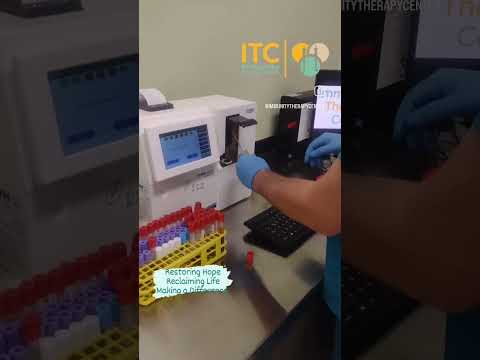
Accurate biochemical data is the driving force behind customized holistic treatments. To rapidly analyze the separated blood serum, the clinical team utilizes highly sophisticated automated chemistry analyzers. As seen at [00:11], the technician operates the JT-500 machine to run essential metabolic panels.
This compact analyzer provides immediate feedback on liver enzymes, kidney function, and electrolyte balances. Ensuring that the body's detoxification organs are functioning optimally is a prerequisite for administering intensive alternative therapies. If liver enzymes are elevated, the medical team will pivot to gentle detoxification protocols before introducing heavier interventions.
For more expansive and complex assay requirements, the laboratory utilizes larger automated systems. The technician loads samples into the CM250 analyzer at [00:16], which is capable of processing multiple tests simultaneously. This high-throughput machine evaluates comprehensive tumor markers, hormone panels, and precise nutritional deficiencies.
Continuous monitoring with these advanced clinical chemistry machines allows oncologists to practice dynamic medicine. Rather than waiting weeks for standard lab results, the doctors receive updated biological data daily. This agility means that IV drips, nutritional supplements, and specific immunotherapy dosages can be adjusted in real-time.
The Role of Continuous Biochemical Monitoring
Integrative cancer treatment is not a static process; it requires constant tuning and optimization. Daily or weekly blood draws allow the clinical team to track exactly how the tumor microenvironment is responding to the therapies. A sudden shift in metabolic markers acts as an early warning system, prompting immediate clinical adjustments.
Monitoring kidney function is particularly crucial when patients are receiving high-dose Vitamin C or heavy metal chelation therapies. The kidneys must efficiently flush out the cellular debris generated by the breakdown of targeted malignant cells. The data provided by the automated analyzers ensures that these detoxification pathways remain clear and unburdened.
This high-frequency testing protocol prevents therapy plateau and minimizes potential side effects. By keeping the patient's body within optimal biochemical ranges, the customized immunotherapy treatment plans for chronic illness become significantly more effective. The patient benefits from a rigorous, data-driven approach that still prioritizes natural, non-toxic healing modalities.
Microscopic Analysis for Deep Cellular Evaluation
While automated chemistry analyzers provide vital quantitative data, direct visual inspection of the blood offers unique qualitative insights. High-powered microscopic evaluation is a cornerstone of advanced clinical diagnostic testing protocols. At [00:25], the laboratory specialist carefully examines a freshly prepared slide under a compound microscope.
Many alternative treatment centers employ dark-field microscopy, also known as live blood cell analysis. This technique involves examining a single drop of living, uncoagulated blood under specialized lighting conditions. Practitioners observe the real-time movement, size, and shape of the blood cells to assess the patient's overall biological terrain.
Live blood analysis can reveal structural abnormalities in red blood cells that indicate nutritional deficiencies or severe oxidative stress. It also allows the technician to observe white blood cell motility, which is a direct indicator of active immune system engagement. Sluggish or clumped immune cells suggest a suppressed immune response that requires immediate clinical attention.
Furthermore, microscopic evaluation can identify the presence of microbial overgrowth, parasites, or excessive fibrin in the blood. These hidden stressors constantly drain the immune system's resources, preventing it from addressing more serious chronic illnesses. Identifying and clearing these underlying infections is a critical phase of the holistic healing journey.
Sharing these visual findings with the patient often provides a profound psychological benefit. Seeing their own living cells on a monitor helps patients understand their cellular health and reinforces their commitment to the prescribed nutritional and therapeutic protocols. This visual confirmation bridges the gap between complex clinical data and personal health awareness.
Integrating Specialized Intravenous Therapies
The extensive data gathered through advanced laboratory diagnostics directly informs the prescription of specialized intravenous (IV) therapies. Bypassing the digestive system allows these treatments to deliver high concentrations of healing compounds directly into the bloodstream. This method ensures maximum cellular absorption and rapid systemic distribution.
Alternative cancer treatment procedures in Mexico frequently rely on a diverse menu of targeted IV infusions. Each patient receives a custom-compounded IV bag daily, designed to address the specific metabolic deficiencies identified in their lab work. These therapies aim to alter the tumor microenvironment, making it inhospitable to disease progression.
- High-Dose Vitamin C IV: Acts as a powerful pro-oxidant at high concentrations, targeting and damaging specific abnormal cells while leaving healthy tissue unharmed.
- Ozone Blood Therapy (Major Autohemotherapy): Oxygenates the blood and stimulates the immune system by introducing medical-grade ozone, which is highly toxic to anaerobic pathogens.
- Amygdalin (Vitamin B17) Therapy: Utilizes natural compounds derived from apricot kernels to target specific cellular enzymes associated with malignant growth.
- Poly-MVA Infusions: Provides a unique complex of palladium, vitamins, and minerals that supports cellular energy production and protects mitochondrial function.
- Chelation Therapy: Employs specific binding agents to safely remove heavy metals and accumulated environmental toxins from the patient's bloodstream and tissues.
The sequence and dosage of these therapies are continually adjusted based on the ongoing feedback from the automated clinical chemistry analyzers. This flexibility ensures that the patient's liver and kidneys are never overwhelmed by the detoxification process. Integrative oncologists carefully balance aggressive alternative therapies with deep nutritional support to protect overall vitality.
In addition to IV therapies, patients often undergo hyperthermia, hyperbaric oxygen therapy (HBOT), and pulsed electromagnetic field (PEMF) therapy. This multi-modal approach creates a synergistic effect, where each treatment enhances the efficacy of the others. The ultimate goal is to completely rebuild the patient's internal terrain, fostering an environment where natural healing can flourish.
Comparative Benefits of Integrative Diagnostic Facilities
Choosing an alternative medical path requires understanding the fundamental differences in diagnostic and therapeutic philosophies. Standard oncology typically relies on standardized, protocol-driven treatment plans based primarily on tumor staging. In contrast, integrative facilities focus on treating the individual biology of the host rather than just the localized disease.
The speed and scope of laboratory testing vary significantly between these two medical models. Holistic clinics heavily invest in on-site diagnostic equipment to maintain total control over the testing environment. This autonomy allows for a much broader investigation into the underlying causes of chronic immune suppression.
| Diagnostic Feature | Integrative Holistic Approach | Standard Conventional Approach |
|---|---|---|
| Primary Focus | Evaluating complete immune function and cellular terrain health. | Measuring tumor size, staging, and localized tissue damage. |
| Testing Frequency | Daily or weekly comprehensive metabolic and immune tracking. | Periodic testing, usually spaced weeks or months apart. |
| Treatment Adjustment | Real-time adjustments based on immediate biochemical feedback. | Rigid protocols that rarely deviate until a specific cycle is complete. |
| Scope of Analysis | Includes heavy metals, live cell microscopy, and viral loads. | Typically limited to standard CBC, chemistry, and tumor markers. |
This comparative advantage is precisely why thousands of patients travel to Mexico for customized alternative cancer therapy programs each year. The ability to monitor specific tumor markers alongside overall immune vitality provides a much safer and more comprehensive healing environment. Patients appreciate the detailed explanations of their lab results, empowering them to take an active role in their recovery.
By breaking away from rigid standard protocols, these advanced facilities can innovate faster and adopt promising new diagnostic technologies. This proactive medical culture embraces global research on natural compounds, orthomolecular medicine, and advanced immunology. The result is a highly sophisticated, patient-first approach to complex disease management.
Patient-Centric Care Models and Healing Environments
Beyond the advanced laboratory equipment and complex biochemical testing, the psychological environment of a clinic profoundly impacts patient outcomes. Chronic illness takes a massive emotional toll, often leaving patients feeling disempowered and overwhelmed by fear. Specialized natural healing centers are intentionally designed to counter this stress and foster a deep sense of psychological safety.
The welcoming interaction seen at [00:28], where the medical professional smiles and waves, is indicative of this patient-centric philosophy. Reducing a patient's stress burden directly lowers systemic cortisol levels, which in turn allows the immune system to function more robustly. Compassionate, humanized care is not just a customer service goal; it is a clinical necessity in holistic medicine.
The mission to "Restore Hope, Reclaim Life," as highlighted in the facility's messaging, drives every interaction from the initial consultation to daily IV administrations. Doctors and nurses take the time to sit with patients, explain complex lab results, and listen to their emotional concerns. This collaborative partnership builds immense trust and compliance with the rigorous customized immunotherapy treatment plans for chronic illness.
Healing environments in these clinics often incorporate natural light, comfortable therapy lounges, and spaces for meditation or psychological counseling. Recognizing that the mind and body are intrinsically linked is a core tenet of alternative medical care. Providing comprehensive emotional support ensures that patients have the necessary mental resilience to navigate their complex healing journeys.
Medical Tourism Logistics and Preparing for Your Journey
Deciding to pursue an alternative cancer treatment procedure in Mexico involves careful logistical planning. The medical tourism infrastructure in border cities like Tijuana is highly developed, designed specifically to accommodate international patients seamlessly. Clinics typically provide dedicated patient coordinators who assist with travel arrangements, border crossings, and local accommodations.
Prior to traveling, patients undergo remote consultations where doctors review their existing medical records and previous standard oncology lab work. This preliminary assessment helps the clinical team outline a tentative treatment strategy and estimate the required duration of stay. Most intensive holistic cancer therapy programs require a commitment of three to six weeks of daily in-clinic treatments.
The cost-effectiveness of these advanced diagnostic and therapeutic programs is a significant factor for many families. Operating in Mexico allows these specialized facilities to offer complex treatments like dendritic cell vaccines and extensive daily IV therapies at a fraction of the cost found in other countries. This financial accessibility democratizes advanced medical care, providing high-quality holistic options to a broader demographic.
When preparing for the journey, patients are encouraged to adopt a deeply open and positive mindset. The transition from a conventional medical environment to a holistic, patient-empowered model requires active participation in daily therapies, nutritional overhauls, and lifestyle modifications. Armed with advanced clinical diagnostic testing protocols and a dedicated integrative medical team, patients find a clear, supportive path forward.
Take Control of Your Health Journey Today
Discover exactly how a customized alternative cancer treatment procedure in Mexico can be tailored to your unique biological needs. Speak directly with medical experts to review your case and explore advanced holistic therapies.
Get Free QuoteView Full Video Transcript & Visual Details
[00:00] Visual: The video opens in a modern medical laboratory setting with the Immunity Therapy Center (ITC) logo visible. Text overlay reads: "Restoring Hope, Reclaiming Life, Making a Difference."
[00:01] Visual: A male clinical technician wearing medical scrubs snaps on blue protective examination gloves to ensure a sterile environment.
[00:03] Visual: The clinical technician performs a gentle, precise blood draw from a patient's arm into specialized vacutainer tubes.
[00:05] Visual: The collected blood sample tubes are carefully loaded into a Drucker Diagnostics Horizon Model 653V Centrifuge to separate the blood components.
[00:11] Visual: The technician interacts with the touchscreen interface of a JT-500 automated clinical chemistry analyzer, loading a small sample for rapid biochemical testing.
[00:16] Visual: The camera shifts to a larger, more advanced CM250 automated clinical chemistry analyzer as the technician places a sample inside for comprehensive metabolic profiling.
[00:25] Visual: The clinical specialist leans in to examine a prepared blood slide through the eyepieces of a high-powered laboratory microscope.
[00:28] Visual: The technician steps back from the microscope, turns to the camera, smiles warmly, and waves, reinforcing the clinic's positive, patient-centric healing environment.

















Share this listing