

Restoring your smile is a major decision, and navigating treatment options abroad requires careful planning. If you are researching dental implants in India to manage high healthcare costs at home, this guide helps you evaluate safety standards, understand pricing structures, and verify the credentials of local dental specialists. By knowing exactly what certifications to look for and what to expect during the procedure, you can confidently choose the right clinic for your dental health needs.
Quick Answer Summary: Dental Implants in India
- Estimated Cost: Typically ranges from $500 to $900 per single implant, and $3,500 to $6,000 for full-arch (All-on-4) systems.
- Safety Overview: Highly regulated when choosing clinics accredited by the National Accreditation Board for Hospitals & Healthcare Providers (NABH).
- Ideal Candidate: Patients with missing teeth, sufficient jawbone density, and controlled overall health conditions.
- Recovery Time: Initial healing takes 7-14 days; complete bone fusion (osseointegration) requires 3 to 6 months.
- Why Patients Choose India: Access to globally trained prosthodontists, advanced digital dentistry, and significant cost savings without compromising clinical protocols.
- Certifications to Verify: Look for surgeons registered with the Dental Council of India (DCI) and clinics holding NABH or ISO 9001 certifications.
- Important Caution: Treatment usually requires two separate trips spaced several months apart for implant placement and final crown fitting.
Why International Patients Travel for Dental Implants in India
Dealing with missing teeth affects your ability to eat, speak, and smile comfortably. For many patients living in the US, UK, or Australia, local treatment costs put high-quality restorations out of reach. You might be looking for a solution that fits your budget but preserves stringent clinical safety standards. India has emerged as a primary destination for complex dental rehabilitations due to its robust medical infrastructure.
Patients travel for dental implants in India primarily to receive specialized care from highly educated prosthodontists and oral maxillofacial surgeons. The combination of English-speaking medical teams, digital diagnostic tools, and transparent pricing structures creates a supportive environment for international visitors.
The primary reasons patients travel to India for this procedure include:
- Substantial cost reductions compared to North American or European private dental fees.
- Access to board-certified specialists who often hold international fellowships.
- Availability of premium, globally recognized implant brands (such as Nobel Biocare or Straumann).
- Shorter waiting times for consultations and surgical appointments.
- The ability to combine extensive dental work with a dedicated recovery period away from daily stressors.
- State-of-the-art clinic infrastructure featuring 3D CBCT scanners and CAD/CAM milling machines.
Understanding the Dental Implant Procedure in India
A dental implant acts as an artificial tooth root surgically placed into your jawbone. This procedure offers a stable foundation for replacement teeth that look, feel, and function like natural teeth. When you choose dental implants in India, the clinical protocols strictly follow international restorative dentistry guidelines.
The implant itself is typically made of biocompatible titanium or zirconia. Once placed, your body undergoes a biological process called osseointegration. During this phase, the surrounding bone cells grow and attach directly to the implant surface, locking it firmly in place. This structural integration prevents bone loss, which often occurs when teeth are missing.
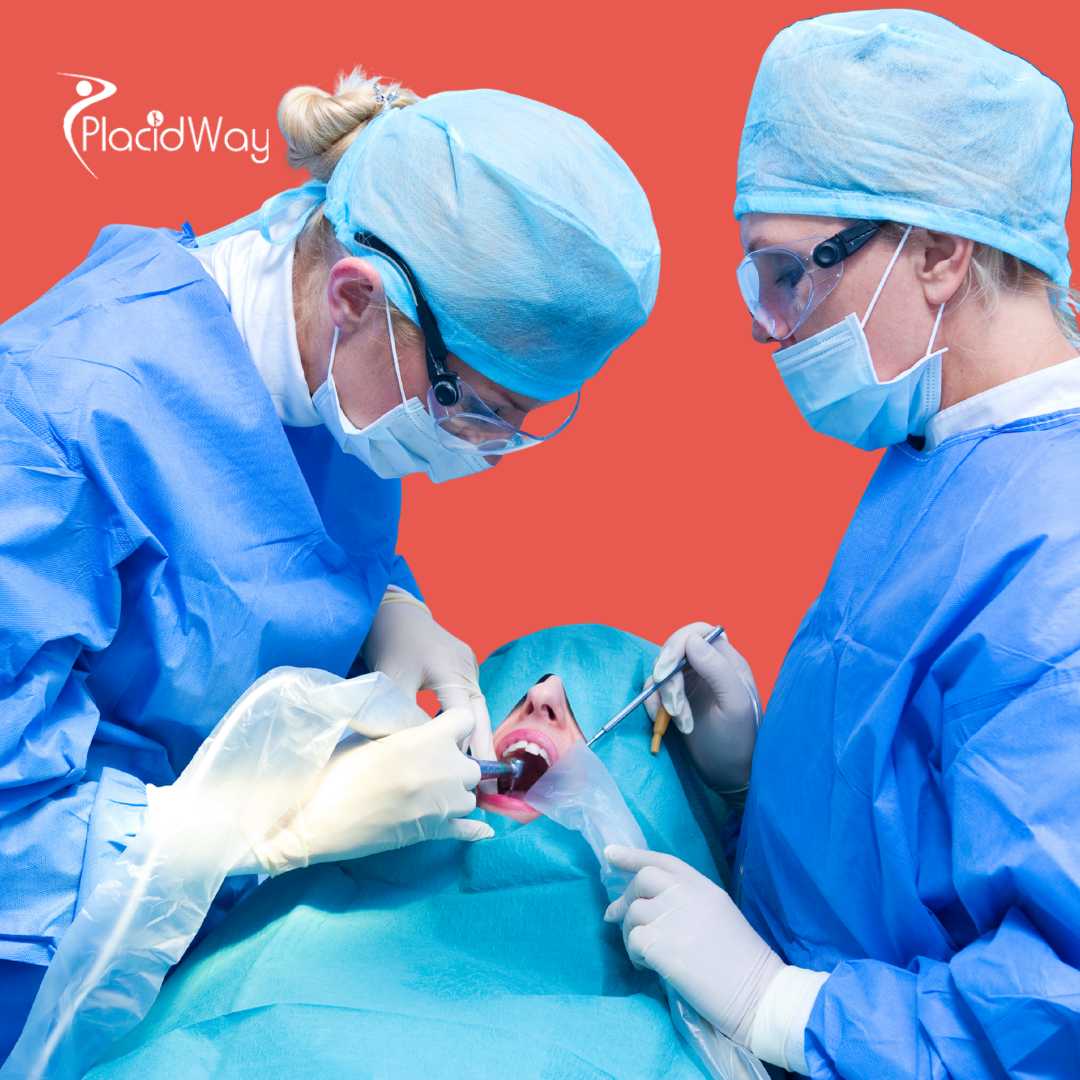
Because osseointegration takes time, you typically need to plan for two distinct phases of treatment. The first visit involves surgical placement, while the second visit, months later, focuses on attaching the permanent abutment and custom crown.
Types of Dental Implants Available in Indian Clinics
Your oral surgeon will recommend a specific implant type based on your jawbone health, the number of missing teeth, and your aesthetic goals. Clinics offering dental implants in India provide several advanced restorative options.
Single Tooth Implants
Ideal if you are missing one tooth. A single titanium post is placed, followed by a custom-milled crown. It does not require altering adjacent healthy teeth.
Multiple Tooth Implants
If you are missing several teeth in a row, two implants can support a fixed dental bridge. This provides a stronger bite force than traditional removable partial dentures.
All-on-4 or All-on-6
Designed for full-arch restoration. Four to six strategically angled implants support a complete set of fixed teeth. This technique often avoids the need for extensive bone grafting.
Step-by-Step Timeline for Dental Implants in India
Understanding the exact timeline helps you coordinate travel dates and manage your expectations. The process requires precise diagnostic planning and adequate healing time. Your clinic in India will typically provide a structured schedule prior to your arrival.
| Treatment Stage | Clinical Action | Estimated Timeframe | Patient Action Required |
|---|---|---|---|
| Trip 1: Diagnostics | 3D CBCT scan, comprehensive oral exam, and digital treatment planning. | Day 1 - 2 | Review the treatment plan and provide medical history. |
| Trip 1: Surgery | Tooth extraction (if needed), bone grafting (if required), and surgical implant placement. | Day 3 - 5 | Rest, apply ice, and follow soft food dietary guidelines. |
| Healing Phase | Osseointegration occurs. The bone fuses securely with the titanium implant. | 3 to 6 Months | Return to your home country. Maintain excellent oral hygiene. |
| Trip 2: Restoration | Uncovering the implant, taking digital impressions, and placing the final permanent crown. | 7 to 10 Days | Attend fittings, verify bite alignment, and return home with a restored smile. |
Understanding the Cost of Dental Implants in India
Financial considerations heavily influence the decision to travel for healthcare. When evaluating the cost of dental implants in India, you will find that prices are substantially lower than in Western healthcare systems. These savings stem from lower local operational costs and favorable exchange rates, rather than a reduction in material quality.
It is crucial to request an itemized quote from your chosen clinic. A transparent quote should separately list the surgical placement, the abutment, the final crown, and any necessary preparatory procedures like extractions or sinus lifts. Keep in mind that prices vary depending on the implant brand used and the complexity of your specific case.
Below is a comparative look at estimated expenses for standard procedures.
| Procedure Type | Estimated Cost in US/UK/Aus | Estimated Cost in India |
|---|---|---|
| Single Titanium Implant (with Crown) | $3,500 - $5,500 | $500 - $900 |
| Bone Grafting (Per Quadrant) | $500 - $1,200 | $150 - $350 |
| All-on-4 Full Arch System (Per Jaw) | $15,000 - $25,000 | $3,500 - $6,000 |
| Zygomatic Implants (Complex cases) | $20,000 - $35,000 | $5,000 - $8,000 |
What to Look for in Dental Implant Treatment Packages
Many facilities catering to international patients offer comprehensive treatment packages. While these can simplify your planning, you must carefully review what is actually included. Not all clinics bundle the same services, which can lead to unexpected out-of-pocket expenses during your trip.
A comprehensive dental implant package in India should clearly specify the implant brand being used. Premium brands carry higher upfront costs but offer global warranties, meaning a dentist in your home country can easily source replacement parts if adjustments are ever needed.
Checklist for Reviewing Quotes
- Does the quote include the 3D CBCT scan and initial consultation?
- Is the cost of the abutment and final crown included, or just the surgical post?
- Are temporary crowns provided during the 3-6 month healing phase?
- Are airport transfers and hotel accommodations part of the bundle?
- Does the clinic provide post-operative medications and a detailed aftercare kit?
Patient Demographics for Dental Implants in India
International patient flow to India for complex dental procedures has shown distinct demographic patterns. Based on 2024–2025 cross-border healthcare data, individuals seeking full-mouth rehabilitations are predominantly older adults who require extensive restorative work that is financially prohibitive in their home nations.
The majority of patients traveling for dental implants in India originate from the United States, the United Kingdom, Australia, and regions of the Middle East. These patients typically exhibit a high need for functional restoration to improve chewing capability and overall quality of life. The data indicates that treatment adoption peaks in specific age brackets where natural tooth loss becomes most prevalent.
Age Distribution of Inbound Dental Implant Patients (2024-2025 Data)
Percentage of international patients by age group seeking implantology in India.
How to Choose a Safe Dental Clinic in India
Your safety and the longevity of your restoration depend heavily on the facility you choose. When researching where to get dental implants in India, you must prioritize clinics that adhere to strict national and international regulatory standards. Do not select a provider based solely on the lowest price.
First, verify if the clinic holds accreditation from the National Accreditation Board for Hospitals & Healthcare Providers (NABH). NABH is the principal constituent board of Quality Council of India, ensuring strict protocols for sterilization, radiation safety, and clinical governance. Clinics maintaining this standard undergo rigorous external audits.
Additionally, look for facilities that possess ISO 9001 certification for quality management systems. If the clinic treats a high volume of international patients, they may also hold certifications from international bodies like the Joint Commission International (JCI), though highly reputable, NABH-accredited clinics are fully capable of providing safe, top-tier care.
Verifying the Credentials of Dental Surgeons in India
The skill of your operating surgeon is the most critical factor in a successful outcome. In India, dental professionals must complete a Bachelor of Dental Surgery (BDS) to practice. However, implantology requires advanced surgical expertise.
You should seek a specialist holding a Master of Dental Surgery (MDS) in Prosthodontics, Periodontics, or Oral and Maxillofacial Surgery. Furthermore, the doctor must be actively registered with the Dental Council of India (DCI) or their respective State Dental Council. This registration ensures they are legally licensed to practice and are bound by the national code of medical ethics.
Many leading surgeons also pursue international recognition. Look for fellowships or active memberships in organizations such as the International Congress of Oral Implantologists (ICOI) or the American Academy of Implant Dentistry (AAID). You have the right to ask the clinic coordinator for the surgeon's exact registration number and credentials before paying any deposits.
Clinical Outcomes and Success Rates in India
Implants are recognized as one of the most predictable restorative dental procedures available today. When performed by qualified specialists using modern diagnostic imaging, the clinical outcomes for dental implants in India align closely with global averages. Success heavily depends on the bone quality, implant location, and patient adherence to post-operative hygiene.
According to 2024 implantology clinical consensus reports, long-term survival rates differ slightly based on where the implant is placed within the jaw. The denser bone of the lower jaw (mandible) typically yields slightly higher integration rates compared to the upper jaw (maxilla).
5-Year Implant Survival Rates by Placement Area (2024 Clinical Data)
Global average success rates reflecting standardized protocols utilized in top Indian facilities.
Patient Suitability for Dental Implants in India
Not everyone is an immediate candidate for this surgery. During your remote consultation with a clinic in India, the medical team will assess your eligibility to ensure safe outcomes. They will typically request recent dental X-rays or a CBCT scan from your local dentist to evaluate your jaw architecture.
Adequate bone density is the primary requirement. If teeth have been missing for years, bone resorption may have occurred. In such cases, your doctor may recommend a preliminary bone grafting or sinus lift procedure to build a stable foundation. While this extends the treatment timeline, it is clinically necessary to prevent implant failure.
Furthermore, uncontrolled medical conditions such as severe diabetes, autoimmune disorders, or active periodontal (gum) disease can compromise the healing process. Patients who smoke face a significantly higher risk of complications, as tobacco restricts blood flow to the gums, interfering with osseointegration.
Risks, Complications, and Safety Protocols
All surgical interventions carry inherent risks, regardless of where the procedure is performed. While getting dental implants in India involves sophisticated protocols, you must be aware of potential complications to make an informed decision.
Immediate post-operative risks include localized infection, swelling, and minor bleeding. In rare instances, nerve damage can occur, resulting in temporary or permanent numbness in the lower lip, chin, or gums. Advanced 3D imaging significantly mitigates this risk by allowing surgeons to map nerve pathways precisely before making incisions.
Long-term risks include peri-implantitis, a destructive inflammatory condition affecting the soft and hard tissues surrounding the implant. It is similar to gum disease and can lead to implant loss if untreated. Top-tier clinics manage these risks by operating in strict, sterile environments, prescribing appropriate antibiotics, and providing clear aftercare instructions.
Warning Signs to Monitor
Contact your dental provider immediately if you experience:
- Severe, throbbing pain that worsens after the first few days.
- Fever or swelling that spreads to your neck or face.
- A loose or shifting sensation in the implant post.
- Pus or continuous bleeding from the surgical site.
Recovery Expectations and Aftercare Timeline
Proper recovery is vital to the success of your restoration. While the surgery itself is relatively quick, the biological healing phase is gradual. You will typically be advised to remain in India for a few days post-surgery for a final check-up before flying home.
During the first week, you must adhere strictly to a soft food diet. Avoid chewing directly on the surgical site and refrain from using straws, as suction can dislodge blood clots. Your clinic will guide you on how to clean the area gently without disrupting the sutures.
| Timeframe | Biological Process | Patient Sensation | Action Required |
|---|---|---|---|
| Days 1-3 | Initial tissue healing and clot formation. | Mild to moderate swelling, tenderness, and minor oozing. | Rest, apply cold compresses, take prescribed anti-inflammatories. |
| Days 7-14 | Gum tissue closes over the surgical site. Sutures dissolve or are removed. | Swelling subsides. Minimal pain remains. | Maintain soft diet. Begin gentle warm salt water rinses. |
| Months 1-3 | Early stages of osseointegration. | Site feels normal. No pain should be present. | Avoid hard, crunchy foods on the implant side. Maintain oral hygiene. |
| Months 3-6 | Complete bone fusion. Implant achieves maximum stability. | Ready for the final crown placement. | Return to your clinic for the prosthetic attachment phase. |
Visa Requirements and Travel Health Planning for India
Planning your travel involves logistical preparation. The Government of India facilitates healthcare travel through the e-Medical Visa program. This specific visa category allows patients and a companion to enter the country for targeted medical treatments. The application process is entirely online and generally processed within a few days.
When booking flights, account for the fact that dental implants require two separate trips. The first trip for surgery usually requires a stay of 5 to 7 days. The second trip, scheduled 3 to 6 months later for crown placement, requires approximately 7 to 10 days to ensure the bite is perfectly adjusted.
Before traveling, consult a local physician regarding travel vaccines. Ensure you have copies of all your dental records, a letter from your Indian clinic confirming your appointment, and travel medical insurance that covers flight cancellations or non-dental medical emergencies abroad.
Technology and Materials Used in Indian Dental Clinics
Leading facilities offering dental implants in India utilize the exact same diagnostic and surgical technologies found in premier clinics in the US or Europe. The reliance on digital dentistry minimizes human error and enhances patient comfort.
Cone Beam Computed Tomography (CBCT) scanners provide highly detailed 3D images of your jawbone, nerve canals, and sinus cavities. This allows the surgeon to select the precise implant length and plan the insertion angle before the procedure begins. Furthermore, many clinics utilize intraoral scanners, eliminating the need for uncomfortable traditional putty impressions.
Regarding materials, reputable clinics use FDA-approved or CE-marked implant bodies. When discussing your treatment, ask the clinic if they use computer-aided design and manufacturing (CAD/CAM) technology for milling the final crowns. This technology ensures an incredibly precise fit that blends seamlessly with your natural teeth.
Alternative Procedures to Consider
While implants offer the most permanent solution, they may not be medically or financially viable for every patient. During your consultation, your prosthodontist may discuss alternative restorations depending on your specific anatomical constraints.
If you lack sufficient bone density and cannot undergo grafting, a traditional dental bridge supported by natural teeth might be recommended. Alternatively, high-quality removable partial or full dentures remain a standard, non-surgical option. While dentures do not prevent bone loss like implants do, they restore aesthetic appearance and basic chewing function at a much lower initial cost.
Frequently Asked Questions
Is it safe to get dental implants in India?
Yes, it can be highly safe if you select a clinic accredited by the NABH and ensure your surgeon is registered with the Dental Council of India (DCI). Strict sterilization protocols are followed in these top-tier facilities.
How much does an All-on-4 dental implant cost in India?
An All-on-4 full-arch restoration typically ranges from $3,500 to $6,000 per jaw in India. This is significantly lower than the $15,000 to $25,000 average seen in the US or Australia. Costs vary based on the implant brand used.
How long do I need to stay in India for dental implants?
You will typically need to make two trips. The first trip for surgery requires a 5 to 7-day stay. After a 3 to 6-month healing period at home, you will return for 7 to 10 days for the final crown fitting.
What happens if my dental implant fails after I return home?
Many reputable clinics provide warranties on the implant post. However, you will need to pay for travel back to India. Choosing a globally recognized implant brand allows local dentists to assist with minor prosthetic issues.
Do Indian dental clinics use international implant brands?
Yes. Leading clinics use highly reputable international brands such as Nobel Biocare, Straumann, Osstem, and Zimmer. Always request written confirmation of the exact brand being used in your treatment plan.
Will the dental procedure be painful?
The surgery is performed under local anesthesia or IV sedation, meaning you will not feel pain during the procedure. Post-operative discomfort is normal and is typically managed effectively with prescribed pain medications.
Do I need a special visa for dental treatment in India?
Yes, international patients are advised to apply for an e-Medical Visa. This visa is specifically designed for foreign nationals seeking medical or dental treatment in recognized healthcare institutions in India.
Are consultations done before traveling to India?
Yes, you can have comprehensive virtual consultations before booking flights. Clinics usually ask you to email local dental X-rays or a CBCT scan to provide an accurate preliminary assessment and cost estimate.
Can I get bone grafting and implants done on the same trip?
In many cases, minor bone grafting can be performed simultaneously with implant placement. However, if severe bone loss exists, the graft may need to heal for several months before an implant can be safely anchored.
How long do dental implants last?
With proper oral hygiene and regular dental check-ups, the titanium implant post can last a lifetime. The custom crown or prosthetic attached to it may experience normal wear and require replacement after 10 to 15 years.
Ready to Explore Your Dental Options?
Navigating foreign healthcare systems can be complex. PlacidWay can help you compare certified dental clinics, understand itemized treatment costs, and request direct information from leading implant specialists in India.
Request Free Clinic InformationDisclaimer: This information is for educational purposes only and does not replace professional medical advice. Always consult a qualified healthcare provider before making medical decisions. Treatment outcomes, costs, and recovery times vary depending on individual patient conditions and selected clinical pathways.
References
- Guidelines for Dental Professionals – Dental Council of India (DCI)
- Accreditation Standards for Dental Health Care Service Providers – National Accreditation Board for Hospitals & Healthcare Providers (NABH)
- Long-Term Survival Rates of Dental Implants (2024 Clinical Review) – National Center for Biotechnology Information
- e-Medical Visa Guidelines for International Patients – Government of India
- Patient Education and Implant Safety – International Congress of Oral Implantologists
- Medical Tourism Travel Statistics and Trends (2024 Updates) – Ministry of Tourism, India



























Share this listing