
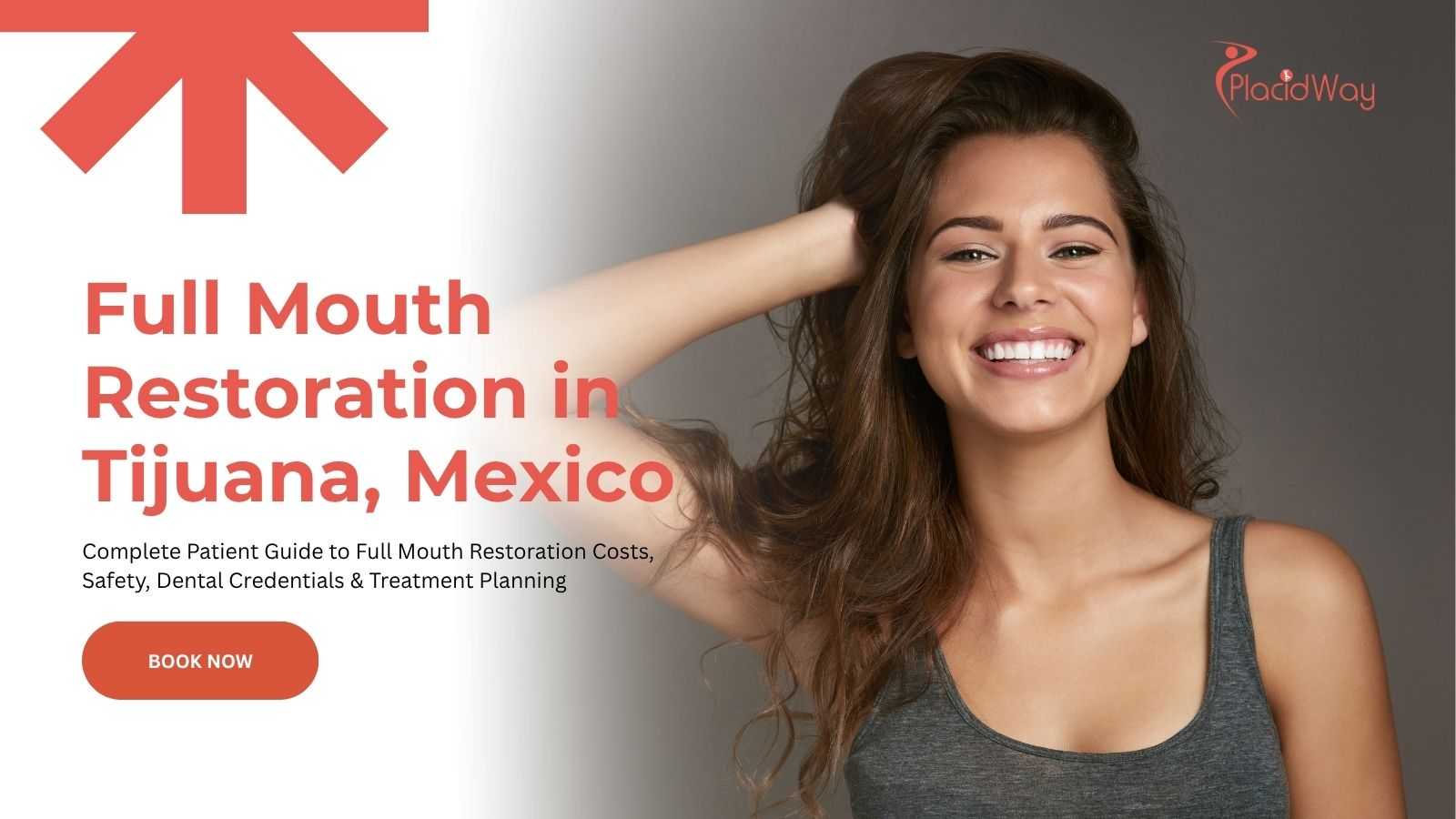
Struggling with severe tooth loss or failing dental work can profoundly impact your ability to eat, speak, and smile comfortably, pushing many to seek solutions abroad due to prohibitive domestic prices. Traveling for a full mouth restoration in Tijuana, Mexico offers substantial cost savings, but making a safe choice requires knowing exactly which clinical credentials, such as COFEPRIS licensing and ADM board registry, to verify. This guide helps you navigate treatment options, evaluate certified specialists, and understand realistic clinical expectations before making your healthcare decision.
Quick Answer Summary
- Estimated Cost: Typically ranges from $10,000 to $25,000 USD depending on whether you need traditional implants, All-on-4, or bone grafting, compared to $40,000+ in the US.
- Safety Overview: Generally safe when utilizing modern clinics regulated by the Mexican government. Thorough vetting of provider credentials and facility hygiene standards is strictly required.
- Ideal Candidate: Patients suffering from extensive tooth decay, advanced periodontal (gum) disease, or missing most of their natural teeth, provided they have controlled systemic health.
- Recovery Time: Initial surgical healing takes 7 to 14 days. Complete bone integration (osseointegration) requires 3 to 6 months before final permanent prosthetics are attached.
- Why Patients Choose Tijuana, Mexico: Easy cross-border access from San Diego, specialized medical tourism infrastructure, English-speaking staff, and significant cost reductions on complex procedures.
- Important Caution: Always verify that the clinic holds an active COFEPRIS (Ministry of Health) license and that your surgeon is registered with the ADM (Asociación Dental Mexicana) or CMO (Consejo Mexicano de Odontología).
Understanding Full Mouth Restoration in Tijuana, Mexico
A full mouth restoration involves rebuilding or replacing all of the teeth in a patient's mouth. This is not a single procedure, but a comprehensive, customized treatment plan. Dental specialists combine multiple restorative dentistry techniques to rebuild the structure, function, and aesthetics of your jaw and smile.
Patients with severe dental trauma, long-term acid erosion, or genetic conditions that deteriorate tooth enamel often require this level of intervention. When conservative treatments like fillings or single crowns are no longer viable, a full arch or full mouth reconstruction becomes the standard clinical recommendation.
The complexity of these combined treatments means that local costs in the US and Canada are frequently out of reach for the average patient. By looking toward specialized dental centers across the border, you can access the exact same medical-grade titanium implants, zirconia crowns, and advanced 3D imaging technology at a fraction of the domestic price.
Common Medical Techniques and Dental Procedures Involved
Because every patient presents a unique anatomical landscape, your treatment protocol will vary. A thorough evaluation of your jawbone density, gum tissue health, and bite alignment dictates which procedures are medically appropriate for your restoration.
The foundation of most modern restorations relies on dental implants. These are biocompatible titanium posts surgically embedded into your jawbone. Over several months, your bone fuses to these posts through a biological process called osseointegration, creating a stable root replacement.
If you lack sufficient bone volume due to prolonged tooth loss, your surgeon may recommend bone grafting or a sinus lift. These preparatory surgeries rebuild the bone matrix, ensuring the titanium implants have a solid foundation to anchor into safely.
| Procedure Type | Clinical Purpose | Typical Placement |
|---|---|---|
| All-on-4 / All-on-6 | Supports a full arch prosthesis using 4 to 6 strategic implants. | Upper and lower jaw. |
| Bone Grafting | Rebuilds jawbone density using synthetic or donor bone material. | Areas of severe bone resorption. |
| Zirconia Crowns | Replaces the visible portion of the tooth with highly durable material. | Over natural roots or single implants. |
| Sinus Lift | Elevates the sinus membrane to make room for upper jaw implants. | Posterior maxilla (upper back jaw). |
Why Patients Choose Tijuana for Complex Dental Care
Tijuana has evolved into one of the most prominent medical tourism hubs globally, specifically for advanced dental restorations. Its geographical proximity to San Diego makes it highly accessible. Patients can fly into Southern California and cross the border via specialized medical lanes, minimizing travel stress.
The primary driver for this cross-border movement is the stark difference in healthcare economics. The lower cost of living, reduced administrative overhead, and different malpractice insurance structures in Mexico allow clinics to offer lower prices. However, reputable facilities still utilize the same globally recognized implant brands, such as Straumann or Nobel Biocare.
Beyond cost, specialized clinics in this region often house multiple dental disciplines under one roof. Instead of traveling between a periodontist, an oral surgeon, and a prosthodontist in your hometown, international clinics frequently provide coordinated care from a multidisciplinary team during a single visit.
- Significant reduction in out-of-pocket expenses.
- Access to multidisciplinary dental teams in one facility.
- Geographic proximity for US and Canadian travelers.
- Use of global, premium implant materials.
- Requires international travel and valid passports.
- Multiple visits are usually required over several months.
- Requires diligent research to avoid substandard clinics.
- Post-operative complications must be managed from afar.
Evaluating the Cost of Full Mouth Restoration in Tijuana, Mexico
Understanding the financial commitment is a critical step in your research. A full mouth restoration is a highly individualized process, meaning there is no single universal price. The final cost depends heavily on the materials chosen, the number of extractions needed, and the complexity of the surgical intervention.
When reviewing treatment quotes from international providers, it is essential to ask for a fully itemized breakdown. Some clinics may advertise a low base rate that excludes the cost of temporary dentures, surgical facility fees, or the final permanent prosthesis. Transparency is a key indicator of a trustworthy provider.
Patients typically save between 50% to 70% compared to average prices in the United States or Canada. Even when factoring in the cost of flights, local accommodation, and border transportation, the overall financial savings remain substantial for extensive procedures.
| Procedure Component | Estimated Cost in US/Canada (USD) | Estimated Cost in Tijuana, Mexico (USD) |
|---|---|---|
| All-on-4 (Per Arch) | $20,000 - $35,000 | $8,000 - $12,000 |
| Bone Grafting (Per Quadrant) | $800 - $3,000 | $300 - $800 |
| Single Dental Implant (With Crown) | $3,500 - $5,500 | $1,200 - $1,800 |
| Full Mouth (Dual Arch All-on-4) | $40,000 - $70,000 | $16,000 - $24,000 |
Be cautious of clinics offering prices significantly below the regional average. Excessively low prices may indicate the use of unbranded, lower-grade titanium implants or acrylic materials that are prone to fracturing under normal chewing pressure.
Patient Demographics and Travel Trends
The demographic profile of patients traveling for advanced dental restoration has shifted in recent years. While it was once primarily retirees seeking affordable dentures, the current patient base includes a much broader age range looking for permanent, fixed implant solutions.
Recent data from cross-border healthcare registries in 2024 and 2025 demonstrate that adults aged 55 to 64 represent the largest segment of patients seeking full arch rehabilitations. These individuals frequently travel from states with high living costs, such as California, Texas, and New York, as well as Canadian provinces like British Columbia and Ontario.
The primary clinical motivation for this demographic is restoring the ability to chew fibrous foods securely and eliminating the social anxiety associated with removable, poorly fitting traditional dentures. The integration of digital dentistry has made treatments faster and more predictable, encouraging more patients to make the journey.
Furthermore, contemporary clinical data from 2025 demonstrates high survival rates for full arch implants placed in regulated international environments, provided the patient adheres to strict post-operative care and maintains routine professional cleanings.
Qualifications to Look for in a Prosthodontist or Oral Surgeon
The success of your restoration relies entirely on the expertise of the dental professional performing the surgery. Placing implants in a jawbone with compromised density requires extensive surgical precision. You should not accept treatment from a general dentist who only places implants occasionally.
When selecting your surgeon in Mexico, you must verify their national credentials. The doctor should be registered with the Mexican Dental Association (Asociación Dental Mexicana - ADM) and hold specific board certification in oral surgery, periodontics, or prosthodontics from the Mexican Council of Dentistry (Consejo Mexicano de Odontología - CMO).
Many top-tier specialists practicing near the border also hold active memberships in international organizations. Finding a surgeon with credentials from the American Academy of Implant Dentistry (AAID) or the International Congress of Oral Implantologists (ICOI) provides an additional layer of confidence regarding their continuous medical education.
How to Verify Dental Clinics and Hospital Safety in Tijuana
Finding a qualified doctor is only half the equation; the facility itself must adhere to rigorous health and safety standards. The regulatory environment in Mexico relies on a central governmental authority to maintain hygiene, sterilization, and operational protocols.
The foremost credential to look for is an active license from COFEPRIS (Comisión Federal para la Protección contra Riesgos Sanitarios). This is the Mexican equivalent of the FDA and the Department of Health. A clinic legally operating in Tijuana must pass COFEPRIS inspections, which govern everything from the sterilization of autoclaves to the safe disposal of biological waste.
In addition to national licensure, reputable facilities will openly share their sterilization protocols and complication management procedures. Ensure the clinic has an on-site CBCT scanner, an established post-operative follow-up schedule, and a clear, written revision policy should an implant fail to integrate.
Assessing Your Candidacy for Comprehensive Dental Implants
Not every patient is immediately eligible for a full mouth restoration. Your current anatomical and systemic health dictates your suitability for surgery. During your initial consultation, the specialist will evaluate several physiological factors to ensure the procedure is safe and has a high probability of success.
Adequate jawbone density is a primary requirement. If your teeth have been missing for years, the bone naturally recedes. If the bone is too thin to anchor a titanium implant securely, you will require preliminary bone grafting. Systemic health conditions, particularly uncontrolled diabetes or autoimmune disorders, can severely inhibit the body’s healing response.
Smoking is a significant contraindication for implant placement. Nicotine constricts blood vessels in the gum tissue, delaying healing and dramatically increasing the risk of early implant failure. Your surgeon will typically require you to cease smoking several weeks before and after the procedure.
| Factor Evaluated | Impact on Candidacy | Action Required if Deficient |
|---|---|---|
| Bone Density | Implants require a strong foundation to fuse correctly. | Bone grafting or sinus lift prior to implant placement. |
| Gum Health | Active periodontal disease can infect the new implants (peri-implantitis). | Comprehensive periodontal treatment and scaling beforehand. |
| Systemic Health | Diabetes and autoimmune conditions affect tissue healing. | Medical clearance from your primary care physician. |
Step-by-Step Treatment Timeline and Logistics
A full mouth restoration is rarely completed in a single day, despite marketing claims you might see regarding "teeth in a day." While you may leave the clinic with functional temporary teeth, the underlying biological healing process takes several months.
Your first visit will typically last between three to five days. Day one includes your comprehensive evaluation, 3D imaging, and finalization of the surgical plan. Day two is usually reserved for the extraction of any remaining failing teeth and the surgical placement of the titanium implants. Depending on the stability of the implants, a temporary acrylic bridge may be attached the next day.
Following this initial phase, you must return home for the osseointegration period. During the next three to six months, the jawbone biologically fuses to the titanium threads. Once healing is confirmed through follow-up imaging, you will return to Tijuana for a shorter trip to have your permanent, custom-milled zirconia crowns or hybrid denture affixed.
Consultation, extractions, implant placement, and attachment of temporary prosthetics. Requires 3-5 days in the destination city.
3 to 6 months of biological healing (osseointegration). Patient follows a strict soft-food diet to prevent implant shifting.
Impressions are taken, and the final highly durable zirconia or porcelain prosthetics are custom-fitted and permanently attached. Requires 3-5 days.
Recovery, Healing, and Aftercare Protocols
The immediate post-operative recovery phase involves managing swelling, minor bleeding, and discomfort. Your clinic will provide you with a precise regimen of antibiotics to prevent infection and analgesics to manage pain. Swelling typically peaks on the third day following surgery before gradually subsiding.
Your diet is heavily restricted during the initial weeks. You must adhere to a liquid or ultra-soft food diet. Chewing hard or crunchy foods places premature biomechanical stress on the implants, which can cause them to fail before the bone has had a chance to fuse around them.
Long-term maintenance is critical to the survival of your restoration. Just like natural teeth, implant-supported prosthetics require diligent daily brushing, the use of a water flosser to clean beneath the bridge, and routine professional cleanings at a local dental hygienist every six months.
| Recovery Timeframe | Biological Process | Patient Sensation | Required Action |
|---|---|---|---|
| Days 1 - 3 | Inflammatory response; tissue begins closing. | Swelling, tenderness, and minor bruising. | Rest, ice packs, take prescribed antibiotics and pain medication. |
| Weeks 1 - 4 | Soft tissue healing; initial bone formation starts. | Swelling subsides; mouth feels mostly normal. | Strict soft-food diet; gentle brushing; avoid strenuous exercise. |
| Months 3 - 6 | Osseointegration (bone fuses completely to titanium). | Implants feel solid and integrated. | Maintain hygiene; prepare for return trip for final prosthetics. |
Understanding Risks, Complications, and Success Rates
While full mouth restorations have high historical success rates, it is a complex oral surgery carrying inherent medical risks. Honest discussions about potential complications are a hallmark of a trustworthy medical provider.
The most severe immediate risk is infection, which can occur if post-operative hygiene protocols are ignored or if systemic conditions impair healing. Long-term, the primary risk is peri-implantitis, a destructive inflammatory condition affecting the soft and hard tissues surrounding dental implants, often triggered by poor oral hygiene or smoking.
In rare cases, nerve damage can occur during the placement of implants in the lower jaw, resulting in temporary or permanent numbness in the lip or chin. This risk is heavily mitigated by surgeons who utilize modern CBCT 3D scanning and computer-guided implant surgery.
Comparing All-on-4 vs. Traditional Implants in Tijuana
Patients researching full arch replacement frequently encounter the term "All-on-4." This specific protocol differs from traditional single-implant restorations and is highly popular in medical tourism due to its efficiency and lower cost.
Traditional full mouth reconstruction often requires placing 8 to 10 individual implants per arch. This method frequently necessitates extensive bone grafting, a longer healing timeline, and significantly higher costs. It mimics natural tooth structure closely but requires optimal bone health.
The All-on-4 technique uses only four strategically angled implants to support an entire arch of teeth. By tilting the posterior implants, surgeons can utilize available dense bone, frequently bypassing the need for bone grafting altogether. This approach allows for a faster surgical process and immediate loading of a temporary prosthesis.
| Feature | All-on-4 / All-on-6 Protocol | Traditional Implant Restoration |
|---|---|---|
| Number of Implants | 4 to 6 per arch. | 8 to 10 per arch. |
| Bone Grafting Need | Rarely required due to angled placement. | Frequently required in areas of bone loss. |
| Treatment Timeline | Faster; temporary bridge attached quickly. | Longer; requires grafting and extended healing. |
| Overall Cost | More cost-effective due to fewer components. | Significantly higher overall investment. |
Travel Logistics and Border Crossing Guide
Navigating the logistical aspects of receiving dental care in Mexico requires basic preparation. Most international patients fly into San Diego International Airport (SAN). From there, Tijuana is only a 30-minute drive to the San Ysidro port of entry, one of the busiest land borders in the world.
Many premium clinics offer concierge services. A representative will pick you up directly from the airport or your hotel in San Diego and drive you across the border to the clinic. This eliminates the stress of navigating foreign transportation systems and dealing with border traffic.
To cross back into the United States efficiently, many recognized dental clinics can issue a "Medical Lane Pass" (Pase Médico). This pass grants you access to a dedicated lane at the border, dramatically reducing wait times. Ensure you have a valid passport or an enhanced driver's license, depending on your nationality and entry requirements.
Frequently Asked Questions
Is a full mouth restoration in Tijuana, Mexico completely safe?
Treatment is generally safe when performed by credentialed specialists in clinics regulated by COFEPRIS. Risks are minimized by thoroughly vetting the surgeon's board certifications (such as the ADM) and confirming the clinic utilizes rigorous sterilization and advanced 3D imaging.
How much does a full mouth reconstruction cost across the border?
Prices vary based on the clinical complexity and materials, but patients typically pay between $10,000 and $25,000 USD for comprehensive treatments. This is often 50% to 70% lower than the cost of identical procedures performed in the United States.
Will I get my permanent teeth in a single visit?
No. While you may receive functional temporary teeth on your first visit, your body requires 3 to 6 months for the bone to heal and integrate with the titanium implants. A second trip is required to attach the final permanent prosthetics.
What happens if a dental implant fails after I return home?
Reputable clinics provide transparent, written revision policies. If an implant fails to integrate due to biological rejection, many clinics will replace the implant at no additional surgical cost. You must clarify these terms and emergency protocols before proceeding with surgery.
How do I verify a Mexican dentist's credentials?
Ask for the surgeon's Cédula Profesional (medical license number) and verify it through the Mexican government’s professional registry. Additionally, look for memberships in the ADM (Asociación Dental Mexicana) and specialty board certifications.
Do Tijuana dental clinics accept American dental insurance?
Most Mexican clinics do not bill US insurance directly. However, many will provide you with a highly detailed, itemized invoice complete with medical codes. You can submit this paperwork to your domestic insurance provider for potential out-of-network reimbursement.
What materials are used for full arch dental crowns in Mexico?
Top clinics use globally recognized, medical-grade materials. The implant posts are typically made of titanium, while the final visible crowns are custom-milled from highly durable monolithic zirconia or porcelain fused to metal, matching US clinical standards.
How long is the recovery after full mouth implant surgery?
Initial swelling and discomfort peak around the third day and generally subside within 7 to 14 days. However, the internal biological healing (osseointegration) takes several months, during which you must strictly adhere to a soft-food diet.
Can I get a full mouth restoration if I have diabetes?
You may still be a candidate, provided your blood sugar levels are strictly controlled (usually determined by your HbA1c levels). Uncontrolled diabetes impairs healing and increases infection risk, so your surgeon will require medical clearance from your primary physician.
Do I need a passport to travel to Tijuana for dental care?
Yes. While you may sometimes enter Mexico via land borders with minimal checks, returning to the United States requires a valid US Passport, a US Passport Card, or an Enhanced Driver's License in compliance with border regulations.
Ready to Explore Your Restorative Dental Options?
PlacidWay can help you confidently compare credentialed providers, understand transparent treatment costs, review comprehensive care options, and securely request information directly from specialized clinics in Tijuana.
Request Free InformationDisclaimer: This information is for educational purposes only and does not replace professional medical advice. Always consult a qualified healthcare provider before making medical decisions.
References
- Survival Rates of Dental Implants and Associated Prostheses – National Institutes of Health (NIH)
- Regulatory Guidelines for Healthcare Facilities – Comisión Federal para la Protección contra Riesgos Sanitarios (COFEPRIS)
- Standards of Implant Dentistry – American Academy of Implant Dentistry (AAID)
- Health and Safety Guidelines for Medical Tourism – Centers for Disease Control and Prevention (CDC)
- Registry of Professional Dental Standards – Asociación Dental Mexicana (ADM)
- Patient Guide to Dental Implants and Recovery – American Dental Association (ADA)
- Cross-Border Travel Requirements and Safety Protocols – US Department of State






















Share this listing