
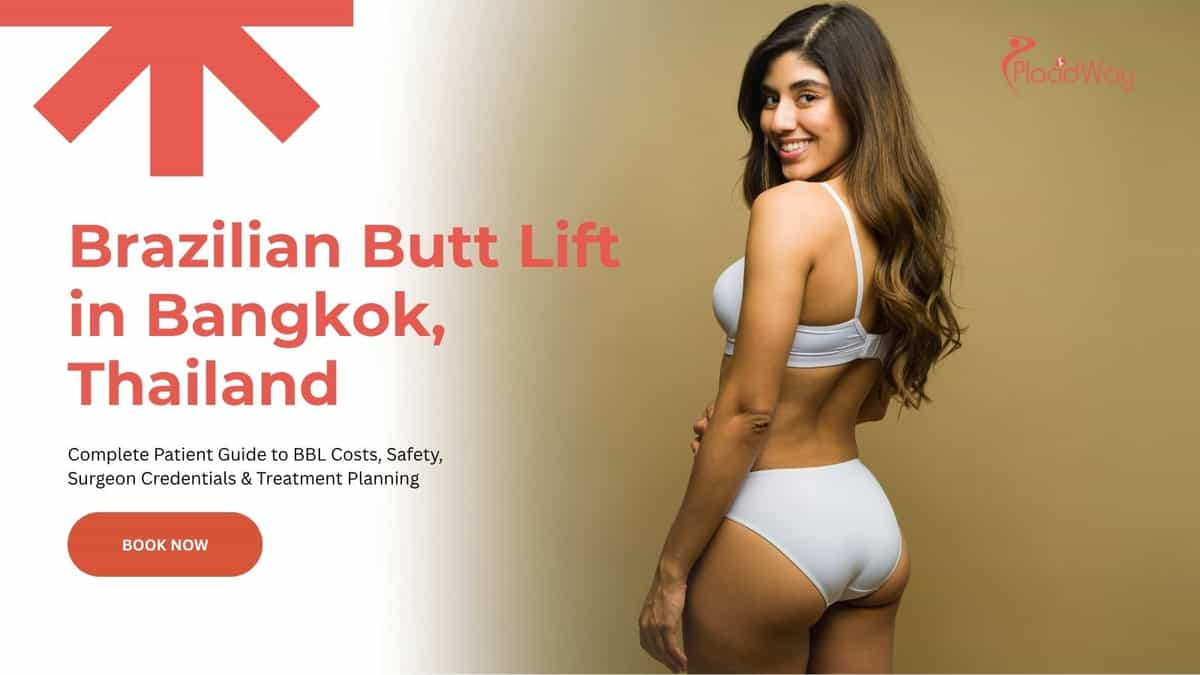
If you are considering traveling for cosmetic surgery, understanding the safety, costs, and medical credentials required for a Brazilian Butt Lift in Bangkok is an important first step. Many international patients look toward Thailand to find board-certified plastic surgeons and highly regulated medical facilities that offer competitive pricing compared to their home countries. This guide helps you navigate the essential medical certifications, evaluate estimated treatment expenses, and approach your healthcare journey with confidence.
Quick Answer Summary
- Estimated Cost: Typically ranges from $3,500 to $6,500 USD, depending on the complexity and facility.
- Safety Overview: High-risk procedure requiring strict adherence to subcutaneous (above the muscle) fat injection and ultrasound-guided techniques.
- Ideal Candidate: Healthy adults with a stable BMI (usually below 30) who possess enough donor fat for grafting.
- Recovery Time: Most patients need 2 to 3 weeks before flying home, with full swelling resolution taking up to 6 months.
- Why Patients Choose Bangkok: Access to globally recognized medical facilities, highly trained plastic surgeons, and structured medical tourism infrastructure.
- Important Certifications to Look For: The Medical Council of Thailand, Society of Plastic and Reconstructive Surgeons of Thailand (ThPRS), and Joint Commission International (JCI) or Healthcare Accreditation Institute (HA) for hospitals.
- Caution: Always verify your surgeon’s board certification specifically in plastic and reconstructive surgery. Do not select providers based solely on price.
Understanding the Appeal of Brazilian Butt Lift Surgery in Thailand
International patients frequently seek out cosmetic surgery in Southeast Asia to access specialized medical care outside their local healthcare systems. A Brazilian Butt Lift utilizes your body’s own natural fat to enhance the volume and shape of your buttocks. Finding a surgeon experienced in gluteal fat grafting is an essential part of the decision-making process.
Traveling to another country for an elective procedure involves balancing clinical expertise with logistical considerations. People choose this destination for several verified medical and practical reasons. The local healthcare system has evolved specifically to accommodate international medical travelers.
- Cost-to-Value Ratio: Medical expenses and hospital fees are generally lower than in North America or Australia without compromising strict clinical standards.
- Specialized Expertise: Local plastic surgeons frequently train internationally and perform a high volume of body contouring procedures annually.
- Regulated Facilities: Top-tier hospitals strictly adhere to local Ministry of Public Health guidelines and often hold recognized accreditations.
- Comprehensive Aftercare: Many private clinics offer structured recovery programs, including in-house nursing and post-operative lymphatic drainage massage.
- Privacy and Recovery: Patients appreciate recovering discreetly in a supportive environment before returning home.
Patient Demographics and Travel Trends
The profile of patients traveling for body contouring has shifted in recent years, heavily influenced by evolving safety standards and comprehensive care packages. According to recent healthcare travel data gathered between 2024 and 2025, patients arriving in Southeast Asia for cosmetic procedures primarily originate from Western countries where the out-of-pocket cost for elective surgery remains high.
Demographically, the majority of individuals seeking gluteal fat grafting fall between the ages of 28 and 45. Women make up the vast majority of this patient base, though male body contouring is showing a steady increase. These patients are typically in the research phase for three to six months before confirming a surgical date.
*Data reflects verified national medical tourism datasets tracking inbound cosmetic surgery admissions.
The Clinical Process of Gluteal Fat Grafting
A Brazilian Butt Lift involves three distinct clinical phases: fat harvesting, purification, and precise reinjection. Your surgeon will first perform liposuction on donor areas such as your abdomen, flanks, or thighs. The goal is to carefully extract viable fat cells while contouring your surrounding silhouette to enhance the final aesthetic result.
Once removed, the biological material undergoes a purification process in a closed system to separate robust fat cells from blood, oil, and tumescent fluid. The purified fat is then methodically injected into the subcutaneous space of the buttocks. Fat survival relies on a process called neovascularization, where your body builds a new blood supply to nourish the transferred cells.
Evaluating the Cost of Treatment
Understanding the financial commitment is a primary reason patients research international medical options. The estimated cost for a Brazilian Butt Lift in Southeast Asia generally ranges from $3,500 to $6,500 USD. Pricing fluctuates based on the amount of liposuction required, the surgeon’s experience level, the type of anesthesia used, and hospital fees.
When comparing prices, it is crucial to ensure you are looking at all-inclusive quotes. Some clinics provide a base price that only covers the surgeon's fee, leaving you responsible for anesthesia, operating room charges, and overnight hospital stays. Always request a transparent, itemized written quote before traveling.
| Country | Estimated Cost (USD) | Typical Inclusions in Baseline Cost |
|---|---|---|
| United States | $8,000 - $15,000+ | Procedure, anesthesia, facility fees |
| Australia | $9,500 - $16,000+ | Procedure, anesthesia, hospital fees |
| United Kingdom | $8,500 - $13,000+ | Procedure, anesthesia, facility fees |
| Bangkok, Thailand | $3,500 - $6,500+ | Procedure, anesthesia, facility fees, initial garments |
Please note that these estimated costs do not include international flights, extended hotel stays, medical complication insurance, or post-operative massage therapies. Your final cost may vary depending on your specific diagnosis and clinical needs.
Identifying Hidden Costs and Building Your Budget
While the initial quote for your procedure might seem highly affordable, a successful medical trip requires budgeting for all associated expenses. Out-of-pocket costs can accumulate quickly during the recovery phase. Proper financial planning prevents stressful situations while you are trying to heal in a foreign country.
International patients must account for pre-operative diagnostics, which are sometimes billed separately. Furthermore, specialized recovery equipment and extended accommodations are necessary because you cannot fly immediately after this specific surgery.
Common Hidden Medical Fees
- Pre-operative blood panels and EKGs
- Additional compression garments (fajas)
- Prescription medications for pain and infection prevention
- Mandatory post-operative lymphatic drainage massages
Logistical and Travel Expenses
- Specialized medical travel insurance
- Extended hotel stays (minimum 14-21 days recommended)
- Special seating pillows for flights home
- Local transportation to and from follow-up appointments
Choosing a Licensed Hospital or Clinic
Your safety during a surgical procedure depends heavily on the facility where the operation takes place. The local medical regulatory framework is robust, provided you select properly licensed institutions. You must verify that the hospital or clinic operates under the strict oversight of the local Ministry of Public Health.
The facility should be equipped to handle medical emergencies. This includes having an on-site Intensive Care Unit (ICU), emergency power backups, and a dedicated anesthesiology team. Never compromise on facility standards to secure a lower price.
- Ministry of Public Health License: Mandatory legal requirement to operate a medical facility.
- Healthcare Accreditation Institute (HA) Thailand: The national standard for hospital quality and patient safety.
- Joint Commission International (JCI): While not strictly necessary, this international accreditation signals adherence to global safety protocols.
Verifying Your Surgeon’s Credentials and Experience
Selecting the right surgeon is the most critical decision in your medical journey. A Brazilian Butt Lift is highly technique-sensitive, and poor execution can lead to severe medical complications or asymmetrical results. You must evaluate the physician's formal education, board certification, and specific experience with fat transfer.
Do not rely solely on social media before-and-after photos. Verify your doctor's registration with the national medical council and their standing within recognized professional societies. A qualified provider will happily share their license numbers and credential documentation during your consultation.
| Verification Step | What to Look For | Why It Matters |
|---|---|---|
| National Licensure | Active registration with the Medical Council of Thailand | Ensures the doctor is legally permitted to practice medicine. |
| Specialist Certification | Board Certified in Plastic and Reconstructive Surgery | Confirms they have completed rigorous surgical specialty training, not just a weekend course. |
| Professional Society | Member of the Society of Plastic and Reconstructive Surgeons of Thailand (ThPRS) | Indicates adherence to national ethical and safety standards. |
| Procedure Volume | High annual volume of gluteal fat grafting cases | Experience directly correlates with better aesthetic outcomes and risk management. |
Evaluating Your Patient Suitability
Not everyone is an ideal candidate for fat transfer procedures. During your preliminary online consultation, a qualified healthcare provider will evaluate your medical history to determine your eligibility. This assessment protects you from unnecessary surgical risks and helps set realistic aesthetic expectations.
Ideal candidates must be in good general health, non-smokers, and possess enough excess fat in donor areas to achieve their desired volume. If your Body Mass Index (BMI) is too low, you may not have sufficient fat to transfer. Conversely, if your BMI is significantly elevated, your surgeon may recommend weight loss before proceeding to reduce anesthesia risks.
- Stable Weight: Significant weight fluctuations after surgery can alter your results, as transferred fat cells expand and shrink with weight changes.
- Skin Elasticity: Good skin tone in the liposuction donor areas helps the skin retract smoothly after fat removal.
- Medical History: Conditions like uncontrolled diabetes, bleeding disorders, or cardiovascular disease may disqualify you from elective surgery.
- Realistic Expectations: Your surgeon will explain that not all transferred fat survives; typically, 60% to 80% of the grafted fat remains permanently.
Surgical Safety Protocols and Risk Management
Patient safety surrounding this treatment has improved dramatically following updated international guidelines. The most serious risk associated with gluteal fat grafting is a pulmonary fat embolism. This occurs if fat is mistakenly injected deep into the gluteal muscles, where it can enter large veins and travel to the lungs or heart.
To mitigate this risk, board-certified surgeons in reputable local clinics now employ strict safety protocols. They inject fat exclusively into the subcutaneous tissue located just beneath the skin and above the muscle. Many clinics have adopted the use of continuous real-time ultrasound during the injection phase to visualize exactly where the cannula is placed.
*Graph reflects the adoption of international safety mandates (ultrasound integration) among surveyed clinical facilities between 2024 and 2026.
What to Expect During the Recovery Process
Healing from a body contouring procedure requires time, patience, and strict adherence to your surgeon's aftercare instructions. You will not see your final results immediately. Post-operative swelling is significant, and your body needs time to establish blood flow to the newly transferred fat cells.
During the first several weeks, you must avoid sitting directly on your buttocks to prevent pressure necrosis, which can destroy the grafted fat. You will be required to wear a compression garment around the clock to minimize swelling and support your newly contoured shape in the liposuctioned areas.
| Timeframe | Clinical Process | Patient Sensation | Action Required |
|---|---|---|---|
| Days 1–7 | Initial inflammatory response; high swelling. | Soreness, bruising, fluid drainage from incisions. | Rest off your buttocks; wear compression garment; stay hydrated. |
| Weeks 2–3 | Neovascularization begins; incisions heal. | Decreased pain; itching at healing sites; persistent swelling. | Use a BBL pillow if brief sitting is required; begin light walking. |
| Weeks 4–6 | Fat stabilization; fluid retention reduces. | More comfortable movement; contour begins to look natural. | Clearance for long-haul flights usually granted; resume light work. |
| Months 3–6 | Final fat survival is established. | Normal sensation returns; final shape is visible. | Resume all normal exercises and activities as cleared by your doctor. |
Managing Travel and Flights After Surgery
Returning home safely after your medical procedure is a logistical challenge that requires careful planning. Sitting for prolonged periods during an international flight increases the risk of Deep Vein Thrombosis (DVT), a dangerous condition where blood clots form in the deep veins of the legs. Furthermore, direct pressure on your buttocks can compromise your surgical results.
Most board-certified surgeons strongly recommend staying in the destination country for at least 14 to 21 days before attempting a long-haul flight. During this time, your medical team will monitor your healing progress, manage any fluid buildup, and clear you for travel when it is safe.
Handling Complications and Follow-Up Care Abroad
Even in the most capable hands, surgery carries inherent risks. Complications such as infection, hematoma, fat necrosis, or contour irregularities can occur. When you undergo treatment abroad, managing these complications requires a proactive approach and clear communication with your medical provider.
Before committing to a clinic, inquire about their revision policy. Ask how they handle emergencies during your stay and what support they provide once you return home. Reputable facilities offer telemedicine follow-ups and may have partnerships with physicians in your home country.
- Medical Travel Insurance: Standard travel insurance does not cover elective surgery complications. You must purchase specialized medical complication insurance designed specifically for medical tourism.
- Extended Stays: Build a financial buffer into your budget in case a minor complication requires you to extend your hotel stay for a few extra days.
- Emergency Protocols: Ensure you have the 24/7 direct contact number for your clinic's on-call nursing staff.
Alternative and Combined Procedures
During your consultation, your surgeon may evaluate your body type and recommend alternative or combined treatments to achieve your aesthetic goals. Because gluteal fat grafting relies on liposuction, it is inherently a combined contouring procedure. However, some patients choose to undergo additional enhancements simultaneously.
Combining surgeries can reduce overall recovery time and limit your exposure to anesthesia, but it also increases the physical trauma your body must endure at one time. Your doctor will carefully assess your health status to ensure combining procedures is safe.
Commonly Combined Procedures
Many patients opt for Lipo 360, which contours the entire midsection (abdomen, flanks, and back) to provide a dramatic contrast that enhances the gluteal area. Breast augmentations or lifts are also occasionally combined, provided the total surgical time remains within safe limits.
Alternatives to Fat Grafting
If you lack sufficient donor fat, your surgeon may suggest gluteal implants. While implants provide guaranteed volume, they carry different risks, such as capsular contracture and a higher likelihood of infection or shifting compared to your body's own natural tissue.
Frequently Asked Questions
Below are common concerns international patients raise when planning a medical trip for body contouring.
Is a Brazilian Butt Lift in Thailand safe for international patients?
It can be safe if you select a licensed facility and a board-certified plastic surgeon who adheres to modern safety protocols, such as superficial subcutaneous fat injection and ultrasound guidance. However, like all major surgeries, it carries significant inherent medical risks that must be carefully evaluated.
How much fat do I need for a successful transfer?
The amount varies depending on your anatomy and goals. Typically, surgeons look to harvest at least 800cc to 1000cc of purified fat total. During your online consultation, your doctor will assess your BMI and donor areas to determine if you have sufficient adipose tissue.
How long do the results of gluteal fat grafting last?
The fat cells that successfully survive the transfer process (usually 60% to 80%) become a permanent part of your buttocks. However, significant weight fluctuations, aging, and lifestyle changes can still alter the shape and size of your glutes over time.
When can I sit down normally after the procedure?
Most surgeons advise against placing direct pressure on the buttocks for at least 3 to 6 weeks. When sitting is unavoidable, you must use a specialized cushion that places your body weight entirely on your lower thighs to protect the healing fat cells.
Do Thai clinics offer packages with hotels included?
Many specialized medical tourism clinics provide comprehensive packages that include airport transfers, pre-operative testing, the surgery, and accommodation in partnered hotels that cater to recovering surgical patients.
Can I lose weight before my surgery date?
You should maintain a stable, healthy weight prior to surgery. Intentionally losing significant weight right before the procedure may deplete the donor fat needed for a successful transfer. Always consult your surgeon before making major dietary changes.
What happens to the fat that does not survive?
The portion of transferred fat that does not establish a blood supply typically undergoes cell death. The body’s immune system then safely metabolizes and reabsorbs this non-viable fat over the first few months of recovery.
Will I have visible scars after the liposuction?
Liposuction requires very small incisions, usually less than half an inch in length. Surgeons place these incisions in natural body folds or discreet areas where they typically fade over time, though they will never disappear completely.
Is it possible to finance a medical procedure abroad?
While clinics in Southeast Asia rarely offer direct financing to international patients, many travelers secure medical loans, personal loans, or use dedicated healthcare credit lines originating from their home country.
What should I pack for my medical trip?
Pack loose, comfortable clothing that is easy to put on without bending over. Essential items include slip-on shoes, dark-colored clothing (to manage post-surgical drainage), a travel companion if possible, and all relevant medical records and prescriptions.
Ready to Plan Your Medical Journey?
PlacidWay can help you compare highly qualified providers, understand transparent treatment costs, and request information directly from licensed clinics. Take the guesswork out of your healthcare decisions today.
Request Free InformationDisclaimer
Disclaimer: This information is for educational purposes only and does not replace professional medical advice. Always consult a qualified healthcare provider before making medical decisions.
References
- Updated Safety Guidelines for Gluteal Fat Grafting – American Society of Plastic Surgeons (ASPS)
- Gluteal Fat Transfer Procedure Overview – International Society of Aesthetic Plastic Surgery (ISAPS)
- Physician Registration and Standards – The Medical Council of Thailand
- Board Certified Specialist Registry – Society of Plastic and Reconstructive Surgeons of Thailand (ThPRS)
- Health Risks and Safety in Medical Tourism – Centers for Disease Control and Prevention (CDC)
- Hospital Quality and Patient Safety Standards – Healthcare Accreditation Institute (Public Organization) Thailand

























Share this listing