
Source: Interview published in Four Wellbeing – Longevity Section
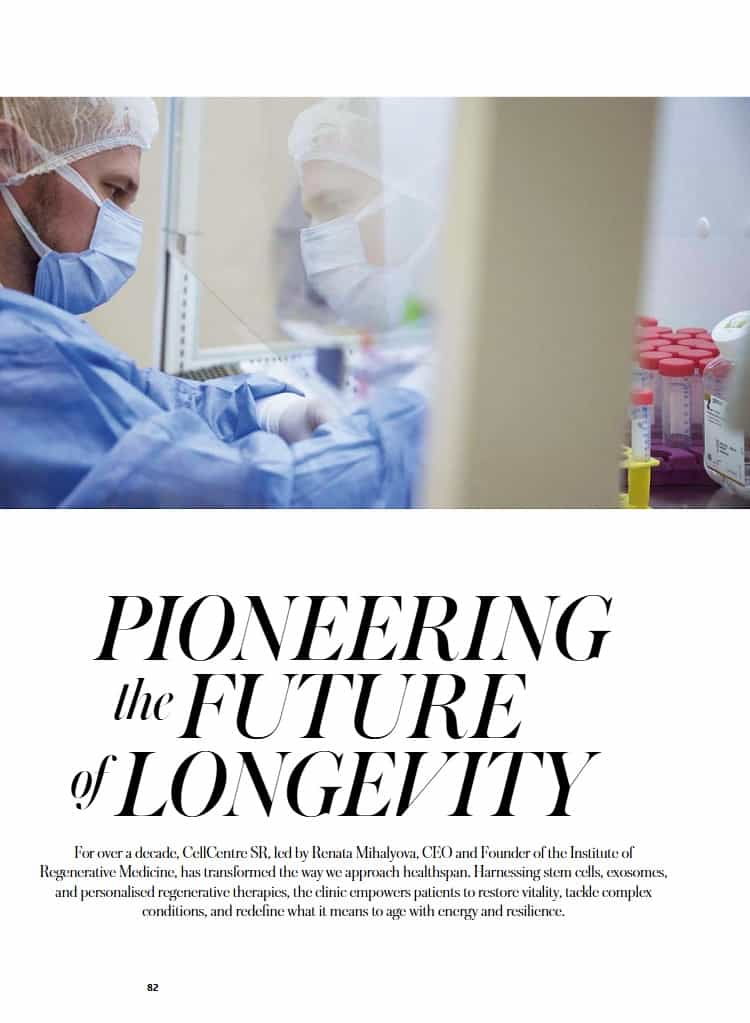
Pioneering the Future of Longevity: Advancing Stem Cell Therapy in Bratislava and Malacky, Slovakia
For over a decade, CellCenter SR, led by Renata Mihalyova, CEO and Founder of the Institute of Regenerative Medicine, has transformed the way we approach healthspan. As a leader in Stem Cell Therapy in Bratislava and Malacky, Slovakia, the clinic harnesses stem cells, exosomes, and personalized regenerative therapies to empower patients to restore vitality, tackle complex conditions, and redefine what it means to age with energy and resilience.
Source: Four Wellbeing – Longevity Section – Page 82
Core Philosophy
The Mission: Amplifying the Body's Innate Capacity for Repair
Your clinic has been a pioneer in regenerative medicine and stem cell applications for over a decade. What inspired its founding, and how has your mission evolved?
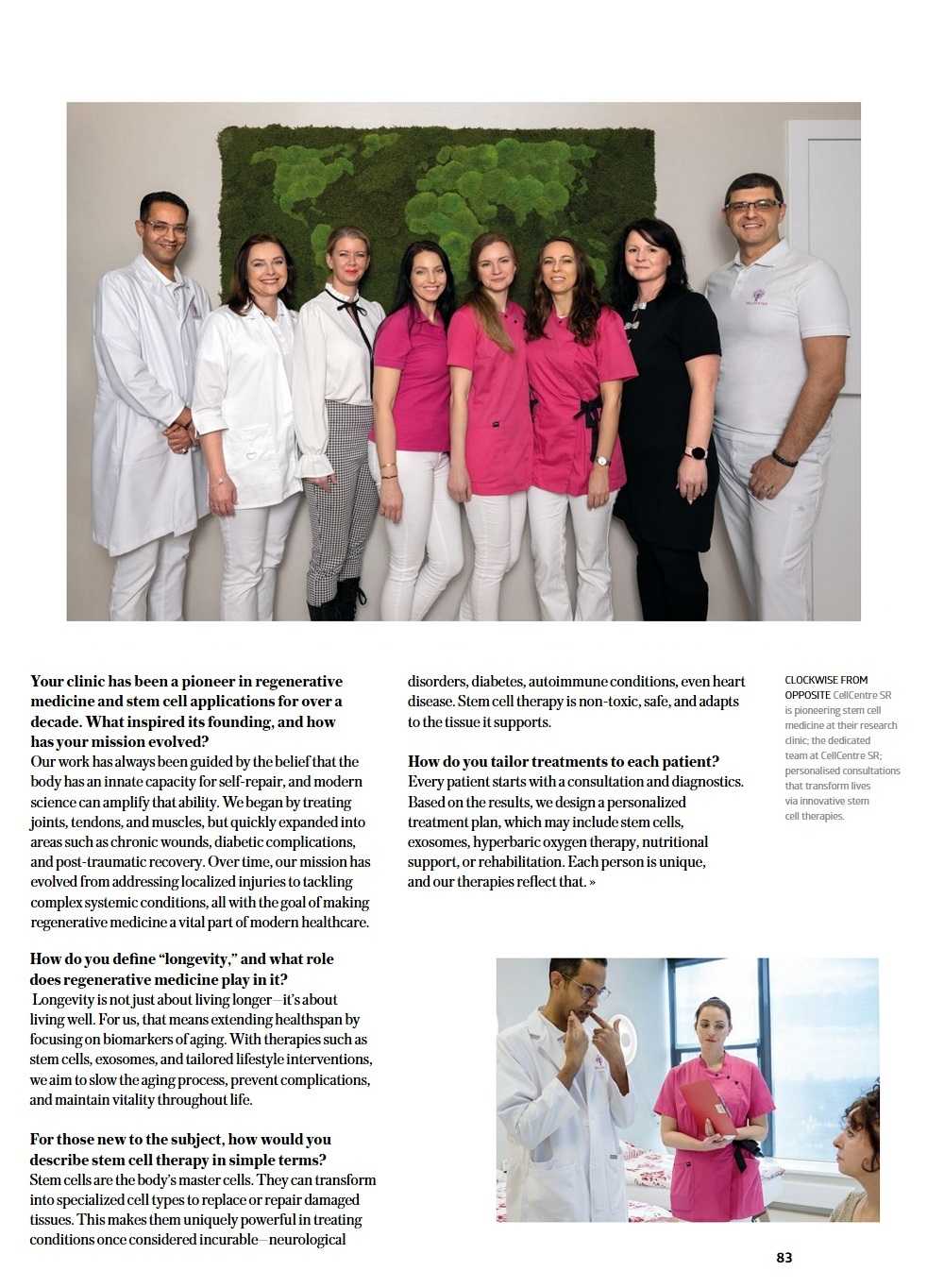
Our work has always been guided by the belief that the body has an innate capacity for self-repair, and modern science can amplify that ability. We began by treating joints, tendons, and muscles, but quickly expanded into areas such as chronic wounds, diabetic complications, and post-traumatic recovery. Over time, our mission has evolved from addressing localized injuries to tackling complex systemic conditions, all with the goal of making regenerative medicine a vital part of modern healthcare.
How do you define “longevity,” and what role does regenerative medicine play in it?
Longevity is not just about living longer; it's about living well. For us, that means extending healthspan by focusing on biomarkers of aging. With therapies such as stem cells, exosomes, and tailored lifestyle interventions, we aim to slow the aging process, prevent complications, and maintain vitality throughout life.
For those new to the subject, how would you describe stem cell therapy in simple terms?
Stem cells are the body's master cells. They can transform into specialized cell types to replace or repair damaged tissues. This makes them uniquely powerful in treating conditions once considered incurable—neurological disorders, diabetes, autoimmune conditions, and even heart disease. Stem cell therapy is non-toxic, safe, and adapts to the tissue it supports.
How do you tailor treatments to each patient?
Every patient starts with a consultation and diagnostics. Based on the results, we design a personalized treatment plan, which may include stem cells, exosomes, hyperbaric oxygen therapy, or nutritional support. Each person is unique, and our therapies reflect that.
Source: Four Wellbeing – Longevity Section – Page 83
Clinical Impact
Restoring Hope: The Success of Personalized Care
Which conditions have shown the most promising results?
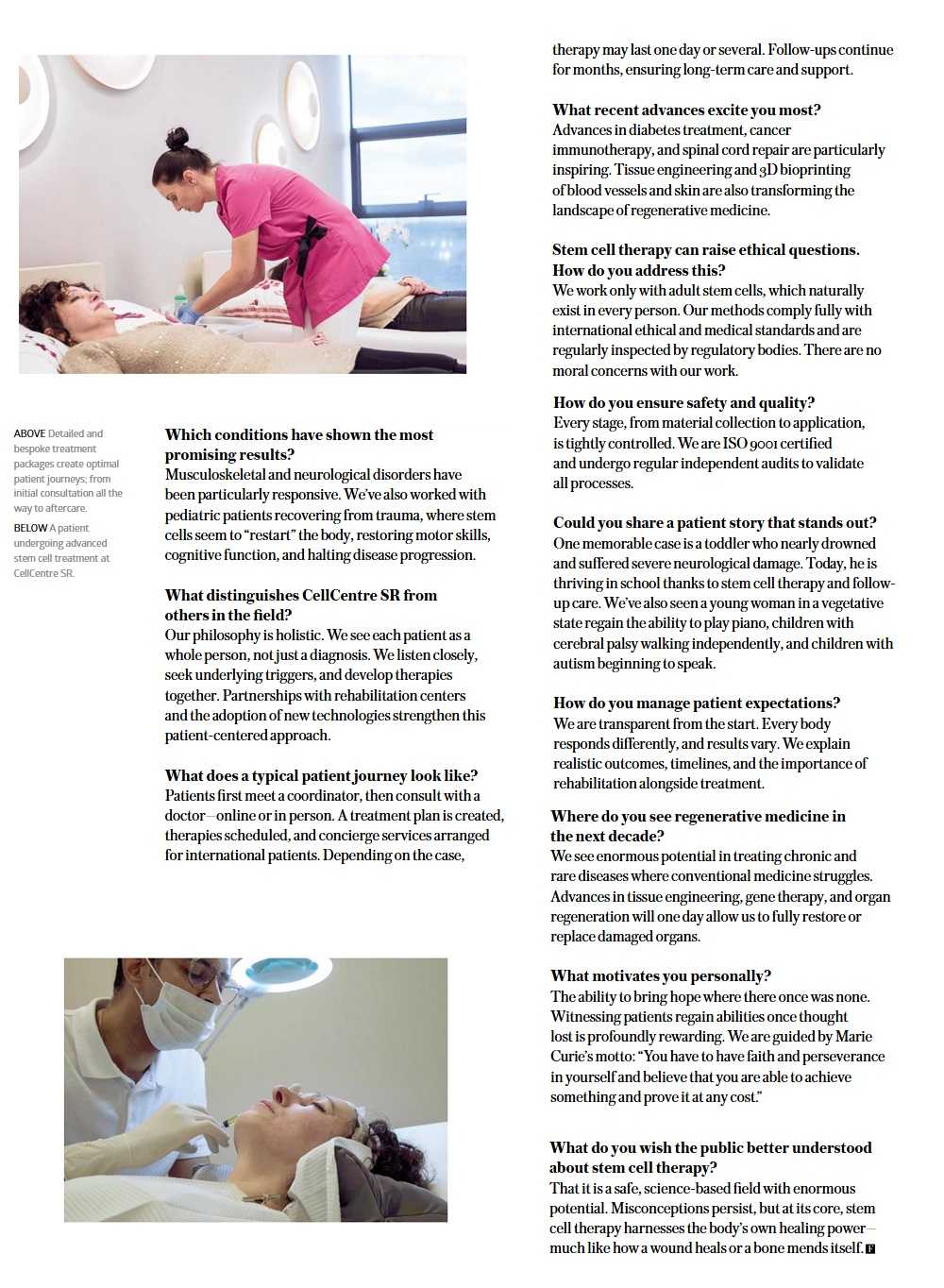
Musculoskeletal and neurological disorders have been particularly responsive. We've also worked with pediatric patients recovering from trauma, where stem cells seem to "restart" the body, restoring motor skills, cognitive function, and halting disease progression.
What distinguishes CellCenter SR from others in the field?
Our philosophy is holistic. We see each patient as a whole person, not just a diagnosis. We listen closely, seek underlying triggers, and develop therapies together.
What does a typical patient journey look like?
Patients first meet a coordinator, then consult with a doctor online or in person. A treatment plan is created, therapies scheduled, and concierge services arranged for international patients. Depending on the case, therapy may last one day or several. Follow-ups continue for months, ensuring long-term care and support.
What recent advances excite you most?
Advances in diabetes treatment, cancer immunotherapy, and spinal cord repair are particularly inspiring. Tissue engineering and 3D bioprinting of blood vessels and skin are also transforming the landscape of regenerative medicine.
Standards & Practice
Safety, Ethics, and the Future of Healing
Ethical Standards
Stem cell therapy can raise ethical questions. How do you address this?
We work only with adult stem cells, which naturally exist in every person. Our methods comply fully with international ethical and medical standards and are regularly inspected by regulatory bodies. There are no moral concerns with our work.
Quality Assurance
How do you ensure safety and quality?
Every stage, from material collection to application, is tightly controlled. We are ISO 9001 certified and undergo regular independent audits to validate all processes.
Patient Expectations
How do you manage patient expectations?
We are transparent from the start. Every body responds differently, and results vary. We explain realistic outcomes, and timelines.
Could you share a patient story that stands out?
One memorable case is a toddler who nearly drowned and suffered severe neurological damage. Today, he is thriving in school thanks to stem cell therapy and follow-up care. We've also seen a young woman in a vegetative state regain the ability to play piano, children with cerebral palsy walking independently, and children with autism beginning to speak.
Looking Ahead
The Vision for Regenerative Medicine
Where do you see regenerative medicine in the next decade?
We see enormous potential in treating chronic and rare diseases where conventional medicine struggles. Advances in tissue engineering, gene therapy, and organ regeneration will one day allow us to fully restore or replace damaged organs.
What motivates you personally?
The ability to bring hope where there once was none. Witnessing patients regain abilities once thought lost is profoundly rewarding. We are guided by Marie Curie's motto: "You have to have faith and perseverance in yourself and believe that you are able to achieve something and prove it at any cost."
What do you wish the public better understood about stem cell therapy?
That it is a safe, science-based field with enormous potential. Misconceptions persist, but at its core, stem cell therapy harnesses the body's own healing power, much like how a wound heals or a bone mends itself.
Source: Four Wellbeing – Longevity Section – Page 84






















Share this listing