



For decades, total hip arthroplasty has been regarded as one of the most successful procedures in modern medicine. Conventional stem systems have demonstrated excellent long-term survivorship and continue to provide reliable outcomes for millions of patients worldwide.
Yet despite this remarkable success story, hip replacement surgery is undergoing another important transformation. Increasingly, surgeons and researchers are shifting away from standardized reconstruction concepts toward approaches that aim to restore the individual anatomy and biomechanics of each patient more precisely.
This development has become particularly visible in Europe, where calcar-guided short-stem total hip arthroplasty has gained substantial momentum over the last decade. Once viewed primarily as a niche concept for younger patients, modern calcar-guided short stems are now increasingly regarded as one of the most sophisticated and successful developments in contemporary cementless hip arthroplasty. In several European countries, registry data and clinical studies have reported highly encouraging outcomes regarding survivorship, complication rates, and patient satisfaction. At the same time, the philosophy behind these implants has evolved considerably beyond the simplistic idea of merely “shortening” a conventional stem.
Modern Hip Replacement Procedure in Germany by Prof. Kutzner
One of the surgeons most closely associated with this evolution is Prof. Dr. med. Karl Philipp Kutzner, a German Hip Surgeon and researcher who has published extensively on calcar-guided short-stem arthroplasty, individualized fixation strategies, biomechanics, migration behavior, and minimally invasive hip surgery. In recent years, Kutzner and colleagues introduced a new scientific classification system for calcar-guided short-stem THA, now referred to as the Kutzner Classification, which attempts to redefine how surgeons think about fixation behavior in modern short-stem arthroplasty.
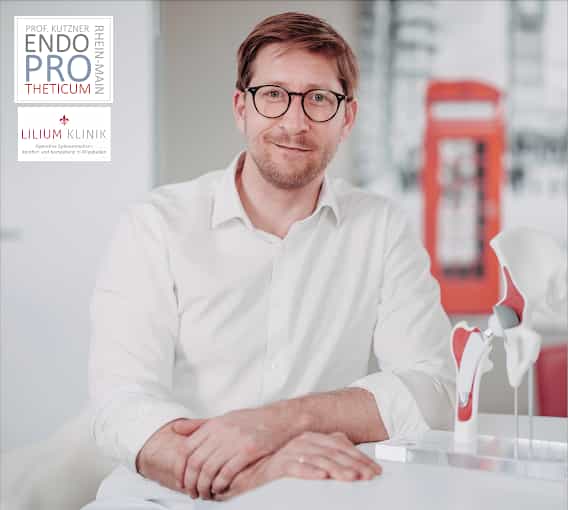
According to Kutzner, the growing international interest in calcar-guided short stems reflects a broader philosophical change within hip replacement surgery itself. “Modern arthroplasty is becoming increasingly individualized,” he explains. “We are recognizing more and more that hip anatomy differs substantially between patients. The same stem design can allow for very different fixation strategies depending on anatomy, bone quality, alignment, and surgical planning.”
This individualized philosophy is central to the concept of calcar-guided short-stem THA. Unlike many conventional stems, calcar-guided implants follow the femoral calcar in a curved implantation pathway that allows adaptation to the native anatomy of the proximal femur. The goal is not simply to implant a smaller stem, but rather to achieve individualized reconstruction with physiologic load transfer and preservation of bone and soft tissues.
Kutzner believes that this distinction is often misunderstood, particularly outside Europe, where short stems are sometimes still perceived primarily as “bone-saving implants.” In reality, he argues, the philosophy is considerably more complex. “The major idea is not simply shortening the implant,” he says. “The concept is about individualized fixation. Depending on anatomy, osteotomy level, alignment, and bone quality, the same stem can behave very differently biomechanically.”
That observation ultimately led to the development of the Kutzner Classification, which was recently introduced in peer-reviewed publications including PubMed – Introduction of a classification system in calcar-guided short-stem THA and HIP International – Scientific Publication. Rather than categorizing implants according to design alone, the classification focuses on fixation behavior and anchorage concepts.
“The same implant may achieve completely different fixation patterns depending on implantation strategy,” Kutzner explains. “This is why we felt a new classification system was necessary. Calcar-guided short-stem arthroplasty should not be viewed as one uniform philosophy, but rather as a spectrum of individualized fixation strategies.”
Kutzner Classification of Hip Replacement Fixation in Germany
The Kutzner Classification differentiates four fixation concepts that describe how the same calcar-guided short stem can achieve different anchorage patterns depending on surgical strategy and patient anatomy:
-
Group I – Metaphyseal Fixation: Pure metaphyseal anchorage with highly proximal load transfer and maximal bone preservation. This reflects the classic bone-preserving philosophy of calcar-guided short-stem THA.
-
Group II – Meta-Diaphyseal Fixation: Combined metaphyseal and transitional fixation with increased rotational stability and broader cortical support.
-
Group III – Diaphyseal Fixation: More distal fixation concepts that may be useful in demanding anatomy, compromised bone quality, or complex reconstruction situations.
-
Group IV – Cemented Fixation: Cemented short-stem fixation concepts that expand the philosophy even further to elderly patients or selected cases with osteoporotic bone.
What makes this particularly relevant for the future of arthroplasty is the broader shift away from rigid implant philosophies toward personalized reconstruction strategies. Surgeons increasingly recognize that patients differ substantially regarding activity level, femoral morphology, bone density, and functional expectations. Modern hip arthroplasty therefore increasingly aims not merely to replace the joint, but to reconstruct the hip as individually as possible.
This evolution also coincides with advances in minimally invasive surgery and rapid recovery protocols. Calcar-guided short stems are especially compatible with tissue-preserving surgical approaches because their reduced implant length and curved geometry facilitate implantation through muscle-sparing pathways. As outpatient arthroplasty and accelerated rehabilitation continue to gain popularity internationally, interest in these concepts has expanded further.
The Evolution and Global Expansion of Patient Care
Although calcar-guided short stems are now widely established in several European arthroplasty centers, the technology has not yet become broadly available in the United States. That may soon change. With increasing global interest in minimally invasive surgery, personalized reconstruction, and tissue-preserving arthroplasty, many observers expect calcar-guided short-stem systems to enter the U.S. market in the near future.
Kutzner believes the timing reflects a broader international trend within Hip Replacement Surgery in Germany. “I think the future of arthroplasty will become increasingly individualized,” he says. “What is especially interesting about calcar-guided short stems is that the same stem design allows surgeons to adapt fixation strategies much more individually according to anatomy, biomechanics, and bone quality.”
Importantly, proponents of calcar-guided short stems do not suggest that conventional stems are obsolete. Long-term results with conventional designs remain excellent and continue to represent the standard for many patients worldwide. Rather, the growing interest in individualized short-stem concepts reflects the expanding spectrum of options available to surgeons as hip arthroplasty evolves further.
At the center of this evolution is a changing understanding of what defines modern hip replacement success. Historically, survivorship alone dominated discussions about implant performance. Today, however, issues such as bone preservation, soft-tissue protection, physiologic biomechanics, rapid recovery, and long-term revision strategies increasingly shape the conversation as well.
For this reason, calcar-guided short-stem THA may represent more than simply another implant category. It may instead reflect a broader conceptual shift in modern arthroplasty itself — one in which individualized reconstruction strategies become as important as the implant design alone.
Many observers believe this philosophy is still in the early stages of global expansion. While Europe has accumulated extensive experience with calcar-guided short stems over the past decade, increasing international interest suggests that individualized fixation concepts may soon become more widely adopted across larger parts of the world. As modern arthroplasty continues to evolve toward personalized reconstruction, minimally invasive surgery, and tissue-preserving techniques, calcar-guided short-stem THA is likely to play an increasingly important role in shaping the future direction of hip replacement surgery worldwide.
Why Choose Calcar-Guided Short-Stem Hip Arthroplasty?
Adapts perfectly to your unique femoral profile and structure rather than forcing a one-size-fits-all shape.
Conserves critical bone and natural tissue structures, keeping healthier bone stock intact for future longevity.
Curved, shorter geometries easily align with muscle-sparing pathways to support accelerated recovery protocols.
Promotes natural biomechanical force distribution to maximize long-term implant stability and patient comfort.
Ready to Personalize Your Joint Replacement Journey?
Empower your healthcare decisions by discovering the latest tissue-preserving techniques, individualized fixation concepts, and world-class orthopedic centers in Germany. Take the first step toward restoring your natural mobility and long-term joint health with confidence.




















Share this listing