
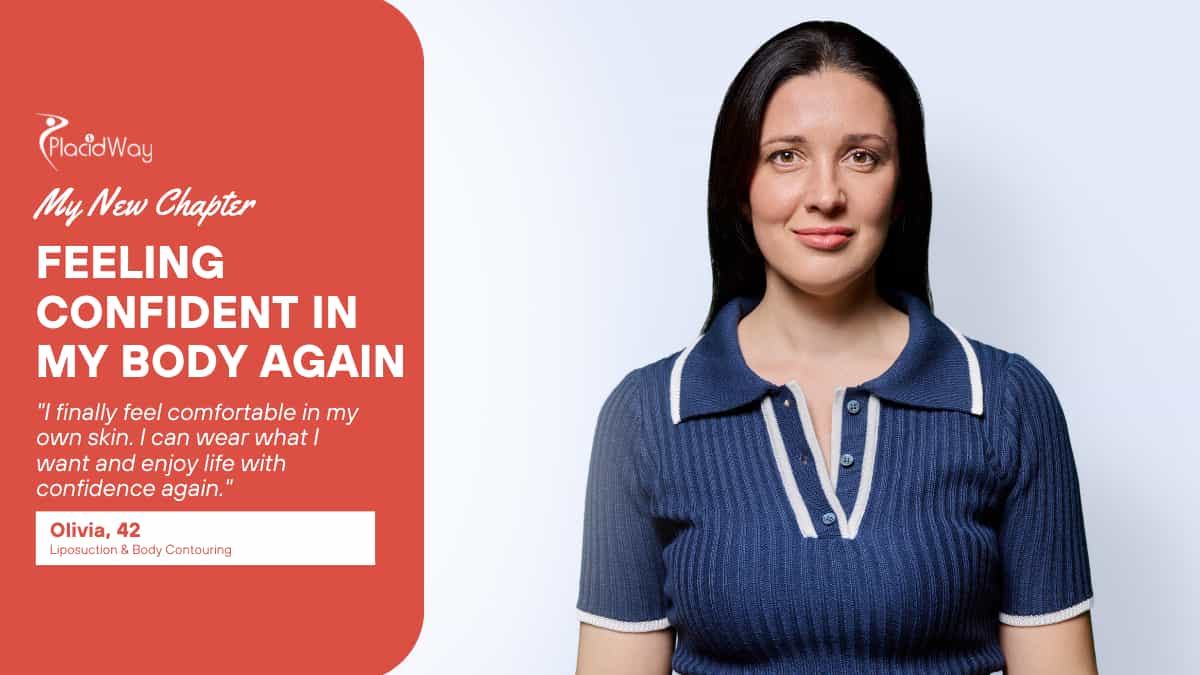
Patient Profile
Name: Olivia Hughes
Age: 42
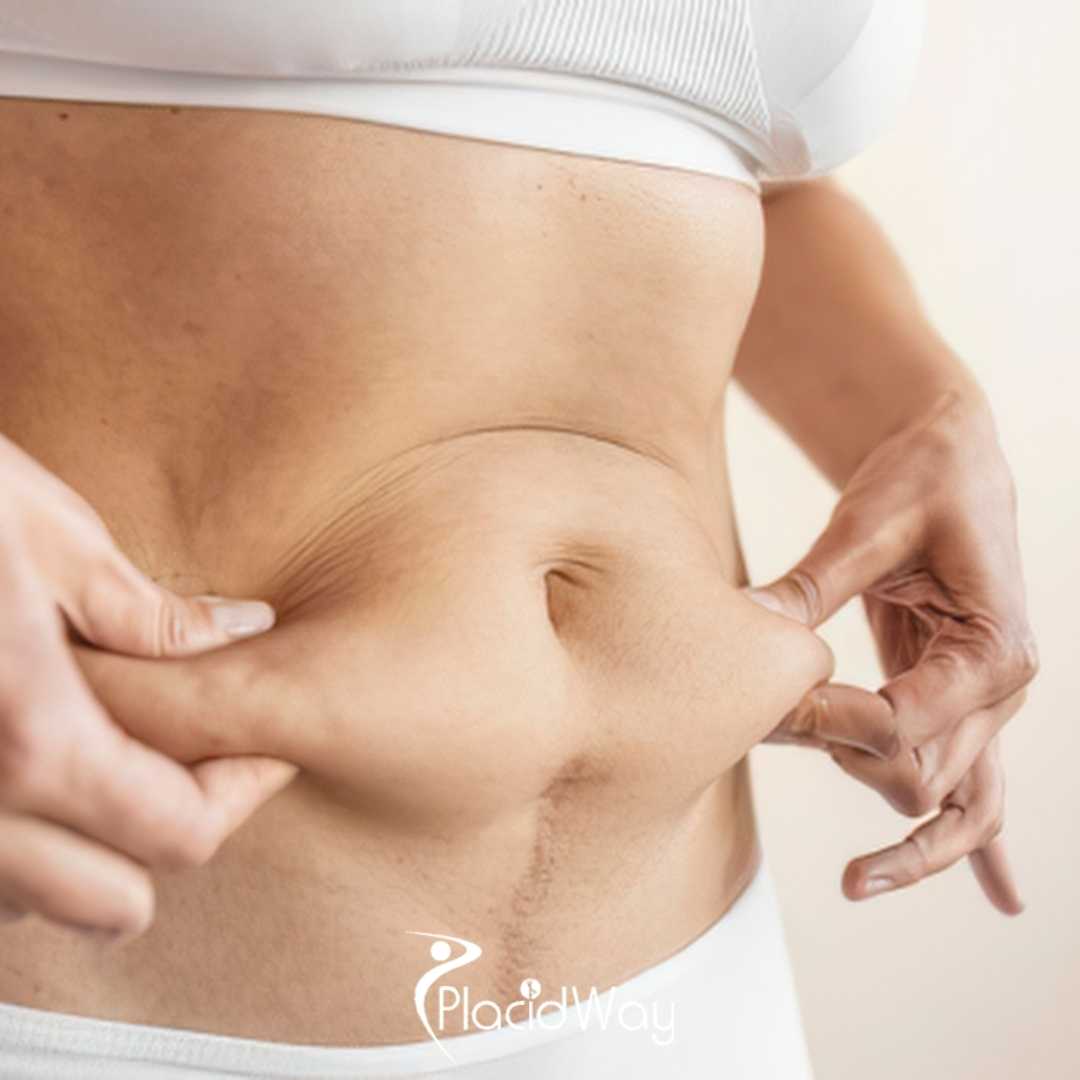
Condition: Localized adiposity after major weight loss
Treatment: Liposuction with possible skin tightening or body contouring
Destination: Ho Chi Minh City, Vietnam
Journey at a Glance
Main problems: Localized fat deposits unresponsive to diet and exercise, particularly in abdomen, flanks, love handles, upper arms, and thighs; Loose or sagging skin overlying areas of fat (common post-weight-loss); Psychological distress or body image…
Previous care: Sustained diet and exercise programs (succeeded at weight loss, failed at spot reduction); CoolSculpting or non-invasive fat reduction treatments (minimal or temporary results; expensive repeat sessions $2,000–$5,000 AUD); Consulting Australian…
Travel driver: Cost Advantage: Liposuction in H
Treatment explored: Liposuction with possible skin tightening or body contouring
Personal goal: See body contours that better reflect the effort invested in significant weight loss.
You started by simply avoiding clothes that cling.
Then you stopped buying swimwear entirely.
You began untagging yourself in photographs.
You learned to position a cushion across your lap before sitting down.
You stopped offering to go first at the pool.
You started checking the mirror only from the collarbone up.
You bought heavy tunics in the height of summer.
You stopped leaving the lights on in the bathroom.
"I just run a bit cold these days."
"No, I prefer sitting in the shade."
"I'll take the photos, you guys line up."
Your world has quietly become smaller.
The most punishing part is not the physical reality of the remaining tissue, but the waiting.
Olivia Hughes is not a real patient of PlacidWay.
She is a fictional composite built entirely from the logistics, barriers, and questions Australian adults face after massive weight loss.
She is forty-two years old and manages regional logistics for a Melbourne freight company.
She plans school pickup schedules three months in advance.
She calibrates fuel budgets to the cent.
She tracks driver rosters across three time zones.
She spent two years explaining the problem away.
She told herself the remaining softness would tighten over time.
Water.
Fasting.
Pilates.
Dry brushing.
Creams.
Massage.
More water.
Liposuction is an established surgical technique utilized to remove localized fat deposits that remain entirely unresponsive to severe caloric deficit and sustained physical conditioning.
It is commonly considered only after a patient has maintained a stable target weight for at least six to twelve months.
The verdict from her specialist was absolute:
"The fat will not shift."
When?
Australian patients seeking elective body contouring following significant weight loss commonly face private consultation wait lists extending beyond twelve weeks, followed by surgical booking delays of two to four months depending on regional theatre availability.
But Olivia Hughes does not experience the healthcare system as a national statistic.
She experiences it when the receptionist in Toorak slides a printed estimate across the desk.
"The surgeon might have a cancellation in late November."
She experiences it when she unzips a dress she bought as a reward for losing twenty-five kilograms and watches the fabric catch on her lower abdomen.
"I think they sent the wrong size."
She experiences it when she logs into her banking app and stares at the school fee account.
"We can just push the kitchen renovation back another year."
She has already tried to be patient.
The assumption that patients exploring cross-border medical options are merely impatient shoppers fundamentally misreads their discipline.
She spent three years weighing portions.
She walked in the dark before the household woke.
She recovered from the initial bariatric procedure while managing a full-time job.
She documented every gram of protein.
She paid for useless cooling treatments that left her bruised and unchanged.
"I did everything they asked me to do."
"I followed the rules."
The question she asks herself in the mirror has changed from "Can I tolerate this?" to:
How much of my life am I prepared to organise around it?
The domestic reality requires a different kind of sacrifice.
Booking a local surgeon means securing a date three months away and committing AUD 12,000 to AUD 15,000 in out-of-pocket fees.
The issue is not that she cannot access the funds.
The issue is what extracting that sum does to the architecture of her family's security.
She sits at the kitchen island with her husband as he taps a pen against the mortgage statement.
"We have the money, Olivia Hughes, if you really want to spend it here."
"Affording something is not the same as being able to afford it."
She isn't searching for Vietnam yet.
Stubborn stomach fat after weight loss
Non-surgical fat removal that actually works
Liposuction cost Melbourne out of pocket
Why is body contouring so expensive in Australia
Best countries for liposuction surgery
Liposuction Ho Chi Minh City reviews
The screen populates with international medical facilities offering dates within three weeks.
Her instinct is sharp:
"I'm not going abroad just because something is cheaper."
The instinct to reject an option based solely on a low price tag is a measure of competence.
Why does Ho Chi Minh City keep appearing in the results?
The Vietnamese government has systematically incentivized private healthcare development, leading to international accreditation for several major urban hospitals catering to expatriates and cross-border patients.
The analytical error is asking whether a specific country is good at surgery.
Countries do not hold scalpels.
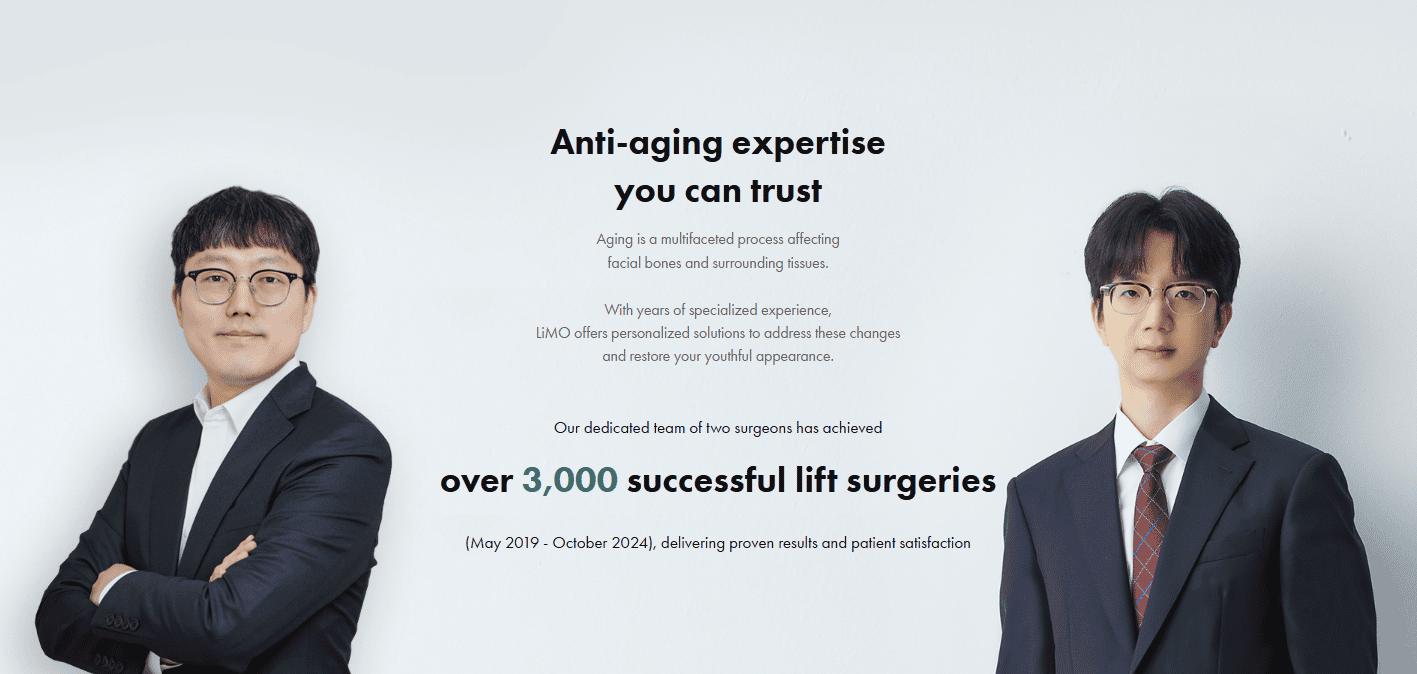
Individual board-certified surgeons do.
Dedicated clinical teams do.
Accredited hospital facilities do.
There is a concrete operational history to verify before a passport is even located.
Australian government advisories explicitly recommend that citizens considering overseas medical procedures conduct independent facility verification and consult their local general practitioner prior to committing funds.
Her first question was: "How much?"
Indicative pricing for targeted liposuction in Ho Chi Minh City varies between AUD 4,000 and AUD 7,500, fluctuating based on the number of areas treated, the specific surgical technique employed, and the duration of the required inpatient stay.
She remembers her father's warning about mechanics:
"You only get the deal if you know what they left out."
"What exactly am I getting?"
Does this include the pre-operative blood work?
Are the compression garments provided or billed separately?
Is the anaesthetist fee wrapped into this figure?
Does the quote cover an overnight hospital stay?
What happens to the price if the procedure takes two hours longer than estimated?
Are the post-operative lymphatic drainage massages included?
Who pays for the prescription painkillers upon discharge?
Is the hotel transfer handled by the clinic?
Does the surgeon use ultrasound-assisted or traditional tumescent techniques?
Are the remote consultation fees deducted from the surgical total?
What is the specific protocol for revision surgery if the skin retracts poorly?
Will there be an English-speaking liaison present in the recovery room?
The advertised number is only the beginning of the conversation.
What does the procedure actually involve?
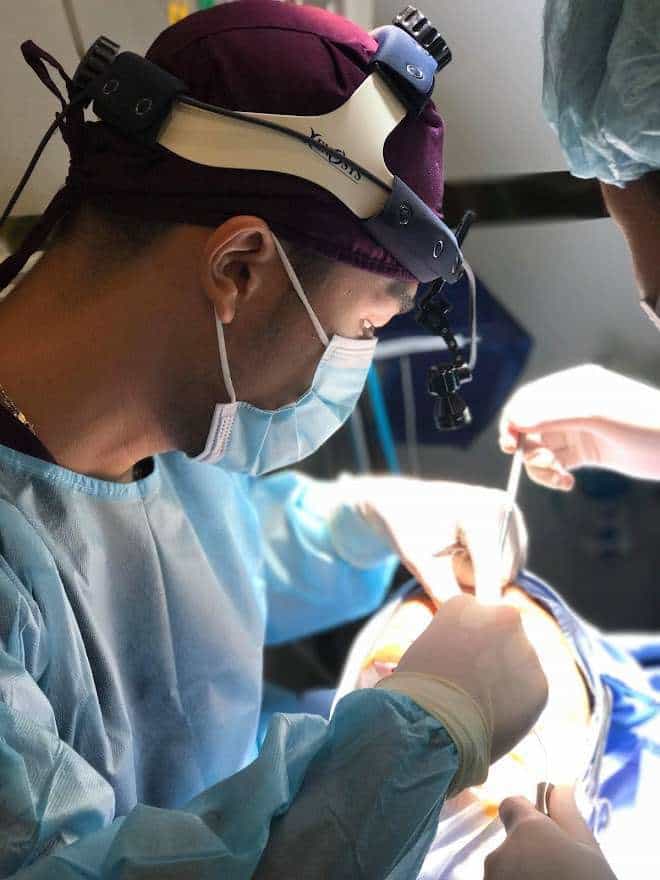
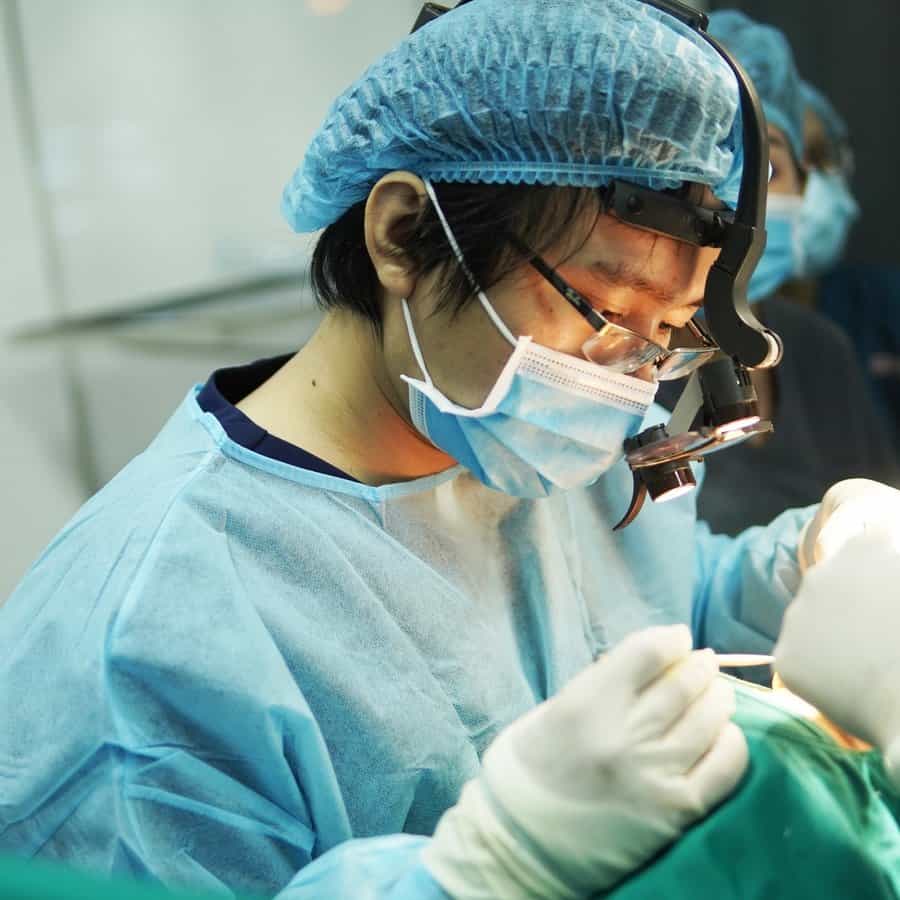
Surgical fat removal requires the injection of a tumescent solution to minimize bleeding, followed by the insertion of a cannula through small incisions to physically break up and suction adipocytes from beneath the dermal layer.
It is a trauma to the tissue.
It requires a biological toll to be paid in swelling, bruising, and restricted mobility.
Which leads to the single most critical logistical hurdle:
"How do I actually get home?"
The part the sales decks rarely put on the front page.
Aviation health standards regarding post-surgical flying vary significantly, with some medical authorities advising against long-haul flights for up to two weeks following abdominal procedures due to deep vein thrombosis risks.
The variation in official guidance is the actual lesson.
This physical constraint must be mapped into the travel itinerary before a deposit is paid, never treated as an afterthought.
"Wait. Does that mean I am stuck in a hotel room for ten days?"
Possibly, depending on the volume of tissue removed and your surgeon's specific discharge protocols.
Who changes the dressings on day four?
How far is the hotel bed from a functioning bathroom?
Is there room service available that adheres to a low-sodium recovery diet?
Are the hotel floors carpeted or tiled for easy walking?
What happens if the air conditioning fails in a humid climate while wearing a compression garment?
Who takes the phone call if a fever spikes at two in the morning?
How do you navigate a busy foreign airport while prohibited from lifting more than two kilograms?
What is the exact distance from the recovery accommodation to the surgical clinic?
Is there a reliable pharmacy within a five-minute walk?
Can the shower head in the hotel bathroom be detached?
She folds the printed list of questions.
She places it inside a manila folder on the counter.
This is not tourism in the usual sense.
Her husband isn't just coming along for the food.
He will be the one holding the fluid drains.
He will be the one setting the alarm for medication schedules.
He will be the one communicating with the hotel concierge.
He will be the one assessing the colour of a bruise under fluorescent bathroom lighting.
He needs access to the emergency contact numbers.
He requires an understanding of what constitutes a normal post-operative symptom versus a critical warning sign.
Australian standard travel insurance policies routinely exclude coverage for complications arising from elective cosmetic procedures undertaken overseas, necessitating specialized medical travel underwriting.
He is part of the clinical system too.
Then comes the uncomfortable conversation about risk.
All surgical body contouring carries inherent baseline risks, including infection, contour irregularities, seroma formation, and adverse reactions to general anaesthesia.
She learns to close the browser window the moment she sees specific marketing phrases:
Completely safe.
No risk.
Guaranteed success.
The absolute best.
Informed consent means understanding the mechanics of failure just as clearly as the geometry of the hoped-for outcome.
Price should never be used to answer a clinical or strategic question.
Olivia Hughes's questions become sharply focused.
She stops asking "How cheap is it?" and "How fast can I get it?"
Where did you complete your specific training in post-weight-loss contouring?
How many procedures of this exact type do you perform monthly?
What is your facility's protocol if I require an emergency blood transfusion?
Can I speak to an Australian patient you operated on in the last six months?
Who administers the anaesthesia, and are they a specialized physician?
What happens if the results are highly asymmetrical once the swelling subsides?
Who bears the financial responsibility for a required revision surgery?
Do you use third-party clinics for aftercare or keep it in-house?
How do you manage deep vein thrombosis prophylaxis for international patients?
What would you see in my blood work that would make you cancel the surgery?
She does not merely want a surgeon willing to operate.
She wants a professional willing to tell her not to proceed.
Have I exhausted my options at home?
Patients may have avenues for partial Medicare rebates if localized skin folds cause documented chronic medical issues, though strict criteria regarding BMI stability and clinical evidence apply.
Can my local GP refer me to a public hospital waitlist just to assess eligibility?
Have I requested a revised quote from a surgeon in a different Australian state?
Could a dedicated medical loan make the domestic waitlist bearable?
Have I asked my bariatric team for a specialized referral?
Is there a cancellation list I can join locally?
Vietnam should be compared with Olivia Hughes's real domestic alternatives, not with a worst-case assumption about the Australian system.
The night before the decision.
The kitchen island is covered again.
A printed PDF of the surgeon's international board certification.
A quote for specialized medical travel insurance.
A mapped route from the HCMC hotel to the hospital.
A spreadsheet comparing domestic wait times against recovery downtime in Vietnam.
"I actually understand what they are going to do to me."
"Then we know what we're saying yes to."
The research did not make her more afraid.
It made her capable of deciding.
What Olivia Hughes actually wants isn't surgery.
"What are you trying to get out of this?"
"I want the fat gone."
TO WEAR JEANS THAT BUTTON WITHOUT PINCHING.
To stand up from a chair without immediately adjusting her waistband.
To walk on a beach without wrapping a towel around her waist.
To look at a photograph and recognize the person she built.
Not the clinic.
Not the surgical technique.
Not the competitive price tag.
Not the stamped passport.
The core of the issue is this:
RESOLUTION.
And underneath that:
ALIGNMENT.
Vietnam might be the answer. It might not be.
She might decide the ten-hour flight home is too daunting.
She might calculate that the domestic peace of mind is worth the extra AUD 8,000.
She might secure a sudden cancellation slot with a surgeon in Brisbane.
She might determine her body needs another year of stability before enduring a scalpel.
She might choose to invest the money elsewhere and tolerate the contour.
She might sign the international consent forms, transfer the deposit, and pack her compression garments.
Any of those can be an informed decision.
The goal of this exploration is not to persuade you to board a plane.
The goal is to ensure that frustration does not make the decision for you.
You have your own paperwork on the table.
Maybe you've stared at a domestic quote that feels like a ransom note.
Maybe you've lost the weight but cannot locate the victory.
Maybe you've dismissed the idea of travelling overseas as reckless.
Maybe you've started reading medical forums late at night.
Maybe you are simply tired of waiting for your life to resume.
You do not need to decide today.
What exactly is included in the international quote?
Who is responsible if something requires revision?
How do I safely fly home?
What qualifications does the surgeon actually hold?
Have I truly investigated all local funding options?
Can my support person handle the recovery logistics?
What would cause me to walk away?
You are not merely comparing prices.
You are comparing paths forward.
Hope isn't the promise that surgery will fix everything.
Hope is not a glossy brochure showing a sunset over the Mekong River.
Hope is not a discounted invoice arriving in your inbox.
Hope is not ignoring the very real physiological risks of undergoing an operation.
Hope is having enough information to make a decision that feels like yours.
You have the capacity to evaluate medical credentials.
You have the right to demand transparent pricing.
You have the authority to ask difficult questions of any professional.
You have the discipline to plan a rigorous recovery.
You have the freedom to say no.
The default setting changes from "I suppose I'll just have to keep waiting" to:
"What other informed options do I have?"
PlacidWay — Your Way to Hope
PlacidWay helps individuals explore international healthcare options by providing access to facility profiles, accredited surgeon credentials, and transparent pricing structures.
We equip you to compare global providers and prepare the critical questions necessary for rigorous medical consultations.
For someone in Olivia Hughes's position, exploring clinics in Vietnam isn't a promise of a perfect outcome, it is simply one structured route worth understanding fully.
Your Way to Hope.
This article is for educational and informational purposes only and does not recommend that any individual undertake surgery or travel for medical procedures. Individual clinical suitability and procedural risk require comprehensive professional assessment. Readers must consult their own qualified clinician or medical adviser in their home country, verify the current regulatory status of any overseas facility independently, and obtain appropriate specialized medical travel insurance prior to making healthcare decisions.
.png)





.png)

.png)


.jpg)
.png)
.png)








Share this listing