


Canadians Drive Surge in Cancun Fresh Egg Donation Cycles
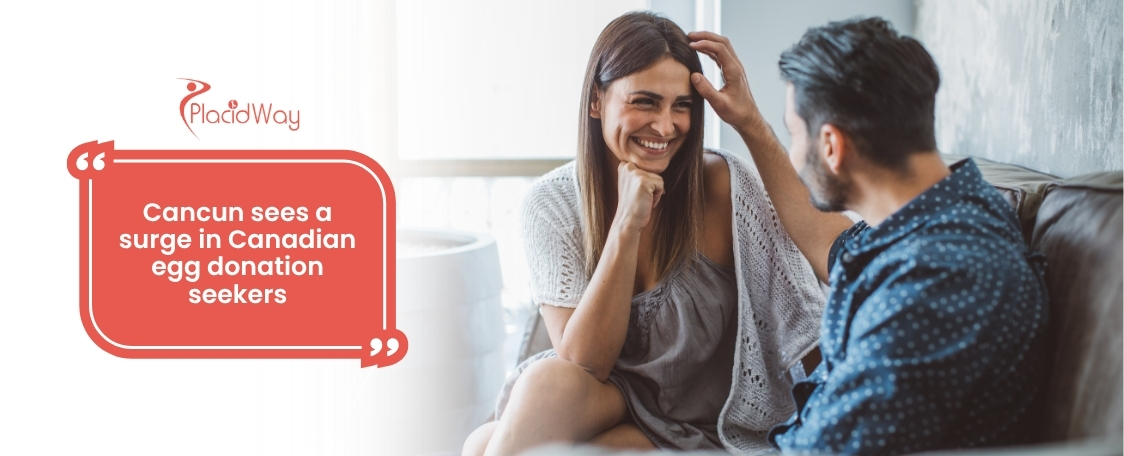
Driven by restrictive laws and multi-year waitlists at home, Canadian couples are fueling a massive surge in Egg Donation in Cancun, seeking guaranteed fresh donor cycles, world-class IVF success rates, and affordable boutique fertility care in Mexico's premier medical tourism hub this year.
Why Canadian Couples Are Flocking to Mexico for Fertility Treatments?
The landscape of international reproductive medicine is undergoing a dramatic paradigm shift, heavily influenced by an unprecedented influx of Canadian intended parents seeking fertility solutions abroad. While Canada boasts a robust and highly celebrated universal healthcare system for general medical needs, its infrastructure for third-party reproduction is fraught with systemic bottlenecks. Couples facing premature ovarian failure, severe diminished ovarian reserve, or recurrent implantation failures are increasingly discovering that domestic pathways to parenthood are not only financially exorbitant but logistically paralyzing. As a direct result, the demand for an IVF with egg donation in Cancun has skyrocketed, transforming the sun-drenched coastal city into a global epicenter for advanced assisted reproductive technology (ART).
What makes this specific geographic migration so compelling is the strategic combination of accessibility, elite medical proficiency, and comprehensive emotional support. Cancun is no longer just a luxury vacation destination; it has evolved into a highly sophisticated medical tourism hub located just a brief, direct flight away from major Canadian cities like Toronto, Montreal, and Vancouver. This proximity allows intended parents to seamlessly integrate complex fertility treatments into their schedules without the extreme jet lag or grueling travel associated with traveling to European or Asian fertility clinics. By combining highly regulated medical protocols with the deeply compassionate care characteristic of Latin American medical providers, Cancun offers a holistic, stress-reducing environment that is critically important for couples who have endured the exhausting emotional rollercoaster of prolonged infertility.
Did You Know?
Due to the strict legal prohibition on compensating egg donors in Canada, the national waitlist for an altruistic local donor can easily exceed two to three years. In stark contrast, boutique fertility programs in Mexico boast expansive, diverse donor databases that allow for immediate, highly tailored donor matching within weeks.
The Severe Bottleneck of Altruistic Egg Donation Laws in Canada
To truly understand the massive southbound migration of Canadian fertility patients, one must examine the profound impact of the Assisted Human Reproduction Act (AHRA). Enacted by the Canadian government, this legislation strictly mandates that all egg and sperm donation must be purely altruistic. It is a federal criminal offense to financially compensate a woman for her oocytes or for her time, physical discomfort, and the medical risks associated with the ovarian stimulation process. While the law was initially designed with the ethical intention of preventing the commodification of human genetic material, its real-world application has completely decimated the domestic supply of available egg donors. Without fair financial compensation, very few young, healthy women are willing to undergo the rigorous, multi-week medical procedures required for egg retrieval.
Consequently, Canadian fertility clinics are forced to rely heavily on importing frozen donor eggs from commercial banks located in the United States. This transatlantic importation process introduces a staggering layer of financial burden, with cohorts of just six to eight frozen eggs frequently costing upwards of $20,000 CAD—before any actual IVF procedures, fertilization, or embryo transfers even take place. For many couples, this financial barrier is insurmountable. The stark reality of these domestic limitations has pushed intended parents to look globally for affordable fertility treatments abroad. By seeking care in jurisdictions where donor compensation is legal, regulated, and culturally accepted, Canadians can bypass years of agonizing wait times and secure top-tier genetic material without facing financial ruin.
Understanding the Appeal of Guaranteed Fresh Donor Cycles
One of the most powerful catalysts driving Canadians to Mexico is the availability and affordability of Fresh Donor Cycles in Mexico. In the realm of assisted reproduction, there is an ongoing clinical debate regarding fresh versus frozen oocytes. While flash-freezing technology (vitrification) has improved significantly, reproductive endocrinologists universally acknowledge that fresh eggs typically yield a higher survival rate during fertilization. A fresh cycle involves perfectly synchronizing the menstrual cycles of the egg donor and the intended mother (or gestational surrogate). Once the donor's eggs are retrieved, they are immediately fertilized in the laboratory with the partner's or donor's sperm, completely bypassing the cellular stress associated with the freezing and thawing processes. This immediate fertilization often results in higher blastulation rates and stronger, more robust embryos.
Furthermore, boutique fertility centers in this region have pioneered the revolutionary concept of the "Guaranteed Cycle." Unlike standard IVF models where patients pay per attempt regardless of the outcome, these specialized programs offer risk-sharing guarantees. Intended parents are often guaranteed a minimum number of high-quality Day-5 blastocysts, or even guaranteed live birth programs that offer partial refunds if a pregnancy is not ultimately achieved. This model completely shifts the financial risk from the patient to the medical provider. Because a fresh retrieval frequently yields a larger number of mature eggs compared to purchasing a limited frozen cohort, intended parents not only have a higher chance of success on their first transfer, but they also frequently secure surplus embryos. These surplus embryos can be cryopreserved, offering a highly cost-effective pathway for couples who dream of having multiple biologically related children in the future.
"Intended parents are no longer bound by the geographic and legal limitations of their home countries. The emergence of boutique IVF programs in Mexico provides not just cutting-edge reproductive technology, but a deeply compassionate, highly regulated pathway to parenthood with transparent outcomes. We are seeing a profound shift where patients leverage international expertise to reclaim control over their family-building journeys."
— Pramod Goel, CEO of PlacidWay
The World-Class IVF and Medical Infrastructure in Cancun
The assumption that traveling across borders equates to a compromise in medical quality is a vastly outdated misconception. The medical infrastructure supporting fertility tourism in the Yucatan Peninsula rivals, and frequently exceeds, the standards found in top-tier North American metropolitan centers. Multi-million-dollar investments have been poured into constructing state-of-the-art embryology laboratories designed to mimic the exact physiological conditions of the human body. These facilities are equipped with ultra-purified HEPA air filtration systems, advanced anti-vibration tables, and sophisticated Time-Lapse incubators that allow embryologists to monitor cellular division 24/7 via microscopic cameras without ever disturbing the delicate embryonic environment.
Beyond the physical technology, the intellectual capital driving these boutique clinics is truly world-class. The leading reproductive endocrinologists and senior embryologists operating in these elite Mexican hubs have routinely completed their advanced medical fellowships in the United States, Spain, or the United Kingdom. They strictly adhere to the rigorous protocols set forth by international governing bodies such as the American Society for Reproductive Medicine (ASRM) and the European Society of Human Reproduction and Embryology (ESHRE). By integrating advanced diagnostic techniques like Preimplantation Genetic Testing for Aneuploidies (PGT-A) and Intracytoplasmic Sperm Injection (ICSI) as standard inclusions rather than expensive add-ons, these facilities consistently report clinical pregnancy rates that command global respect.
Cost Comparison: Fertility Care in North America vs. Mexico
The financial devastation caused by repeated, failed IVF cycles is a silent epidemic among North American couples. In Canada and the United States, the pricing structure for third-party reproduction is deeply fragmented. Patients are subjected to an à la carte billing system where donor agency fees, psychological screenings, legal contracts, clinical monitoring, egg retrieval, fertilization, and the actual embryo transfer are all billed separately. When importing frozen eggs from a US bank to Canada, a single cycle can easily consume $35,000 to $50,000 CAD. For families relying on personal savings, second mortgages, or high-interest medical loans, this pricing model is utterly unsustainable.
Conversely, the boutique fertility model in Mexico relies on transparent, all-inclusive package pricing. Because the cost of living, administrative overhead, and specialized medical labor are more economical in Mexico, clinics can offer highly sophisticated, fresh cycle treatments at a fraction of the domestic cost. These comprehensive packages inherently bundle the donor’s compensation and medication, the complete IVF laboratory process, genetic testing, and the embryo transfer into one predictable sum. The mathematical value proposition is undeniable, allowing Canadian couples to budget with exact certainty while receiving a superior volume of genetic material.
Did You Know?
The clinical success rates for fresh donor egg IVF cycles can exceed an astonishing 75% per single embryo transfer. For women over the age of 40 struggling with autologous (own egg) IVF, transitioning to a specialized donor program increases their statistical probability of a live birth by more than fourfold.
The Boutique Medical Tourism Experience: Healing in Paradise
Infertility is inherently traumatizing, and the clinical, high-volume "factory" feel of many massive North American fertility centers often exacerbates patient anxiety. Elevated cortisol levels and severe stress have been clinically documented to negatively impact uterine receptivity and overall IVF outcomes. Recognizing this vital mind-body connection, the leading providers in Mexico have intentionally adopted a boutique approach to reproductive medicine. This model strictly limits patient volume, ensuring that every visiting couple receives highly personalized, unhurried, and deeply empathetic care from their dedicated medical team.
Furthermore, the geographic setting of the Yucatan Peninsula acts as an incredibly potent, holistic therapeutic intervention. The "IVF Vacation" concept allows intended parents to step away from the daily triggers of their infertility struggles back home. Specialized medical travel packages frequently include VIP airport concierge services, private ground transportation, and accommodations at luxury wellness resorts dedicated to restorative healing. Patients can engage in pre-transfer acupuncture, nutritional counseling, and relaxing beachfront therapies. By replacing the sterile waiting rooms of urban clinics with the tranquil sounds of the Caribbean Sea, patients enter the critical embryo transfer procedure in a state of profound psychological and physiological relaxation, fundamentally optimizing the environment for successful implantation.
Navigating International IVF Laws and Donor Anonymity
Navigating the complex legalities of third-party reproduction is a primary concern for any couple crossing international borders. Unlike the restrictive altruistic models found in Canada, Mexico operates under a progressive, legally secure framework that officially permits and regulates commercial egg donation. This legislation ensures that young women are ethically compensated for their time and physiological dedication, which in turn fosters a highly motivated, reliable, and diverse donor pool. Intended parents are shielded from the severe legal gray areas and potential future custody disputes that occasionally arise in unregulated altruistic arrangements.
A crucial element drawing Canadians to these programs is the structured approach to donor anonymity and screening. In Mexico, egg donation is typically anonymous, protecting the privacy of both the donor and the receiving family. However, anonymity does not equate to a lack of transparency. Boutique clinics provide intended parents with exhaustive, multi-page donor profiles. These profiles include detailed multigenerational medical histories, psychological evaluation results, educational backgrounds, personal essays, and extensive childhood and adult photographs. Every prospective donor undergoes rigorous FDA-level screening for infectious diseases, karyotyping, and expansive genetic carrier panels, ensuring that the biological material meets the highest conceivable standards of global medical safety.
How PlacidWay Connects Intended Parents with Top IVF Programs?
Despite the overwhelming clinical and financial advantages of pursuing a fresh donor cycle in Latin America, coordinating international medical care independently can be an incredibly daunting endeavor. The internet is flooded with unregulated medical advertisements, making it difficult for intended parents to objectively verify international accreditations, accurately translate complex medical protocols, or guarantee the authenticity of a clinic's reported success rates. This critical gap in trust and information is precisely where dedicated medical tourism facilitators become an indispensable asset in the family-building journey.
Serving as a premier, independent connector, PlacidWay meticulously curates a highly exclusive network of globally recognized, intensively vetted fertility centers. Through this comprehensive platform, Canadian couples can easily evaluate verified provider profiles, review completely transparent pricing structures, and read authentic testimonials from previous international patients. Furthermore, PlacidWay facilitates direct, secure virtual consultations with internationally credentialed fertility specialists before any travel arrangements are made. By seamlessly managing the intricate logistics of international credential verification, medical record transfers, and bespoke itinerary planning, PlacidWay empowers intended parents to focus purely on what truly matters: a safe, successful pregnancy and the joyful realization of their dream to build a family.







.png)
.png)
.png)
.png)










Share this listing