


Slovak Thyroid Care Draws French Medical Travelers
French citizens are abandoning standard prescriptions to pursue regenerative thyroid treatment in Slovakia. Driven by medication fatigue, hundreds seek advanced alternatives to lifelong pills, highlighting a massive shift toward holistic cross-border healthcare solutions in Central Europe.
The Rising Demand for Alternatives to Conventional Thyroid Medication
For decades, the standard medical response to hypothyroidism and autoimmune thyroiditis has been a rigid reliance on synthetic hormone replacement. In France, millions of patients are prescribed medications like Levothyroxine under the assumption that their condition requires lifelong, irreversible pharmaceutical management. However, a growing subset of this demographic is experiencing severe treatment fatigue. Many patients report that despite their blood work showing normalized TSH (Thyroid Stimulating Hormone) levels, they continue to suffer from debilitating symptoms such as chronic fatigue, brain fog, unexplained weight gain, and clinical depression. This disconnect between standard laboratory markers and actual patient well-being has sparked a profound medical awakening across Western Europe.
Disillusioned by a domestic healthcare system that frequently dismisses these lingering symptoms as psychosomatic, French patients are looking beyond their borders for more nuanced, restorative care. The modern patient is highly educated and increasingly unwilling to accept the prospect of a lifetime tethered to a pharmacy. Instead, they are actively researching integrative endocrinology and regenerative medical protocols that aim to heal the underlying autoimmune dysfunction rather than merely masking the glandular deficit. This relentless pursuit of genuine health restoration has inadvertently transformed Central Europe into a booming frontier for alternative thyroid solutions.
Did You Know? France boasts one of the highest per-capita consumptions of thyroid medication in the world. However, recent clinical surveys indicate that over 30% of patients on standard hormone replacement therapy continue to experience persistent hypothyroid symptoms despite biochemically "normal" lab results.
Why French Patients Are Crossing Borders for Thyroid Treatment in Slovakia
The migration of French medical tourists to Central Europe is driven by a unique convergence of geography, regulatory frameworks, and medical innovation. Slovakia, nestled in the heart of the continent, has strategically positioned itself as a sanctuary for advanced, personalized medicine. While the French public healthcare system is heavily bureaucratic—often restricting doctors to strict, outdated pharmaceutical protocols—the Slovak private healthcare sector operates with an agile, progressive mindset. This allows specialized clinics to adopt safe, cutting-edge therapies that have proven efficacious in clinical trials but remain bogged down by red tape in Western European nations.
Furthermore, the logistics of cross-border medical care within the European Union have never been more seamless. French patients can easily board a short, inexpensive flight to Bratislava or Vienna, utilizing their EU patient mobility rights to access specialized care without complex visa requirements. The overall affordability of the region also plays a massive role. The lower cost of living and operational overhead in Slovakia means that patients can afford highly comprehensive, multi-disciplinary treatment packages—including advanced diagnostics, luxury accommodations, and intensive biological therapies—for a fraction of what identical private care would cost in Paris or Lyon.
Understanding the Regenerative Protocols Displacing Lifelong Pills
The clinical approach drawing patients to Slovakia drastically diverges from the traditional "diagnose and prescribe" model. Slovak medical institutions utilize a functional medicine framework, which views the thyroid not in isolation, but as a crucial component of a broader, interconnected endocrine and immune system. The ultimate goal of these advanced protocols is to modulate the hyperactive immune response, reduce systemic inflammation, and stimulate the regeneration of damaged thyroid tissue. At the forefront of this medical frontier is CellCenter in Slovakia, where specialized clinical teams are pioneering customized cellular therapies aimed at restoring optimal glandular function naturally.
These regenerative packages are highly individualized, combining numerous synergistic modalities to achieve long-term medication independence. Typical protocols implemented during a patient's stay include:
- Mesenchymal Stem Cell (MSC) Therapy: Utilizing ethically sourced or autologous cellular components to repair damaged thyroid follicles and reset the autoimmune response.
- Advanced Peptide Therapy: Targeted amino acid chains that naturally stimulate the pituitary-thyroid axis, encouraging endogenous hormone production.
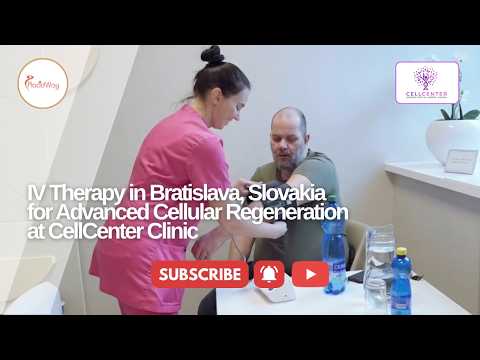
- Intravenous (IV) Ozonotherapy: A potent biological treatment that hyper-oxygenates the blood, rapidly decreasing systemic inflammation and combating autoimmune flare-ups.
- Low-Level Laser Therapy (LLLT): Direct photobiomodulation applied to the thyroid gland to increase cellular ATP production and enhance tissue healing.
- Orthomolecular IV Nutrition: High-dose infusions of selenium, zinc, and bio-available vitamin C—critical cofactors for the conversion of inactive T4 to active T3 hormone.
The Advanced Role of Cellular Science in Autoimmune Thyroid Care
The vast majority of hypothyroid cases in the developed world, particularly among French women, are caused by Hashimoto's Thyroiditis—an autoimmune condition where the body's own immune system mistakenly attacks the thyroid gland. Traditional medicine addresses the symptom (low thyroid hormone) but completely ignores the root cause (the rogue immune system). This is precisely why cellular therapies have become the most sought-after medical intervention in Slovakia. Cellular science, particularly the use of multipotent stem cells, provides a groundbreaking mechanism to actively intervene at the immunological level.
When introduced into the patient's system, these advanced cells possess a unique immunomodulatory capability. They release distinct exosomes and cytokines that signal the aggressive T-cells to stand down, effectively halting the destruction of the thyroid tissue. Concurrently, the regenerative properties of the therapy stimulate angiogenesis (the formation of new blood vessels) and tissue repair within the gland itself. Over the course of several months post-treatment, many international patients report a drastic reduction in their antithyroid antibody counts (TPO and TgAb). As the gland begins to heal and function independently, patients can, under strict medical supervision, begin to safely taper off their synthetic hormone dependence.
Comparing Thyroid Care: French Public Health vs. Slovak Private Clinics
To truly understand the exodus of medical travelers, one must examine the stark contrast in the patient experience. In Western public health systems, the sheer volume of patients forces endocrinologists into a high-turnover model. Appointments are brief, testing is minimalistic due to budgetary constraints, and treatment options are rigidly confined to a standardized algorithm. For a patient suffering from complex, multi-layered autoimmune dysfunction, this one-size-fits-all approach is profoundly inadequate.
Slovak private medical tourism facilities flip this paradigm entirely. They operate on a concierge medical model where the patient's holistic well-being is the singular focus. Appointments last for hours rather than minutes, and the diagnostic deep-dive is exhaustive. The table below illustrates the core differences driving this cross-border healthcare trend:
"The European medical tourism landscape is shifting dramatically. French patients are no longer settling for simple symptomatic management; they are actively demanding regenerative solutions. Slovakia's emergence as a pioneering hub for advanced thyroid protocols demonstrates the immense power of cross-border healthcare in providing patients with transformative, scientifically-backed alternatives to lifelong medication."
— Pramod Goel, CEO of PlacidWay
Advanced Diagnostics: Uncovering the Root Cause of Thyroid Dysfunction
A crucial element of the success seen in Slovak medical centers is their absolute refusal to rely on outdated diagnostic models. In many standard clinical settings, doctors test solely for Thyroid Stimulating Hormone (TSH). If this single marker falls within a vast, generic reference range, the patient is often told they are perfectly healthy, despite suffering from chronic hair loss, lethargy, and joint pain. Slovak clinicians recognize that TSH is a pituitary hormone, not a thyroid hormone, and it fails to paint a complete picture of cellular metabolic health.
When international patients arrive at these advanced facilities, they undergo a rigorous, multi-faceted diagnostic process. This includes an extensive blood panel evaluating Free T3 (the active hormone), Free T4, Reverse T3 (which blocks cellular hormone absorption), and all pertinent autoimmune antibodies. Furthermore, diagnostic protocols extend beyond bloodwork. High-resolution thyroid ultrasounds assess glandular tissue integrity and nodule formation, while comprehensive stool testing evaluates the gut microbiome, acknowledging the scientifically proven gut-thyroid axis. This precise, data-driven methodology ensures that the subsequent regenerative therapies are flawlessly tailored to the patient's exact physiological deficits.
Did You Know? The thyroid gland requires optimal levels of specific micronutrients to convert inactive hormones into active ones. Advanced European clinics report that nearly 80% of their international thyroid patients have severe, previously undiagnosed cellular deficiencies in Selenium, Zinc, or Vitamin D upon their initial arrival.
The Strategic Role of PlacidWay in Navigating European Healthcare
Despite the undeniable clinical advantages, traveling internationally for complex endocrinological care can seem like a daunting endeavor for the uninitiated. Patients must contend with language barriers, verify the medical credentials of foreign doctors, and coordinate complex international logistics while battling the chronic fatigue inherently associated with their condition. The digital landscape is also flooded with contradictory medical marketing, making it difficult for patients to distinguish genuinely accredited medical facilities from opportunistic wellness retreats.
This is precisely where the strategic intervention of a global medical tourism facilitator becomes invaluable. PlacidWay serves as the essential bridge connecting frustrated French patients with elite, extensively vetted medical providers in Slovakia. By utilizing the platform, patients can transparently compare facility credentials, review exact pricing structures for regenerative packages, and read verified testimonials from previous international travelers. Most importantly, PlacidWay facilitates secure, direct virtual consultations with leading Slovak endocrinologists before a flight is ever booked, ensuring absolute alignment on medical goals and safety protocols.
What to Expect During Your Restorative Thyroid Retreat in Bratislava
A medical journey to Slovakia is intentionally designed to feel less like a clinical hospitalization and more like a deeply restorative wellness retreat. Recognized clinics partner with luxury medical spas and boutique hotels nestled in the serene landscapes of Bratislava and surrounding thermal regions. This environment is not accidental; chronic stress and high cortisol levels directly inhibit thyroid function. By removing patients from their high-stress daily routines in France and placing them in a tranquil, hospitable setting, the body's parasympathetic nervous system is activated, maximizing the efficacy of the biological treatments being administered.
The duration of these regenerative programs typically spans one to two weeks. During this time, patients receive daily therapies, nutritional counseling, and continuous medical monitoring. However, the care does not terminate upon departure. A hallmark of these premium European protocols is the extensive post-treatment follow-up. Clinics maintain robust telemedicine connections with their international patients, monitoring follow-up blood work locally obtained in France, and safely guiding them through the intricate process of weaning off their synthetic medications as their revitalized thyroid gland slowly resumes its natural function.

.png)



.png)










Share this listing