


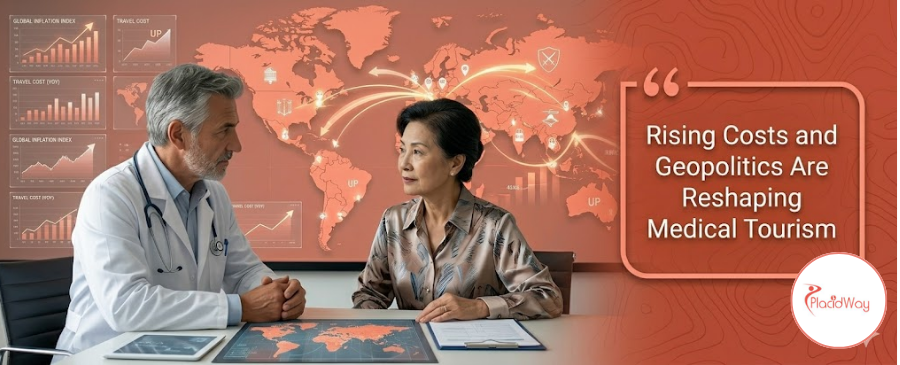
In 2026, the medical tourism industry faces a unique set of challenges. The global economic slowdown, coupled with geopolitical instability, has led to rising travel and healthcare costs, causing a ripple effect across regions traditionally known for attracting medical tourists, including Europe, Asia, the Middle East, and Africa. As these forces shape global patient behavior, medical providers worldwide must adapt quickly to maintain competitiveness.
A Global Crisis: Rising Costs and Patient Hesitancy
The global tourism sector — including medical travel — is facing a decline in demand as inflationary pressures continue to rise. According to industry research, the rising cost of airfare, accommodation, and medical services is making cross-border healthcare increasingly expensive for many patients. This, combined with geopolitical risks such as the war in the Middle East and regional tensions in Eastern Europe, is deterring people from traveling for elective procedures.
In North America, Americans and Canadians have been particularly affected. 40% of Americans have reported delays in planning medical travel, as safety concerns, soaring travel costs, and a decrease in discretionary income weigh on decisions. Similarly, Canadians are more cautious, preferring domestic options due to rising airfares and uncertainty about international safety. This cautious approach is mirrored in Europe as well, where travel advisories and economic uncertainty have made elective procedures abroad seem less viable.
In Asia and the Middle East, the story is similar. Rising operational costs, compounded by international conflict and safety risks, have resulted in reduced international arrivals for medical procedures. Major medical tourism hubs such as India, Thailand, and Turkey have seen sharp declines in medical tourists, with a 40% drop in bookings in some countries compared to previous years.
What Patients Want: Delays, Shifts, and Uncertainty
Patient behavior is undergoing a dramatic transformation:
-
Delays in Medical Decisions: In response to higher travel costs and geopolitical instability, 40% of patients from North America and Europe have postponed elective treatments until the situation stabilizes. These patients are unwilling to invest in procedures when travel costs and logistical uncertainties are so high.
-
Increased Reliance on Virtual Care: Many patients are turning to telehealth consultations and remote follow-ups, with 58% of patients opting for digital care instead of travel. Virtual consultations offer a way to stay connected to medical providers without incurring the expense and risk of international travel.
-
Preference for Regional Alternatives: Patients are seeking more local options for their medical needs. In Asia, for instance, patients from the Middle East are choosing domestic providers or shorter travel destinations, reducing the long-haul flights traditionally associated with medical travel.
The View From PlacidWay CEO, Pramod Goel
Pramod Goel, CEO of PlacidWay, offers a clear perspective on the current state of the medical tourism industry:
"2026 is proving to be a pivotal year for the medical tourism industry. While there’s a slowdown due to rising costs and geopolitical tensions, we must remember that medical tourism is still a fundamental need. Clinics around the world need to adapt to the changing landscape by offering smarter solutions, including AI-driven engagement and flexible pricing models, to meet the evolving needs of patients."
According to Goel, the industry can’t afford to stand still. AI technology, smart patient engagement, and strong value propositions are key to maintaining trust in the face of uncertainty. He believes that the key to survival lies in offering transparent communication, comprehensive care packages, and digital solutions that reduce the logistical burden for patients.
Adapting to the Challenges: Solutions for Medical Providers
As the demand for international medical travel weakens, providers in Europe, Asia, the Middle East, and Africa must adopt strategies to navigate the current global landscape:
1. Emphasize Value and Safety:
In a cost-sensitive market, it’s essential to emphasize outcome-based care and safety protocols. Clinics should clearly communicate the value they offer — not just through price but also by showcasing accreditation, patient success stories, and post-treatment care.
2. Leverage AI and Digital Engagement:
AI tools can be used to predict patient behavior and automate engagement, offering tailored content and reminders that keep potential patients informed and connected. Chatbots and virtual assistants can also provide 24/7 communication, making international clinics more accessible and responsive.
3. Offer Flexible Pricing and Financing:
Affordability is top of mind for many patients. Clinics can attract patients by offering payment plans, financing options, and all-inclusive packages that make international medical travel more predictable and manageable financially.
4. Expand Virtual Care:
As telehealth becomes the go-to solution for many, clinics should invest in virtual consultations, remote follow-ups, and digital monitoring to support patients who are reluctant to travel but still want expert care.
5. Adapt to Regional Preferences:
Providers should consider regional preferences and local healthcare options that are becoming more appealing. Offering packages for short-haul medical tourism or enhancing local partnerships can also help clinics reach a broader market.
Looking Ahead: What’s Next for the Global Medical Tourism Market?
Despite the slowdown in 2026, medical tourism is not disappearing. The key takeaway for providers is that patient behavior has changed: people are more cautious, waiting for global conditions to stabilize before committing to international travel. The global landscape, with its rising costs and political instability, has reshaped the decision making process for medical travelers.
However, with the right tools and strategies, such as smart digital engagement, value-driven packages, and flexible care solutions, medical tourism providers in North America, Europe, Asia, the Middle East, and Africa can ride out the storm and position themselves to capitalize on the long term growth of the sector.
In a world where safety, value, and trust are more important than ever, those who adapt to the changing environment will be the ones who thrive when the global landscape becomes more predictable.
Navigate the Global Market with Confidence
Stay ahead of geopolitical shifts and economic trends. Those who adapt to the changing environment will be the ones who thrive when the global landscape becomes more predictable.





.png)

.png)



















Share this listing