
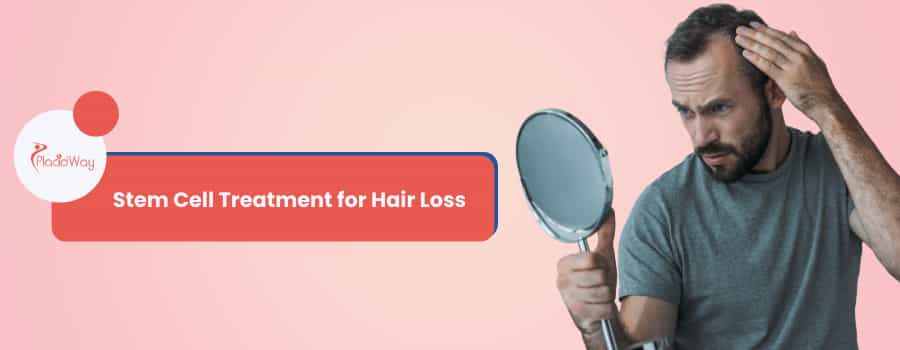
Regenerate Your Hair - The Future of Stem Cell Hair Loss Treatment
If you're dealing with thinning hair, receding lines, or overall loss of density, you know how frustrating it can be when topical treatments fail. You've likely heard the term Stem Cell Treatment for Hair Loss and for good reason. This cutting-edge, regenerative medicine is transforming the field of hair restoration by addressing the root cause of hair loss: dormant or weakened hair follicles.
Unlike traditional hair transplants, which redistribute existing hair, stem cell therapy aims to rejuvenate and regenerate the follicles you already have. It's a game-changer for people in the early to mid-stages of hair thinning, especially those suffering from common conditions like Androgenetic Alopecia (male or female pattern baldness).
For many, particularly those in the US, UK, or Canada, the high price tag associated with this advanced procedure makes it financially prohibitive. This is why more and more patients are turning to medical tourism. Traveling abroad for stem cell hair restoration provides access to world-class specialists and state-of-the-art technology, often at a fraction of the cost, making the future of hair regeneration accessible today. We will guide you through how this procedure works, what to expect, and why countries like Turkey and Mexico are leading the charge in affordable, high-quality hair tourism.
How Does Stem Cell Treatment Actually Work for Hair Growth?
"The core mechanism of stem cell hair therapy is rooted in cellular signaling and regeneration."
The procedure typically involves extracting a small sample of tissue—often fat (Adipose-Derived Stem Cells, ADSCs) or a small punch biopsy from the back of the scalp—which is rich in regenerative cells. This sample is then processed in a lab centrifuge to isolate and concentrate the powerful mesenchymal stem cells (MSCs) and their growth factors. These growth factors are the critical component; they are injected back into the areas of the scalp suffering from thinning.
Once injected, the cells and factors act like natural fertilizer for the scalp. They improve blood circulation (angiogenesis), reduce localized inflammation that often contributes to hair loss, and most importantly, send signals to the miniaturized hair follicles, prompting them to exit their resting phase and re-enter the active growth cycle (Anagen phase). This results in thicker, denser, and healthier hair over several months.
What Are the Different Types of Stem Cell Hair Restoration?
"The term 'stem cell treatment' is broad and encompasses several innovative regenerative techniques."
The field is evolving rapidly, and clinics offer different methods based on cell sourcing and application. Understanding the distinctions is vital for choosing the right treatment center:
- Adipose-Derived Stem Cells (ADSCs): This is one of the most common methods. Stem cells are harvested from a small amount of the patient's own fat tissue, usually from the abdomen or flank, via a mini-liposuction procedure. These cells are highly potent and versatile.
- Cellular Micrografting (e.g., Regenera Activa): This technique involves taking a small biopsy from the back of the scalp. The tissue is processed mechanically to extract progenitor cells and growth factors from the healthy hair follicles, which are then injected into the thinning areas. It’s a very fast, single-session procedure.
- Exosome Therapy: Exosomes are tiny vesicles released by stem cells that carry the beneficial growth factors without containing the actual stem cell itself. This is the least invasive, as it requires no harvesting procedure (fat or scalp biopsy). The exosomes are usually sourced from donor mesenchymal stem cells.
- Combination Therapy: Many successful treatments combine stem cells with Platelet-Rich Plasma (PRP) therapy. PRP provides an immediate burst of growth factors, while the stem cells offer sustained regenerative signaling over weeks and months, maximizing results.
Am I a Good Candidate for Stem Cell Hair Loss Therapy?
"Stem cell therapy is most effective when it has something to regenerate—it cannot bring life to a completely scarred, bald patch."
The ideal patient is usually someone who is experiencing hair thinning but is not yet completely bald. The treatment relies on the presence of existing, albeit dormant or miniaturized, hair follicles. If hair follicles have been entirely replaced by scar tissue (as in some advanced forms of scarring alopecia), the treatment is unlikely to yield results. A detailed consultation with a regenerative medicine specialist is crucial.
Key Candidacy Factors:
- Diagnosis: Best for Androgenetic Alopecia, certain forms of Alopecia Areata, and general hair thinning.
- Health Status: Patients must be in good overall health. Conditions like active infection, uncontrolled diabetes, or certain autoimmune disorders can be contraindications.
- Smoking Status: Non-smokers typically experience better outcomes, as smoking impairs the necessary blood circulation to the scalp.
What Are the Risks and Recovery Time for Hair Stem Cell Injections?
"Because autologous stem cell therapy uses your body’s own cells, the risk of allergic reaction or rejection is virtually eliminated."
Since the treatment is usually done on an outpatient basis and involves injections rather than major surgery, the recovery is remarkably fast. Patients can often return to work and light activities the very next day. You might experience some minor side effects:
- Injection Site: Mild swelling, bruising, or tenderness on the scalp for 24-48 hours.
- Harvest Site (if applicable): If fat or tissue was harvested, there might be slight soreness at that site (usually the back of the head or abdomen) for a few days.
Doctors typically advise avoiding strenuous exercise, excessive sweating, swimming, and washing the scalp aggressively for about five days to ensure the best retention and integration of the cells. Overall, it’s considered a very safe procedure when performed by licensed, experienced practitioners in sterile environments.
How Much Does Stem Cell Hair Treatment Cost Worldwide?
"The primary driver for medical tourism in this sector is the staggering cost difference, making advanced regenerative treatments affordable."
The price of stem cell treatment varies immensely based on the country’s labor costs, regulatory environment, and whether the clinic uses advanced, lab-expanded cells or simpler, on-site processing kits. The table below illustrates typical cost ranges for a single session:
Why is Medical Tourism the Best Option for Stem Cell Hair Restoration?
"For many patients seeking stem cell hair loss treatments, going abroad isn't just about saving money; it’s about accessing the latest technology and top-tier expertise immediately."
In countries where stem cell therapy is still classified as experimental or faces heavy regulation, the cost is inflated, and availability is limited. Medical tourism destinations have embraced this technology, often leading to better standardization and high patient volumes. High volume means doctors gain extensive experience, perfecting their techniques and improving outcomes.
Furthermore, medical tourism hubs understand the value of a patient experience. Their packages are often designed to minimize stress, including VIP transfers, luxury accommodation, and dedicated translation services. This level of comprehensive care is rarely, if ever, seen when booking a procedure domestically.
Which Countries Offer the Best Value for Stem Cell Hair Treatments?
"The 'best' destination depends on your priority: cost, travel convenience, or technological specialty."
Each leading medical tourism country has a unique selling point for stem cell hair loss treatments:
- Turkey (Istanbul): The global leader in hair restoration volume. Clinics here offer unmatched price points, often bundling the procedure with 4-star hotels, airport transfers, and post-operative care kits. They treat thousands of international patients yearly.
- Mexico (Tijuana, Cancun): Ideal for patients from the US and Canada who seek convenience. Many doctors are US board-certified, and the quality of care is extremely high, often rivaling US clinics but at significantly lower costs.
- South Korea (Seoul): Known as the aesthetic capital of the world. Korean clinics frequently utilize cutting-edge exosome and follicular stem cell technologies, focusing heavily on aesthetic refinement and scalp health.
Is Stem Cell Hair Treatment Safe When Done in Clinics Abroad?
"Safety abroad hinges entirely on due diligence and selecting reputable, accredited centers, not just the lowest price."
High-volume medical tourism clinics understand that their reputation relies on safety and successful outcomes. To attract international patients, the best clinics invest heavily in international accreditations like Joint Commission International (JCI). JCI accreditation ensures the clinic meets strict global standards for patient safety and quality of care, including sterile operating environments and trained staff.
A reputable medical tourism facilitator, like PlacidWay, verifies these credentials, ensuring you are directed only to clinics with proven track records and transparent procedures. Always confirm the doctor's certifications and experience level before booking.
How Do All-Inclusive Medical Tourism Packages Work?
"Imagine landing in a new country and having every logistical detail managed for you—that’s the convenience of an all-inclusive medical tourism package."
These packages are designed to remove the stress of international travel, particularly when undergoing a medical procedure. Instead of worrying about booking flights, finding a reputable hotel, or navigating local transport, the package handles it all. This holistic approach ensures the patient can focus entirely on their recovery and regenerative process.
What a typical package often includes:
- The Stem Cell Treatment itself (including cell harvesting and injection).
- VIP airport transfers (both arrival and departure).
- 3 to 5 nights of stay in a 4- or 5-star hotel near the clinic.
- Pre-operative consultation, necessary blood tests, and follow-up checks.
- Dedicated translator or patient coordinator throughout the stay.
Can I Combine My Hair Treatment with a Vacation?
"One of the most appealing aspects of medical tourism is the 'treat and retreat' model."
Since the recovery time for stem cell hair injections is so short, patients often allocate a few days before or after their procedure for tourism. Imagine having your procedure in Istanbul, spending a day or two recovering, and then exploring the Hagia Sophia and the Grand Bazaar before flying home with a head start on regeneration.
However, it is crucial to balance tourism with medical necessity. Avoid activities that involve intense physical exertion, excessive sun exposure, or swimming in public pools immediately after the procedure, as these can increase the risk of infection or swelling. Most clinics will provide a clear itinerary that safely integrates recovery and relaxation.
How Do I Choose the Right Overseas Clinic and Doctor?
"Don't rely solely on glossy websites. Focus on verifiable credentials and transparent operating procedures."
The key to a successful experience abroad is rigorous research. When evaluating a clinic, ask specific questions about their stem cell protocol. Do they use adipose-derived cells, follicular cells, or exosomes? Is the cell processing done on-site with a closed-system kit (which is safer), or is it sent to an external lab?
Utilizing a trusted platform like PlacidWay simplifies this by offering curated access to vetted centers. Look for clinics that can provide a clear breakdown of the number of procedures performed, the success rate for similar cases, and transparent pricing with no hidden fees.
How Long Until I See Real, Visible Hair Regrowth Results?
"Regeneration takes time. Stem cell therapy kickstarts a biological process, and growth requires patience."
Unlike a traditional hair transplant where results are visible immediately (albeit followed by shedding), stem cell therapy is a gradual process. The growth factors need time to revitalize the dormant follicles, and the follicle then needs time to grow a new, healthy hair shaft.
It is important to set realistic expectations. The first sign of success is often a significant reduction in hair shedding and an overall improvement in the quality and texture of existing hair. Peak results usually align with a full hair growth cycle, approximately one year after the initial treatment. Some patients may require a booster session after 12-18 months to maintain the renewed density, especially if hair loss is genetically determined.
Take the Next Step with PlacidWay
Ready to explore the future of hair restoration with affordable stem cell treatment? Your journey to renewed hair density and confidence is just a click away. Explore top-rated international clinics, compare prices across leading medical tourism destinations, and get a free, personalized quote for your stem cell hair restoration with PlacidWay.
Let us help you plan a seamless, safe, and rejuvenating medical travel experience, from pre-consultation to post-op follow-up. Start your transformation today!





.png)










Share this listing