
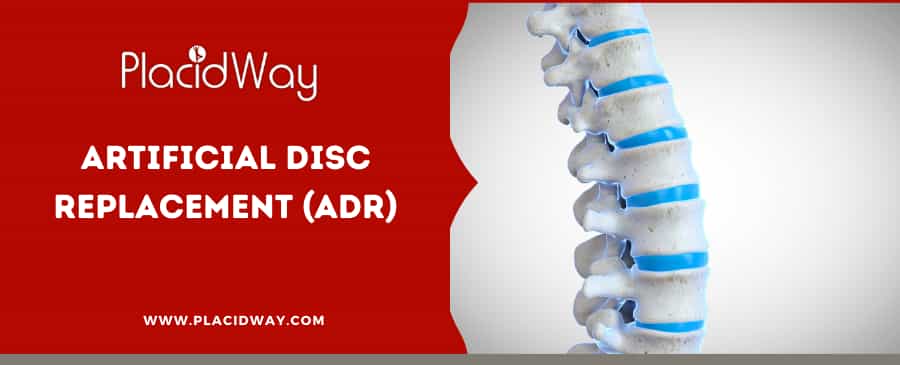
Finding Relief: Is Artificial Disc Replacement (ADR) Your Solution for Chronic Back or Neck Pain?
Living with persistent back or neck pain can be incredibly debilitating, impacting every aspect of your life—from daily activities to sleep and overall well-being. If you've been searching for "solutions for chronic back pain," "treatment for herniated disc," or "alternatives to spinal fusion," you've likely encountered the term Artificial Disc Replacement (ADR).
Artificial Disc Replacement, often referred to as ADR, is an innovative surgical procedure designed to alleviate chronic pain and restore mobility in the spine. Unlike spinal fusion, which permanently joins two or more vertebrae, ADR replaces a damaged or degenerated disc with a prosthetic one, mimicking the natural movement of a healthy disc. This procedure is typically considered for individuals suffering from degenerative disc disease (DDD) in either the cervical (neck) or lumbar (lower back) spine, where the natural disc has lost its cushioning and shock-absorbing capabilities, leading to pain, numbness, or weakness.
The journey to finding a solution often begins with understanding your symptoms and the underlying causes. Are you experiencing a persistent dull ache, sharp shooting pains down your arm or leg (sciatica), tingling, or numbness? These could be signs that your spinal discs are not functioning optimally. While conservative treatments like physical therapy, medication, and injections are usually the first line of defense, for many, the pain persists. This is where exploring advanced options like ADR becomes vital, especially for those seeking to maintain spinal flexibility.
For patients considering "affordable back surgery abroad" or "spine surgery overseas," ADR presents a compelling option, combining cutting-edge medical technology with potential cost savings and reduced waiting times. This comprehensive guide will explore everything you need to know about Artificial Disc Replacement, from symptoms and causes to types, recovery, risks, and why so many patients are choosing to pursue this life-changing procedure in leading medical tourism destinations worldwide.
What are the Symptoms of Degenerative Disc Disease (DDD) that Lead to ADR?
Degenerative Disc Disease (DDD) isn't truly a "disease" but rather a natural process of aging that can lead to significant pain and discomfort. When people search for "why does my back hurt so much?" or "neck pain radiating to arm," they're often describing symptoms associated with DDD. The intervertebral discs—the spongy cushions between your vertebrae—begin to dry out, shrink, and lose their flexibility. This loss of integrity can lead to a range of symptoms:
- Chronic Back or Neck Pain: This is the most common symptom, ranging from a dull ache to severe, incapacitating pain. It often worsens with certain activities like bending, twisting, lifting, or prolonged sitting/standing. Patients often describe it as "lower back pain that won't go away."
- Radiating Pain (Radiculopathy/Sciatica): If a degenerated disc presses on a spinal nerve, pain can travel. In the lumbar spine, this is often felt as sciatica—pain, numbness, or tingling running down the leg and into the foot. In the cervical spine, it can manifest as pain, numbness, or weakness in the shoulder, arm, or hand.
- Numbness or Tingling: Nerve compression can also cause sensations of pins and needles, or a complete loss of feeling in the affected limb.
- Muscle Weakness: In severe cases, nerve compression can weaken muscles, making it difficult to lift objects or perform fine motor tasks.
- Sudden Flare-ups: Periods of chronic low-level pain can be interrupted by sudden, severe episodes, often triggered by simple movements.
These symptoms can be incredibly disruptive, prompting patients to seek "effective treatments for disc pain" or "how to stop nerve pain from a herniated disc."
What Causes Spinal Disc Degeneration and Why is ADR an Option?
Understanding the "causes of back pain" and "what causes herniated discs" is crucial for patients considering ADR. While aging is the primary driver of disc degeneration, several factors contribute to its progression:
- Aging: As we age, our discs naturally lose water content, becoming less flexible and more prone to tearing or bulging. This is a normal part of the body's wear and tear.
- Genetics: Some individuals are genetically predisposed to earlier or more severe disc degeneration.
- Injury or Trauma: Acute injuries, such as those from sports or accidents, can accelerate disc degeneration.
- Repetitive Stress: Certain occupations or activities involving heavy lifting, twisting, or prolonged sitting can put excessive strain on the spine over time.
- Lifestyle Factors: Smoking can reduce blood flow to the discs, impairing their ability to repair. Obesity adds extra load to the spine, potentially hastening degeneration.
When conservative treatments fail to address the pain caused by a degenerated disc, and imaging confirms the disc is the primary pain generator, surgery may be considered. ADR is a preferred option for many because it aims to restore the disc's natural function and preserve spinal motion, which is a significant advantage over spinal fusion for suitable candidates. This preservation of motion can reduce stress on adjacent discs, potentially preventing further degeneration at those levels.
What are the Different Types of Artificial Disc Replacement Procedures?
ADR surgery is tailored to the specific region of the spine affected:
- Cervical Artificial Disc Replacement (C-ADR): This procedure targets degenerated discs in the neck. Neck pain with arm pain, numbness, or weakness is a common indicator. The surgery is typically performed through a small incision at the front of the neck (anterior approach), allowing the surgeon to remove the damaged disc and insert the artificial one. There are various designs of cervical artificial discs, often involving a metal-on-plastic or metal-on-metal articulating surface. Patients searching for "cervical disc surgery options" or "neck disc replacement" are often interested in C-ADR.
- Lumbar Artificial Disc Replacement (L-ADR): This procedure addresses degenerated discs in the lower back, often for patients experiencing chronic low back pain or sciatica. Similar to C-ADR, it's usually performed through an anterior (front) approach to minimize muscle disruption. Lumbar discs are designed to withstand greater weight-bearing forces. For those seeking "lumbar disc replacement surgery" or "alternatives to lumbar fusion," L-ADR is a key consideration.
Both types aim to maintain the segment's natural range of motion, providing a more functional outcome compared to fusion for suitable patients.
Am I a Candidate for Artificial Disc Replacement? Eligibility Criteria Explained.
Knowing "who qualifies for ADR" or "ADR candidacy requirements" is vital. Not everyone with disc pain is a candidate for ADR. Strict criteria ensure the best possible outcomes:
- Degenerative Disc Disease at One or Two Levels: ADR is typically performed for single- or two-level disc degeneration. Extensive multi-level degeneration might require a different approach.
- Failed Conservative Treatment: Patients should have tried non-surgical treatments (physical therapy, medication, injections) for at least 6-12 months without significant relief.
- No Significant Facet Joint Arthritis: The facet joints (small joints at the back of the spine) must be relatively healthy. If these joints are severely arthritic, preserving motion may not alleviate pain, and fusion might be more appropriate.
- No Spinal Instability or Deformity: Conditions like scoliosis or significant spinal instability usually contraindicate ADR.
- Good Bone Quality: Patients need healthy bone density to support the artificial disc implants. Osteoporosis can be a contraindication.
- No Prior Spinal Surgery at the Same Level: Generally, prior surgery at the same spinal level makes ADR more complex and less predictable.
- Good Overall Health: Patients should be in good general health, without active infections, autoimmune diseases, or severe obesity that could complicate surgery or recovery.
A comprehensive evaluation by a spine surgeon, including physical exams, imaging (MRI, CT scans, X-rays), and discography (in some cases), is crucial to determine suitability.
What is the Recovery Time and What Can I Expect After ADR Surgery?
Understanding the "ADR recovery timeline" and "post-surgery expectations" helps patients prepare. Recovery from ADR is generally faster than from spinal fusion, but it still requires patience and adherence to medical advice:
- Hospital Stay: Most patients stay in the hospital for 1-2 nights after cervical ADR and 2-3 nights after lumbar ADR.
- Immediate Post-Op: You'll likely experience some pain at the incision site, managed with medication. Early mobilization, like walking short distances, is encouraged to prevent complications.
- First Few Weeks (2-4 weeks): You'll gradually increase your activity level, avoiding heavy lifting, bending, and twisting. Many patients can return to light office work within this period. Physical therapy often begins.
- Months 1-3: Physical therapy becomes more intensive, focusing on core strengthening, flexibility, and proper body mechanics. Most daily activities will become easier.
- Months 3-6 (and beyond): Full recovery can take 3 to 6 months, or even up to a year for certain activities. You'll work towards resuming more strenuous activities, always guided by your surgeon and therapist.
The goal of "ADR rehab" is to optimize strength and flexibility, allowing patients to enjoy a significantly improved quality of life with reduced pain and restored motion.
What are the Risks and Potential Side Effects of Artificial Disc Replacement?
While ADR is generally safe and effective, it's important to be aware of "ADR complications" and "risks of disc replacement surgery." Potential risks include:
- General Surgical Risks: These include infection, excessive bleeding, blood clots, adverse reaction to anesthesia, and lung problems.
- Nerve Damage: While rare, there's a risk of damage to spinal nerves or the spinal cord, potentially leading to weakness, numbness, or paralysis.
- Implant-Specific Risks:
- Disc Migration or Dislodgement: The artificial disc can shift from its intended position.
- Wear and Tear: Over time, the components of the artificial disc may wear out, similar to a joint replacement.
- Loosening: The implant may loosen from the bone.
- Subsidence: The implant may sink into the adjacent vertebrae.
- Continued Pain: Even after successful surgery, some patients may still experience pain, either from the original condition or from adjacent spinal segments.
- Heterotopic Ossification: Abnormal bone growth around the artificial disc, which can limit motion.
- Adjacent Segment Disease: While ADR aims to reduce this, adjacent discs can still degenerate over time.
Your surgeon will discuss these "ADR side effects" and risks in detail, explaining how they are mitigated.
How Much Does Artificial Disc Replacement Cost Globally?
One of the primary drivers for patients seeking "ADR cost comparison" or "spine surgery cost abroad" is the vast difference in pricing. The cost of Artificial Disc Replacement can vary dramatically depending on the country, the clinic's reputation, the surgeon's experience, the type of disc used, and the length of hospital stay. Here's a general comparison:
| Country | Estimated ADR Cost (USD) | Notes |
|---|---|---|
| United States | $40,000 - $80,000+ | High costs, often covered by insurance; long wait times for some. |
| United Kingdom | $35,000 - $60,000 | NHS waiting lists can be very long for elective procedures. |
| Canada | $30,000 - $55,000 | Public healthcare covers residents, but private options exist at similar prices. |
| Turkey | $15,000 - $25,000 | Growing medical tourism hub with modern facilities and experienced surgeons. |
| Mexico | $15,000 - $28,000 | Popular for US patients due to proximity, often includes travel packages. |
| India | $12,000 - $22,000 | Known for advanced medical infrastructure and highly skilled surgeons at very competitive prices. |
| Germany | $25,000 - $40,000 | High-quality healthcare, often at a lower cost than the US for complex procedures. |
These figures are estimates and can fluctuate. They generally include the surgery, anesthesia, hospital stay, and basic post-operative care. Travel, accommodation, and extended rehabilitation are usually additional.
Why Consider Artificial Disc Replacement Abroad for Better Value and Access?
The decision to pursue "ADR overseas" or "affordable back surgery abroad" is often driven by several compelling factors:
- Significant Cost Savings: As seen in the table above, the cost difference can be tens of thousands of dollars. Even with travel and accommodation expenses, the total cost for ADR abroad is often significantly lower than in one's home country, especially for uninsured or underinsured patients.
- Reduced Wait Times: In countries with public healthcare systems (like Canada or the UK), wait lists for elective surgeries like ADR can stretch for months or even years. Medical tourism provides immediate access to treatment, allowing patients to get relief sooner.
- Access to Advanced Technology and Expertise: Many international clinics specialize in spinal surgery, boasting state-of-the-art equipment and highly experienced surgeons who perform a high volume of ADR procedures. This can translate to superior outcomes.
- Comprehensive Packages: Many medical tourism providers offer all-inclusive packages that cover surgery, hospital stay, local transportation, and even accommodation, simplifying the process for international patients.
- High Standard of Care: Top medical tourism destinations have internationally accredited facilities that adhere to rigorous quality and safety standards, comparable to the best hospitals in Western countries.
For individuals burdened by chronic pain and frustrated by high costs or long waits, looking internationally for "spine surgery medical tourism" can open doors to effective and accessible treatment.
Which Countries Offer the Best Value and Quality for ADR Surgery?
When searching for "best countries for ADR" or "spinal surgery abroad reviews," certain destinations consistently stand out due to their combination of quality, expertise, and affordability:
- Turkey: Istanbul and Ankara have become prominent medical tourism hubs, offering JCI-accredited hospitals with experienced neurosurgeons and orthopedic spine specialists. The healthcare infrastructure is modern, and costs are highly competitive.
- Mexico: Particularly popular with US patients due to geographical proximity, Mexico offers excellent private hospitals, especially in cities like Tijuana, Guadalajara, and Monterrey. Many surgeons are US-board certified or trained.
- India: Known for its highly skilled medical professionals, state-of-the-art hospitals, and exceptionally low costs, India is a top choice for complex procedures like ADR. Hospitals in cities like Delhi, Mumbai, and Chennai attract patients globally.
- Germany: While often a bit pricier than Asian or Latin American options, Germany is renowned for its cutting-edge medical technology, strict quality control, and world-leading spine specialists. It offers excellent value compared to North America for those seeking European standards.
- South Korea: A rising star in medical tourism, especially for advanced spine procedures. South Korean hospitals boast advanced technology and highly specialized surgeons, with prices generally lower than in the US or Western Europe.
Choosing the "best spine clinic abroad" involves research into specific surgeon credentials, hospital accreditations, and patient testimonials.
What Should I Expect When Traveling Abroad for Artificial Disc Replacement?
Preparing for "medical travel for ADR" involves more than just booking a flight. Here's a general overview of what to expect:
- Initial Consultation: This usually happens remotely, via video calls, where you'll share your medical records (MRI scans, X-rays, reports) with the international surgeon for evaluation.
- Travel and Visa Arrangements: Once candidacy is confirmed, you'll arrange travel. Some countries offer medical visas, and a medical tourism agency can assist with this.
- Arrival and Pre-Op: You'll arrive a few days before surgery for in-person consultations, physical examinations, and any final diagnostic tests. This also allows you to settle in and recover from jet lag.
- The Surgery and Hospital Stay: The ADR procedure is performed, followed by the typical hospital recovery period (1-3 days).
- Post-Operative Recovery Abroad: You'll need to stay in the destination country for a period after discharge—usually 1-3 weeks—for follow-up appointments, wound care, and initial physical therapy. This ensures you're stable enough for travel home.
- Return Home and Ongoing Rehab: Once cleared by your surgeon, you'll return home to continue your physical therapy and long-term recovery with your local healthcare providers.
Organizations like PlacidWay specialize in facilitating "planning spine surgery abroad," ensuring a smooth and stress-free experience from start to finish.
How Can I Ensure Safety and Quality When Choosing an ADR Clinic Abroad?
Ensuring "safe medical tourism" and choosing the "best spine clinic abroad" requires diligence:
- Accreditation: Look for international accreditations like Joint Commission International (JCI), which signifies adherence to global standards of patient safety and quality of care.
- Surgeon Qualifications and Experience: Verify the surgeon's board certifications, experience specifically with ADR procedures, and their track record. Ask about their training, number of procedures performed, and success rates.
- Facility Standards: Research the hospital's infrastructure, technology, and hygiene protocols. Modern operating rooms, advanced imaging, and dedicated spine units are good indicators.
- Patient Testimonials and Reviews: Seek out reviews from previous international patients who underwent ADR at the clinic. Independent platforms and medical tourism facilitators can provide valuable insights.
- Communication: Ensure there are clear communication channels, including language support, before, during, and after your treatment.
- Comprehensive Care Packages: A reputable clinic or facilitator will offer transparent pricing, clearly outlining what's included and what's extra, along with detailed itineraries for your medical journey.
- Emergency Preparedness: Understand the clinic's protocols for handling complications or emergencies, and ensure they have adequate intensive care facilities.
A trusted medical tourism facilitator can guide you through these checks, offering vetted options and transparent information.
What Are Real Patient Success Stories from Abroad for Artificial Disc Replacement?
While individual outcomes vary, countless patients have found profound relief and a new lease on life through "successful back surgery abroad." These "ADR patient testimonials" often highlight several common themes:
- Return to Active Life: Patients who once struggled with basic movements report being able to engage in sports, hobbies, and daily activities they had given up due to pain. Imagine a retiree from the UK, once crippled by sciatica, now enjoying long walks and gardening again after an ADR in Turkey.
- Elimination of Chronic Pain: For many, ADR successfully removes the nagging, constant pain that conservative treatments couldn't touch, freeing them from daily reliance on pain medication. A common sentiment is "I finally have my life back" or "I wish I had done this sooner."
- Restored Mobility and Flexibility: A key advantage of ADR over fusion is the preservation of spinal motion. Patients often express surprise and gratitude for how naturally their spine moves after the procedure.
- Exceptional Care and Value: Beyond the medical outcome, patients frequently praise the high standard of personalized care, state-of-the-art facilities, and the overall value they received abroad. They often compare it favorably to their experiences at home, especially concerning patient attention and cost-effectiveness.
These stories underscore the potential of ADR as a transformative procedure, made accessible and affordable through medical tourism, offering hope to those suffering from debilitating disc degeneration.
Take the Next Step with PlacidWay
Ready to explore treatment options abroad? Discover top clinics, compare prices, and get a free quote tailored to your needs with PlacidWay.
Affordable Spine Surgery | Best Spine Surgery Abroad





.png)










Share this listing