


Fighting the Freeze: Why Hans from Germany Chose Bratislava for Advanced ALS Stem Cell Protocols
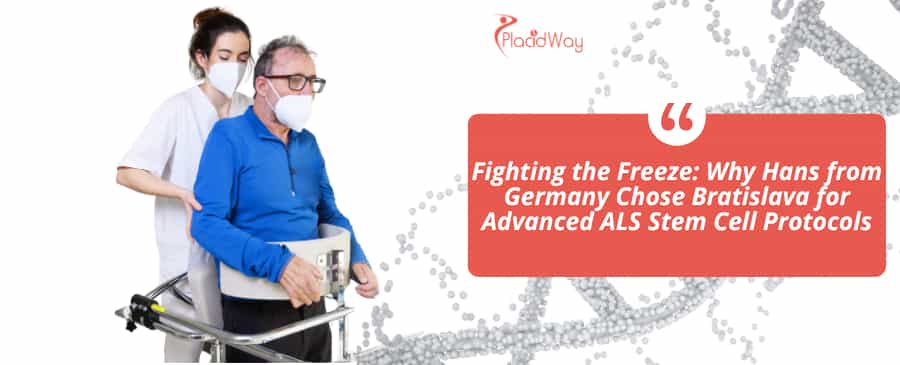
Patient Name: Hans
Profession: Former Civil Engineer
Residence: Munich, Germany
Treatment: ALS Stem Cell Treatment
Treatment Destination: Bratislava, Slovakia
Medical Tourism Platform: PlacidWay
Partner Clinic: CellCenter
The Devastating Diagnosis: Facing ALS and the Fear of the Freeze
As a civil engineer, my life was built on precision, movement, and strength. I spent decades on bustling construction sites across Munich, pointing at blueprints, climbing scaffolding, and feeling deeply connected to the physical world. The first sign that something was wrong was incredibly subtle a persistent, painless twitch in my left thumb. I ignored it for months, assuming it was just fatigue or a pinched nerve from years of hard work. But as the weeks turned into months, the weakness began to spread up my arm, making it difficult to grip a simple pen or hold my morning coffee.
When the neurologist finally delivered the diagnosis of Amyotrophic Lateral Sclerosis (ALS), the world simply stopped spinning. I remember sitting in that sterile white office, the doctor’s words echoing as if spoken from underwater. ALS is a thief that works in the shadows, slowly disconnecting your brain from your muscles. It was as though a terrifying, invisible ice was forming in my veins, threatening to freeze me inside a body that would eventually refuse to obey my commands.
The psychological weight of the diagnosis was arguably worse than the physical symptoms in those early days. I would lie awake at night, staring at the ceiling, wondering how much time I had left before I wouldn't be able to walk, swallow, or breathe on my own. The deep emotional turmoil of realizing you are losing your independence is a darkness I wouldn't wish on anyone.
Frustrations at Home: Why I Looked Beyond Germany for ALS Treatment
Germany is known globally for its robust and highly efficient healthcare system. For acute trauma, surgeries, and standard care, it is exceptional. However, when you are diagnosed with an incurable, progressive neurodegenerative disease, the system's rigid adherence to standard protocols can feel like a death sentence. My doctors prescribed standard symptom-management medications and physical therapy, but when I asked about regenerative medicine or cutting-edge treatments to halt the progression, I was met with sympathetic but firm rejections.
I was told that my focus should be on "quality of life" and preparing for the inevitable decline. The frustration I felt was immeasurable. I wasn't ready to surrender. I am an engineer; my entire life has been about finding solutions to complex structural problems. My body was failing structurally, and I refused to believe that sitting in a chair waiting for the freeze to take over was my only option.
Every time I visited a local specialist, I left with less hope than I arrived with. I realized that if I wanted to fight this disease proactively, I would have to look beyond the borders of my home country. I needed innovative protocols, and I needed them before the disease progressed past the point of no return. My determination to survive pushed me to open my laptop and begin what would become the most important research of my life.
Discovering Medical Tourism in Slovakia: A Glimmer of Hope
My online searches quickly shifted from "ALS life expectancy" to "advanced regenerative therapies for ALS." It was during these late-night, anxiety-fueled deep dives that I first encountered the concept of medical tourism for neurodegenerative diseases. I read about patients traveling across the globe for therapies that utilized the body's own building blocks to repair and protect nerve cells. The idea of affordable healthcare abroad combined with cutting-edge medical science sparked a tiny glimmer of hope in my chest.
During my research, the destination of Bratislava, Slovakia, kept appearing. Slovakia was emerging as a hub for highly specialized medical treatments, boasting state-of-the-art laboratories and renowned specialists trained in advanced protocols. The fact that Bratislava was just a short journey from Munich made the prospect even more appealing. I wouldn't have to endure exhausting, long-haul flights that my rapidly weakening body could barely tolerate.
However, deciding to seek medical tourism in Slovakia brought its own set of fears. How could I ensure the quality of care? Was the treatment safe? I was venturing into the unknown, stepping outside the comfortable, regulated healthcare bubble of Germany. I knew I needed a bridge—a trusted guide who could connect me to the right experts and validate my findings. I couldn't afford to make a mistake.
How PlacidWay Guided My Medical Tourism Journey to Bratislava
That is when I discovered PlacidWay. Feeling overwhelmed by medical jargon and foreign clinic websites, finding their platform was like finding a compass in a dense forest. The PlacidWay support team stepped in immediately. I wasn't just left to scroll through directories; a dedicated patient coordinator reached out to understand my specific diagnosis, my physical limitations, and my medical history.
They helped me systematically search through different international options, filtering out anything that wasn't a perfect fit for advanced ALS stem cell protocols. What truly impressed me was how PlacidWay empowered me to connect directly with the doctors. Through their secure platform, I was able to exchange messages with leading neurologists in Slovakia. We even set up a virtual video consultation where I could look the lead specialist in the eye and ask my most pressing, terrifying questions.
The PlacidWay medical tourism assistance didn't stop there. Once I felt confident in the medical team, PlacidWay facilitated a comprehensive, formal quote for the treatment. There were no hidden fees, no confusing terms—just pure transparency. This clarity allowed me to focus entirely on mentally preparing for the treatment, knowing that the medical logistics had been thoroughly vetted by a trusted partner.
Arriving for Advanced ALS Stem Cell Protocols in Bratislava
The day I arrived in Bratislava, a mix of profound anxiety and tentative excitement washed over me. The city was beautiful, blending historic charm with modern innovation. But my focus was entirely on the medical facility. When I walked through the doors of CellCenter, any lingering doubts I had about seeking affordable healthcare abroad instantly vanished.
The facility was immaculate, boasting technology that looked more advanced than the hospitals I had visited back in Munich. But what struck me the most was the warmth of the medical team. They didn't look at me as just another failing body or a tragic statistic. They looked at me as a partner in a fight for my life. The head neurologist sat down with me for over an hour, detailing the precise science of the ALS stem cell treatment in Slovakia.
We discussed how the advanced protocols would utilize ethically sourced stem cells to target the neuroinflammation in my spinal cord and promote the regeneration of damaged motor neurons. They mapped out every step of the coming days, ensuring I felt in control. For the first time since my diagnosis, I felt like a patient who had a fighting chance, rather than a victim waiting for the end.
The Procedure: My Experience with Stem Cell Therapy for ALS
The actual procedure was surprisingly straightforward, yet deeply profound. The medical team at CellCenter prepared me meticulously for the infusion process. There were comprehensive blood tests, neurological evaluations, and careful monitoring to ensure my body was primed to receive the therapeutic cells. The environment was incredibly calming, accompanied by soft music and constant, reassuring check-ins from the nursing staff.
During the administration of the stem cells, which was delivered intravenously and via a specialized lumbar puncture to directly reach the central nervous system, I felt a strange sense of peace. I closed my eyes and visualized millions of microscopic engineers entering my bloodstream, traveling to the damaged pathways in my brain and spinal cord, and beginning the hard work of rebuilding the bridges that ALS had burned down.
The procedure itself was relatively painless, though the emotional weight of the moment brought tears to my eyes. This was the culmination of months of fear, research, and determination. Surrounded by a team of specialists in a foreign country, I realized I had taken the ultimate leap of faith. I was receiving one of the most advanced medical treatments available, and I was doing it on my own terms.
Healing and Hope: The Physical and Emotional Recovery After Treatment
The recovery phase in the weeks following my return to Germany was a rollercoaster of emotions. With neurodegenerative diseases, miracles rarely happen overnight. The doctors had been transparent that the goal of the ALS stem cell treatment was primarily to halt or significantly slow the progression of the disease, with any regained function being an incredible bonus. The waiting was difficult, as I hyper-analyzed every twitch and movement of my body.
However, about six weeks post-treatment, the subtle shifts began. The bone-deep, exhausting fatigue that had become my constant companion started to lift. I woke up one morning and realized I had the energy to stay out of bed for the entire day. A few weeks later, the terrifying stiffness in my left arm seemed to ease just a fraction. I was able to button my own shirt without my wife's help—a small victory for a healthy person, but an absolute triumph for an ALS patient.
Emotionally, this period of healing was transformative. The heavy, suffocating cloud of immediate doom had dissipated. The "freeze" that had been rapidly taking over my body had undeniably slowed down. While I still faced the realities of my diagnosis, I was no longer a passive passenger on a sinking ship. I had bought myself time, energy, and a renewed sense of dignity.
A New Chapter: How ALS Stem Cell Treatment Transformed My Life
Today, months after my journey, I look back at my decision with immense gratitude. Sharing this patient story ALS stem cell treatment experience is my way of reaching out to others who are standing exactly where I stood—paralyzed by fear and a devastating diagnosis. The treatment didn't erase my disease, but it fundamentally changed its trajectory. It gave me the physical stability to enjoy my family, take walks in the Bavarian countryside, and live my life rather than just wait for the end.
My transformation wasn't just physical; it was deeply psychological. Overcoming the overwhelming odds and taking control of my own healthcare destiny restored my spirit. PlacidWay made that empowerment possible. By breaking down the barriers to international healthcare, they allowed me to find the specific, advanced care I desperately needed but couldn't access at home.
To anyone facing a devastating neurological diagnosis: do not let the freeze take you without a fight. The world is vast, and medical science is advancing rapidly across borders. Be your own advocate, explore every single option, and don't be afraid to look globally for your salvation. My journey proves that even when the prognosis is dark, there is always a path forward if you are brave enough to take it.
Ready to Start Your Own Success Story?
Connect with top-tier medical specialists abroad and discover how personalized stem cell therapy can transform your life.
Get Your Free Consultation TodayDisclaimer: The narratives presented here reflect the true experiences of individuals, though names have been altered to ensure privacy. These stories are intended to offer information and inspiration but should not replace professional medical guidance. Outcomes and experiences can differ widely from person to person. Always seek the advice of qualified healthcare professionals before making any medical choices, as they can provide tailored advice and support for your unique health needs.
.png)

.png)










Share this listing