


Patient Profile
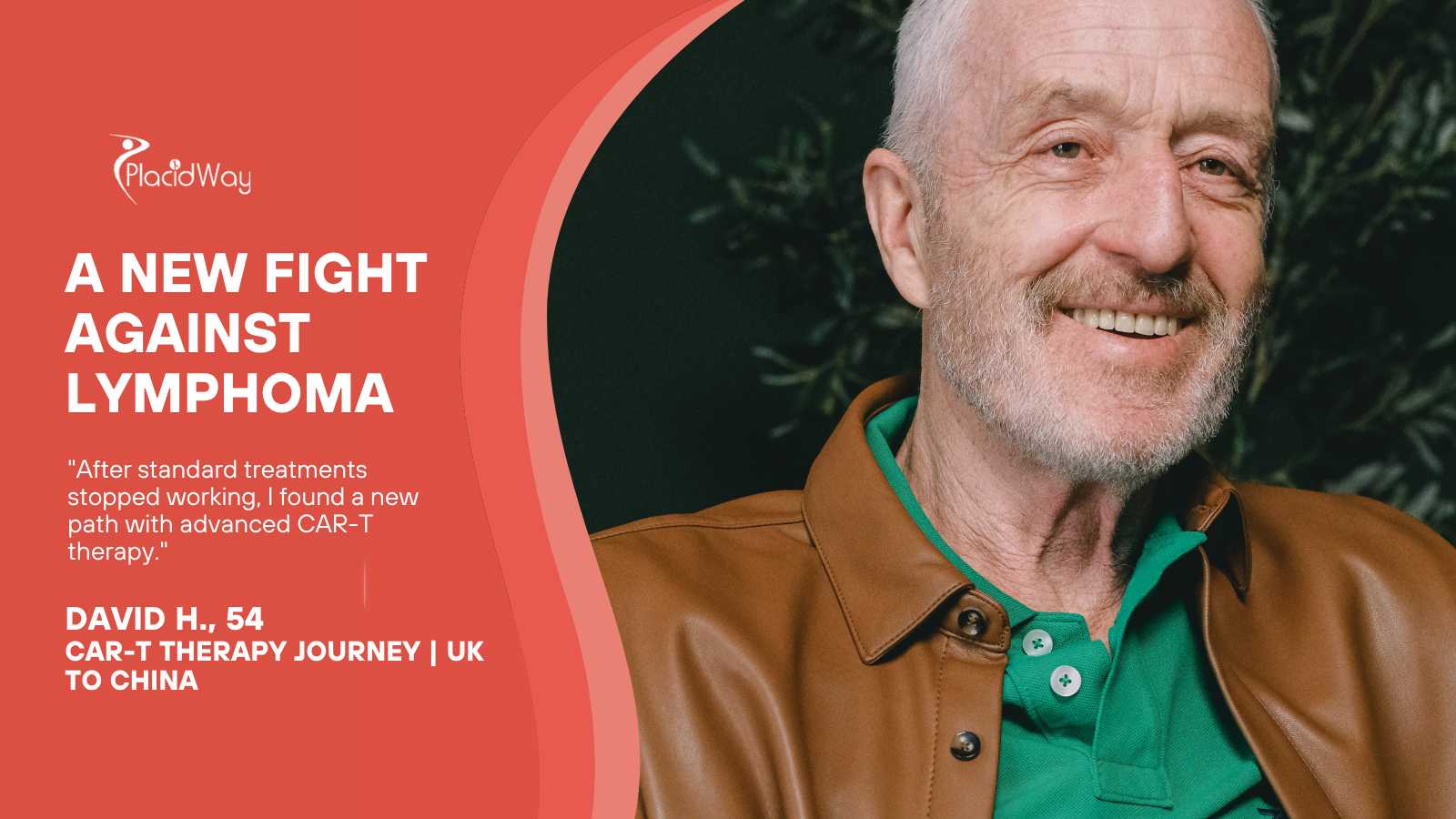
- Patient: David H.
- Age: 54
- Profession: Civil Engineer
- Residence: Manchester, UK
- Treatment: Dual-Targeting CD19/CD20 CAR-T Therapy
- Destination: Beijing, China
- Provider: Bioocus Medical Group
Journey at a Glance
- Diagnosis: Refractory Diffuse Large B-Cell Lymphoma (DLBCL)
- Local barrier: The cancer did not respond to aggressive chemotherapy
- Reason for travel: Seeking specialized, dual-target cell therapy
- Decision: Chose Bioocus Medical Group based on their cellular engineering expertise
- Time abroad: Several weeks for treatment and strict monitoring
- Recovery status: Rapid engraftment of cells with no severe immune reaction
- Current outcome: Steady improvement in energy, continuing maintenance protocol
As a civil engineer in Manchester, my whole life revolves around finding structural solutions when things go wrong.
I never expected to have to apply that same logic to my own blood.
Three years ago, I started feeling an exhaustion so deep it felt like my bones were made of lead. I couldn't focus on blueprints; I couldn't even manage a full day on-site. The diagnosis hit me hard: diffuse large B-cell lymphoma (DLBCL).
When Standard Chemo Hits a Brick Wall
By the summer of 2025, my local oncology team was throwing everything they had at it.
I went through cycle after cycle of heavy chemotherapy. I lost my hair and my appetite, but mostly, I lost my patience.
Then came the scan results. Despite all those brutal treatments, the lymphoma wasn't shrinking. The doctors used the word "refractory," meaning the disease simply refused to respond to the chemicals we were using.
Searching for Answers Beyond Traditional Treatments
I am an engineer; when a bridge design fails, you look for a completely new approach. I started researching alternative treatments for refractory DLBCL.
I wasn't looking for a miracle cure; I was looking for a logical next step. That's when I kept seeing the term "CAR-T cell therapy."
To put it simply, CAR-T therapy doesn't use chemicals to kill the cancer. Instead, doctors take some of your own immune cells out of your blood, reprogram them in a lab so they can recognize and attack the lymphoma, and then put them back in.
"I knew it was a massive undertaking to travel to Beijing while ill, but the science behind it made perfect logical sense to me."
Discovering the Dual-Target Approach in Beijing
Through my research, I found Bioocus Medical Group in China. They were utilizing a newer version of this treatment: a dual-targeting CD19/CD20 CAR-T therapy.
My understanding was simple: instead of reprogramming my immune cells to look for just one specific marker on the cancer (CD19), they would program them to hunt for two (CD19 and CD20). If the cancer mutated to hide from one tracker, the second tracker would still find it.
PlacidWay helped coordinate the transfer of my complex medical file to the Bioocus team, ensuring the specialists in China had every detail before I even boarded the plane.
The Infusion Day and the Wait for the Storm
The Bioocus team was incredibly structured. They handled the accommodation and translation, allowing my wife to simply be my support.
On September 8, I received the infusion of my modified cells. I was terrified. I knew the risks of severe inflammatory responses—a reaction called cytokine release syndrome (CRS)—associated with these advanced therapies.
I lay in bed for days, waiting for a massive fever to hit.
But it didn't. The course was incredibly smooth. I was able to sit up, eat the hospital food, and talk normally with the nurses.
Rebuilding My Foundation Back Home
Because I didn't experience severe side effects, the medical team could show me how the reprogrammed cells were behaving exactly as designed, multiplying rapidly in my bloodstream.
I am back in Manchester now. The recovery is not an overnight fix. I am on a strict regimen of supportive medications and have to monitor my blood counts constantly.
I still need a nap most afternoons. But that heavy, suffocating fatigue from the refractory lymphoma has lifted. Last week, I managed to walk down to the local pub for a quiet lunch with my wife. It was an ordinary moment, but after the last three years, ordinary is exactly what I was fighting for.
Exploring Advanced Hematology Options?
If you are facing refractory conditions and wish to understand specialized cellular therapies abroad, professional guidance can help you review your choices.
Start a Personalized InquiryAlways consult with your primary oncology team before making decisions regarding complex medical travel and cellular therapies.
Disclaimer: The story above is a fictionalized narrative designed to illustrate a patient’s experience with specific medical procedures abroad. While grounded in realistic clinical scenarios and real medical provider capabilities, the patient persona is invented. This article does not constitute medical advice, nor does it guarantee specific outcomes or safety profiles for CAR-T cell therapy. Treatment efficacy depends on highly individualized clinical and biological factors. Always consult a qualified oncologist to discuss medical options.


.png)


.png)










Share this listing