
Patient Profile
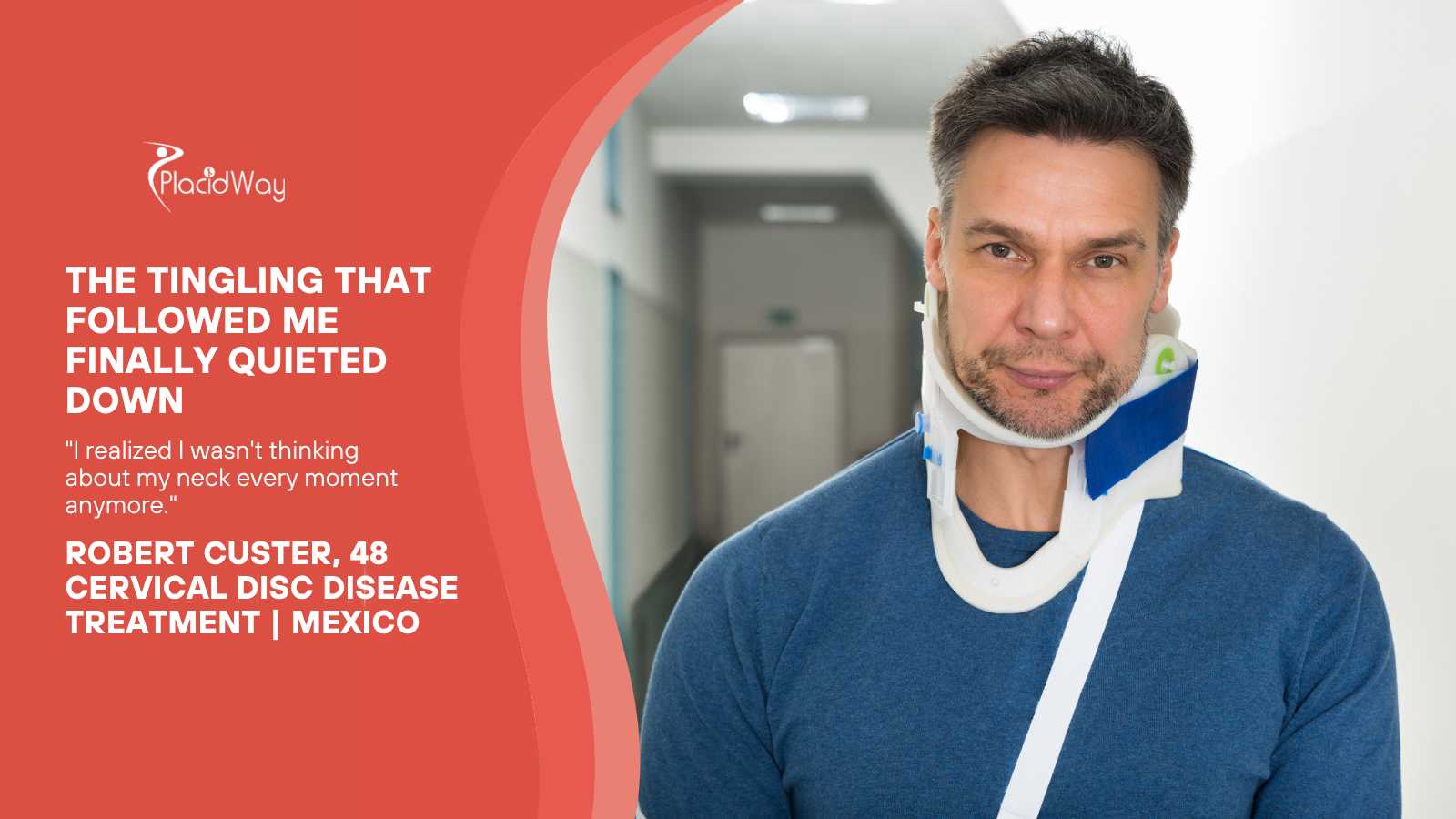
Name: Robert Custer
Age: 48
Condition: Cervical Degenerative Disc Disease with Cervical Spondylosis and Radiculopathy
Treatment: Stem Cell, Exosome & PRP Therapy
Destination: Mexico City, Mexico
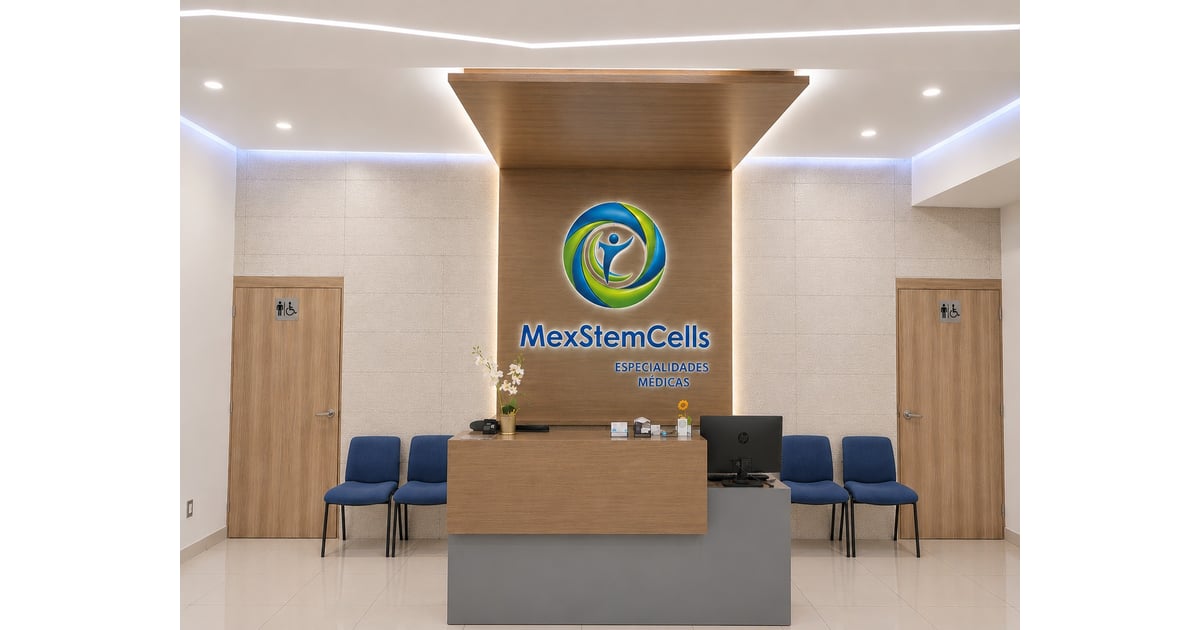
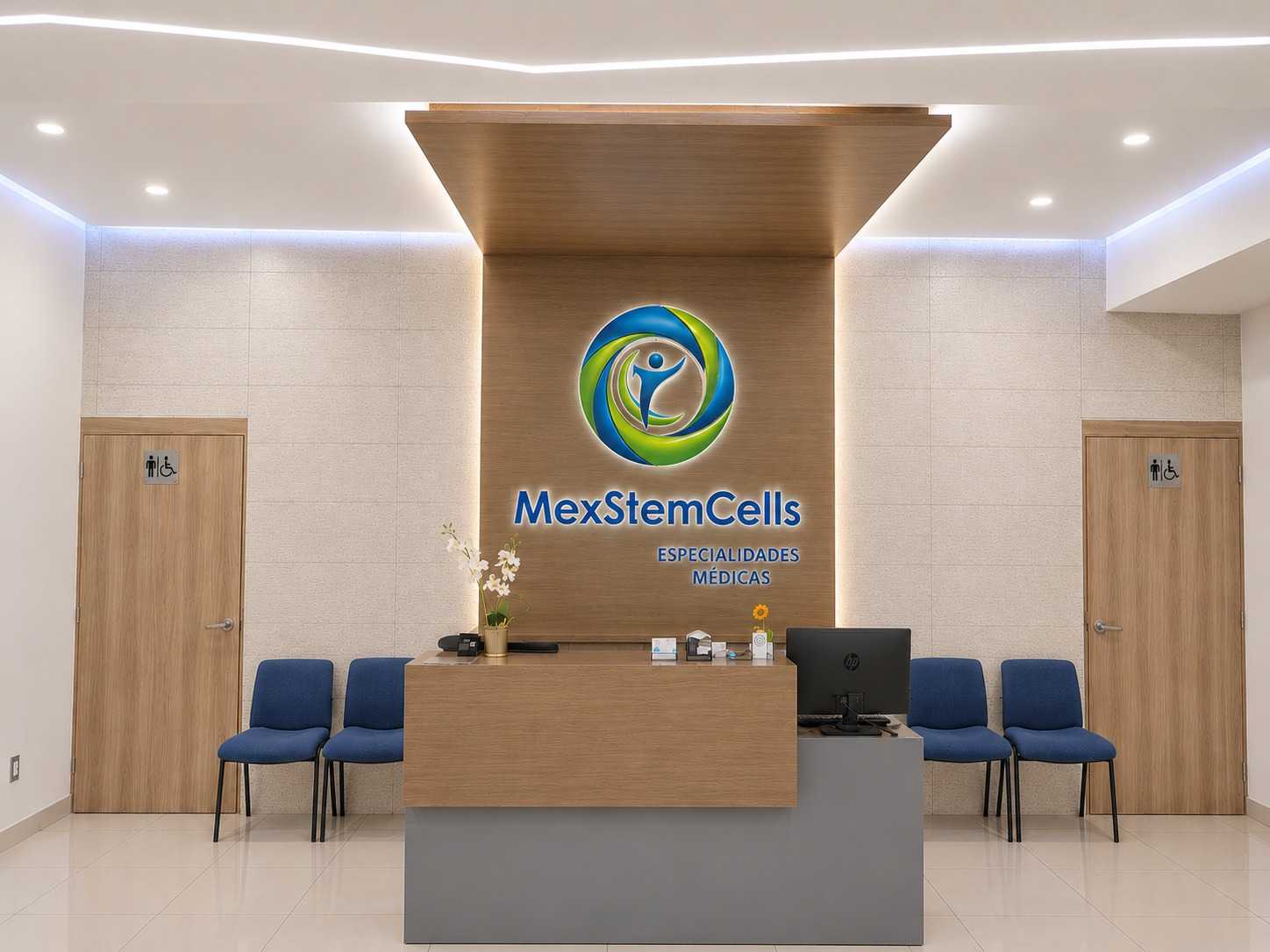
Provider: MexStemCells Clinic
Journey at a Glance
◉ Diagnosis: Multilevel cervical disc degeneration with radiculopathy
◉ Main concerns: Neck pain, numbness, tingling and muscle spasms
◉ Affected area: C4-C7 with foraminal stenosis at C5-C6
◉ Treatment approach: Local and IV regenerative therapy with PRP
◉ Recovery: Pain and cervical muscle spasms decreased
◉ Outcome: Numbness and tingling were reported as resolved
The first thing I noticed was what wasn't happening
During follow-up, I remember realizing that the numbness and tingling weren't bothering me the way they had before. Honestly, it took me a little while to trust that because those nerve symptoms had become something I expected. I kept waiting for that familiar sensation to show up again, and it wasn't.
That was probably the change I noticed most because the tingling had been connected to the nerve-root compression around C5-C6. The pain related to the cervical disc protrusions had also eased, and the muscle spasms were happening less often and weren't as severe. Looking back, the biggest relief was that all three problems weren't demanding my attention at the same time anymore.
Honestly, I had gotten used to wondering what my neck was going to do next. Pain was frustrating enough, but the tingling and spasms made the whole thing feel unpredictable.
Before that, my neck never seemed to pick one problem
A while earlier, things felt very different. My cervical spine showed disc protrusions at C4, C5, C6 and C7 along with multilevel cervical spondylosis. There was also neural foraminal stenosis at C5-C6, which helped explain why this wasn't only neck pain—the nerve involvement was part of the problem too.
I didn't understand every medical term immediately. What I understood was that pain could be bothering me, then the numbness or tingling would become the thing I noticed most, and the chronic muscle spasms added another layer to it. That unpredictability was probably what frustrated me more than anything else.
When I started looking at additional cervical disc disease treatment options, I wanted something more specific than broad promises about regenerative medicine. My search eventually included treatment in Mexico, and I used PlacidWay mainly to compare provider information in one place. That was how I came across MexStemCells Clinic in Mexico City.
What kept me interested was that there was an actual treatment plan tied to the levels involved in my neck. I could look at what would be done locally, what would be given through the IV and how the different parts fitted together. That felt more useful than reading another page that simply described one general treatment for neck pain.
Once I was there, the treatment plan made more sense
I had read through the treatment details before going ahead, but they made more sense once I could connect them back to my own cervical spine. The local part of the program included 40 million umbilical cord stem cells around C4 through C7, along with PRP at those same cervical levels. An adipose tissue procedure was also included as part of the local treatment plan.
There was also an IV part of the program using 100 million umbilical cord stem cells and 5 million exosomes. Honestly, once the treatment was underway, I wasn't sitting there trying to memorize every number. I was thinking much more simply about the three things that had brought me there in the first place: the pain, the nerve symptoms and the muscle spasms.
I also wasn't expecting somebody to give me a brand-new neck or make the degenerative changes disappear. Cervical spondylosis and degenerative disc disease were still part of my medical history. What I wanted to know was whether the symptoms associated with those problems would be any different when I was evaluated afterward.
Looking Back
"The treatment plan looked complicated when I first read it. Once I stopped focusing on all the terminology, I really just wanted to know what would happen to the symptoms that had been frustrating me every day."
The follow-up was simpler than the diagnosis had been
My diagnosis had several different findings behind it, but the follow-up was much easier for me to understand. The pain and inflammation associated with the cervical disc protrusions were reduced. The numbness and tingling that had previously been associated with the C5-C6 nerve-root compression were reported as resolved.
The muscle spasms had changed too. They weren't simply described as a little easier to tolerate; both their frequency and severity had decreased. For me, that mattered because the spasms had been one of the things that made the neck problem feel so unpredictable in the first place.
I don't look at those improvements and assume the structural degeneration in my cervical spine disappeared. I also can't say that the stem cells, PRP, exosomes or any one part of the multi-part program was individually responsible for a particular change. What I can say is that the three symptoms I had been watching before treatment were different when I was evaluated afterward.
One evening, I was sitting with my phone in my hand and realized I hadn't been thinking about the tingling at all. Nothing dramatic happened after that. I put the phone on charge, got up, and went on with the rest of my evening.
Exploring Treatment Options for Cervical Disc Disease?
Cervical disc disease can involve pain, nerve symptoms, muscle spasms and structural changes that require careful medical evaluation. Patients considering regenerative or complementary treatment abroad should review their imaging, neurological findings and established treatment options with a qualified spine specialist.
Request InformationCompare treatment approaches carefully and ask what each part of a proposed program is intended to address, what evidence supports it, and what follow-up care may still be required.



.png)

.png)
.png)


















Share this listing