


The Complete Guide to Impacted Lower 3rd Molar Surgical Extraction in Mexico
Are you suffering from severe jaw pain or recurring infections due to a stubborn wisdom tooth? Ignoring this issue can lead to serious oral health complications, but the exorbitant prices of oral surgery in the United States and Canada often force patients to delay necessary treatment. Fortunately, undergoing an impacted lower 3rd molar surgical extraction in Mexico provides a safe, highly advanced, and incredibly affordable alternative.
By choosing cross-border dental care, you can access board-certified maxillofacial surgeons who utilize state-of-the-art technology to permanently resolve your wisdom tooth pain. Discover how international dental tourism combines world-class clinical expertise with immense financial savings, allowing you to reclaim your oral health without emptying your bank account.
Video Chapters & Quick Navigation
Understanding the Impacted Lower 3rd Molar
The human jaw has evolved over thousands of years, gradually becoming smaller as our diets shifted to softer, cooked foods. However, our genetic blueprint still produces a final set of molars, commonly known as wisdom teeth, which typically erupt between the ages of seventeen and twenty-five. Because the modern human jaw often lacks the adequate space to accommodate these large teeth, the lower third molars frequently become trapped, or "impacted," beneath the gum line or jawbone.
An impacted lower 3rd molar is a complex dental condition that requires professional intervention. Unlike a simple extraction where a tooth has fully erupted and can be pulled with basic dental forceps, an impacted tooth necessitates a surgical approach. This condition is categorized by the angle at which the tooth is trapped, which dictates the complexity of the extraction process.
Types of Wisdom Tooth Impaction
The severity of your oral surgery heavily depends on how the wisdom tooth is positioned within your jaw. Mesioangular impaction is the most common type, where the tooth is angled forward toward the front of the mouth. This angle pushes directly against the adjacent second molar, often causing severe crowding and localized pain.
Horizontal impaction is generally considered the most difficult to extract, as the tooth lies completely flat beneath the gums, parallel to the jawbone. Vertical impaction occurs when the tooth is relatively straight but lacks the vertical space to break through the gums. Finally, distoangular impaction involves the tooth pointing backward toward the rear of the mouth, which is quite rare but challenging to remove surgically.
The Severe Risks of Delaying Surgical Extraction
Many patients attempt to endure the pain of an impacted wisdom tooth, hoping the discomfort will eventually subside. Unfortunately, ignoring an impacted lower 3rd molar almost always leads to compounding oral health disasters. When a wisdom tooth partially erupts, it creates a small flap of gum tissue known as an operculum, which becomes a perfect breeding ground for trapped food particles and aggressive oral bacteria.
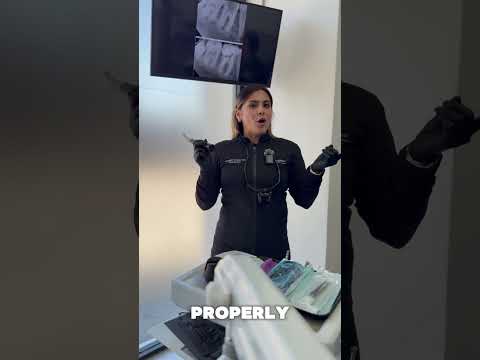
This localized bacterial buildup leads to a highly painful infection called pericoronitis. As demonstrated in the clinical footage at , inflamed gum tissue surrounding the impacted tooth bleeds easily and causes severe facial swelling. If pericoronitis is left untreated, the infection can spread deeply into the neck and head, resulting in a life-threatening condition known as Ludwig's angina.
Damage to Adjacent Teeth and Bone
Beyond immediate infections, an impacted lower 3rd molar constantly exerts immense physical pressure on the neighboring second molar. This relentless pushing can resorb the roots of the healthy second molar, leading to the eventual loss of both teeth. Furthermore, the tight, uncleaned space between the impacted tooth and the second molar is highly susceptible to deep, aggressive cavities that cannot be reached by normal brushing or flossing.
In more severe cases, a fluid-filled cyst can form around the crown of the unerupted wisdom tooth. Over time, this cyst expands silently, hollowing out the surrounding jawbone and damaging local nerve structures. Removing the tooth and the associated cyst requires a highly skilled maxillofacial surgeon to prevent permanent damage to the structural integrity of the mandible.
Why Choose Mexico for Complex Oral Surgery?
The concept of crossing international borders for medical and dental care has transitioned from a niche trend to a mainstream healthcare strategy. Mexico has established itself as the premier global destination for high-quality, affordable dental tourism. Cities like Tijuana, Los Algodones, Cancun, and Puerto Vallarta host hundreds of state-of-the-art dental clinics specifically designed to cater to international patients.
One of the primary reasons patients choose Mexico for an impacted lower 3rd molar surgical extraction is the exceptional standard of clinical care. Top-tier Mexican dental clinics invest heavily in continuous education, with many of their oral surgeons completing advanced residencies and fellowships in the United States, Europe, and Canada. These professionals strictly adhere to international sterilization protocols and patient safety guidelines.
Language and Cultural Accessibility
A common fear among dental tourists is the potential for a language barrier during complex medical procedures. However, the leading dental tourism clinics in Mexico are entirely bilingual, with dentists, surgeons, and support staff fluent in English. This ensures that every step of your diagnosis, surgical plan, and post-operative care instructions is communicated with absolute clarity.
Additionally, these clinics understand the specific anxieties faced by international travelers. They often employ dedicated patient coordinators who assist with everything from booking local hotel accommodations to arranging private shuttle services across the border. This concierge-level service transforms a stressful surgical requirement into a seamless, highly supported medical vacation.
Step-by-Step: The Surgical Extraction Procedure
Understanding the clinical mechanics of an impacted lower 3rd molar surgical extraction can significantly reduce pre-operative anxiety. The procedure is a highly orchestrated oral surgery that requires precision, specialized instrumentation, and a deep understanding of mandibular anatomy. The primary goal is to safely remove the tooth without damaging the critical inferior alveolar nerve that runs through the lower jaw.
The process always begins with profound anesthesia to ensure the patient experiences absolutely no pain. Depending on the patient's anxiety levels and the complexity of the impaction, the surgeon will administer local anesthesia, intravenous (IV) conscious sedation, or even general anesthesia. Once the surgical site is completely numb and the patient is comfortable, the precise surgical extraction begins.
Incision and Flap Creation
The first physical step of the surgery involves accessing the hidden tooth. As shown at , the maxillofacial surgeon uses a scalpel to make a precise incision in the thick gingival tissue overlying the impaction. This incision allows the surgeon to carefully reflect the gum tissue, creating what is known as a mucoperiosteal flap.
Reflecting this flap exposes the dense jawbone covering the impacted wisdom tooth. The surgeon must handle these soft tissues delicately to promote rapid healing and minimize post-operative swelling. Excellent visibility of the surgical field is crucial at this stage to accurately assess the exact position of the tooth crown relative to the surrounding bone.
Bone Removal and Tooth Sectioning
Because the tooth is encased in bone, the surgeon must perform an ostectomy. Using a specialized high-speed surgical handpiece with generous saline irrigation, the surgeon meticulously removes a small window of bone to expose the impacted tooth. The saline irrigation prevents the bone from overheating during the drilling process, which is vital for preventing bone necrosis.
Rather than trying to force the entire large tooth out through a small surgical window, modern surgical techniques rely on odontisection. As highlighted at , the surgeon uses a bur to cut the wisdom tooth into smaller, manageable pieces. The crown is usually sectioned away from the roots, and the individual roots are then gently elevated out of the socket one by one, minimizing trauma to the surrounding jawbone.
Socket Debridement and Suturing
Once all fragments of the impacted lower 3rd molar have been successfully removed, the surgeon thoroughly cleans the empty socket. This debridement process involves flushing the area with sterile saline and using specialized curettes to remove any remaining cystic tissue, bone fragments, or debris. A clean socket is the foundation for healthy, infection-free blood clot formation.
Finally, the surgical flap is repositioned to its original anatomical placement. The surgeon places several sutures, often using dissolvable materials, to hold the gum tissue tightly together over the extraction site. These sutures help control bleeding and protect the underlying blood clot, which is essential for proper bone regeneration during the recovery phase.
Comprehensive Cost Analysis: US/Canada vs. Mexico
The primary driver for the boom in dental tourism is the astronomical cost of dental care in the United States and Canada. Dental insurance plans typically have low annual maximums, often capping out at $1,000 to $1,500. When facing the extraction of multiple impacted wisdom teeth, patients quickly exhaust their insurance benefits and are hit with massive out-of-pocket expenses.
In contrast, the cost of living, lower malpractice insurance premiums, and subsidized medical education in Mexico allow top-tier clinics to offer the exact same surgical procedures at a fraction of the price. The quality of the instruments, anesthetics, and clinical expertise remains identical, but the financial burden is entirely lifted from the patient.
| Procedure Type | Average Cost (USA/Canada) | Average Cost (Mexico) | Estimated Savings |
|---|---|---|---|
| Simple Wisdom Tooth Extraction | $150 - $300 | $50 - $100 | Up to 70% |
| Surgical Impaction Extraction (Partial Bone) | $300 - $600 | $100 - $180 | Up to 75% |
| Complex Full Bony Impaction Extraction | $600 - $1,200+ | $150 - $250 | Up to 80% |
| IV Sedation (Per Hour) | $300 - $800 | $150 - $250 | Up to 70% |
As the table illustrates, a patient requiring the surgical extraction of all four impacted wisdom teeth under IV sedation could easily face a bill exceeding $4,000 in the United States. In Mexico, that same comprehensive surgical package would likely cost less than $1,000. These profound savings easily cover the cost of flights, a comfortable hotel, and local transportation, turning a dreaded medical expense into an affordable medical vacation.
Advanced Dental Technology Utilized in Mexican Clinics
When traveling abroad for an impacted lower 3rd molar surgical extraction, patients are often surprised to find that Mexican clinics are frequently more technologically advanced than their local hometown dentists. To attract international clientele, premium dental clinics in Mexico continuously invest in cutting-edge diagnostic and surgical equipment. This commitment to technology ensures precise surgical planning and greatly reduces the risk of post-operative complications.
One of the most critical pieces of technology used in modern oral surgery is the Cone Beam Computed Tomography (CBCT) scanner. Unlike traditional two-dimensional X-rays, a 3D CBCT scan provides the oral surgeon with a high-definition, three-dimensional view of the patient's entire maxillofacial structure. This allows the surgeon to see exactly where the impacted tooth's roots are located in relation to the sensitive inferior alveolar nerve, preventing accidental nerve damage during the extraction.
Piezoelectric Surgery Techniques
Many elite maxillofacial surgeons in Mexico now utilize piezoelectric surgical devices for bone removal. Piezosurgery uses ultrasonic micro-vibrations to cut through hard tissue, such as bone and teeth, while leaving soft tissues like nerves, blood vessels, and the mucosal lining completely unharmed. This incredibly precise technology significantly reduces surgical trauma.
Because piezosurgery is so gentle on the surrounding tissues, patients experience markedly less post-operative swelling, bruising, and pain compared to traditional rotary drill osteotomies. Integrating these advanced ultrasonic techniques demonstrates the elevated level of specialized surgical care available to dental tourists visiting top-tier clinics in Mexico.
Post-Operative Recovery and Healing Guidelines
The success of your impacted lower 3rd molar surgical extraction heavily depends on your commitment to the post-operative recovery guidelines provided by your Mexican oral surgeon. The first 48 hours after the procedure are the most critical for stabilizing the blood clot and managing inflammation. Patients can expect moderate swelling around the jaw and mild to moderate discomfort, which is easily managed with prescribed analgesics.
Immediately after surgery, you will be instructed to bite down on a sterile gauze pad for about 45 minutes to encourage a strong blood clot to form over the empty socket. This blood clot acts as a biological bandage, protecting the exposed bone and nerve endings. Applying ice packs to the outside of your face in 20-minute intervals during the first day will dramatically reduce facial swelling and bruising.
Preventing Dry Socket Complications
The most common and painful complication following a wisdom tooth extraction is alveolar osteitis, widely known as a dry socket. This occurs when the protective blood clot is prematurely dislodged or dissolves before the wound has healed, leaving the underlying bone fully exposed to the oral cavity. Preventing a dry socket is paramount for a smooth recovery.
To ensure the blood clot remains intact, you must strictly avoid creating suction in your mouth for at least one week. This means absolutely no drinking through straws, no smoking or vaping, and no aggressive spitting. Furthermore, you must transition to a soft-food diet—consuming items like yogurt, applesauce, mashed potatoes, and smoothies—to prevent hard food particles from physically disrupting the surgical site.
Oral Hygiene During the Healing Phase
Maintaining excellent oral hygiene is essential for preventing infections after your oral surgery, but you must alter your normal routine to protect the surgical site. During the first 24 hours, you should avoid brushing your teeth vigorously or using commercial mouthwashes, which can irritate the healing tissues. Instead, focus on keeping your mouth clean through gentle methods.
Starting on the second day after surgery, your Mexican dental team will likely instruct you to begin gently rinsing your mouth with warm salt water after every meal. The mild saline solution naturally cleanses the area, neutralizes oral acids, and promotes faster healing of the gingival tissues. You can resume normal brushing of your other teeth, but you must be incredibly cautious when navigating the toothbrush near the extraction sites.
Finding the Right Board-Certified Surgeon in Mexico
While the financial benefits of traveling to Mexico for oral surgery are undeniably attractive, your primary focus should always be on clinical safety and the qualifications of the medical provider. Not all dental clinics offer the same level of expertise when it comes to complex surgical procedures. It is essential to perform thorough due diligence before selecting a clinic for your impacted lower 3rd molar surgical extraction.
Look specifically for clinics that employ certified maxillofacial surgeons rather than general dentists. Maxillofacial surgeons undergo years of additional hospital-based surgical residency training after dental school, making them highly qualified to manage complex bone impactions, administer deep sedation, and handle any rare surgical complications. You should openly ask the clinic to provide the credentials, board certifications, and educational background of the attending surgeon.
Leveraging Medical Tourism Facilitators
Navigating foreign healthcare systems, verifying medical credentials, and arranging international travel logistics can be overwhelming for patients already dealing with dental pain. This is where medical tourism facilitators become an invaluable resource. Reputable facilitators rigorously vet international clinics, ensuring they meet strict criteria for hygiene, technological advancement, and clinical success rates.
By partnering with an established medical tourism network, you gain access to a curated list of Mexico's most elite dental centers. These organizations streamline the entire process, negotiating all-inclusive pricing packages that bundle the surgical extraction, 3D imaging, specialized sedation, and even local hotel transfers. This comprehensive support allows you to focus entirely on your health and recovery while experts handle the complex logistics of your dental journey.
Ready to Safely Remove Your Impacted Wisdom Teeth?
Stop living with intense jaw pain and avoid astronomical local dental bills. PlacidWay Medical Tourism connects you with fully vetted, board-certified oral surgeons in Mexico, offering premium, pain-free extractions at a fraction of the cost. Let our experts handle the logistics of your medical journey.
REQUEST YOUR FREE QUOTE















Share this listing