


The Complete Guide to Hip Resurfacing in India: An American Patient's Journey
Dealing with chronic, debilitating hip pain can halt your active lifestyle, but finding the right surgical solution shouldn't bankrupt you. For countless active adults, the thought of a traditional total hip replacement is daunting due to bone loss and mobility restrictions. In this profound video, we explore a transformative American patient experience undergoing hip resurfacing with Dr. A.K. Venkatachalam in Chennai, India.
By stepping outside the borders of the United States, patients are discovering world-class orthopedic care, advanced bone-conserving techniques, and unparalleled personal attention. Watch and read on to understand why traveling for Birmingham Hip Resurfacing (BHR) is becoming the ultimate medical tourism solution for athletes and active professionals worldwide.
Video Chapters & Quick Navigation
The Silent Agony of Severe Hip Arthritis
For individuals who have spent their lives running, lifting, or engaging in high-impact sports, the onset of osteoarthritis can feel like a sudden halt to their identity. The protective cartilage in the hip joint slowly wears away, leaving raw bone to grind against raw bone. Every step becomes a calculated effort to avoid sharp, radiating pain.
Conservative treatments, such as non-steroidal anti-inflammatory drugs (NSAIDs), physical therapy, and cortisone injections, only offer temporary relief. Eventually, these half-measures fail to provide the mobility needed for a fulfilling life. The patient in our video describes exactly this scenario at , highlighting how daily activities like tying shoes or walking upstairs became monumental tasks.
When the pain begins to interrupt sleep and severely limits walking distance, orthopedic specialists typically recommend surgical intervention. However, for a younger or highly active demographic, the traditional route of amputating the femoral head is a terrifying prospect. They need a solution that preserves their anatomy while completely eradicating the arthritic pain.
Hip Resurfacing vs. Total Hip Replacement: The Crucial Difference
To truly appreciate the American patient's decision to travel to India, one must understand the stark medical differences between the two primary joint operations. A Total Hip Replacement (THR) involves completely sawing off the top of the thigh bone (the femoral head) and driving a long metal stem deep into the hollow center of the femur. While effective for elderly patients, this approach sacrifices a massive amount of healthy bone.
Conversely, Hip Resurfacing Arthroplasty (HRA) is a sophisticated, bone-conserving procedure. Instead of amputation, the surgeon meticulously shaves down the damaged cartilage on the femoral head. A smooth, high-carbon cobalt-chrome metal cap is then cemented over the natural bone, much like a dentist placing a crown on a damaged tooth. The pelvic socket is also lined with a matching metal cup.
Why Active Adults Demand Resurfacing
At in the video, the physiological benefits of preserving the femoral neck are discussed. Because the natural bone size is maintained, the new joint perfectly mimics the patient's original anatomy. This larger bearing surface virtually eliminates the risk of joint dislocation, a common and dangerous complication associated with traditional replacements.
Furthermore, patients who undergo resurfacing report a more "natural" feeling in their hip. They retain better proprioception—the body's ability to sense movement and position within the joint. For athletes wanting to return to martial arts, heavy weightlifting, or long-distance running, this natural joint mechanic is absolutely non-negotiable.
| Feature | Total Hip Replacement (THR) | Hip Resurfacing (BHR) |
|---|---|---|
| Bone Preservation | Low (Femoral head removed) | High (Femoral head capped) |
| Dislocation Risk | Moderate (Requires lifestyle limits) | Extremely Low (Natural ball size) |
| Activity Level | Light to moderate impact | High impact sports permitted |
| Future Revisions | Complex and bone-depleting | Easier (Can convert to THR later) |
Dr. A.K. Venkatachalam: A Master of Orthopedic Precision
Hip resurfacing is widely acknowledged in the medical community as a technically demanding procedure. Unlike a total replacement, where the surgeon can simply cut away the bone to create space, resurfacing requires meticulous, millimeter-perfect sculpting of the living bone. The success of the operation is heavily dependent on the skill, experience, and spatial awareness of the surgeon.
This brings us to Dr. A.K. Venkatachalam, a globally recognized orthopedic surgeon operating out of Chennai, India. As seen at , Dr. Venkatachalam brings decades of specialized experience to the operating table. He holds extensive international qualifications and has dedicated a significant portion of his practice specifically to the Birmingham Hip Resurfacing technique.
The Importance of High-Volume Surgeons
In the United States, finding a surgeon who routinely performs hip resurfacing can be surprisingly difficult. Many US-based orthopedic doctors prefer standard replacements because they are quicker to perform and easier to teach. Consequently, patients often face long waitlists or must travel cross-country to find a qualified specialist.
Dr. Venkatachalam is considered a high-volume resurfacing surgeon. His vast experience means shorter surgical times, minimized blood loss, and a dramatic reduction in intraoperative complications. His deep understanding of hip biomechanics ensures that the metal implant is positioned at the perfect angle, drastically reducing the risk of premature wear and metal ion release.
The American Patient Perspective: Overcoming Medical Tourism Fears
For the average American, the concept of leaving the United States for major invasive surgery can initially invoke anxiety. The primary concerns usually revolve around hospital hygiene, the quality of surgical implants, and language barriers. However, as documented in this patient's experience at , these fears dissipate almost immediately upon arrival in India.
The patient explicitly notes the extreme professionalism and fluency in English exhibited by the entire medical staff. Communication is seamless, from the initial pre-operative consultations to the daily interactions with the nursing team. There is no feeling of being rushed; the surgeon takes ample time to explain the procedure, review MRI scans, and answer every single question.
A Standard of Care That Exceeds Expectations
Corporate hospitals in Chennai are designed to cater specifically to international medical tourists. They boast accreditations from global organizations like the Joint Commission International (JCI). The operating theaters feature state-of-the-art laminar airflow systems to prevent infection, and the diagnostic imaging centers utilize the latest in 3D mapping technology.
Furthermore, the implants used by Dr. Venkatachalam are identical to those used in top-tier American hospitals. The Birmingham Hip Resurfacing (BHR) device is manufactured by Smith & Nephew, a globally renowned medical technology company. Patients are receiving the exact same FDA-approved premium materials, simply administered in a different geographical location.
Inside the Surgical Experience: From Pre-Op to the Recovery Room
The logistical flow of undergoing surgery in India is highly optimized for international patients. Upon arrival, the patient is greeted at the airport and transferred directly to a comfortable hotel or hospital suite. Comprehensive pre-operative testing is conducted immediately, encompassing blood work, cardiac evaluations, and detailed pelvic radiographs.
On the day of the surgery, detailed at , the anesthesiology team ensures maximum comfort. Most hip resurfacings are performed under regional spinal anesthesia accompanied by twilight sedation. This method significantly reduces post-operative nausea, lowers the risk of deep vein thrombosis (DVT), and allows for a much smoother awakening process.
The Surgical Technique
Dr. Venkatachalam employs a precise surgical approach that minimizes soft tissue damage. The hip joint is carefully exposed, and the arthritic bone spurs are removed. Using specialized instruments, the femoral head is shaped into a precise cylinder with a chamfered top.
The acetabulum (the pelvic socket) is then reamed to expose healthy, bleeding bone, allowing the porous outer coating of the metal cup to integrate naturally over time. The femoral cap is cemented into place, and the joint is carefully reduced back into its anatomical position. The meticulous closure of the surgical site ensures optimal healing and a neat cosmetic scar.
Shattering the Price Barrier: The Economics of Medical Tourism
The elephant in the room regarding American healthcare is the exorbitant cost. For uninsured or underinsured patients, or those with high-deductible health plans, a specialized procedure like Birmingham Hip Resurfacing can be financially devastating. In the United States, the total billed cost for an HRA can easily range from $25,000 to over $45,000.
At , the patient breaks down the dramatic financial advantage of choosing Chennai. In India, the entire surgical package generally costs between $7,000 and $10,000. This is not a reflection of lower quality care, but rather the stark difference in the cost of living, administrative overhead, and pharmaceutical pricing between the two nations.
What Does an All-Inclusive Package Cover?
When booking through specialized medical tourism facilitators like PlacidWay, patients receive a transparent, bundled price. This prevents the "surprise billing" phenomenon that plagues the American medical system. A typical medical tourism package for orthopedic surgery includes:
- The Surgeon's Fees: Comprehensive compensation for the lead surgeon and assisting doctors.
- The Premium Implant: The authentic Smith & Nephew BHR device.
- Hospital Stay: 5 to 7 days in a private, VIP hospital suite with meals provided.
- Anesthesia and Operating Room: All technical fees associated with the surgery.
- In-Patient Physical Therapy: Daily sessions with a dedicated physiotherapist before discharge.
- Logistical Support: Airport transfers and assistance with medical visa processing.
The Post-Operative Recovery Timeline in India
Recovery from hip resurfacing is an active, engaging process. Because less bone is removed compared to a total replacement, many patients find that their initial stability is remarkably robust. Pain management protocols in Indian corporate hospitals are world-class, utilizing a multimodal approach to ensure the patient remains comfortable and capable of participating in early rehabilitation.
As shown at , the patient is encouraged to stand and take assisted steps within 24 hours of the surgery. This early mobilization is critical for stimulating blood flow and preventing stiffness. A dedicated physiotherapist works with the patient twice a day right in their hospital room.
Transitioning to Outpatient Care
After a 5 to 7-day stay in the hospital, patients are generally discharged to a nearby partner hotel. Here, they continue their recovery in a relaxed, comfortable environment while remaining in close proximity to Dr. Venkatachalam for follow-up appointments. The Indian hospitality shines during this period, with hotel staff accustomed to assisting recovering medical tourists.
During the second week, physical therapy intensifies. The focus shifts to strengthening the gluteal muscles and abductors, which were carefully separated during surgery. By day 14, the surgical staples or sutures are removed, and the patient is typically cleared to fly back to the United States. They leave walking with crutches or a cane, experiencing a completely different, purely surgical pain that rapidly diminishes daily.
Long-Term Mobility and the Return to a Passionate Life
The ultimate goal of traveling halfway across the world for Birmingham Hip Resurfacing is not just pain relief—it is the restoration of passion. Traditional hip replacement patients are often warned against high-impact activities for the rest of their lives. They are told to avoid deep squats, heavy lifting, and running to prevent premature wear of the plastic bearing or joint dislocation.
Hip resurfacing patients face a radically different long-term outlook. The metal-on-metal articulation is incredibly durable and designed for the rigorous demands of an active lifestyle. Fluid lubrication naturally occurs between the highly polished metal surfaces, minimizing friction. Once the bone has fully integrated into the implant—usually around the six-month mark—the joint is exceptionally strong.
The American patient featured by Dr. Venkatachalam echoes the sentiments of thousands of successful BHR recipients globally. The surgery does not just repair a joint; it hands back a stolen life. The chronic fatigue associated with living in constant pain vanishes, replaced by the energy to hike, bike, swim, and play with children and grandchildren without hesitation.
Planning Your Medical Journey to India
Deciding to pursue affordable hip resurfacing surgery abroad is a life-changing choice, but it requires careful planning and coordination. The process involves securing a medical visa, transferring medical records internationally, and coordinating flight schedules with surgical availability. This is where professional medical tourism facilitation becomes invaluable.
Partnering with a recognized agency ensures that your medical records, including crucial digital X-rays and MRI scans, are safely transmitted to Dr. Venkatachalam for a comprehensive pre-evaluation. Before you ever book a flight, you will know exactly if you are a viable candidate for the Birmingham Hip Resurfacing procedure and precisely what the total financial investment will be.
The journey from crippling arthritis to unrestricted mobility is entirely possible. The combination of Dr. A.K. Venkatachalam's surgical mastery, the advanced BHR technology, and the compassionate, high-quality care found in Chennai's medical centers creates an unparalleled healthcare experience for the discerning American patient.
Ready to Reclaim Your Active Life?
Don't let chronic hip pain or exorbitant US medical costs keep you sidelined. PlacidWay Medical Tourism connects you directly with world-renowned orthopedic surgeons like Dr. A.K. Venkatachalam for premium, affordable hip resurfacing in India. Get your life back in motion today.
GET A FREE ORTHOPEDIC CONSULTATION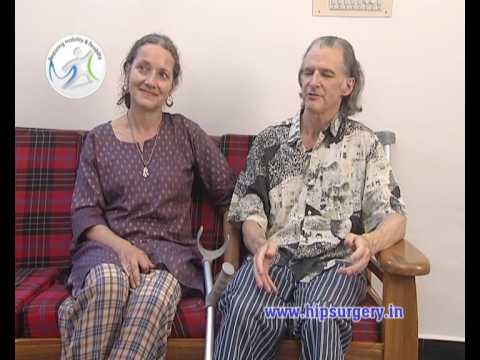









.png)










Share this listing