


Inside The Prostho Studio: Advanced Dental Prosthetics Manufacturing
At the forefront of advanced dental prosthetics manufacturing, The Prostho Studio Lab Manager Mario Lopez is redefining the art of restorative dentistry. In this comprehensive overview, we explore the digital dental lab workflows that power flawless smile transformations. Whether you are a clinician seeking optimal clinical to lab communication in prosthodontics or a patient investing in custom zirconia dental crowns, understanding the laboratory process is essential. Dive into the world of precision CAD/CAM dental milling processes and discover how expert technicians craft life-changing restorations.
Video Chapters & Quick Navigation
The dental industry has experienced a monumental paradigm shift over the last decade, transitioning from traditional analog methods to highly sophisticated digital ecosystems. At the heart of this transformation are dedicated professionals who bridge the gap between clinical dentistry and engineering. The Prostho Studio stands as a beacon of this modern approach, leveraging cutting-edge technology to deliver unparalleled restorative solutions.
Understanding the inner workings of a high-end dental laboratory provides immense value to both dental professionals and prospective patients. It demystifies the creation of customized dental prosthetics, revealing the meticulous attention to detail required to mimic natural human dentition. By exploring these processes, we gain a deeper appreciation for the fusion of biology, materials science, and digital artistry.
The Evolution of Digital Dental Lab Workflows
Historically, creating a dental crown or bridge was a highly manual, time-consuming process heavily reliant on physical impressions. Patients would endure uncomfortable trays filled with gooey impression materials, which were then shipped to a laboratory. Today, as highlighted at in the video, digital intraoral scanners have revolutionized this initial step.
Clinicians now capture highly accurate 3D representations of the patient's oral cavity in a matter of minutes. These digital files, typically in STL or PLY formats, are instantly transmitted to facilities like The Prostho Studio via secure cloud portals. This immediate data transfer drastically reduces turnaround times and eliminates the dimensional distortions commonly associated with traditional impression materials.
Seamless Integration and Case Planning
Once the digital impression arrives at the lab, the comprehensive digital dental lab workflows begin. Technicians import the data into advanced dental design software to begin the virtual construction of the prosthetic. This environment allows for the magnification of margins, ensuring a fit that is accurate to the micron level.
Furthermore, digital workflows enable virtual smile design, where the proposed restorations can be superimposed onto photographs of the patient's face. This ensures that the final custom zirconia dental crowns align perfectly with the patient's facial symmetry, midline, and lip dynamics, resulting in a naturally aesthetic outcome.
The Crucial Role of a Dental Lab Manager
Operating a state-of-the-art dental laboratory requires more than just high-tech equipment; it demands visionary leadership and stringent operational management. As a cosmetic dentistry lab technician and manager, Mario Lopez oversees the entire production lifecycle. This involves orchestrating a symphony of digital designers, ceramists, and milling specialists.
A typical day involves reviewing complex restorative cases, from single central incisors to full mouth rehabilitations. The manager must verify that the clinical data provided by the prosthodontist is adequate for the planned procedure. If discrepancies exist, immediate clinical to lab communication in prosthodontics is initiated to resolve issues before manufacturing begins, as discussed at .
Optimizing Production and Team Synergy
Beyond quality assurance, the lab manager is responsible for optimizing the throughput of the facility. This means managing milling machine schedules, coordinating the sintering cycles for various materials, and ensuring that delivery deadlines are met without ever compromising quality. It is a high-pressure environment where precision cannot be sacrificed for speed.
Fostering an environment of continuous education is also a hallmark of a premier lab manager. The materials and software used in advanced dental prosthetics manufacturing are constantly evolving. Keeping the team trained on the latest updates in CAD software or the newest layering techniques for porcelain ensures the studio remains at the cutting edge of the industry.
Mastering CAD/CAM Dental Milling Processes
Computer-Aided Design (CAD) and Computer-Aided Manufacturing (CAM) have fundamentally changed how dental prosthetics are fabricated. In the CAD phase, digital designers use sophisticated algorithms to generate the optimal shape, size, and occlusal contacts for the new teeth. They must consider the opposing dentition and the patient's specific bite mechanics.
Once the design is approved, the CAM software takes over. This software calculates the precise toolpaths required for the milling machines to carve the restoration out of a solid block or puck of raw material. The complexity of these CAD/CAM dental milling processes cannot be overstated, as the software must account for the specific burr sizes and milling strategies needed for different materials.
Precision Milling and 3D Printing Technologies
Modern dental laboratories utilize 5-axis milling machines capable of articulating in multiple directions simultaneously. This allows the machine to carve intricate undercuts and detailed occlusal anatomy that older 3-axis machines could not achieve. The result is a restoration that drops perfectly onto the prepared tooth or implant abutment with zero rocking or friction.
In addition to subtractive milling, additive manufacturing, or 3D printing, plays a massive role in the modern lab. 3D printers are routinely used to produce highly accurate physical models from digital impressions, surgical guides for implant placement, and castable resins for traditional pressing techniques. The synergy between milling and printing creates a robust, versatile manufacturing ecosystem.
Choosing the Right Materials: Zirconia vs. E-max
The success of any dental restoration relies heavily on the selection of the appropriate material. The Prostho Studio utilizes a variety of high-performance ceramics, each with its own unique optical and mechanical properties. Understanding these materials is vital for prescribing the correct treatment for specific areas of the mouth.
As noted at in the presentation, the debate often centers around Zirconia and Lithium Disilicate (commonly known as E-max). Both offer distinct advantages, and the choice ultimately depends on the balance between aesthetic demands and functional requirements.
| Material Feature | Zirconia (Zirconium Dioxide) | E-max (Lithium Disilicate) |
|---|---|---|
| Flexural Strength | Exceptionally high (up to 1200 MPa). Ideal for posterior teeth and bruxers. | High (around 400-500 MPa). Strong, but slightly more prone to fracture under extreme stress. |
| Aesthetics & Translucency | Highly opaque traditionally, though newer high-translucency blends have vastly improved aesthetics. | Unmatched natural translucency. Mimics natural enamel perfectly. Ideal for anterior (front) teeth. |
| Primary Indications | Molar crowns, multi-unit bridges, full arch implant restorations, custom abutments. | Veneers, anterior crowns, inlays, onlays, and single premolar crowns. |
The Sintering and Crystallization Process
When custom zirconia dental crowns are milled, they are actually in a chalk-like, "green" state that is approximately 20% larger than the final desired size. They must be placed into specialized sintering ovens that reach temperatures exceeding 1,500 degrees Celsius. During this cycle, the material densifies, shrinks to its exact calculated size, and achieves its massive structural strength.
Conversely, E-max restorations are often milled from a pre-crystallized "blue block." These blocks are fired in a ceramic furnace, causing a phase change that turns the purple/blue material into the selected tooth shade while simultaneously boosting its strength. Both processes require precise temperature calibration managed by the lab's technical team.
Seamless Clinical to Lab Communication in Prosthodontics
The greatest technology in the world is useless without accurate data input. The relationship and communication between the prescribing dentist and the dental laboratory are the most critical factors in achieving a successful patient outcome. This dynamic goes far beyond a simple written prescription pad.
Today's clinical to lab communication in prosthodontics involves a wealth of multimedia. Dentists provide the lab with comprehensive macro photography, detailing the texture, translucency, and specific shade variations of the patient's adjacent teeth. They may also send video clips to show the patient's dynamic smile line and phonetics.
- Shade Matching Protocols: Using digital spectrophotometers to eliminate the subjectivity of the human eye when selecting tooth colors.
- Diagnostic Wax-Ups: Creating physical or digital mock-ups to secure patient approval before any irreversible tooth preparation begins.
- Stump Shade Reporting: Communicating the color of the underlying prepared tooth, which drastically affects the final color of highly translucent restorations.
Engineering Full Arch Implant Restorations
Perhaps the most complex and rewarding procedures handled by The Prostho Studio are full arch implant restorations. Patients suffering from terminal dentition or complete edentulism seek out these life-changing treatments to restore full chewing function and facial aesthetics. This is where advanced dental prosthetics manufacturing truly shines.
As detailed at , full arch cases, often referred to as All-on-4 or All-on-6, require absolute precision. The prosthetic must attach seamlessly to multiple implants placed in the jawbone. Any slight discrepancy in the framework can induce stress on the implants, potentially leading to bone loss or implant failure over time.
Titanium Bars and Zirconia Frameworks
To ensure maximum longevity, these prosthetics are typically supported by a custom-milled titanium substructure. This bar acts as the rigid foundation. Over this titanium framework, the lab will layer highly aesthetic custom zirconia dental crowns and customized pink porcelain to replicate the natural gingival tissues.
The design of the gingival architecture is crucial. It must not only look natural but also be inherently self-cleansing. The lab manager ensures that the intaglio surface (the part touching the gums) is highly polished and properly contoured, allowing the patient to maintain optimal oral hygiene with water flossers and specialized brushes.
The Art and Science of Cosmetic Dentistry Wax-Ups
Before committing to irreversible cosmetic procedures like porcelain veneers, patients need predictability. They need to visualize the end result. This is achieved through diagnostic wax-ups, a process where a cosmetic dentistry lab technician meticulously designs the proposed new smile directly over a model of the patient's current teeth.
In the digital era, this is done virtually. The lab designs the new smile in CAD software and then 3D prints the model. The clinician can then use this printed model to create a "mock-up" directly in the patient's mouth using a temporary resin. This allows the patient to test drive their new smile, assessing both aesthetics and phonetics before proceeding.
Custom Staining and Glazing
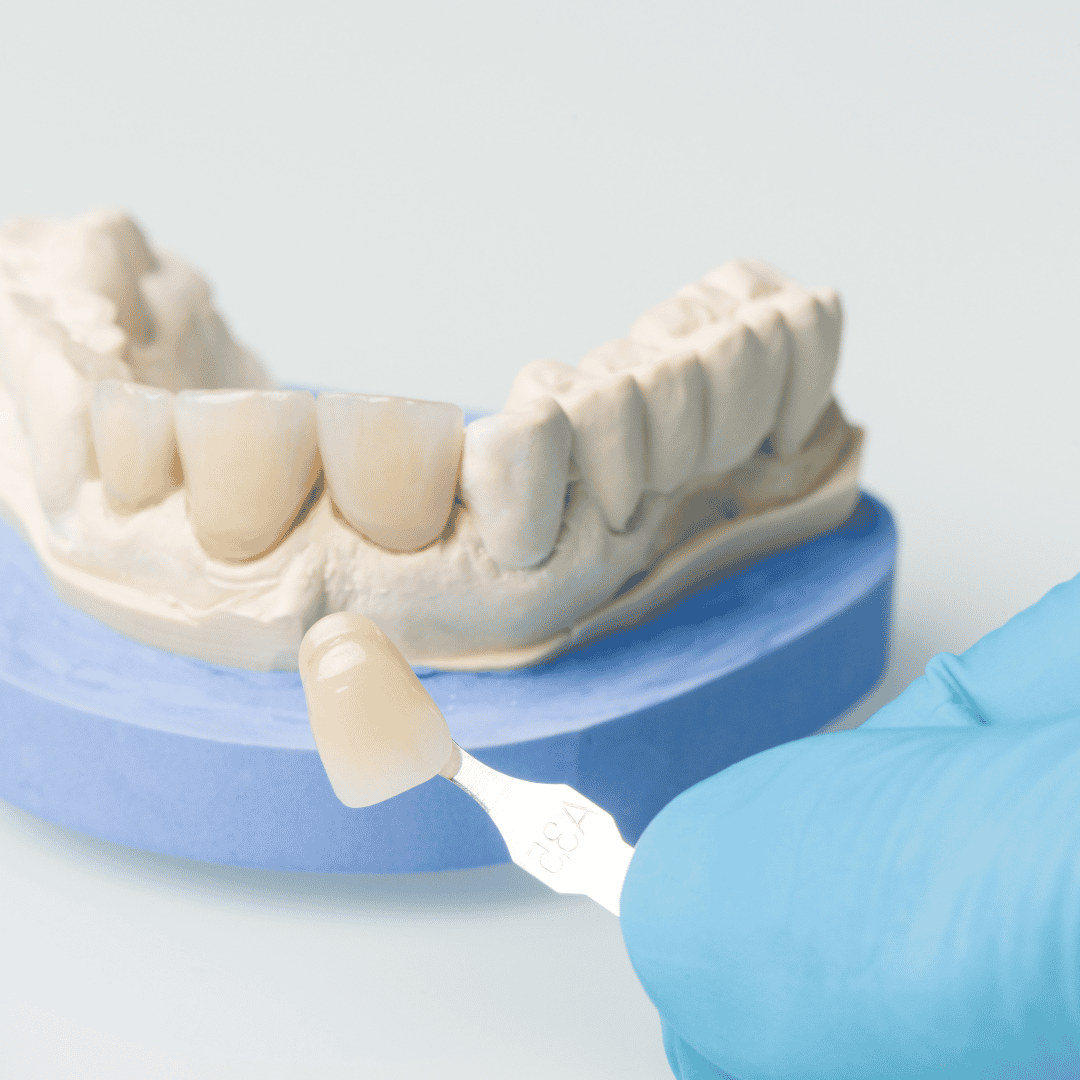
While milling machines create the shape, the soul of a dental restoration is breathed into it by the ceramist. Natural teeth are not monochromatic; they feature varying degrees of opacity, internal mamelons, halo effects at the incisal edges, and subtle surface textures that scatter light.
Master ceramists at The Prostho Studio apply microscopic layers of liquid ceramics and stains to the milled restorations. They mimic the wear patterns, decalcification spots, and intricate color gradients required to make the ceramic tooth indistinguishable from its natural neighbors. This artistry is the true hallmark of high-end advanced dental prosthetics manufacturing.
Rigorous Quality Control Protocols
In a premier dental laboratory, quality control is not an afterthought; it is integrated into every step of the workflow. The margin for error in implantology and restorative dentistry is effectively zero. A crown that is too high by even a fraction of a millimeter can cause severe occlusal trauma and temporomandibular joint (TMJ) discomfort for the patient.
Under the supervision of the lab manager, every single unit undergoes strict verification before being dispatched to the clinical office. As highlighted at , this involves multiple checkpoints using both high-tech equipment and experienced human oversight.
- Microscopic Margin Evaluation: Technicians inspect the restorative margins under high-power stereomicroscopes to ensure an absolute seal, preventing future bacterial microleakage.
- Solid Model Articulation: Cases are mounted on precision articulators that simulate the patient's exact jaw movements, allowing technicians to verify that there are no premature bite interferences during chewing motions.
- Contact Point Verification: The mesial and distal contacts (where the tooth touches its neighbors) are carefully checked with shim stock foil. Contacts must be tight enough to prevent food impaction but allow dental floss to snap through smoothly.
The Future: AI and Automated Dental Workflows
The dental laboratory industry refuses to stand still. As we look to the horizon, Artificial Intelligence (AI) is beginning to make profound impacts on CAD/CAM dental milling processes. AI algorithms are now capable of automatically analyzing intraoral scans, identifying margin lines, and generating initial crown proposals within seconds.
This does not replace the cosmetic dentistry lab technician; rather, it supercharges their efficiency. By automating the repetitive tasks, master ceramists and designers can focus their time and energy on the highly complex, aesthetic refinements that require a human touch. Facilities like The Prostho Studio continually invest in these emerging technologies to maintain their status as industry leaders.
Continuous Innovation for Patient Care
The ultimate beneficiary of all this advanced dental prosthetics manufacturing technology is the patient. Faster turnaround times, reduced chair time, higher aesthetic outcomes, and longer-lasting materials mean a drastically improved patient experience. Dental anxiety is mitigated when procedures are predictable and the results are consistently flawless.
The dedication of professionals who manage these complex digital dental lab workflows ensures that every prosthetic delivered is not merely a medical device, but a highly customized piece of functional art. By combining advanced engineering with deep anatomical knowledge, the modern dental laboratory continues to change lives, one perfect smile at a time.
Ready to Elevate Your Restorative Outcomes?
Discover how advanced digital lab workflows and precision milling can transform patient smiles. Connect with top-tier dental facilities utilizing world-class prosthetics today.
GET A FREE QUOTE

.jpg)




.png)
.png)


.jpg)

.png)
.jpg)








Share this listing