


The Complete Guide to Stem Cell Therapy for Arthritis and Holistic Physical Regeneration
About this video: Living with chronic autoimmune conditions and the physical toll of extreme emotional trauma can leave patients feeling entirely devoid of hope. For years, the traditional medical establishment has relied heavily on managing the symptoms of severe arthritis rather than addressing the root cause of cellular degradation. However, advanced stem cell therapy for arthritis is rapidly changing the landscape of modern regenerative medicine.
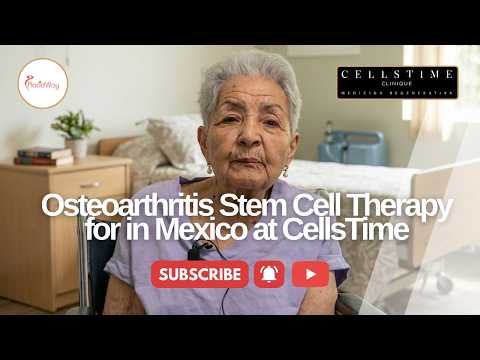
In this powerful patient testimony from Stem Cell Therapy for Osteoarthritis in Guadalajara at Cellstime Clinique, we explore the extraordinary recovery of Hermelinda Becerra Peña. After suffering profound personal losses that triggered a massive physical decline, she turned to regenerative medicine as a last resort. Her incredible results—ranging from restored joint mobility to unexpected improvements in ocular health—highlight the systemic, full-body healing potential of mesenchymal stem cells. This comprehensive guide explores the science, applications, and profound benefits of cellular regeneration.
Video Chapters & Quick Navigation
For millions of aging adults worldwide, the gradual onset of degenerative joint disease is viewed as an unavoidable consequence of getting older. Traditional healthcare systems typically offer a predictable, escalating ladder of interventions.
Patients are usually started on non-steroidal anti-inflammatory drugs (NSAIDs), progressed to painful corticosteroid injections, and eventually pushed toward highly invasive joint replacement surgeries. However, the rapidly advancing field of cellular medicine is aggressively challenging this outdated paradigm.
The Harsh Reality of Chronic Arthritis and Joint Degeneration
Arthritis is not merely a condition of minor aches and pains; it is a profoundly debilitating disease that systematically strips away a patient's independence. As we hear right at the beginning of the video at [00:00], Hermelinda's primary, overriding health condition was severe arthritis. This inflammatory condition aggressively attacks the protective cartilage that cushions the ends of bones within the joints.
Once this crucial cartilage begins to erode, the resulting bone-on-bone friction creates localized trauma, triggering a massive immune response that floods the area with inflammatory cytokines. This chronic inflammation causes the surrounding joint capsule to swell significantly, restricting mobility and causing excruciating, constant pain. Over time, the body's natural inability to regenerate this specific type of cartilage leads to permanent joint deformity.
For patients like Hermelinda, this loss of mobility often spirals into a much broader systemic decline. When chronic pain prevents basic daily movements, cardiovascular health plummets, muscle atrophy accelerates, and the psychological burden of constant suffering frequently leads to severe clinical depression. Breaking this vicious cycle requires an intervention that actually repairs the tissue, rather than simply masking the neurological pain signals sent to the brain.
The Limitations of Corticosteroids
It is vital to understand why conventional treatments ultimately fail in the long run. Corticosteroid injections, the most common orthopedic intervention for severe joint pain, offer highly effective, rapid relief by artificially suppressing the local immune response.
However, extensive clinical research has demonstrated that repeated steroid injections actually accelerate the degradation of whatever healthy cartilage remains in the joint. Patients find themselves trapped in a cycle of diminishing returns, needing injections more frequently while the underlying structural damage to the joint becomes progressively worse.
How Stem Cell Therapy Actually Repairs Damaged Joints
The introduction of Mesenchymal Stem Cells (MSCs) into orthopedic medicine represents one of the most significant medical breakthroughs of the 21st century. When Hermelinda explains at [00:20] that she decided to try stem cells to "regenerate something" in her failing body, she was tapping into a highly advanced biological mechanism. Stem cells are the foundational "master cells" of the human body, possessing the unique ability to differentiate into highly specialized cell types.
When concentrated, high-quality mesenchymal stem cells are introduced into a damaged arthritic joint, they perform a dual function that no synthetic pharmaceutical can replicate. First, they act as powerful immunomodulators. The stem cells release a cascade of anti-inflammatory proteins that effectively "turn off" the destructive, hyperactive immune response that is attacking the joint tissue.
Secondly, and most importantly, these cells have the capacity to differentiate into chondrocytes—the specific biological cells responsible for producing new, healthy cartilage matrix. By laying down new structural tissue, the therapy directly addresses the bone-on-bone friction, restoring the natural cushioning of the joint and providing long-term, sustainable pain relief.
The Paracrine Effect
Beyond direct cellular replacement, stem cells operate through a phenomenon known as the paracrine effect. They act as biological signaling centers, secreting vital growth factors, cytokines, and exosomes into the surrounding damaged tissue.
These powerful chemical signals awaken the body's own dormant, native stem cells that reside in the joint but have become sluggish due to age or chronic disease. By recruiting the body's natural healing mechanisms, the introduced stem cells essentially serve as a general contractor, organizing and accelerating a massive biological repair project at the site of the injury.
Beyond Joints: Regenerating Failing Vision and Ocular Health
One of the most fascinating aspects of systemic stem cell therapy is its ability to seek out and repair damaged tissues throughout the entire body, far beyond the initial area of primary concern. At [00:11], Hermelinda shares a remarkable secondary benefit: her failing vision began to improve. She distinctly noted that her eye "was turning off" prior to receiving her regenerative treatments.
The application of regenerative medicine in ophthalmology is a rapidly expanding frontier. Many age-related visual impairments, such as macular degeneration, diabetic retinopathy, and optic nerve degradation, are fundamentally caused by cellular death within the highly sensitive tissues of the eye. Traditional optometry has largely focused on corrective lenses or invasive surgeries to manage these progressive conditions.
Systemically administered mesenchymal stem cells possess an incredible homing ability; they are naturally drawn to areas of the body emitting chemical signals of inflammation and cellular distress. When these cells reach the damaged ocular tissues, they promote intense vascular regeneration, improving essential blood flow to the optic nerve and the retina. Furthermore, the neurotrophic factors secreted by stem cells can actively repair damaged neural pathways, leading to the subjective improvements in visual acuity reported by patients like Hermelinda.
The Devastating Physical Toll of Extreme Grief and Trauma
Medical science has long understood the profound, undeniable connection between severe psychological trauma and catastrophic physical decline. At [00:32], the emotional core of this testimony is revealed when Hermelinda discusses the tragic death of her husband and the severe accidents involving her sons. This unrelenting sequence of emotional devastation triggered a massive physiological collapse.
When a human being experiences prolonged, intense grief, the sympathetic nervous system becomes locked in a chronic "fight or flight" state. The adrenal glands pump out toxic, unrelenting levels of cortisol and adrenaline. While these hormones are crucial for surviving immediate, short-term threats, chronic exposure is highly corrosive to the human body.
This sustained stress hormone cascade actively suppresses the immune system, destroys the healthy gut microbiome, and triggers massive, body-wide systemic inflammation. This is precisely why emotional trauma often precedes the rapid onset or severe exacerbation of autoimmune conditions like rheumatoid arthritis. The body quite literally begins to attack itself under the weight of unresolved psychological agony.
Rapid Weight Loss and Physical Wasting
The physical manifestation of this trauma in Hermelinda's case was severe cachexia, or sudden physical wasting. As she poignantly states at [00:43], the compounding tragedies caused her to spiral downward and lose a staggering 20 kilograms (approximately 44 pounds). This type of rapid, unintentional weight loss in the elderly is incredibly dangerous.
It represents a profound loss of essential muscle mass (sarcopenia) and crucial bone density, rendering the patient incredibly fragile and susceptible to catastrophic falls. When the body is starved of nutrients due to stress-induced appetite loss, it begins cannibalizing its own tissues just to maintain basic organ function, leaving absolutely no biological resources available to repair arthritic joints or maintain healthy vision.
Combating Systemic Inflammation: The Edema Connection
Another critical physiological symptom mentioned in this clinical case study is extreme peripheral edema. Following her traumatic weight loss and the progression of her arthritis, Hermelinda notes that her feet became incredibly swollen. Peripheral edema in elderly patients with chronic inflammatory conditions is incredibly common and highly indicative of a failing biological system.
When severe arthritis and chronic stress overload the body, the lymphatic system often struggles to process and eliminate the massive influx of inflammatory waste products. Fluid pools in the lower extremities due to gravity and compromised vascular circulation. This swelling further restricts mobility, creating a sensation of heaviness and acute pain with every single step.
Systemic stem cell therapy addresses this directly by rebuilding the microscopic endothelial cells that line the blood vessels and lymphatic vessels. By improving the structural integrity of the vascular system and drastically reducing the overall inflammatory burden in the blood, the body can finally begin to process and eliminate this trapped fluid. As Hermelinda gratefully reports, the severe swelling in her feet noticeably subsided following her cellular treatments.
Analyzing the Treatment Landscape: A Clinical Comparison
To truly appreciate the value of advanced cellular therapies, patients must clearly understand how they contrast with the standard orthopedic protocols mandated by most insurance companies. The difference fundamentally lies in managing decay versus actively promoting tissue regeneration.
| Treatment Modality | Primary Mechanism of Action | Long-Term Cellular Impact |
|---|---|---|
| Oral NSAIDs (Ibuprofen, etc.) | Temporarily blocks pain receptors and mild inflammation. | None. Risk of severe gastrointestinal bleeding and kidney damage over time. |
| Corticosteroid Injections | Suppresses local immune response for 3-6 months. | Negative. Clinically proven to accelerate cartilage degradation with repeated use. |
| Hyaluronic Acid Lubrication | Provides temporary mechanical lubrication to the joint capsule. | Neutral. Does not repair tissue, but may slightly delay the need for surgery. |
| Total Joint Replacement Surgery | Amputation of the diseased bone, replaced with metal and plastic hardware. | Highly invasive trauma. Requires months of grueling physical rehabilitation. |
| Mesenchymal Stem Cell Therapy | Differentiates into healthy cartilage cells and secretes potent anti-inflammatory growth factors. | Positive Regeneration. Actively rebuilds tissue, halts systemic inflammation, and restores natural joint biomechanics. |
The Patient Recovery Timeline: What to Expect
A common misconception regarding regenerative medicine is that it provides instantaneous, overnight relief similar to a potent pharmaceutical painkiller. However, true biological healing is a complex process that requires time, adequate nutrition, and a supportive cellular environment.
At [00:52], Hermelinda accurately describes the reality of her recovery timeline, stating that "with the days, I already felt better, little by little." This gradual, progressive improvement is the hallmark of genuine tissue regeneration. In the first few weeks following a stem cell infusion or local injection, the primary biological action is fierce immunomodulation. Patients typically notice a significant reduction in acute swelling, morning stiffness, and generalized systemic fatigue as the cellular inflammation is systematically neutralized.
The actual structural rebuilding of the cartilage and the repair of ocular nerve tissues occur over a span of three to six months. During this critical window, the introduced mesenchymal stem cells are hard at work differentiating, multiplying, and laying down new, healthy biological scaffolding. Patients who pair their regenerative treatments with tailored physical therapy, an anti-inflammatory diet, and proper hydration tend to experience the most profound and long-lasting clinical outcomes.
Choosing the Right Clinic for Cellular Therapy
As the demand for alternative, holistic treatments skyrockets, the market has unfortunately become saturated with inexperienced providers offering sub-par cellular products. Not all stem cell therapies are created equal, and the clinical outcomes are heavily dependent on the quality of the biological materials and the expertise of the medical staff.
Leading facilities like Cellstime Clinique differentiate themselves by adhering to the highest international standards of biotechnology. They utilize rigorously screened, highly pure cell lines that boast maximum viability and differentiation potential. The medical protocols are entirely customized to the individual patient's unique pathology, combining systemic intravenous infusions with highly targeted, ultrasound-guided local injections to maximize the therapeutic payload directly at the site of severe tissue damage.
Ultimately, Hermelinda's beautiful testimony serves as a beacon of hope for patients who have been told that their physical decline is permanent. By embracing the cutting-edge science of cellular regeneration, she was able to pull herself back from the brink of profound physical and emotional collapse. Her story proves that with the right medical intervention, the human body retains an astonishing, innate capacity to heal, rebuild, and thrive once again.
Ready to Start Your Own Regeneration Journey?
Don't let severe arthritis, systemic inflammation, or failing health dictate the rest of your life. Discover how advanced, personalized stem cell therapy at world-class clinics can help you rebuild your body from the cellular level up. Take the first step toward a pain-free, active future today.
Request a Free Medical ConsultationView Full Video Transcript
[00:00:00] My name is Hermelinda Becerra Peña. My condition is arthritis. Stem cells have helped me have better vision, because my eyesight was already starting to fade.
[00:00:11] They also told me that stem cells were very good, and I thought that somehow I should try them to regenerate my body.
[00:00:20] After the accidents, the death of my husband, and the accidents involving my children, I felt very down emotionally.
[00:00:32] I lost 20 kilos, and my feet were very swollen.
[00:00:43] Now the swelling has reduced, and day by day I started feeling better little by little.
[00:00:52] It really works. It helps regenerate parts of the body that are damaged. Yes, it truly works.
























Share this listing