
Comprehensive Stem Cell Therapy for Autism in Mexico: A Real-Life Recovery Journey
Finding an effective treatment for neurodevelopmental disorders can be an exhausting and emotional journey for parents globally. Many families are now turning to international medical solutions, discovering that a targeted stem cell therapy for autism in Mexico can yield unprecedented improvements in cognitive function. When traditional interventions reach a plateau, regenerative medicine offers a scientifically backed avenue to address underlying neurological inflammation.
This innovative medical approach is rapidly becoming a beacon of hope for children facing severe developmental delays and nonverbal autism challenges. In this comprehensive guide, we analyze a remarkable clinical case study of a six-year-old boy named Claudio. His journey perfectly illustrates the profound potential of advanced cellular treatments to restore communication and autonomy. By documenting his progressive milestones, we provide an in-depth look at the mechanisms of cellular regeneration and how it synergizes with specialized pediatric therapies.
Video Chapters Quick Navigation
Understanding Nonverbal Autism and Developmental Delays
Autism spectrum disorders and severe developmental delays present a unique set of challenges that dictate every aspect of a family's daily routine. For many children, the inability to communicate verbally or interact socially creates a profound barrier to learning. This lack of engagement is rarely due to a lack of desire to connect with others. Instead, it stems from a neurological disconnect that makes processing external environmental stimuli incredibly difficult.
In the documented case, a six-year-old boy named Claudio faced these exact neurodevelopmental hurdles [00:10]. Despite being described by his parents as an incredibly sweet child who taught them profound life lessons, his developmental progress was entirely stalled. He spent the vast majority of his time merely observing other children play, unable to initiate interactions. His parents noted that while he was generally in a positive mood, his lack of participation was a constant source of anxiety regarding his future independence.
The Complex Neurological Landscape of Autism
The root causes of nonverbal autism are deeply embedded in the brain's complex neural pathways. Current medical understanding points to chronic neuroinflammation and poor synaptic connectivity as primary culprits preventing children from acquiring language. This underlying biological reality means that purely psychological or behavioral interventions often struggle to trigger meaningful, long-term progress. Parents like Claudio's recognized early on that addressing the physiological root of the problem was absolutely essential.
Managing these neurological challenges requires immense patience and financial resources from the family unit. Claudio did not take any pharmaceutical medications to alter his mood or manage his condition [00:36]. This is a deliberate choice for many parents who desperately wish to avoid the lethargy and behavioral side effects frequently associated with heavy psychiatric drugs. Instead, his family focused on providing vital natural nutrients, ensuring his body maintained a clean physiological foundation prior to seeking advanced medical treatments.
The Limits of Conventional Speech and Language Therapy
When a child is officially diagnosed with a severe developmental delay, the standard medical protocol almost always begins with conventional therapeutic routes. Speech and language therapy, occupational training, and sensory integration are considered the foundational cornerstones of early intervention. These proven methods are designed to build communication habits through repetitive exercises in highly structured environments. However, the true efficacy of these therapies heavily depends on the child's neurological plasticity and readiness to absorb new information.
Before discovering regenerative medical options, Claudio's parents exhausted multiple conventional avenues in their hometown. They enrolled him in intensive speech and language therapy, praying it would unlock his dormant ability to communicate. Unfortunately, these traditional methods ultimately fell short, and Claudio remained completely nonverbal [00:30]. This lack of tangible progress is a frustrating reality for countless families pursuing alternative therapies for developmental delay.
When Traditional Methods Hit a Plateau
The plateau effect in traditional autism therapies occurs when a child reaches the strict limit of what behavioral conditioning can achieve alone. For Claudio, trained therapists tried various physical and auditory techniques to encourage socialization, but he consistently struggled to engage in a meaningful way. The family's unwavering dedication led them to try equinotherapy, an animal-assisted approach utilizing horseback riding to stimulate sensory systems. While highly beneficial for core physical balance, it did not produce the necessary cognitive breakthrough.
Realizing that they needed a much more profound biological intervention, the family made a crucial decision to completely shift their strategy. They decided to look beyond the confines of conventional medicine and aggressively explore advanced clinical options abroad. This pivotal shift led them to investigate a pediatric stem cell procedure in Mexico, setting the stage for a dramatic neurological transformation.
- Speech Therapy Limitations: Interventions are often ineffective if the underlying neurological pathways required for language remain inflamed or dormant.
- Sensory Overload: Standard clinic environments can easily overwhelm autistic children, entirely preventing the absorption of therapeutic exercises.
- The Need for Synergy: Traditional behavioral therapies are vastly more effective when successfully paired with medical treatments that enhance brain plasticity.
The Mechanism of Stem Cell Procedures for Child Developmental Delay
The deliberate decision to pursue a stem cell procedure represents a massive paradigm shift from behavioral management to actual biological healing. Stem cells, specifically mesenchymal stem cells (MSCs), possess incredibly unique regenerative properties that make them ideal candidates for treating neurological conditions. When carefully introduced into the pediatric body, these powerful cells actively seek out areas of severe inflammation and damaged tissue. Once they reach the affected brain regions, they release vital growth factors that promote the rapid repair of broken neural pathways.
Claudio's family initiated the stem cells procedure with an incredibly positive attitude and very high expectations [00:57]. They clearly understood that regenerative medicine for neurological conditions is not an overnight magic pill, but rather a progressive biological restoration. The treatment specifically aims to enhance neurogenesis—the natural creation of new neurons—while also promoting angiogenesis. This subsequently increased blood flow facilitates drastically better communication between different lobes of the brain.
Why Mexico is Leading in Regenerative Medicine
Over the last decade, Mexico has securely emerged as a premier global destination for advanced medical treatments. Clinics operating under the Health Facilitators network maintain strict medical regulations while providing access to cutting-edge cellular protocols. These specialized treatments are frequently heavily restricted by slow bureaucratic processes in other Western countries. Medical tourism for pediatric care demands absolute trust, and facilities in Mexico have built unshakeable reputations by delivering consistent results.
The total cost of stem cell therapy for autism in Mexico is also a highly significant factor driving families to travel. Compared to the massive lifelong expenses associated with full-time specialized care and potential adult institutionalization, the upfront investment in a cellular procedure is incredibly cost-effective. By directly addressing the biological root cause of the developmental delay early on, families can drastically reduce their reliance on expensive, intensive interventions in the future.
Early Breakthroughs: Sensory Processing and Speech Development
The truest measure of any advanced neurological treatment is the tangible, daily change in a child's spontaneous behavior. Following the stem cell intervention, the earliest signs of cognitive awakening can vary wildly, but they frequently manifest as vastly heightened sensory awareness. For Claudio, the initial indicators of clinical progress were incredibly swift and highly encouraging. By his fourth post-treatment session, his family noticed a dramatic, undeniable shift in how he visually and physically interacted with his environment.
During Session 4, Claudio miraculously transformed into an eager, curious explorer [01:04]. He became restless in a highly positive manner, suddenly showing intense interest in the nuanced smells and tastes of ordinary objects. He began sucking on items to gauge their texture and actively complained about food flavors he disliked [01:33]. This newfound vocalization, heavily characterized by shouting in distinctly different tones, proved his brain's auditory processing centers were finally firing correctly.
The Phenomenon of First Words in Session 5
The single most emotional and universally defining moment for any parent battling nonverbal autism is hearing their child intentionally speak. For Claudio's parents, this absolute miracle occurred abruptly during Session 5 [01:43]. While actively participating in equinotherapy, he clearly uttered his very first word, explicitly indicating his urgent need to use the bathroom. This spontaneous, context-accurate verbalization demonstrated the cognitive ability to perfectly associate a spoken word with a specific biological urge.
This massive breakthrough rapidly cascaded into a surge of further linguistic development at home. Later that same week, Claudio expanded his active vocabulary, clearly articulating the words "yes," "no," "mama," and "hand." Furthermore, he began to make sustained, intentional eye contact, staring directly into cameras and observing facial expressions. The success stories of stem cell treatment for autism consistently highlight this exact rapid transition from silent isolation to active, engaged communicative intent.
Achieving Independence: Motor Skills and Cognitive Growth
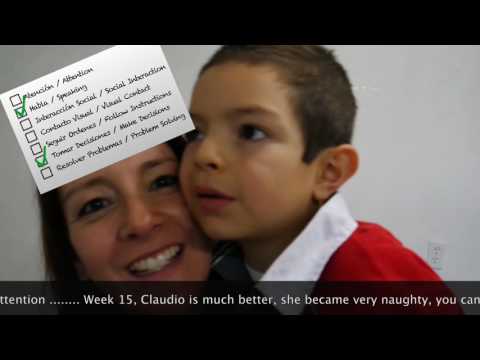
As the systemic regenerative effects of the stem cells continued to continuously propagate throughout his central nervous system, Claudio's progress exploded. By Week 15, the structural improvements in his cognitive bandwidth and precise fine motor skills were undeniably spectacular [02:08]. He completely transformed from a purely passive observer into a highly engaged, wonderfully mischievous participant in the family dynamic. His overall spatial awareness sharpened immensely, allowing him to easily focus on highly complex, multi-step tasks without distraction.
His newfound ability to perfectly follow complex instructions vastly improved his daily functionality. When parents asked him to perform specific actions like "up," "down," "come," or "bring," he executed them with zero hesitation [02:30]. He also developed a very strong, undeniable intention to communicate with adults. He actively sought help by physically taking his mother's hand and deliberately guiding her to desired objects when his ten-word vocabulary fell short.
Mastering Digital Technology and Sustained Attention
One of the most objectively striking markers of his rapid cognitive growth was his sophisticated interaction with digital technology. Prior to the cellular treatment, his engagement with an iPad was fleeting; he would merely touch the screen once and instantly discard it. Post-treatment, Claudio quickly learned to turn the device on, skillfully navigate between hidden applications, and precisely manage the hardware volume controls. His focused attention span miraculously skyrocketed from mere seconds to maintaining deep focus for up to 30 uninterrupted minutes [03:06].
Potty Training and Personal Autonomy Milestones
Achieving physical independence is a universally monumental goal in treating severe developmental delays. Following the therapy, Claudio achieved incredible milestones in basic self-care, completely dropping the requirement for nighttime sleep diapers [03:17]. He gained the necessary neural connectivity to recognize his body's internal signals and use the bathroom completely unassisted. Additionally, he began asserting his personality by choosing his own specific clothes and dressing himself daily.
- Following Commands: Successfully interpreting advanced spatial and directional instructions accurately.
- Fine Motor Control: Manipulating digital tablet interfaces and managing small clothing fasteners independently.
- Bladder Control: Achieving full day and night potty training, signifying repaired brain-to-body neural connectivity.
Medical Perspectives: Evaluating Autism Stem Cell Treatment Success Rates
While the profound behavioral changes observed by hopeful parents are incredibly validating, objective clinical confirmation provides necessary scientific backing. Routine medical evaluations are absolutely critical to accurately tracking the long-term efficacy of neuroregeneration protocols. When Claudio's primary pediatrician evaluated him a full six months after the initial consultation, the seasoned physician was thoroughly astounded by the visible changes [03:22]. The doctor specifically highlighted the drastically improved attention spans and sustained eye contact during the exam.
From a purely clinical standpoint, the recorded rate of neurodevelopment was entirely unprecedented for his age group. The pediatrician firmly concluded that Claudio had developmentally advanced more in the six months following the stem cell procedure than he had in the entire two years prior. This massive clinical endorsement underscores the undeniable reality that stem cells for neuroregeneration can rapidly accelerate a delayed child's timeline, allowing them to finally catch up.
Long-Term Clinical Observations
A child's developmental progress is rarely accurately observed in a vacuum; it requires the broad consensus of an entire multidisciplinary team. In Claudio's specific case, every single professional involved in his extensive care unanimously agreed on his incredible advancement. The speech therapist, sensory integration specialist, therapeutic riding instructor, and his dedicated shadow teacher all acknowledged that his neurological hardware was finally capable of supporting complex speech [03:37].
Furthermore, his emotional regulation stabilized in a highly dramatic fashion. Before the cellular therapy, Claudio would instantly resort to aggressively screaming or crying when frustrated by a simple puzzle. Post-treatment, he began actively analyzing physical problems and calmly resolving spatial situations independently [03:50]. This vital shift from chaotic emotional outbursts to logical, calculated problem-solving is a definitive hallmark of high-level cognitive maturation.
Synergizing Regenerative Medicine with Specialized Autism Therapies
It is a highly common medical misconception that regenerative procedures completely replace the need for traditional behavioral interventions. In clinical reality, the absolute most successful outcomes are achieved when advanced cellular therapies are heavily combined with specialized pediatric rehabilitation. The infused stem cells act as the biological catalyst, physically repairing the structural damage in the brain. Meanwhile, the consistent behavioral therapies provide the necessary educational software, actively teaching the newly repaired brain exactly how to function.
Claudio's subsequent integration back into standard educational school routines was remarkably seamless, surprising even his veteran educators. His primary teacher specifically noted that after a long break, he returned to the loud classroom with an impressive level of memory retention [04:04]. He easily reconnected with the strict school schedule, sitting quietly for an hour and following complex group directions without any shadow assistance. Simple requested tasks, such as walking across the room to turn on the light [04:28], demonstrated a flawless, uninterrupted synchronization between auditory comprehension and motor execution.
A Multidisciplinary Approach to Neurodevelopment
Intensive speech therapy combined with stem cells creates an incredibly powerful, undeniable synergistic effect. While the exact same therapy previously failed to yield any vocal results, the heavily repaired post-treatment neurological landscape allowed the verbal exercises to finally take permanent root. Claudio also began enthusiastically participating interactively in group music classes. This is considered a highly sophisticated activity that explicitly requires simultaneous auditory processing, physical rhythm recognition, and advanced social coordination.
Navigating Medical Tourism for Pediatric Stem Cell Clinics in Mexico
For cautious parents actively considering crossing international borders for critical healthcare, thoroughly understanding the logistical safety protocols of medical tourism is paramount. Choosing to undergo a specialized stem cell therapy for autism in Mexico involves meticulous, extensive research. Families must ensure the selected clinic strictly adheres to the highest established international safety standards. Facilities officially partnered with specialized medical tourism agencies provide a highly streamlined, deeply secure experience for traveling international patients.
The practical clinical application of regenerative medicine is truly a proven reality that changes lives on a daily basis [05:22]. Top-tier clinics consistently utilize rigorously tested, highly ethically sourced mesenchymal stem cells, prioritizing child safety above all other clinical metrics. The absolute transparency of these specific clinics regarding their sterile procedures, exact cell counts, and realistic expected outcomes successfully builds the necessary bedrock of trust required for anxious parents.
The Future of Advanced Neuroregeneration
The arduous journey from a devastating diagnosis of nonverbal autism to a joyful life filled with communication is no longer just a distant fantasy; it is a documented clinical possibility. As global research into targeted cellular therapies continues to drastically expand, the medical protocols are becoming increasingly refined. These ongoing advancements continually offer higher verified success rates and vastly more profound developmental leaps. For growing children actively struggling with severe neurological delays, these advanced medical treatments definitively represent a critical turning point in their young lives.
Explore Stem Cell Therapy Options Today
Discover if advanced regenerative medicine is the right strategic path for your child's unique developmental needs. Consult directly with top-tier medical experts and receive a completely personalized, comprehensive treatment plan.
Get Free QuoteView Full Video Transcript
00:00 Health Facilitators - MexStemCells
00:10 Familia de Claudio Sesión 1. Claudio is like the best we have in our lives, he is an angel that came to teach and show us a lot of things.
00:16 He is sincere and he is always with good humor... the 80% of the time, the 90% of the time he is in a good mood.
00:24 And we decided that we were not going to give up, that we were going to seek options.
00:30 In the search for alternatives and give him options we started with speech and language therapy but it didn't work... as you can see Claudio does not speak.
00:36 He takes no medications. Claudio does not have a single medicine that controls him in state of mind, nor health, nor anything.
00:44 In this treatment we have put much hope and we want to see how much he can advance.
00:57 The stem cells procedure with great attitude and expectations... at the beginning he does not interact with other children to play, just liked to watch them play.
01:04 Session 4. You could notice a breakthrough, he became restless and began to smell and suck some things, began to express much more, shouting with different sounds and tones.
01:33 And also he complained of food that were not the ones to he liked.
01:43 Session 5. Began to speak, leaving a equinoterapia uttered his first words, said if not, breast, hand and now... He also began to stare, looking at the camera and paying attention.
02:08 Week 15. Claudio is much better, she became very naughty, you can see a remarkable advance of the session 1 to session 15.
02:18 Has grown, it is much more attentive and gets much more attention both to what he does as to what happens around him.
02:30 Follow-up instructions is much higher, for example instructions as up, down, come or bring... and dresses alone, and speaks about 10 words, when previously not speak.
02:47 And ask for help and show an intention to communicate, going by her mom and says what he wants... and works with the ipad, turn it knows, manage and increase the volume, carries out various activities with their ipad.
03:06 Increased attention spans, before these periods were very small and now working up to 30 minutes with the cases, and also stays up to 1 hour in the classroom and not doing activities.
03:17 Wears a diaper at night and only go to the bathroom without help... choose your clothes.
03:22 The doctor pediatrician saw him 6 months after prior consultation and notice the improvement he had in his periods of attention and the level of attention.
03:32 The doctor says he has advanced more in these 6 months with stem cell treatment in Mexico than in the previous 2 years.
03:37 The speech therapist, sensory therapist, therapeutic riding instructor, pediatrician, doctor, your shadow teacher, etc, all of them considered Claudius and you can start talking, but that still does not want to talk.
03:50 Claudio moves and resolves situations that are presented before had been screaming, mourn or had been doing nothing, now looking like solving situations.
04:04 The teacher school says she impresses as return of summer vacation, besides the growth was, also the way to work, seems to have not gone on vacation, connected back to the school routine and follows instructions.
04:28 Claudio turn on the light... participates interactively in a kind of music.
05:22 Regenerative medicine is a reality that changes lives. MexStemCells.






.png)
.png)

.png)

.png)
-(1).png)









Share this listing