


The Comprehensive Guide to Stem Cell Therapy for Autism Spectrum Disorder and Chronic Conditions
About this patient journey: Navigating a diagnosis of autism spectrum disorder or severe developmental delays can feel like stepping into an overwhelming labyrinth for any parent. For decades, families searching for profound breakthroughs have relied solely on conventional interventions, often facing slow progress and grueling behavioral hurdles. Today, the landscape of pediatric neurodevelopment is shifting dramatically as regenerative medicine takes center stage. Stem cell therapy for autism has emerged as one of the most promising, albeit heavily researched, alternative interventions for addressing the core symptoms of neurodivergent conditions.
By targeting underlying neuroinflammation and promoting cellular repair, this advanced medical protocol aims to unlock potential that traditional therapies alone may not reach. In this detailed clinical breakdown, we examine a powerful real-world case study. We will analyze the journey of a young girl named Elisa, chronicling her early developmental warning signs, her intense sensory processing challenges, and the astonishing cognitive and behavioral leaps she achieved after undergoing specialized stem cell treatment. Prepare to discover how modern regenerative therapies are rewriting the prognosis for children with chronic developmental barriers.
Video Chapters & Quick Navigation
When searching for viable, life-altering medical interventions for neurodevelopmental conditions, parents are leaving no stone unturned. The traditional medical establishment has long maintained that autism spectrum disorder requires strict behavioral management rather than cellular healing. However, an increasing number of families are turning to international regenerative medicine clinics to access cutting-edge stem cell treatments. By utilizing mesenchymal stem cells (MSCs) to target systemic inflammation and promote neurogenesis, children are experiencing rapid improvements in areas previously thought to be permanently impaired.
Identifying Early Developmental Delays in Infants
The earliest signs of neurodivergence often present subtly during the first year of life. Recognizing these early red flags is essential for deploying rapid intervention protocols. In the case of Elisa, her mother noted significant behavioral discrepancies during infancy. [[00:00](https://www.youtube.com/watch?v=TM396FzuR_k&t=0)] Around eight to twelve months of age, it became highly apparent that Elisa was not imitating her environment—a critical milestone in early childhood cognitive development. Imitation is the foundational building block for complex social learning, language acquisition, and empathetic mirroring.
Furthermore, gross motor skill delays frequently accompany early cognitive signs. Elisa struggled significantly with physical milestones, taking an unusually long time to learn how to roll over. Because gross motor functions are closely tied to neurological maturation, this delay prompted her family to seek immediate clinical help. By the time she was just one year old, she had already been enrolled in rigorous early intervention therapies to address these cascading developmental roadblocks.
The Impact of Absent Imitation Skills
When an infant fails to imitate facial expressions, gestures, or vocalizations, it severely blunts their ability to learn from caregivers. This lack of imitation creates an immediate barrier to socialization. Pediatric neurologists emphasize that early imitation deficits are among the most reliable early predictors of autism spectrum disorder, making vigilant parental observation absolutely critical for early diagnosis.
Navigating Severe Sensory Processing Disorder
A staggering majority of children diagnosed with autism also suffer from profound Sensory Processing Disorder (SPD). The central nervous system fails to properly receive, organize, and respond to sensory input. [[00:15](https://www.youtube.com/watch?v=TM396FzuR_k&t=15)] Elisa’s mother describes her daughter's condition as being "sensorially very low," specifically pointing out a severe lack of tactile registration. Because she could not properly feel touch stimuli, Elisa engaged in sensory-seeking behaviors, such as hugging people aggressively or applying excessive pressure just to register a physical sensation.
This hyposensitivity can be incredibly dangerous and socially alienating. Children with under-responsive tactile systems often cannot feel pain properly, making them prone to unacknowledged injuries. Socially, their need for deep-pressure input is frequently misinterpreted by peers and adults as aggression or lack of boundaries, further isolating the child from normal social interactions.
| Sensory Profile | Behavioral Presentation | Impact on Socialization |
|---|---|---|
| Hypersensitive (Over-responsive) | Avoids touch, covers ears, refuses certain clothing textures. | Withdraws from group activities; experiences frequent meltdowns. |
| Hyposensitive (Under-responsive) | Seeks intense input, hugs too tightly, crashes into objects. | Perceived as aggressive; struggles with personal space boundaries. |
Elisa's social dynamics at school perfectly illustrated this struggle. [[00:31](https://www.youtube.com/watch?v=TM396FzuR_k&t=31)] While she showed a desire to interact when classmates approached her, true integration was nearly impossible. She lacked the reciprocal flexibility required for cooperative play, insisting on engaging only on her own strict terms. This rigidity is a hallmark of the autism spectrum, turning playgrounds into stressful environments rather than zones of joyful peer connection.
The Exhaustive Role of Traditional Therapies
To combat these immense developmental mountains, families typically plunge into an exhausting, multi-disciplinary therapeutic regimen. [[00:45](https://www.youtube.com/watch?v=TM396FzuR_k&t=45)] Elisa’s mother vividly recounts attending "thousands of therapies." The family maintained a relentless schedule of interventions, never once pausing her essential speech and language therapy. Alongside speech patholgy, Elisa underwent intensive Applied Behavior Analysis (ABA), specialized behavioral play therapy, and ongoing sensory integration occupational therapy.
While these conventional therapies are the gold standard for behavioral management, they often act as coping mechanisms rather than curative treatments. Therapists train the child to navigate a neurotypical world using their existing, often inflamed or dysregulated, neurological hardware. The sheer volume of therapy required can lead to massive burnout for both the child and the parents. [[00:54](https://www.youtube.com/watch?v=TM396FzuR_k&t=54)] In Elisa's case, the constant internal frustration manifested in severe behavioral outbursts. She would scream incessantly, and her mother noted that once a screaming episode began, there was virtually no way to console or quiet her down.
Why Parents Seek Alternative Medical Interventions
When children plateau in traditional therapies or when the behavioral meltdowns become entirely unmanageable, parents are forced to look beyond behavioral psychology. They begin searching for the biological root of the distress. This quest for answers frequently leads families to investigate the role of neuroinflammation, gut-brain axis dysfunction, and the potential for regenerative medicine to heal the brain at a cellular level.
Stem Cell Therapy Breakthroughs for Neurological Function
The introduction of stem cell therapy into Elisa’s protocol marked a definitive turning point in her life. Stem cell treatments for autism generally utilize mesenchymal stem cells, which possess unique immunomodulatory properties. These cells are introduced into the body to seek out areas of severe inflammation—particularly in the brain—and release powerful anti-inflammatory cytokines. By reducing neurological swelling and promoting improved cerebral blood flow, the brain's neuroplasticity is effectively "unlocked."
[[01:01](https://www.youtube.com/watch?v=TM396FzuR_k&t=61)] The results were nothing short of miraculous for Elisa's family. Her mother expressed profound gratitude, reporting highly visible and sustained improvements across multiple domains. One of the most immediate changes was a drastic reduction in generalized anxiety. Elisa became demonstrably calmer, her behavioral outbursts diminished, and her overall disposition became far more manageable and peaceful.
- Reduction in Neuroinflammation: Stem cells secrete factors that calm the brain's overactive immune response.
- Enhanced Neurogenesis: The therapy supports the creation of new neural pathways, aiding in learning and behavioral adaptation.
- Improved Oxygenation: Better blood flow to the brain's frontal lobe directly correlates with enhanced executive functioning and speech.
Astonishing Cognitive and Memory Enhancements
As the systemic inflammation subsided, Elisa’s cognitive abilities began to flourish. Memory retention is often scattered in children with severe autism, heavily dependent on their current state of sensory regulation. However, following the regenerative treatment, Elisa's school teachers reported a shocking recovery of past skills. [[01:18](https://www.youtube.com/watch?v=TM396FzuR_k&t=78)] For instance, she recalled a complex dance routine that she had not practiced in a very long time. Previously, she struggled to perform the steps correctly. Yet, a week after suddenly remembering it, she flawlessly executed the entire routine independently, without requiring any external instruction or prompting.
This leap in spontaneous recall indicates that the therapeutic intervention successfully cleared the cognitive "fog" that frequently plagues neurodivergent children. It proves that the information and skills were successfully stored in her brain; she simply lacked the neurological clarity to access and execute them prior to the cellular treatment.
Gaining Unprecedented Independence in Daily Living
For parents of children with special needs, the ultimate goal is not just behavioral compliance, but true, self-sufficient independence. The ability to perform Activities of Daily Living (ADLs) without assistance is a massive indicator of developmental maturity. [[01:29](https://www.youtube.com/watch?v=TM396FzuR_k&t=89)] In a beautiful display of progress, Elisa attended a school sleepover—a highly stimulating and potentially overwhelming event for any autistic child. To her mother's amazement, the teacher reported that Elisa was one of the very few girls at the entire event who managed to dress herself completely unassisted.
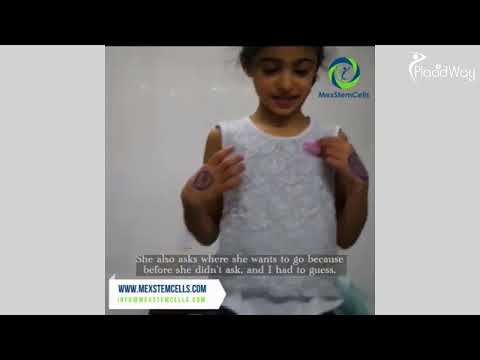
This newfound independence dramatically altered the family's daily dynamic. [[01:35](https://www.youtube.com/watch?v=TM396FzuR_k&t=95)] While previously too restless and agitated to be taken in public, Elisa achieved the monumental milestone of being able to sit calmly at a restaurant table. She learned to wait patiently for her food and eat without distress. More importantly, she developed robust self-advocacy skills. Rather than leaving her mother to blindly guess her needs, Elisa began explicitly stating where she wanted to go and what specific foods she wanted to eat, fiercely rejecting items she disliked. This transition from passive frustration to active decision-making is a testament to an awakened executive function.
Improving Eye Contact, Attention, and Social Integration
The core deficit of autism spectrum disorder lies in social communication. Prior to the biological intervention, Elisa's social presentation was severely impacted. [[02:07](https://www.youtube.com/watch?v=TM396FzuR_k&t=127)] She was a child who actively avoided maintaining eye contact, possessed virtually zero attention span, and vehemently rejected physical touch due to her disordered sensory profile. The world was simply too overwhelming to engage with directly.
However, the mother passionately confirms that the stem cell protocol served as the catalyst for overcoming these exact hurdles. [[02:50](https://www.youtube.com/watch?v=TM396FzuR_k&t=170)] By drastically resolving her underlying sensory distress, Elisa’s capacity for social interaction expanded exponentially. She can now tolerate being around other children for extended periods. While she still requires some guided assistance, she successfully initiates contact, actively seeks out peers for playtime, and participates in cooperative games. She is no longer trapped in her own isolated world; she is finally reaching out to join the one around her.
Monumental Advancements in Speech and Language
Perhaps the most celebrated victory for any parent of a non-verbal or speech-delayed child is the emergence of spontaneous, functional language. While years of continuous speech therapy laid a vital foundation, the biological healing provided the final push needed to bridge the gap between comprehension and verbalization.
[[03:16](https://www.youtube.com/watch?v=TM396FzuR_k&t=196)] Before the regenerative procedure, Elisa's communication was severely limited to isolated, disjointed words. She struggled to string together cohesive thoughts. Today, her linguistic landscape has transformed completely. She easily constructs full phrases, directly articulates her internal desires, and engages in back-and-forth conversational loops. Her mother proudly declares that her daughter is finally able to express exactly what she wants to say, breaking years of silence and frustration.
This case study beautifully illustrates that while traditional therapies are indispensable tools for teaching and guiding neurodivergent children, integrating advanced regenerative medical treatments can act as the ultimate multiplier. By addressing the root biological and neurological inflammation, children are empowered to absorb their therapies more effectively, accelerating their path toward a brighter, more connected, and highly independent future.
Ready to Explore Advanced Pediatric Regenerative Medicine?
PlacidWay Medical Tourism connects families with world-renowned, accredited clinics specializing in cutting-edge stem cell therapy for autism and chronic developmental conditions. Take the first step toward unlocking your child's true potential today.
GET A FREE CLINICAL CONSULTATIONView Full Video Transcript
[[00:00](https://www.youtube.com/watch?v=TM396FzuR_k&t=0)] alrededor de 8 meses un año yo empecé a notar que no imitaba hacía cosas que bueno más bien no
[[00:08](https://www.youtube.com/watch?v=TM396FzuR_k&t=8)] hacía cosas que los niños de su edad hacen Tardó mucho en rodar De hecho empezó a tomar terapia desde
[[00:15](https://www.youtube.com/watch?v=TM396FzuR_k&t=15)] muy chiquita desde el año ya iba a terapia sensorial Ella sensorialmente este está muy baja por ejemplo enotactil no
[[00:24](https://www.youtube.com/watch?v=TM396FzuR_k&t=24)] siente nada De hecho ella me abraza muy fuerte socialización Ella en la escuela cuando los niños la buscan va
[[00:31](https://www.youtube.com/watch?v=TM396FzuR_k&t=31)] y juega con ellos pero es difícil que se que se integre al juego porque ella quiere hacer lo que
[[00:37](https://www.youtube.com/watch?v=TM396FzuR_k&t=37)] ella quiere hacer Hemos ido a miles de terapias Este la del lenguaje siempre nunca la hemos suspendido Ha tomado
[[00:45](https://www.youtube.com/watch?v=TM396FzuR_k&t=45)] terapias conductuales de AVA y actualmente está en una terapia conductual de juego la de lenguaje y está empezando terapia
[[00:54](https://www.youtube.com/watch?v=TM396FzuR_k&t=54)] sensorial Sí grita grita mucho y luego no hay manera de callarla Estoy muy contenta porque ya se ven resultados
[[01:01](https://www.youtube.com/watch?v=TM396FzuR_k&t=61)] gracias a Dios Mi hija ya está hablando mucho más empieza a tener conversación está más tranquila se porta mejor
[[01:10](https://www.youtube.com/watch?v=TM396FzuR_k&t=70)] Eh este en la escuela me reportan también que también recuerda cosas que dejó de hacer por ejemplo un baile
[[01:18](https://www.youtube.com/watch?v=TM396FzuR_k&t=78)] no lo bailaron durante mucho tiempo y no lo sabía hacer bien Y cuando le volvió a bailar después de
[[01:23](https://www.youtube.com/watch?v=TM396FzuR_k&t=83)] una semana ella solita lo logró hacer sin instrucción Como les dije ayer fue a una pijamada en la escuela
[[01:29](https://www.youtube.com/watch?v=TM396FzuR_k&t=89)] y la maestra me dijo que fue de las pocas niñas que logró vestirse sola Elisa está mucho más tranquila
[[01:35](https://www.youtube.com/watch?v=TM396FzuR_k&t=95)] era una niña muy inquieta Sí sigue un poco inquieta pero ya logra sentarse en una mesa de un restaurante
[[01:42](https://www.youtube.com/watch?v=TM396FzuR_k&t=102)] y esperar este a que llegue la comida comer todo más tranquila Ya pide también a dónde quiere ir porque
[[01:50](https://www.youtube.com/watch?v=TM396FzuR_k&t=110)] antes no pedía no tenía que adivinar Ya me pide qué quiere comer Antes yo tenía que adivinar que le
[[01:57](https://www.youtube.com/watch?v=TM396FzuR_k&t=117)] daba de comer Ahora ella me pide y si le doy algo que no le gusta le tengo que dar
[[02:02](https://www.youtube.com/watch?v=TM396FzuR_k&t=122)] lo que pide O sea ya tiene más decisión ya sabe lo que quiere Eliz era una niña que no
[[02:07](https://www.youtube.com/watch?v=TM396FzuR_k&t=127)] mantenía el contacto visual una hablaba muy poco no tenía tensión
[[02:16](https://www.youtube.com/watch?v=TM396FzuR_k&t=136)] no soportaba casi el contacto De hecho ella o sea tenía varios problemas sensoriales y los ha ido mejorando mucho
[[02:24](https://www.youtube.com/watch?v=TM396FzuR_k&t=144)] a través de del tratamiento de las células Elisa ha avanzado muchísimo en su lenguaje muchisísimo Está mucho más atenta
[[02:33](https://www.youtube.com/watch?v=TM396FzuR_k&t=153)] más concentrada se puede trabajar mejor con ella En la escuela me reportan muchos avances mucho más tranquila Antes no
[[02:41](https://www.youtube.com/watch?v=TM396FzuR_k&t=161)] lo podía dejar solo un segundo más independiente se viste sola Hemos logrado varias cosas de este tratamiento En cuanto
[[02:50](https://www.youtube.com/watch?v=TM396FzuR_k&t=170)] a interacción social ella ya o sea puede estar más tiempo con los niños logra establecer ya un juego o
[[03:00](https://www.youtube.com/watch?v=TM396FzuR_k&t=180)] sea no con sus reglas y todo tiene que tener ayuda pero sí puede estar con los niños los busca
[[03:06](https://www.youtube.com/watch?v=TM396FzuR_k&t=186)] más Su memoria se ha ampliado también muchísimo Elisa sí hablaba cuando llegó decía palabras sueltas Y ahorita ya logra
[[03:16](https://www.youtube.com/watch?v=TM396FzuR_k&t=196)] hacer frases y ya te dice pues lo que quieres expresa Ah







.png)
-(11).png)
-(6).png)
.png)

-(3).png)
-(1).png)
-(8).png)








Share this listing