


Undergoing a male facelift procedure in South Korea requires careful planning and a deep understanding of the immediate post-operative phase. The first 24 hours after facial rejuvenation surgery dictate the trajectory of the entire healing process. Patients must adhere strictly to clinical guidelines to ensure optimal aesthetic outcomes and minimal complications.
The specialized techniques used by leading surgeons in Seoul focus on structural repositioning rather than merely pulling the skin tight. This approach requires comprehensive facial plastic surgery recovery protocols that begin the moment the patient wakes up. By managing expectations and following targeted post-operative care routines, patients can achieve a natural, youthful appearance with manageable downtime.
Video Chapters
- 1. What to Expect the Next Morning After Facial Surgery
- 2. The Importance of Professional Bandage Removal
- 3. Managing Swelling and Bruising After Blepharoplasty
- 4. Incision Care and Minimizing Visible Scarring
- 5. Medical Staff Evaluations During Initial Recovery
- 6. Essential Steps for a Smooth Healing Timeline
- 7. Why International Patients Choose Seoul Clinics
- 8. Long-Term Maintenance and Aftercare Best Practices
What to Expect the Next Morning After Facial Rejuvenation Surgery
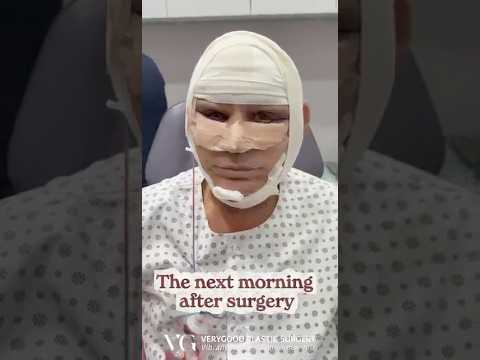
The first 24 hours post-operation are crucial for establishing a healthy healing environment. Patients typically wake up with significant head wrapping and medical dressings intact. This tight compression is necessary to prevent hematoma formation and minimize initial fluid buildup in the facial tissues. [00:00] At this stage, feeling a sense of tightness and mild discomfort is entirely standard.
During the immediate recovery from a male facelift procedure in South Korea, clinical staff will continuously monitor vital signs and drainage tubes. These surgical drains are strategically placed to remove excess blood and serum from beneath the skin flaps. Ensuring these tubes function correctly prevents localized swelling and reduces the risk of post-operative complications.
Hydration and strict bed rest are highly enforced during this initial window. Patients are instructed to keep their heads elevated at a 45-degree angle to utilize gravity against swelling. The first morning evaluation sets the baseline for the remainder of the clinical recovery timeline.
The Role of Clinical Observation Wards
Leading facilities prioritize overnight observation to ensure immediate medical intervention if required. The nursing staff monitors the circulation of the facial skin flaps meticulously. Capillary refill tests are performed frequently to confirm that the repositioned tissues are receiving adequate blood supply.
Pain management is also a primary focus during this stay. Intravenous medications are transitioned to oral painkillers as the patient regains full consciousness. This careful pharmacological management ensures the patient remains comfortable without masking symptoms of potential complications.
The Importance of Professional Post-Operative Care and Bandage Removal
Removing the initial surgical dressings is a delicate process that must be performed by trained medical personnel. [00:04] The nursing staff carefully cuts away the heavy compression bandages to assess the underlying tissues. Pulling or tugging at this stage could disrupt the precise suturing work completed the day prior.
Once the heavy wrappings are removed, the surgical team can evaluate the primary incision sites and overall facial symmetry. It is normal to see temporary distortion of facial features due to uneven swelling. The medical team uses specialized medical-grade solutions to clean away any dried blood or exudate surrounding the wounds.
Proper cleaning prevents early-stage infections and promotes optimal scar maturation. Following this initial unveiling, a lighter, more comfortable compression garment is usually applied. This secondary garment must be worn continuously for the first week to support the newly lifted facial contours.
- Prevents Fluid Accumulation: Proper compression stops seromas from forming in empty tissue spaces.
- Supports Tissue Adhesion: Holds the skin firmly against the deeper SMAS layer for permanent bonding.
- Reduces Tension on Sutures: Takes the mechanical load off the incision lines to prevent widened scars.
- Provides Psychological Comfort: Offers a feeling of security and physical support during early mobility.
Managing Swelling and Bruising After Blepharoplasty and Facelift
When procedures like upper and lower blepharoplasty are combined with a facelift, the periorbital bruising can be highly pronounced. [00:06] The delicate skin around the eyes easily traps pooled blood, resulting in deep purple and red discoloration. This visual severity often peaks at the 48 to 72-hour mark before slowly dissipating.
To combat this, clinics administer focused cold compress therapy immediately following bandage removal. Specialized cooling pads are applied to the ocular region to constrict blood vessels and limit the spread of hematomas. Patients must apply these compresses diligently in 20-minute intervals to maximize their efficacy.
The biological breakdown of trapped blood cells causes the bruising to shift colors over the following weeks. It will transition from dark purple to green, and eventually to a fading yellow. Arnica montana and bromelain supplements are frequently recommended by Korean surgeons to accelerate this natural cellular clearing process.
Advanced Deswelling Treatments
South Korean medical tourism facilities are renowned for their aggressive post-operative healing protocols. Many packages include daily LED light therapy sessions to stimulate cellular regeneration and reduce inflammation. These non-invasive light treatments penetrate deep into the dermal layers to speed up ATP production.
High-frequency ultrasound massages may also be introduced after the first week of recovery. This targeted thermal energy breaks down localized indurations and encourages lymphatic drainage. Combining these advanced modalities significantly shortens the period of visible social downtime.
How Top Clinics Handle Incision Care and Healing Timelines
Detailed examination of the incision sites is a critical component of the day-one assessment. [00:13] The attending surgeon meticulously palpates the skin along the jawline and neck to check for underlying hematomas. Any isolated pockets of fluid must be addressed immediately to ensure smooth contouring.
Incision placement in male facelift surgery differs slightly from female procedures due to facial hair patterns. Surgeons meticulously navigate the sideburn and beard lines to avoid shifting hair-bearing skin onto the ears. [00:19] Surgical staples are frequently utilized within the temporal hairline to minimize damage to hair follicles.
The application of prescribed antibiotic ointments along the pre-auricular and post-auricular suture lines is mandatory. This keeps the incisions moist, preventing heavy scab formation that can lead to prominent scarring. Patients are instructed strictly on how to replicate this cleaning protocol once discharged to their hotel.
| Recovery Phase | Primary Focus | Clinical Actions |
|---|---|---|
| Days 1-3 | Acute Swelling Management | Drain removal, heavy bandage removal, cold compresses. |
| Days 4-7 | Incision Healing | Staple and visible suture removal, LED therapy initiation. |
| Weeks 2-4 | Bruise Resolution | Lymphatic massage, transition to scar gels. |
| Months 3-6 | Tissue Maturation | Final contour settling, sensory nerve recovery. |
Essential Steps for a Smooth Facial Plastic Surgery Recovery Process
Achieving a seamless recovery requires active participation from the patient following clinic discharge. Strict dietary modifications are necessary during the first two weeks of the healing timeline. Foods high in sodium must be completely eliminated to prevent unnecessary water retention and exacerbated swelling.
Chewing tough or chewy foods places immense mechanical strain on the newly tightened facial muscles and jawline incisions. A soft-food diet consisting of nutrient-dense smoothies, soups, and protein shakes is strongly advised. High protein intake is essential to provide the body with the necessary building blocks for rapid collagen production and wound repair.
Physical exertion must be heavily restricted to maintain low resting blood pressure. Any activity that elevates the heart rate can cause delicate newly formed blood vessels to rupture, resulting in late-stage hematomas. Even light bending over or lifting moderate weights is strictly prohibited during the first fourteen days.
Sleep Positioning and Environmental Factors
Maintaining a supine sleeping position with the head elevated on multiple pillows is vital. Sleeping on the side can cause uneven pressure, potentially compromising the surgical results on one side of the face. Specialized neck pillows are often utilized to restrict nocturnal head movements.
Direct sun exposure to the healing incisions can lead to permanent hyperpigmentation of the scars. Patients must apply high-SPF clinical sunblocks and wear wide-brimmed hats when venturing outdoors. Complete avoidance of direct ultraviolet light is required for a minimum of six months to ensure imperceptible scar fading.
Why International Patients Choose Seoul for Advanced Cosmetic Treatments
The concentration of board-certified specialists makes South Korea a global epicenter for facial rejuvenation procedures. The surgical methodology here focuses extensively on the deep-plane technique, which repositions the SMAS layer for durable, natural-looking results. This advanced methodology prevents the highly stigmatized "wind-blown" look associated with outdated superficial skin-only lifts.
Clinical infrastructure in Seoul is specifically designed to accommodate the medical tourism sector. State-of-the-art facilities offer comprehensive in-house care, from high-resolution 3D CT facial mapping to dedicated post-operative recovery lounges. This integrated approach ensures seamless continuity of care from the initial consultation through the final follow-up.
Furthermore, Korean surgeons possess vast experience in addressing diverse anatomical structures and varying tissue thicknesses. Tailoring the surgical vector to the specific requirements of the male facial anatomy preserves masculine jawline angularity. This bespoke approach to aesthetic medicine consistently attracts patients seeking the highest caliber of surgical precision.
- Advanced Surgical Techniques: Utilization of precise endoscopic tools for minimal tissue trauma.
- Comprehensive Care Packages: Inclusion of concierge services, airport transfers, and translation support.
- Intensive Post-Op Treatments: Access to exclusive dermal regeneration technologies not widely available elsewhere.
- Stringent Safety Standards: Rigorous governmental oversight of medical facilities and sterilization protocols.
Preparing for the First 24 Hours After Complex Reconstructive Surgery
Optimal recovery actually begins weeks before the surgical intervention takes place. Patients must cease the consumption of all blood-thinning medications, including aspirin, ibuprofen, and specific herbal supplements. Removing these agents from the bloodstream dramatically reduces intraoperative bleeding and subsequent post-operative bruising.
Smoking and the use of any nicotine products must be completely halted at least four weeks prior to surgery. Nicotine causes severe vasoconstriction, choking off the vital blood supply required for skin flap survival. Failure to abstain from nicotine is the leading cause of devastating tissue necrosis in facial plastic surgery.
Mentally preparing for the initial reflection in the mirror is equally important. The psychological impact of seeing one's face swollen and bruised can be distressing, leading to temporary post-operative depression. Understanding that the day-one appearance is a necessary phase of a long-term transformative process helps maintain a positive healing mindset.
Navigating the Long-Term Maturation of Facial Tissues
While the acute recovery phase dominates the first month, tissue maturation is a protracted biological process. Numbness around the ears and cheeks is completely normal and can persist for several months. The severed sensory nerves regenerate at a slow pace, often accompanied by temporary tingling or itching sensations.
The true contouring results of a deep-plane male facelift only become apparent once the microscopic internal swelling subsides. This deep-tissue resolution typically takes between three to six months to fully finalize. Patience is mandatory, as assessing the final aesthetic outcome prematurely can lead to unnecessary anxiety.
Maintaining a stable body weight following the procedure ensures the longevity of the surgical investment. Significant weight fluctuations can alter facial volume, stretching the carefully repositioned dermal layers. Coupling the surgical results with a dedicated medical-grade skincare routine will protect skin elasticity for years to come. [00:23]
Ready to Start Your Facial Rejuvenation Journey?
Connect with top-rated, board-certified facial plastic surgeons in South Korea. Receive a personalized treatment plan and discover how advanced surgical techniques can help you achieve natural, youthful results with minimal downtime.
Get Free QuoteView Full Video Transcript
[00:00] The next morning after surgery.
[00:04] [Medical staff begins carefully cutting and removing the heavy compression bandages and gauze from the patient's head and face.]
[00:06] [Severe dark purple bruising is visible around the patient's eyes and upper cheeks as the bandages are peeled back.]
[00:13] [The attending plastic surgeon steps in to evaluate the patient, gently touching the jawline and neck to check tissue swelling.]
[00:19] [Close-up view of the temporal and hairline incisions where surgical staples and sutures hold the repositioned skin.]
[00:23] Stay tuned.







.jpg)









Share this listing