


Men actively seeking to restore their vitality, energy, and muscle mass frequently turn to hormone optimization. However, many encounter a highly distressing side effect: sudden and aggressive follicular shedding. Understanding the direct correlation between elevated androgen levels and premature male pattern baldness is absolutely critical for anyone undergoing hormone therapy. When patients lack proper guidance on managing their endocrine system, the resulting physiological imbalances can permanently damage scalp follicles. Reversing this damage often requires advanced clinical interventions, pushing many men to seek a high-quality hair transplant in Turkey to permanently restore their hairline.
The core issue stems from poorly managed clinical protocols. As highlighted in the initial [00:00] segment of our analysis, patients frequently undergo therapy without a clear understanding of their specific hormonal targets. The subsequent physiological cascade involves rapid enzymatic conversions that flood the scalp with destructive androgens. By implementing strict laboratory monitoring, adjusting injection frequencies, and utilizing targeted androgen receptor blockers, patients can effectively protect their existing native hair. For those who have already experienced extensive thinning due to prolonged hormonal mismanagement, surgical restoration remains the gold standard for regaining dense, natural-looking coverage.
Video Chapters & Core Topics
- 1. The Dangers of Unmonitored Testosterone Replacement Therapy Dosages
- 2. How Supraphysiological Hormone Levels Trigger Accelerated Hair Loss
- 3. Understanding Dihydrotestosterone (DHT) and Follicular Miniaturization
- 5. Estrogen Imbalance: The Hidden Culprit in TRT Hair Thinning
- 6. Essential Lab Values for Optimal Hair Health on TRT
- 7. Preventative Medical Strategies for Testosterone Therapy Patients
- 8. Restoring Density: Choosing a Hair Transplant in Turkey
- 9. Long-Term Maintenance: Balancing Grafts and Hormone Injections
The Dangers of Unmonitored Testosterone Replacement Therapy Dosages
The landscape of male hormone optimization has expanded rapidly, leading to a surge of specialized anti-aging clinics. Unfortunately, this rapid growth has resulted in inconsistent patient care and non-standardized treatment protocols. Many men begin their journey seeking relief from fatigue, brain fog, and muscle loss, but they quickly encounter secondary complications due to inadequate clinical oversight. As noted at [00:01], a massive subset of patients operates entirely in the dark regarding their exact dosing protocols. They receive pre-filled syringes or generic prescription vials without understanding the milligram concentrations or the pharmacokinetics of the specific esters they are injecting.
Self-administration without rigorous medical supervision frequently leads to erratic serum concentrations. Injecting large doses of compounds like Testosterone Cypionate or Enanthate on a bi-weekly basis creates massive peaks and deep troughs in the bloodstream. During these aggressive peak periods, the body frantically attempts to maintain homeostasis by upregulating enzymatic conversions. This lack of precision dosing drastically alters the physiological environment, pushing the endocrine system into a state of chronic stress. A precise, micro-dosing schedule is heavily preferred by top-tier endocrinologists to mimic the body's natural diurnal rhythm.
Without an intricate understanding of milligram-to-microgram conversions and half-lives, patients unknowingly expose their sensitive tissues to androgenic toxicity. The scalp is particularly vulnerable to these chemical fluctuations. Men who fail to track their specific exogenous intake cannot identify the threshold at which their hair begins to rapidly miniaturize, making proactive intervention nearly impossible.
How Supraphysiological Hormone Levels Trigger Accelerated Hair Loss
Establishing a healthy baseline reference range is the foundation of safe endocrine therapy. A naturally optimized male typically presents with total serum levels ranging between 600 and 900 nanograms per deciliter (ng/dL). However, many aggressive clinics prescribe generalized cookie-cutter protocols designed to push patients well beyond normal human limits. At [00:17], the discussion highlights the severe danger of artificially driving a patient's levels up to 1300 or 1400 ng/dL. This specific range borders on anabology rather than mere therapeutic replacement, forcing the body into an extreme state of biological adaptation.
When serum concentrations hit the 1400 ng/dL mark, the structural integrity of the hair follicle is severely compromised. The body possesses a finite number of androgen receptors. When these receptors are saturated with excess free hormones circulating in the bloodstream, the overflow must be metabolized by secondary biological pathways. This metabolic overflow acts as the primary catalyst for accelerated follicular degradation. The dermal papilla cells, which regulate hair growth and cycle phases, become overwhelmed by the sheer volume of circulating androgens.
The resulting physiological shock drastically shortens the anagen (growth) phase of the hair cycle. Follicles that were meant to grow steadily for three to five years are abruptly forced into the catagen (transition) and telogen (resting) phases. This premature shifting causes patients to experience massive shedding in the shower or on their pillowcases within weeks of starting a high-dose protocol. Managing these high testosterone dosages is non-negotiable for anyone looking to preserve their hairline.
Understanding Dihydrotestosterone (DHT) and Follicular Miniaturization
The fundamental mechanism behind male pattern baldness involves a highly specific enzymatic conversion process. When free serum testosterone circulates through the body, it eventually encounters an enzyme known as 5-alpha-reductase, which is heavily concentrated in the tissues of the scalp, prostate, and liver. This enzyme acts as a biological catalyst, binding to the free hormone and converting it into Dihydrotestosterone (DHT). As highlighted at [00:34], pushing high levels of synthetic androgens results in a massive, increased uptake of DHT directly into the scalp.
The Biological Impact of DHT on the Scalp
DHT is roughly five times more potent than standard testosterone and binds to androgen receptors with an incredibly high affinity. In men with a genetic predisposition to androgenetic alopecia, the hair follicles positioned at the temporal indentations, hairline, and vertex crown are highly sensitive to this hormone. Once DHT binds to the receptors in these specific zones, it triggers a devastating biological response known as follicular miniaturization.
- Nutrient Restriction: DHT binding restricts blood flow and oxygen delivery to the dermal papilla, slowly starving the follicle of essential nutrients required for robust keratin production.
- Strand Thinning: With each subsequent growth cycle, the hair shaft emerges progressively thinner, weaker, and more unpigmented, eventually resembling fine vellus hair (peach fuzz).
- Permanent Dormancy: If the DHT assault remains untreated over a prolonged period, the follicle completely closes over and turns into scar tissue, resulting in permanent, irreversible baldness.
Because exogenous injections drastically elevate the base pool of available testosterone, the 5-alpha-reductase enzyme has significantly more raw material to convert. This mathematical reality means that men on therapy will generate DHT at a highly accelerated rate compared to their natural baseline. Blocking this specific conversion pathway is the most critical step in halting medically induced hair thinning.
Estrogen Imbalance: The Hidden Culprit in TRT Hair Thinning
While Dihydrotestosterone garners the majority of attention in discussions surrounding male hair loss, estrogen plays an equally vital and often misunderstood role. The male body requires specific amounts of estradiol (E2) for bone density, cardiovascular health, joint lubrication, and cognitive function. However, when large doses of external hormones are introduced, the body activates the aromatase enzyme, predominantly found in adipose (fat) tissue. As stated at [00:28], throwing estrogen and testosterone out of balance directly triggers increased follicular shedding.
When a patient experiences levels peaking at 1300 or 1400 ng/dL, massive aromatization occurs, driving serum estradiol levels well above the optimal male range of 20-30 pg/mL. This acute spike in systemic estrogen creates a toxic inflammatory environment. High estradiol levels can cause severe water retention, fluctuating blood pressure, and severe emotional volatility, all of which elevate systemic cortisol. High cortisol combined with high estradiol creates a secondary pathway for hair destruction known as telogen effluvium, where diffuse thinning occurs across the entire scalp, not just in the traditional male pattern zones.
Furthermore, an inverted testosterone-to-estrogen ratio disrupts the sex hormone-binding globulin (SHBG) matrix. When SHBG levels crash due to hormonal volatility, it leaves even more free hormones unbound and available for rapid DHT conversion. Managing estrogen and DHT levels on TRT requires utilizing precision aromatase inhibitors or altering injection frequencies to lower peak serum levels and mitigate aggressive aromatization.
Essential Lab Values for Optimal Hair Health on TRT
The fundamental failure of many clinical protocols is the complete lack of comprehensive blood diagnostics. Mentioned precisely at [00:06], patients remaining unaware of their exact laboratory values are operating completely blind. Managing endocrine health requires routine, detailed serum analysis every three to four months to ensure that all biomarkers remain within strict therapeutic ranges.
A standard total testosterone check is woefully inadequate for identifying the root causes of shedding. Patients must demand comprehensive panels that analyze the full spectrum of hormonal interplay. Free testosterone must be measured to determine exactly how much bioavailable hormone is actively circulating and available for enzymatic conversion. Without this specific metric, physicians cannot accurately gauge the true systemic impact of the prescribed dosage.
In addition to free and total levels, mandatory testing must include a sensitive estradiol (E2) assay to accurately measure aromatization. Checking DHT levels directly through a specialized blood test provides a clear mathematical picture of 5-alpha-reductase activity in the body. Finally, monitoring Sex Hormone-Binding Globulin (SHBG) dictates injection frequency; patients with low SHBG must inject much more frequently (often daily or every other day) to prevent massive hormonal spikes and subsequent hair follicle shock.
Preventative Medical Strategies for Testosterone Therapy Patients
For men determined to maintain their optimized endocrine state without sacrificing their scalp, integrating scientifically proven preventative strategies is an absolute requirement. The first line of defense involves adjusting the actual administration protocol. Moving away from massive weekly or bi-weekly intramuscular injections to smaller, more frequent subcutaneous micro-doses drastically reduces peak serum levels. Flatter, more stable blood levels prevent the massive spikes that trigger excessive aromatization and 5-alpha-reductase enzymatic conversions.
Pharmacological Interventions for Scalp Protection
When altering the injection protocol is insufficient, targeted pharmacological interventions become necessary to protect vulnerable follicles from circulating androgens.
- 5-Alpha-Reductase Inhibitors: Medications like Finasteride and Dutasteride physically block the enzyme responsible for converting testosterone into DHT. By lowering systemic DHT levels by up to 70-90%, the primary catalyst for miniaturization is neutralized.
- Topical Anti-Androgens: For patients looking to avoid systemic oral medications, topical compounded solutions containing Finasteride or RU58841 can act locally on the scalp to block androgen receptors without significantly altering systemic serum profiles.
- Vasodilators: Utilizing topical or low-dose oral Minoxidil forces the potassium channels in the dermal papilla to open. This expands the blood vessels, forcing essential oxygen and nutrients back into miniaturized follicles to counteract the restrictive nature of DHT.
Combining a highly optimized micro-dosing protocol with localized DHT blockers creates a synergistic defense mechanism. This multi-tiered approach allows men to reap the muscular and cognitive benefits of therapy while ensuring their hairline remains dense and resilient against chemical fluctuations.
Restoring Density: Choosing a Hair Transplant in Turkey
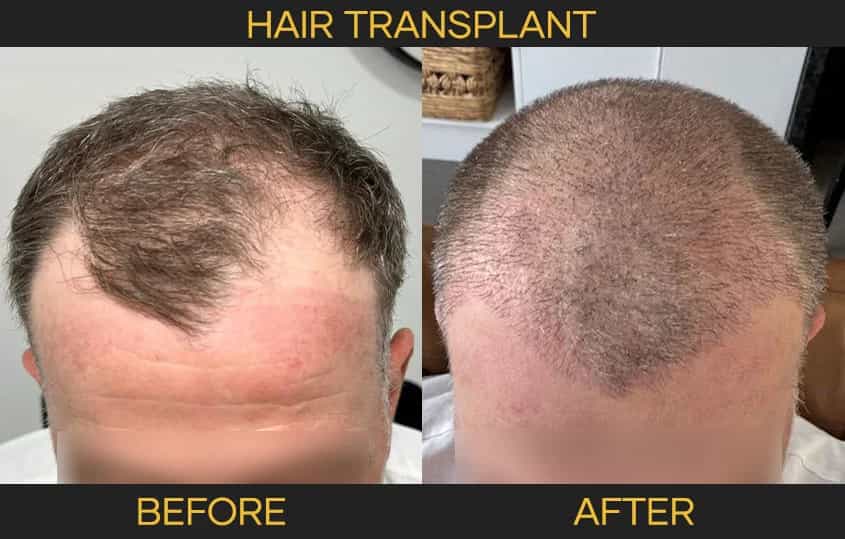
Despite the best preventative efforts, many men realize the damage to their scalp is already done by the time they optimize their clinical protocols. Once a hair follicle undergoes complete miniaturization and closes over, no amount of DHT blockers or micro-dosing will bring it back to life. For patients who have suffered extensive recession or crown thinning due to years of unmonitored elevated hormone levels, undergoing a top-tier hair transplant in Turkey is the only medically viable option for permanent restoration.
Turkey has established itself as the undisputed global capital for advanced medical tourism and hair restoration. The country boasts state-of-the-art clinical facilities that specialize in high-density Follicular Unit Extraction (FUE) and Direct Hair Implantation (DHI). These advanced microsurgical techniques involve extracting DHT-resistant grafts from the safe donor area at the back of the head and precisely implanting them into the depleted zones caused by androgenetic alopecia. Because these transplanted grafts retain their genetic resistance to Dihydrotestosterone, they will not thin or fall out, even when the patient remains on a robust hormone therapy protocol.
The financial logistics of seeking a hair transplant in Turkey make it an incredibly attractive option for international patients. Clinics in North America and Western Europe routinely charge exorbitant fees ranging from $15,000 to $25,000 for advanced FUE procedures. In contrast, elite surgeons in Istanbul offer all-inclusive VIP packages—often covering luxury hotel accommodations, VIP clinical transfers, and comprehensive post-operative care kits—at a fraction of the cost, without sacrificing surgical precision or hygienic standards. This cost-to-quality ratio allows patients to effectively repair the aesthetic damage caused by prior hormonal mismanagement.
Long-Term Maintenance: Balancing Grafts and Hormone Injections
Achieving a successful surgical restoration is only one half of the long-term aesthetic equation. Following a hair transplant in Turkey, patients must commit to a lifelong strategy of integrated medical management to protect their remaining native hair. As perfectly summarized at [00:37], it is critically important to look at things that need to be balanced in the body to make sure you are maintaining long-term cellular health.
Post-operative care dictates that the newly implanted grafts require optimal blood flow and a stable endocrine environment to properly root and transition into the anagen growth phase. Patients must work closely with their endocrinologist to ensure their serum levels never again spike into the dangerous 1300-1400 ng/dL range. Maintaining a total serum level around 800 ng/dL provides the vast majority of physical and cognitive benefits associated with optimization while severely limiting the collateral damage to the scalp tissues.
Combining the permanent structural results of a modern FUE surgery with diligent, data-driven hormonal oversight creates the ultimate blueprint for male aesthetic longevity. By treating the underlying endocrine instability and addressing the physical hair loss via advanced surgical intervention, men can confidently navigate their medical therapies without fearing the devastating psychological impact of accelerated baldness.
Ready to Restore Your Hairline?
Don't let hormonal imbalances permanently dictate your appearance. Connect with elite, board-certified surgeons globally to plan your personalized hair restoration journey and regain your confidence today.
Get Free QuoteView Full Video Transcript
[00:00] There's a couple different things that you see with TRT.
[00:01] Most notably, most patients don't know what their dosing is.
[00:04] They don't know what they're taking, they don't know how much they should be taking.
[00:06] They don't know where their lab values are.
[00:10] These are important in various different ways whether you're looking at it from a mental health perspective or you're looking at it from a hair perspective.
[00:17] If you're jacking somebody up to 1300-1400 and they're unaware of it, then they're going to have accelerated hair loss.
[00:23] Because they're going to be turning that testosterone into much higher forms of both estrogen and DHT.
[00:28] Which when you throw estrogen, testosterone out of balance, then you get increased hair loss from that.
[00:34] In addition to having an increased uptake of DHT in the scalp.
[00:37] And so it's really important to look at things that need to be balanced in the body to make sure that you're maintaining your hair health.
















Share this listing