


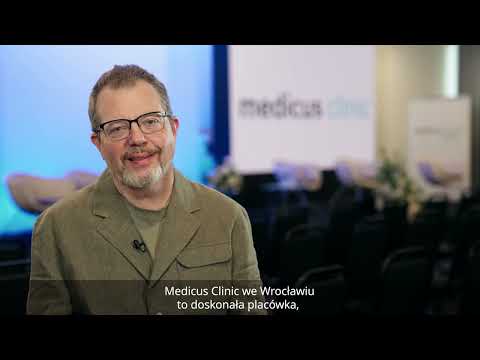
Patients worldwide facing severe hearing degradation and profound facial paralysis are increasingly seeking highly specialized otologic surgery and facial nerve reconstruction in Poland. This specific medical destination offers an unprecedented combination of world-class surgical expertise and state-of-the-art clinical infrastructure. The collaboration between globally recognized specialists and advanced European facilities has created a premier environment for complex neurological and auditory interventions. Through the dedicated work of Prof. Andrew Fishman [00:03], patients have access to transformative procedures designed to restore fundamental human senses and essential facial mobility.
The scope of these advanced medical procedures encompasses everything from delicate hearing restoration to the highly complex reanimation of a paralyzed face. Individuals suffering from conductive or sensorineural hearing loss require meticulous surgical precision to repair the intricate mechanics of the inner ear. By choosing to undergo specialized otologic surgery in Poland, patients benefit from comprehensive diagnostics, innovative surgical techniques, and dedicated post-operative care. This approach addresses both the physiological deficits and the profound psychological impacts associated with hearing loss and facial disfigurement.
Video Chapters & Quick Navigation
- Advanced Hearing Restoration in Poland
- Specialized Treatment for Otosclerosis
- Cochlear Implants for Severe Hearing Loss
- Facial Nerve Surgery and Reconstruction
- Reanimation of Paralyzed Face Procedures
- World-Class Medicus Clinic in Wroclaw
- Micro-Otosurgery and Endoscopic Techniques
- Modern Laser Technology in Otology
Advanced Hearing Restoration and Otologic Surgery in Poland
Otologic surgery involves highly complex procedures that address diseases, traumas, and congenital defects of the ear and its interconnected neural pathways. The primary goal of these precise interventions is comprehensive hearing restoration [00:10], enabling patients to re-engage with their auditory environment. When conservative treatments like medications or standard hearing aids fail to provide adequate relief, surgical intervention becomes the necessary pathway forward. Surgeons operating in this specialized field must possess a profound understanding of the delicate temporal bone anatomy and the tiny structures of the middle ear.
Pursuing advanced otologic surgery in Poland provides patients with access to cutting-edge restorative techniques that target the root cause of auditory failure. Procedures may include repairing a perforated tympanic membrane (tympanoplasty), reconstructing the tiny ossicles of the middle ear (ossiculoplasty), or removing destructive cysts like cholesteatomas. Each of these surgeries demands absolute precision, as the margin for error within the microscopic confines of the middle ear is practically non-existent. The successful execution of these surgeries not only prevents further auditory decline but frequently results in a dramatic improvement in sound perception and clarity.
Hearing restoration profoundly impacts a patient's quality of life, cognitive function, and emotional well-being. Unresolved hearing loss is closely linked to social isolation, depression, and accelerated cognitive decline in older adults. By undergoing targeted otologic interventions, patients can effectively reverse these negative trajectories. The integration of advanced diagnostics ensures that each surgical plan is perfectly customized to the patient's unique anatomical requirements and specific audiological profile.
Specialized Surgical Treatment for Otosclerosis in Poland
Otosclerosis is a complex primary disease of the human temporal bone characterized by abnormal bone remodeling within the inner ear. This abnormal growth restricts the natural movement of the stapes bone, one of the crucial ossicles responsible for transmitting sound vibrations to the inner ear. As the stapes becomes progressively fixated, patients experience a gradual, insidious onset of conductive hearing loss. Effective treatment for otosclerosis [00:16] requires highly specialized surgical intervention to bypass or replace the immobilized bone.
The Stapedectomy and Stapedotomy Procedures
The most reliable and enduring solution for otosclerosis is a micro-surgical procedure known as a stapedectomy or stapedotomy. During this delicate operation, the surgeon removes a portion of the fixed stapes bone and inserts a microscopic prosthesis to restore the mechanical transmission of sound waves. This procedure is performed under high-powered magnification and requires incredibly steady hands and vast experience. The restorative impact of a successful stapedotomy is often immediate, with many patients reporting a profound improvement in hearing immediately following the removal of surgical packing.
Choosing to undergo otosclerosis treatment in Poland ensures that the procedure is performed using the latest micro-prosthetics and advanced laser systems. Lasers allow for non-contact vaporization of the bone, drastically reducing the risk of acoustic trauma to the inner ear during the fenestration process. This elevated level of surgical refinement minimizes post-operative vertigo and maximizes long-term audiological outcomes.
| Stage of Otosclerosis | Surgical Intervention | Expected Auditory Outcome |
|---|---|---|
| Early / Mild Fixation | Observation or Laser Stapedotomy | Near complete closure of the air-bone gap. |
| Moderate to Severe Fixation | Micro-prosthesis Stapedectomy | Significant restoration of mechanical sound transmission. |
| Advanced Cochlear Otosclerosis | Cochlear Implantation | Direct neural stimulation bypassing the ossicles. |
Life-Changing Cochlear Implants in Poland for Severe Hearing Loss
For individuals suffering from profound sensorineural hearing loss, traditional hearing aids often provide insufficient amplification and clarity. In these severe cases, the tiny hair cells within the cochlea are damaged or completely absent, rendering acoustic amplification ineffective. Cochlear implants [00:18] offer a revolutionary alternative by entirely bypassing the damaged acoustic apparatus of the inner ear. Instead of amplifying sound, these sophisticated biomedical devices convert acoustic signals into electrical impulses that directly stimulate the auditory nerve.
The surgical insertion of cochlear implants requires intricate navigation through the mastoid bone and into the delicate structures of the inner ear. The surgeon carefully threads a microscopic electrode array into the spiraling chambers of the cochlea. This delicate insertion must be performed with absolute care to preserve any residual hearing the patient may possess. Receiving cochlear implants in Poland ensures that patients are fitted with the most advanced, multi-channel electrode arrays available globally, capable of delivering high-resolution sound processing.
Candidacy and Rehabilitation for Cochlear Implantation
Determining candidacy for this profound intervention involves a battery of comprehensive audiological, medical, and psychological evaluations. Patients must demonstrate limited benefit from appropriately fitted hearing aids and possess an intact auditory nerve capable of transmitting electrical signals to the brain. The surgery itself is merely the first step in the restorative journey.
- Device Activation: Following a brief healing period, the external sound processor is activated and digitally mapped to the patient's specific neural thresholds.
- Auditory Training: Intensive auditory verbal therapy is crucial to help the brain interpret the new electronic sound signals as recognizable speech.
- Long-Term Mapping: Regular audiological follow-ups are required to continuously adjust and optimize the processor's programming for maximum speech comprehension.
Expert Facial Nerve Surgery and Reconstruction in Poland
The facial nerve, or cranial nerve VII, is an incredibly complex neural structure responsible for controlling the muscles of facial expression. When this vital nerve is damaged due to trauma, viral infections like Bell's palsy, or tumor resections (such as acoustic neuromas), the result is profound facial paralysis. Facial nerve surgery [00:22] aims to restore both the functional capabilities and the aesthetic symmetry of the face. This highly specialized sub-discipline of neurotology requires an exceptional understanding of the nerve's intricate pathway through the temporal bone and across the face.
Reconstruction of the facial nerve [00:25] is highly dependent on the timing and location of the initial injury. If the nerve has been severed recently, direct end-to-end anastomosis can sometimes be achieved using ultra-fine microsurgical sutures. When a direct connection is impossible due to missing nerve segments, surgeons must utilize cable nerve grafts. These grafts are typically harvested from sensory nerves in the patient's neck or leg, serving as a biological conduit through which regenerating facial nerve fibers can grow and eventually re-innervate the facial musculature.
Undergoing facial nerve reconstruction in Poland connects patients with surgeons who specialize in these rare and highly demanding microsurgical techniques. The functional impact of paralysis goes far beyond aesthetics; patients often struggle to articulate speech clearly, retain fluids while drinking, and properly close their eyes. Surgical intervention aims to mitigate these severe functional deficits, protecting the cornea from ulceration and restoring the ability to communicate effectively through facial expression.
Innovative Reanimation of Paralyzed Face Procedures in Poland
When facial nerve damage is long-standing and the native facial muscles have irreversibly atrophied, simple nerve grafting is no longer a viable option. In these advanced cases, surgeons must employ highly sophisticated dynamic procedures known as reanimation of the paralyzed face [00:27]. These surgeries represent the absolute pinnacle of reconstructive microsurgery, requiring the transfer of both new muscle tissue and new neural inputs to the paralyzed side of the face. The ultimate goal is to restore a spontaneous, emotion-driven smile and provide functional muscle tone.
Advanced Gracilis Muscle Transfer Techniques
One of the most effective techniques for facial reanimation involves the free transfer of the gracilis muscle from the inner thigh. The surgeon meticulously harvests a small segment of this muscle along with its dedicated blood supply and motor nerve. This muscle segment is then transplanted into the face, securely anchored to the corner of the mouth and the cheekbone. Under an operative microscope, the blood vessels are connected to local vessels in the neck or face to ensure the muscle's survival.
Crucially, the nerve attached to the transplanted muscle must be connected to a new power source to initiate movement. Surgeons often perform cross-facial nerve grafting, tunneling a nerve from the healthy, functioning side of the face to power the newly transplanted muscle. As neural impulses travel from the healthy side during a natural smile, they stimulate the gracilis muscle, creating a symmetrical and highly natural facial expression. This level of dynamic reconstruction requires extraordinary skill and comprehensive post-operative physical therapy to achieve optimal results.
State-of-the-Art Medicus Clinic in Wroclaw Poland
The success of highly complex otologic and neurological procedures is intrinsically linked to the clinical environment in which they are performed. The Medicus Clinic in Wroclaw [00:30] stands as a beacon of medical excellence, specifically engineered to support the rigorous demands of advanced microsurgery. This facility has been meticulously designed from the ground up to integrate the most advanced medical technologies available in Europe. For international patients seeking specialized care, the clinic represents the perfect synthesis of luxury healthcare and uncompromised medical safety.
Wroclaw, as a premier medical tourism destination, provides a serene and historically rich backdrop for patient recovery. The Medicus Clinic itself features fully equipped, ultra-modern operating theaters [00:38] that utilize advanced air purification and sterile field maintenance systems. The facility is not merely a hospital; it is a comprehensive center for auditory and facial rehabilitation. Patients have access to integrated audiology suites, advanced imaging centers, and dedicated physical therapy wings, all housed within a single, cohesive architectural structure.
- Integrated Diagnostics: High-resolution CT and MRI imaging are available on-site for immediate pre-operative planning and post-operative verification.
- Specialized Audiology Labs: Fully soundproofed chambers and advanced audiometric mapping tools ensure precise programming of cochlear implants and hearing devices.
- Dedicated Recovery Suites: Private, technologically equipped recovery rooms provide patients with maximum comfort and continuous remote monitoring following complex neurotologic surgeries.
The Essential Role of Micro-Otosurgery and Endoscopic Otosurgery in Poland
The evolution of ear surgery has been dramatically shaped by the introduction of enhanced visualization tools. Micro-otosurgery [00:39] relies on high-powered, binocular operating microscopes that provide surgeons with a brilliantly illuminated, three-dimensional view of the surgical field. This stereoscopic vision is absolutely crucial for depth perception when navigating the millimeter-sized structures of the stapes, incus, and malleus. Microscopic techniques remain the gold standard for delicate procedures like facial nerve decompression and complex ossicular chain reconstruction.
More recently, endoscopic otosurgery [00:41] has emerged as a revolutionary, minimally invasive counterpart to traditional microscopic approaches. Using ultra-thin, high-definition endoscopes, surgeons can look "around corners" within the middle ear, visualizing hidden recesses like the sinus tympani that are practically invisible with a straight-line microscope. This wide-angle, panoramic view allows for the complete eradication of cholesteatoma without the need for extensive bone removal behind the ear. Endoscopic approaches significantly reduce post-operative pain and drastically shorten recovery times for patients.
Leading facilities that perform micro-otosurgery and endoscopic otosurgery in Poland utilize a hybrid approach, seamlessly switching between the microscope and the endoscope depending on the specific anatomical challenges of the surgery. This dual-modality approach ensures that the procedure is as minimally invasive as possible while guaranteeing maximum disease eradication and optimal functional reconstruction.
Advanced Medical Technology and Laser Systems for Ear Surgery
The execution of flawless otologic and facial nerve surgeries relies heavily on the integration of cutting-edge biomedical technology. The operating theaters at advanced clinics are equipped with all of the necessary tools [00:44] to safely navigate the treacherous neurovascular anatomy of the head and neck. Continuous intraoperative nerve monitoring systems are universally employed during these surgeries. These sensitive devices alert the surgeon the moment a surgical instrument approaches the facial nerve, drastically minimizing the risk of iatrogenic injury during tumor removals or mastoidectomies.
Furthermore, the integration of surgical lasers [00:45] has transformed the landscape of middle ear surgery. Carbon dioxide (CO2) and KTP lasers are specifically calibrated to vaporize bone and soft tissue with micrometer precision. Unlike traditional drills, which generate heat and acoustic vibration that can irreversibly damage the inner ear, lasers offer a "no-touch" technique. This is particularly vital during stapedotomy procedures, where acoustic trauma must be completely avoided.
The comprehensive arsenal of everything necessary to do an excellent job [00:47] ensures that patients receive the highest standard of care globally available. From the initial 3D imaging to the final application of tissue sealants, every technological asset is leveraged to maximize safety and secure lasting, transformative clinical outcomes for patients traveling for care.
Ready to Restore Your Hearing or Facial Mobility?
Take the first step toward a transformative medical journey. Connect with top specialists for advanced otologic surgery and facial nerve reconstruction in Poland at the world-renowned Medicus Clinic.
Get Free QuoteView Full Video Transcript
[00:00]
Prof. Andrew Fishman: My name is Professor Andrew Fishman, and I'm very proud to be cooperating with the Medicus Clinic,
[00:10]
Prof. Andrew Fishman: where we will be doing otologic surgery, hearing restoration,
[00:16]
Prof. Andrew Fishman: otosclerosis, and cochlear implants.
[00:20]
Prof. Andrew Fishman: Also, I specialize in facial nerve surgery,
[00:25]
Prof. Andrew Fishman: including reconstruction of the facial nerve,
[00:27]
Prof. Andrew Fishman: and reanimation of the paralyzed face.
[00:30]
Prof. Andrew Fishman: Medicus Clinic in Wroclaw is an excellent facility
[00:35]
Prof. Andrew Fishman: with all of the necessary equipment for me to practice
[00:39]
Prof. Andrew Fishman: micro-otosurgery as well as endoscopic otosurgery,
[00:44]
Prof. Andrew Fishman: and all of the necessary tools, lasers,
[00:47]
Prof. Andrew Fishman: and everything necessary to do an excellent job.
[00:50]
Prof. Andrew Fishman: So I'm really, really proud to be collaborating with them.







.png)

.png)








Share this listing