


Achieving a refined, youthful jawline requires a deep understanding of complex facial structures and individualized patient needs. Patients seeking comprehensive neck lift surgery in Thailand often discover that successful outcomes depend entirely on the surgeon's ability to manipulate underlying anatomical layers. Superficial approaches yield superficial results, leaving the structural causes of aging unaddressed and vulnerable to rapid relapse.
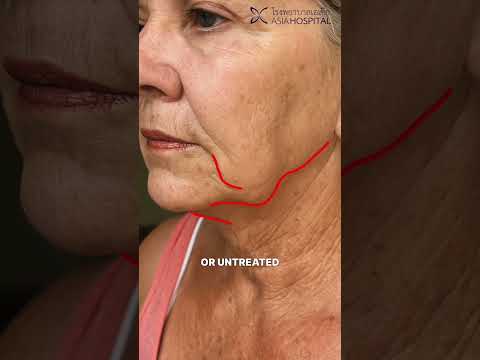
As highlighted at [00:00], neck lift surgeries can fail when the underlying anatomy is not fully addressed during the operative planning phase. This foundational concept dictates the trajectory of the entire surgical intervention and the longevity of the final aesthetic outcome. Surgeons must carefully evaluate the distinct layers of the anterior neck to formulate a precise, customized surgical strategy.
Modern aesthetic medicine has shifted away from isolated tissue excision toward holistic structural repair and repositioning. A comprehensive approach involves a meticulous assessment of the cutaneous, adipose, and muscular layers to determine the specific etiology of the patient's aesthetic concerns. By targeting the true anatomical drivers of visible aging, surgeons can produce stable, natural-looking transformations.
Video Chapters & Quick Navigation
- Common Reasons Why Neck Lift Surgeries Fail
- Addressing Platysma Muscle Laxity for Long-Lasting Results
- Eradicating Persistent Neck Fullness Through Deep Neck Fat Removal
- Managing Subplatysmal Fat and Poor Tension Control
- Structural Layers Involved in Natural-Looking Neck Lifts
- Comparing Traditional Skin-Only Approaches vs. Advanced Deep Plane
- Identifying Patient Anatomy and Pre-Operative Assessment
- Best Cosmetic Hospital for Neck Lifts in Thailand
Common Reasons Why Neck Lift Surgeries Fail and How to Avoid Them
A primary catalyst for poor surgical outcomes is an over-reliance on superficial skin tightening techniques. As noted at [00:04], in many cases the procedure focuses only on removing excess skin, fundamentally ignoring the structural reality beneath the surface. This outdated methodology attempts to use the skin as a supportive garment, which contradicts the tissue's natural physiological properties.
When the skin is forced to bear the weight of underlying ptotic structures, it rapidly stretches, leading to early recurrence of sagging. The tension applied to the dermal layers often results in widened scars, pulled earlobes, and an artificial, wind-blown appearance. Surgeons dedicated to advanced facial rejuvenation understand that the skin should simply redrape smoothly over a properly reconstructed deeper foundation.
Failed procedures often necessitate complex revision surgeries, which carry higher risks and require prolonged recovery periods. Scar tissue from the initial superficial lift complicates the dissection planes, making secondary structural corrections significantly more challenging. Avoiding these primary failures requires selecting a surgeon who performs comprehensive deep structural analysis before ever making an incision.
The Danger of Neglecting Deep Structural Issues
Subsurface neglect is the leading cause of dissatisfaction among patients seeking lower face rejuvenation. When deeper issues like unsupported glands or bulky musculature are ignored, the aesthetic result remains compromised regardless of how tight the skin is pulled. True contouring requires active management of the dense anatomical compartments beneath the dermal layer.
Many patients present with enlarged submandibular glands or ptotic digastric muscles that create a bulky appearance in the submental region. A skin-only approach completely fails to camouflage these prominent structures, often making them more visible once the overlying adipose tissue is compressed. Proper surgical planning must account for glandular and deep muscular volume reduction when clinically indicated.
The Crucial Role of Addressing Platysma Muscle Laxity for Long-Lasting Results
The platysma is a broad, thin sheet of muscle that spans from the upper chest to the lower face, serving as the primary structural hammock of the neck. Mentioned at [00:08], platysma muscle laxity is a critical issue that, when left untreated, guarantees suboptimal contouring. Over time, the medial edges of this muscle separate and lose tone, creating the vertical bands commonly associated with advanced facial aging.
To achieve a sharp cervicomental angle, the surgeon must physically repair and reposition this degraded muscular sling. A procedure known as a platysmaplasty is frequently employed, where the separated muscle edges are sutured together in the midline to create a firm, unified support structure. This internal corset acts as a powerful barrier against future tissue descent, taking the mechanical load entirely off the overlying skin.
Without addressing the muscular integrity, any fat removal or skin tightening will eventually succumb to gravitational pull. The dynamic nature of the platysma means that swallowing, speaking, and facial expressions constantly stress the neck's architecture. A robust muscular reconstruction ensures that the new neck contour can withstand these daily functional movements without early degradation.
Techniques for Effective Muscle Re-suspension
Surgeons utilize various technical maneuvers to secure the platysma, depending on the patient's specific pattern of laxity. Lateral suspension techniques anchor the outer edges of the muscle to strong fascial points near the mastoid behind the ear. This lateral pull works in tandem with midline suturing to create a comprehensive, multidirectional tightening effect.
Advanced practitioners also evaluate the need for partial myotomies, which involve strategically cutting tight muscular bands to release downward tension. By releasing the platysma's attachment to the lower structural points, the surgeon can elevate the entire complex more effectively. This precise release and re-anchoring process is fundamental to generating a crisp, defined jawline.
Eradicating Persistent Neck Fullness Through Deep Neck Fat Removal Procedures
Fat accumulation in the lower face is anatomically divided into two distinct compartments: superficial fat located above the muscle, and deep fat located below it. Traditional liposuction is only capable of addressing the superficial compartment, which is often insufficient for patients with heavier neck profiles. To truly transform the region, surgeons must access and modify the deep adipose tissues.
As detailed at [00:10], untreated deep neck fat remains a leading cause of poor surgical outcomes in aesthetic surgery. Because this fat resides beneath the platysma muscle, standard liposuction cannulas cannot safely reach it without risking damage to vital structures. Direct surgical excision through a submental incision is required to meticulously sculpt this hidden layer of adipose tissue.
Failing to remove adequate deep fat prevents the muscle from sitting flush against the underlying skeletal framework, blunting the desired aesthetic angle. The careful removal of this sub-muscular padding allows for dramatic improvements in the jawline silhouette. Expert surgeons navigate this area with extreme caution, as it houses important neurovascular bundles that must be preserved.
The Limitations of Superficial Liposuction
While superficial liposuction is a valuable tool for refining the immediate subcutaneous layer, its over-application can lead to disastrous aesthetic complications. Aggressive removal of superficial fat can cause the skin to adhere directly to the muscle, creating an unnatural, skeletonized appearance. It can also reveal the underlying muscular bands, worsening the visual signs of aging rather than improving them.
Maintaining a thin, even layer of superficial fat is crucial for preserving a soft, youthful skin texture. The heavy lifting of volume reduction must occur in the deep compartments to maintain this vital superficial cushioning. This balanced approach to fat management separates elite facial contouring from average surgical attempts.
Managing Subplatysmal Fat and Poor Tension Control During Neck Contouring
Tension vectors are the directional forces applied by the surgeon to lift and secure sagging tissues. When tension is poorly calculated or misapplied, the resulting forces can distort facial features and lead to rapid tissue relaxation. Poor tension control, mentioned at [00:12], often manifests as irregular bunching around the ears or early recurrence of submental laxity.
Proper tensioning requires anchoring the mobilized tissues to strong, immobile fascial planes rather than relying on weak superficial structures. Subplatysmal fat management directly influences how effectively this tension can be applied across the neck. If bulky subplatysmal fat is left intact, the surgeon cannot adequately tension the overlying muscle without creating visible bulges.
Untreated subplatysmal fat acts as a physical barrier, preventing the muscle from draping smoothly into the neck's natural concavities. As noted at [00:15], this directly leads to persistent neck fullness, entirely negating the purpose of the surgical intervention. Precision in fat reduction ensures that tension vectors pull the muscle into a sharp, aesthetically pleasing angle.
Vector Mechanics and Tissue Longevity
The longevity of a neck lift is heavily dependent on the mechanical vectors utilized during the re-suspension phase. Vertical vectors help elevate descended facial tissues, while posterior-superior vectors specifically target the cervicomental angle. A surgeon must balance these forces to prevent an unnatural, swept-back appearance that clearly indicates surgical intervention.
Advanced techniques distribute tension broadly across multiple fixation points to reduce the load on any single area. This broad distribution minimizes the risk of suture failure and prevents the tell-tale signs of visible skin pulling. Mastery of vector mechanics is essential for achieving a result that looks entirely natural in both static poses and dynamic animation.
Structural Layers Involved in Achieving Stable and Natural-Looking Neck Lift Results
A successful neck lift is an exercise in multi-layered architectural reconstruction. The most robust procedures are planned by addressing all structural layers: muscle, fat, and skin, as explicitly stated at [00:19]. Treating these tissues as interdependent components rather than isolated layers is the key to creating harmony in the lower face.
The foundational layer involves the skeletal framework and the deep retaining ligaments that anchor the soft tissues to the bone. Releasing these stiff ligaments allows for tension-free mobilization of the superficial muscular aponeurotic system (SMAS) and the platysma. Once the ligaments are released, the deep structural layers can be elevated and secured in a youthful anatomical position.
Following the structural repositioning, the adipose tissue is precisely sculpted to enhance the jawline contour and eliminate shadows. Finally, the skin is gently redraped over the newly refined foundation, with any true excess carefully excised without tension. This comprehensive layered approach is what guarantees the stable and natural-looking results patients desire.
The Interdependence of Tissue Planes
Surgical manipulation of one tissue plane inevitably affects the behavior and appearance of the adjacent planes. For instance, aggressive muscle tightening without appropriate skin management can lead to visible bunching and textural irregularities. Conversely, extensive skin excision without muscle support leads to rapid stretching and scar hypertrophy.
Surgeons must possess a three-dimensional understanding of how these tissues interact during the healing process and over the subsequent decades. Anticipating the natural settling of tissues allows the surgeon to slightly over-correct specific areas, ensuring the final healed state aligns perfectly with the aesthetic goals. This foresight prevents the disappointing early recurrence of sagging that plagues inferior surgical techniques.
Comparing Traditional Skin-Only Approaches vs. Advanced Deep Plane Neck Lifts
The evolution of neck contouring surgery has been marked by a definitive shift away from the traditional, superficially focused methodologies. Older techniques prioritized speed and minimal invasiveness, but ultimately failed to deliver lasting structural improvement. The distinction between these antiquated methods and modern deep plane procedures is profound, affecting every aspect of patient satisfaction.
Traditional skin-lifts rely entirely on dermal tension to pull the underlying fat and muscle upward. This inevitably creates a tight, unnatural look that relaxes within a year as the skin inevitably stretches under the abnormal physiological load. In stark contrast, deep plane techniques delve beneath the SMAS and platysma, releasing ligaments to elevate the entire soft tissue complex as a single, cohesive unit.
By utilizing the deep plane approach, surgeons avoid applying any tension to the fragile skin, resulting in virtually undetectable scars and a completely natural appearance. While the deep plane procedure requires superior anatomical knowledge and longer operative times, the aesthetic dividends it pays are unmatched. This comparative table highlights the distinct differences between the two surgical philosophies.
| Surgical Feature | Traditional Skin-Only Lift | Advanced Deep Plane Lift |
|---|---|---|
| Tension Placement | Placed entirely on the superficial skin layer. | Placed on deep fascial and muscular structures. |
| Subplatysmal Fat | Largely ignored or unaddressed. | Meticulously excised and contoured. |
| Muscle Modification | Minimal to none. | Extensive platysmaplasty and ligament release. |
| Longevity of Results | Short-term; high rate of early recurrence. | Long-term stability and structural permanence. |
| Aesthetic Outcome | Often looks "pulled" or unnatural over time. | Natural, seamless, and completely un-operated appearance. |
Identifying Patient Anatomy and Pre-Operative Assessment
The foundation of a flawless surgical outcome begins long before the first incision is made in the operating room. A rigorous pre-operative assessment is critical to identifying the unique anatomical variables that will dictate the surgical plan. Surgeons must palpate the neck to determine the exact proportion of pre-platysmal fat versus deep structural volume.
Evaluating bone structure, specifically the position of the hyoid bone and the projection of the chin, is vital for managing patient expectations. A low-lying hyoid bone intrinsically limits the sharpness of the cervicomental angle that can be achieved, regardless of the surgical technique employed. Transparent communication regarding these anatomical limitations prevents post-operative disappointment and ensures realistic aesthetic goals.
High-resolution imaging and detailed physical examinations guide the surgeon in selecting the appropriate blend of techniques. If submandibular gland ptosis is detected, the surgeon must decide whether partial gland resection is necessary to achieve the desired contour. This exhaustive pre-operative diligence separates truly comprehensive facial rejuvenation from standardized, assembly-line procedures.
Customizing the Surgical Blueprint
- Evaluating Skin Elasticity: Assessing the skin's recoil capacity helps determine the extent of necessary skin excision and the risk of post-operative textural issues.
- Mapping Adipose Distribution: Precisely locating fat deposits ensures that deep neck fat removal procedures target the correct anatomical compartments.
- Assessing Muscular Tone: Determining the severity of platysmal banding dictates the complexity of the required midline and lateral muscle reconstruction.
- Analyzing Skeletal Support: Examining chin projection and hyoid bone position establishes the mechanical boundaries for the final aesthetic contour.
Finding the Best Cosmetic Hospital for Neck Lifts in Thailand for Optimal Care
Thailand has firmly established itself as a premier global destination for advanced aesthetic surgery, combining world-class medical infrastructure with highly specialized surgical expertise. When seeking procedures that require complex anatomical manipulation, selecting the appropriate medical facility is paramount to ensuring safety and exceptional results. Patients must prioritize hospitals that demonstrate a proven commitment to comprehensive, structurally sound surgical methodologies.
As showcased in the surgical footage at [00:27], renowned institutions like Asia Cosmetic Hospital focus heavily on patient experience and precise surgical execution. Facilities of this caliber employ board-certified plastic surgeons who are internationally trained in the nuances of deep plane facial anatomy. They utilize advanced medical technologies and strictly adhere to international surgical safety protocols to minimize risks.
The best cosmetic hospitals provide extensive pre-operative consultations, comprehensive laboratory testing, and dedicated post-operative care nursing. For international patients traveling for comprehensive neck lift surgery in Thailand, this holistic continuum of care ensures a safe, comfortable, and highly successful surgical journey. Superior hospital selection is the ultimate safeguard against the anatomical failures associated with inferior aesthetic practices.
Criteria for Selecting Elite Surgical Facilities
Patients should rigorously evaluate potential hospitals based on their accreditations and the specific credentials of their surgical staff. Joint Commission International (JCI) accreditation is a powerful indicator that a facility meets stringent global standards for patient safety and quality of care. The presence of dedicated intensive care units and advanced anesthesiology departments is crucial for managing any unforeseen surgical complexities.
Furthermore, elite facilities maintain transparent portfolios of their surgeons' work, showcasing consistent, natural-looking results over long-term follow-up periods. Evaluating these before-and-after cases allows patients to verify that the hospital's surgical approach effectively addresses deep anatomical issues rather than just relying on superficial skin tightening.
Ready for a Comprehensive Neck Lift Consultation?
Don't risk early recurrence and unnatural results. Connect with board-certified surgeons specializing in deep structural neck contouring to receive a personalized surgical plan.
Get Free QuoteView Full Video Transcript
[00:00] Neck lift surgeries can fail when the underlying anatomy is not fully addressed.
[00:04] In many cases, the procedure focuses only on removing excess skin...
[00:08] ...while deeper issues like platysma muscle laxity or deep neck fat remain untreated.
[00:12] Incomplete muscle repair, poor tension control...
[00:15] ...or untreated subplatysmal fat can lead to persistent neck fullness or early recurrence of sagging.
[00:19] At Asia Cosmetic Hospital, neck lift procedures are planned by addressing all structural layers...
[00:23] ...muscle, fat, and skin to achieve stable and natural-looking results.
[00:27] Asia Cosmetic Hospital - Patient Experience Like Never Before.









.jpg)









Share this listing