


Darren’s Journey: How High-Quality Dental Implants in Vietnam Are Transforming Australian Smiles
For many Australians like Darren Richards, the prospect of dental restoration at home often feels like a choice between a financial crisis and living with chronic pain. When missing teeth begin to affect your ability to eat, speak, and smile, the urgency for a solution becomes paramount. However, with domestic dental costs reaching staggering heights, an increasing number of patients are looking toward Vietnam for world-class restorative dentistry.
In this featured patient testimonial, Darren Richards, a 49-year-old from Australia, reveals his transformative experience at Dr. Care Implant Clinic. From dealing with loose, painful teeth to receiving a full-arch restoration with cutting-edge technology, Darren’s story serves as a comprehensive guide for anyone considering dental tourism. Discover why the combination of specialized expertise, advanced diagnostic equipment, and significant cost savings makes Vietnam the premier destination for permanent tooth replacement.
Video Chapters & Quick Navigation
Patient Profile: Why an Australian Traveled to Vietnam for Care
Darren Richards, a 49-year-old resident of Australia, found himself at a crossroads regarding his dental health. For many in his age bracket, the cumulative effects of dental wear, aging, or genetics can lead to a "dental breakdown" where simple fillings or crowns are no longer sufficient. Darren was facing a complex situation involving multiple missing teeth and significant discomfort.
At [00:05], Darren explains that his decision to visit Vietnam was influenced by family—his brother lives in Vietnam and had firsthand knowledge of the local medical landscape. This personal recommendation is a common thread in dental tourism; word-of-mouth remains the most powerful indicator of quality when choosing a clinic thousands of miles away.
Choosing Dr. Care Implant Clinic wasn't just a matter of convenience; it was a matter of finding a facility that specialized specifically in the complex needs of middle-aged and senior patients. Unlike general dentistry offices, implant-focused clinics provide a higher concentration of surgical expertise and recovery protocols specifically designed for full-mouth rehabilitation.
The Burden of Missing Teeth and Chronic Oral Pain
Tooth loss is rarely just an aesthetic issue. It is a functional and physiological challenge. When Darren arrived at the clinic, he described his teeth as being in "not in good condition." This is an understatement for many who suffer from periodontal disease or structural failure.
At [00:26], Darren details the physical symptoms he was enduring: missing teeth, persistent pain, and loose teeth that made basic activities like chewing a struggle. Loose teeth often indicate bone loss or advanced gum disease, conditions that require immediate intervention before they compromise the entire jaw structure.
When teeth are missing or loose, the underlying jawbone begins to resorb or shrink because it is no longer being stimulated by the tooth roots. This can lead to a "collapsed" facial appearance over time. Darren’s decision to pursue dental implants was a move to stop this progression and reclaim his quality of life.
Why Choose Dr. Care Implant Clinic Over Domestic Options?
For an Australian patient, the choice to fly to Ho Chi Minh City is driven by a combination of factors. Darren identifies three primary reasons for his choice: cost, technology, and a perceived higher level of personalized care.
At [00:45], Darren emphasizes that the combination of these factors is what sets the clinic apart. In Australia, high overhead costs, insurance complexities, and labor rates often push the price of a single dental implant into the thousands. In Vietnam, these costs are naturally lower, but the *value* is higher because clinics like Dr. Care invest heavily in the latest international dental equipment.
Darren also noted a difference in the "caring" aspect of the service. Dental tourism clinics are often geared toward international patients, meaning they prioritize clear communication, scheduling efficiency, and a holistic approach to patient comfort that can sometimes be lost in busy domestic practices.
The Role of Precision Technology in Dental Success
One of Darren's most striking observations was the difference in diagnostic thoroughness. Many patients assume that dental care in "developing" nations might lag behind the West, but Darren found the opposite to be true.
At [01:13], he discusses the advanced X-rays and specialized diagnostic machinery used at Dr. Care. He mentions a "machine that goes inside"—likely referring to a 3D CBCT (Computed Tomography) scanner. This technology allows surgeons to see the jawbone in three dimensions, identifying bone density, nerve paths, and sinus cavities with sub-millimeter precision.
Darren explicitly compares this to his experience in Australia, noting that the Vietnamese clinic went to much greater trouble to ensure they had a perfect map of his mouth before any surgery began. This diagnostic phase is the most critical step in ensuring that dental implants last a lifetime and avoid surgical complications.
Full-Arch Restoration: The All-on-5 and All-on-2 Protocol
Darren’s treatment was comprehensive. Instead of replacing teeth one by one—a process that would be expensive and time-consuming—the surgeons opted for a full-arch restoration strategy. This involves removing failing teeth and placing strategic implants to support a full bridge of teeth.
At [01:30], Darren describes the procedure: having all his upper teeth removed and receiving 5 implants on the top and 2 on the bottom. This is a variation of the famous "All-on-X" protocol. By using five implants on the upper arch, the clinic provided Darren with maximum stability, which is essential for patients with varying degrees of bone density.
The beauty of this procedure is the speed of restoration. Darren mentions that temporary teeth were placed just one day after the surgery. This "immediate loading" protocol ensures that patients do not have to spend months without teeth while the implants fuse with the bone, allowing them to return to their normal lives almost immediately.
Painless Recovery and Restoring the Joy of Eating
The primary fear for any dental patient is pain. Darren’s feedback on this front is overwhelmingly positive. Despite having multiple extractions and seven implants placed in a single session, his recovery was manageable and surprisingly comfortable.
At [01:52], he describes chewing for the first time after the surgery. While there was some expected swelling and soreness, he emphasizes that there was "no pain" when biting down on soft foods like noodles. This is a testament to the surgical precision and the high-quality anesthesia and post-operative care provided by the clinic.
Being able to bite down without the stabbing pain of a loose or infected tooth is a massive psychological victory for patients. It marks the transition from a "dental invalid" back to a healthy individual who can enjoy a social meal without embarrassment or discomfort.
The Financial Reality: Vietnam vs. Australia
The cost disparity between Australia and Vietnam is the most common driver for dental tourism, and Darren’s experience confirms this trend. For a full-mouth restoration involving extractions and seven implants, the cost in Australia can easily exceed $30,000 to $50,000 AUD.
At [02:11], Darren states that the cost in Vietnam is "a lot less." He had obtained a rough estimate in Australia before traveling and found that the savings in Vietnam were substantial enough to cover the flight, the stay, and the entire high-tech procedure while still leaving him with a significant surplus.
This "affordable excellence" allows patients to choose premium implant materials (such as titanium or zirconia) that they might have had to compromise on if they were paying Australian prices. In essence, Darren received a higher standard of technology and material at a much lower out-of-pocket cost.
International Service Standards: Communication and Care
A major concern for international patients is the "unknown"—what happens if I have a question? How do I prepare for surgery? Darren highlights the clinic’s robust communication system as a key factor in his comfort.
At [02:45], he mentions being informed by email with all necessary information before and after the surgery. For a patient traveling from Australia, this proactive communication bridges the distance and builds trust. The clinic's ability to handle the logistics of an international patient demonstrates their expertise in the global medical market.
Darren concludes by stating he can’t find anything to improve on. For a patient who arrived with painful, missing teeth and left with a full, functional smile and a significantly heavier wallet than he would have had in Australia, the journey to Vietnam was a resounding success.
Ready to Restore Your Smile in Egypt?
PlacidWay Medical Tourism connects you with top-rated dental clinics in Egypt, offering world-class care at unbeatable prices. Let us handle the details while you focus on your new smile.
GET A FREE QUOTE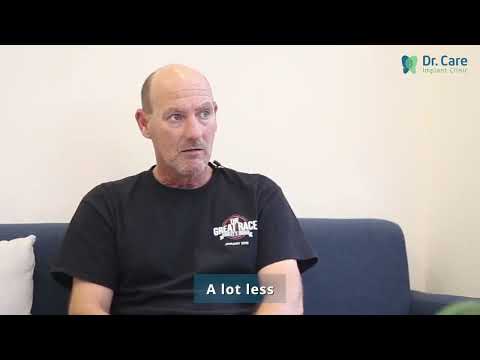



.png)














Share this listing